As of January 20, 2026, the protracted debate surrounding the segregation of transactional and marketing email systems continues to resonate daily across the digital corridors of today’s most dynamic technology companies. This persistent divide, historically viewed as an operational necessity, is increasingly recognized as a significant strategic liability, hindering growth, eroding brand consistency, and introducing costly inefficiencies. From product-led growth (PLG) teams striving for seamless user journeys to compliance officers navigating complex data privacy landscapes, the call for a unified email infrastructure has never been more urgent. This article delves into the inherent challenges posed by fragmented email strategies and explores the emerging consensus around all-in-one platforms as the definitive solution for modern businesses.
The Genesis of Disparity: A Historical Context
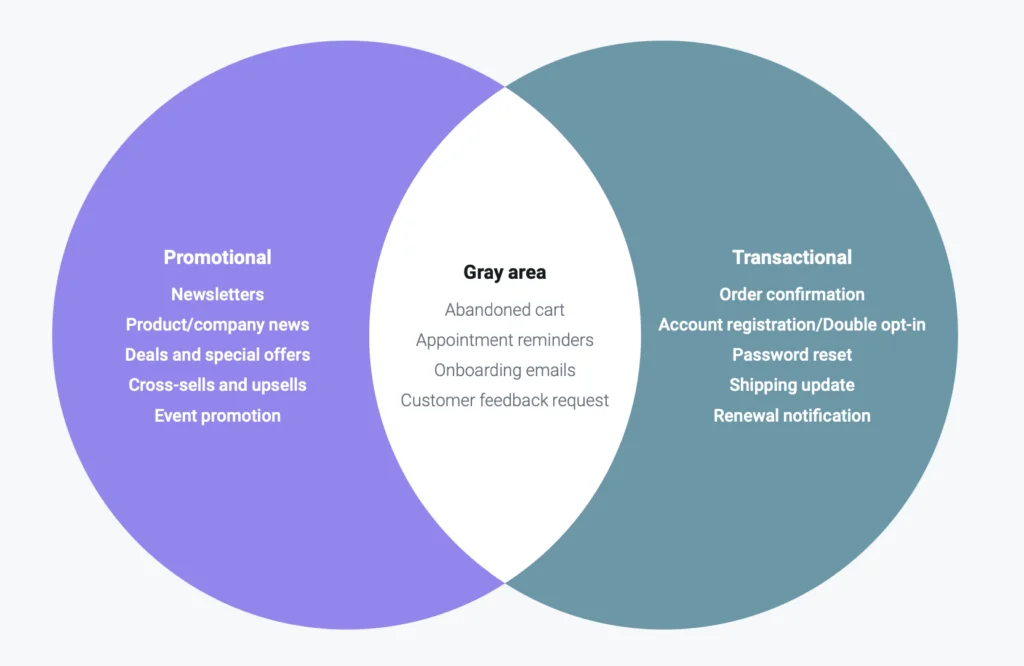
For decades, the distinction between marketing and transactional emails was clear, largely dictating the separate technological stacks used to manage them. Marketing emails, characterized by promotional content, newsletters, and engagement campaigns, were the domain of specialized marketing automation platforms. These tools offered robust features for list segmentation, A/B testing, analytics, and visual campaign builders, empowering marketing teams to craft compelling narratives and drive conversions. In contrast, transactional emails, encompassing critical notifications like password resets, order confirmations, shipping updates, and welcome messages, were typically handled by developers. These messages, often triggered by user actions within an application, prioritized reliability, speed, and API-driven delivery, necessitating powerful but distinct email APIs.
This bifurcation made logical sense in a simpler digital landscape where customer interactions were less integrated. Marketing departments focused on outreach and acquisition, while development teams ensured core application functionality and critical user communications. However, as the digital customer journey became increasingly complex and customer expectations for seamless, personalized experiences escalated, this compartmentalized approach began to expose significant fissures in brand consistency and operational agility. The rise of product-led growth (PLG) models, where the product itself becomes the primary driver of customer acquisition, retention, and expansion, further amplified the need for cohesive communication across all touchpoints. In a PLG environment, every email, regardless of its primary function, contributes to the user’s perception of the product and the brand.
The Escalating Costs of Fragmentation: A Deep Dive into Operational Liabilities
Running two disparate email systems, while seemingly manageable on the surface, accrues hidden costs that quietly sabotage growth, brand integrity, and internal efficiency. These systemic pains are felt most acutely by the very teams tasked with driving business forward, creating friction where there should be fluid collaboration and innovation.
Siloed Customer Experience: Eroding Brand Trust
One of the most immediate and damaging consequences of a fragmented email strategy is the creation of a siloed and inconsistent customer experience. Customers do not perceive departmental boundaries; they interact with a single brand. When email communications originate from different systems, the brand voice, visual identity, and overall tone can diverge dramatically.
Consider a prospective user, initially captivated by a sophisticated marketing email showcasing a platform’s elegant user interface and advanced features. Intrigued, they proceed to sign up for a trial. However, a minor misstep, such as mistyping a password during a subsequent login attempt, leads them to click the "Forgot Password" link. Instead of a polished, on-brand recovery email, they receive a stark, plain-text message that appears functionally detached from the vibrant marketing communication. The initial trust and excitement cultivated by the marketing team can instantly dissipate, replaced by confusion and a subtle sense of disappointment.

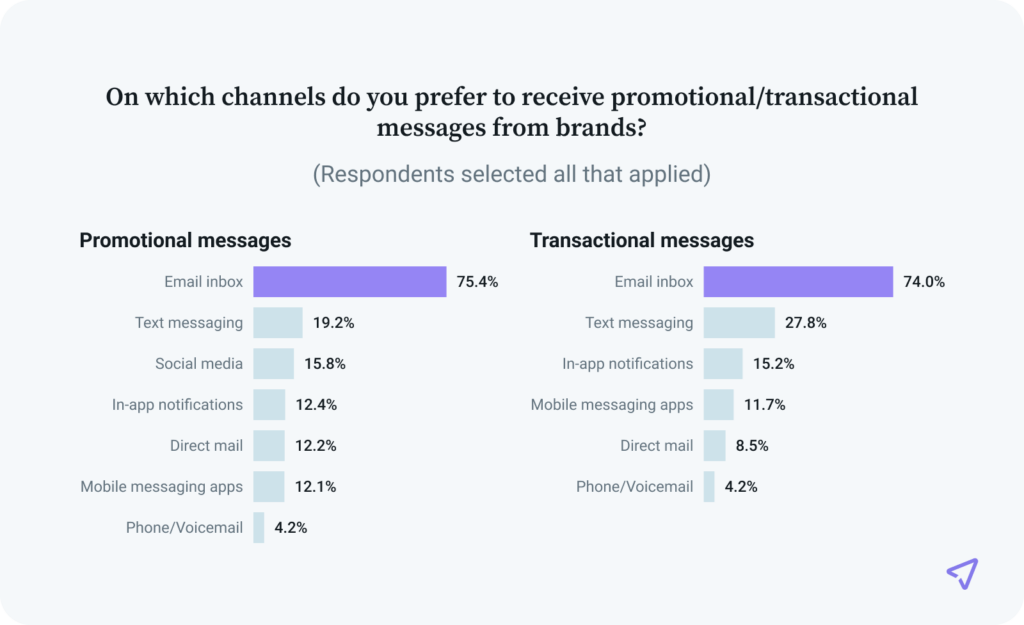
This scenario exemplifies how brand trust can suffer a death by a thousand cuts. Each inconsistent touchpoint—be it a generic payment receipt, an unbranded shipping notification, or an unhelpful error message—widens the crack in the customer journey. Achieving a truly consistent brand experience across all email types becomes an impossible feat. Research consistently indicates that brand consistency across all customer interactions can increase revenue by up to 20% and significantly boost customer loyalty. In the user’s mind, if a company cannot maintain a uniform appearance and voice across its own emails, the perceived reliability and professionalism of its core product or service may also come into question. The simple act of combining transactional and marketing email under one brand identity is a foundational step that siloed systems inherently impede. The data from Mailjet’s email engagement report further underscores this, revealing that a distinct brand look and voice across all customer interactions significantly enhances recognition and trust, leading to higher open and engagement rates.
Developer Bottlenecks: Stifling Innovation and Agility
In today’s highly competitive, product-led growth environment, speed, agility, and the ability to iterate rapidly are paramount. A company’s communication strategy serves as a critical lever for guiding users toward activation, engagement, and retention. However, for Product or Growth Leads, a divided email strategy often becomes a constant source of friction, frequently manifesting as the dreaded developer bottleneck.
Imagine a Growth Manager who, after meticulous analysis of user behavior data, designs a brilliant five-part automated sequence aimed at optimizing user onboarding. The objective is to guide new users through critical activation steps within their first week. The copy is compelling, the email designs are engaging, yet the project encounters a formidable obstacle. Essential welcome emails are often hard-coded into the application, dispatched via a basic transactional service that the marketing team lacks the tools or access to modify. The request for modifications or new email implementations typically enters the development backlog, where it competes for prioritization against critical bug fixes, infrastructure improvements, and new feature builds. Weeks can pass before the request is addressed, and often the final implementation is a watered-down version of the original vision due to resource constraints or technical limitations.
The opportunity to quickly A/B test email subject lines, experiment with different calls-to-action, or dynamically change content based on real-time user actions is frequently lost. What should be a growth accelerator—the SaaS email platform—instead becomes a significant brake on innovation, preventing the very experiments that could dramatically improve activation rates, reduce churn, and accelerate product adoption. This creates a tangible impact on time-to-market for critical engagement strategies, directly affecting a company’s competitive posture.
Governance and Compliance Risks: A Ticking Regulatory Time Bomb
For any leader overseeing operations, security, or finance, email governance and compliance are non-negotiable, top-tier priorities. A divided email strategy, with its duplicate data stores, disparate access controls, and lack of a central command center, constitutes a ticking time bomb of operational and legal risk.
With stringent data privacy regulations such as GDPR (General Data Protection Regulation) in Europe and CCPA (California Consumer Privacy Act) in the United States carrying severe financial penalties for non-compliance, a lack of centralized email management is a risk no business can afford. When a user in the European Economic Area exercises their "right to be forgotten," can an organization confidently ensure that their personal data has been thoroughly scrubbed from both its marketing platform and its transactional service’s logs? When a customer unsubscribes from a promotional newsletter, is there absolute certainty they will not receive another promotional email inadvertently triggered from the "transactional" system, thereby leading to a compliance violation and severely damaging the sender’s reputation? These questions highlight critical vulnerabilities in a fragmented system. Industry reports frequently cite millions in fines levied against companies for privacy breaches, underscoring the gravity of these compliance risks.
Impact on Deliverability and Sender Reputation
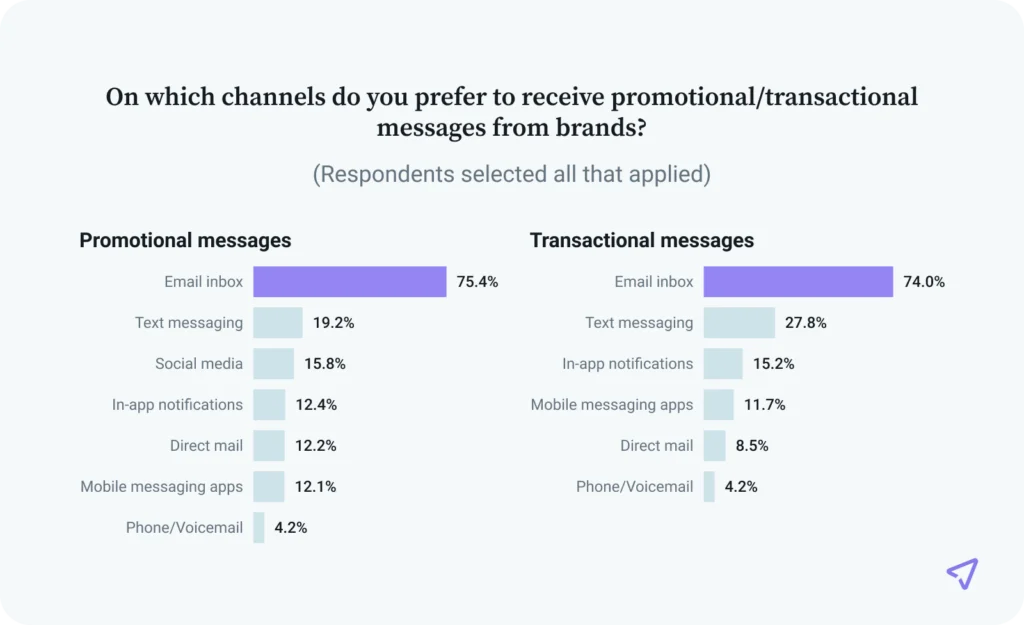
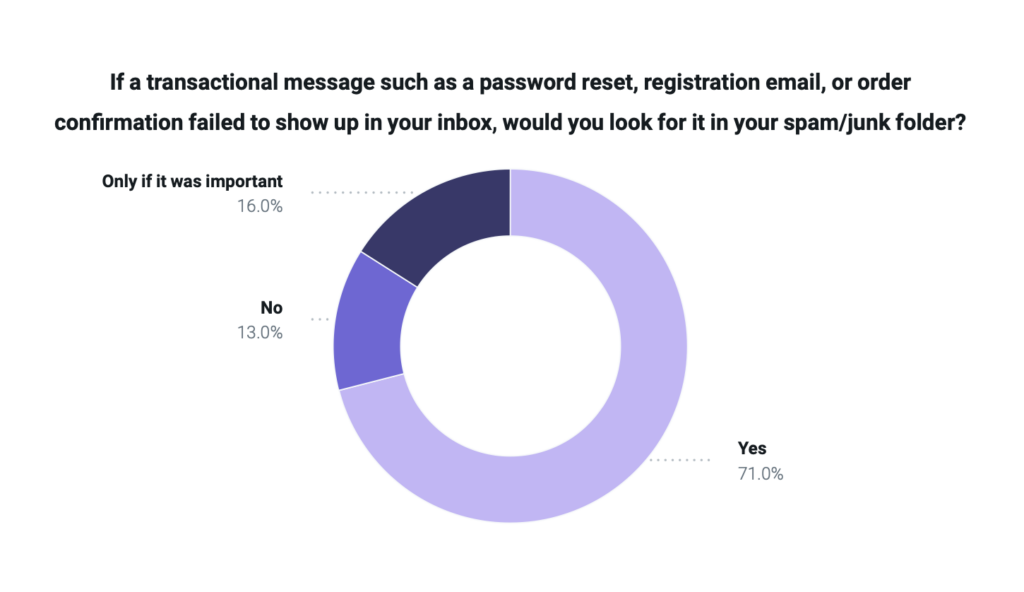
Furthermore, this division profoundly impacts core email deliverability. If a transactional system, perhaps due to less rigorous oversight, maintains poor list hygiene and persistently sends emails to invalid or dormant addresses, it can significantly harm the sending domain’s overall reputation. Because both marketing and transactional systems often send from the same domain or subdomains, the marketing team’s meticulously crafted campaigns may begin landing in spam folders through no fault of their own. This phenomenon, known as "collateral damage," can severely diminish the effectiveness of all email communications, leading to reduced engagement, lost revenue, and a tarnished brand image. While Mailjet’s email engagement report indicates that 71% of respondents would check their spam/junk folder for a transactional email, this is far from ideal, akin to a postal service delivering mail to a trash can. Implementing robust email deliverability best practices across a unified platform becomes crucial to mitigate this risk.
The Paradigm Shift: Embracing Unified Email Platforms
The answer to this strategic chaos is not merely a better compromise; it is a fundamental re-evaluation of how businesses approach email communication. The solution lies in adopting an all-in-one email platform, built on the simple yet powerful principle that all emails are intrinsically part of the same continuous customer conversation. By bringing these disparate functions together, organizations can unlock profound, business-altering benefits that extend far beyond mere operational consolidation.
This paradigm shift represents a move away from the impossible "either/or" choice—investing in a platform for marketers or developers—towards an integrated "both/and" solution. Modern unified platforms are designed to serve the distinct needs of both marketing and development teams while ensuring cohesive strategy and oversight. Companies like Mailjet have been at the forefront of developing such comprehensive solutions, recognizing the critical need for a singular ecosystem where creative design, robust automation, and bulletproof deliverability converge. This integration is not just about technology; it is about fostering cross-functional collaboration and creating a holistic view of the customer journey, enabling businesses to communicate more effectively and strategically in an increasingly competitive digital landscape.
Realizing the Benefits: A New Era of Email Strategy
Adopting a unified email platform heralds a new era of efficiency, innovation, and strategic control for businesses.
Seamless Customer Journeys and Brand Cohesion
When all company emails originate from a single, centralized platform, organizations can finally deliver the cohesive and professional brand experience that is essential for building trust and delight. Every customer touchpoint, from the initial marketing outreach to the final invoice, speaks with one consistent voice, adheres to a unified visual identity, and reinforces the overall brand narrative. This consistency is not just aesthetic; it fosters a sense of reliability and professionalism that resonates deeply with customers.
This level of brand cohesion is made possible through effective email template management designed for modern, collaborative teams. With tools like Mailjet’s collaborative features, for instance, cross-functional teams can build and maintain a shared gallery of email templates. Marketers can design beautiful, on-brand, and mobile-responsive templates for every conceivable scenario—be it a password reset, a new feature announcement, a usage alert, or a payment receipt. Developers can then seamlessly pull from this curated gallery via a simple API call, confident that every email they trigger is perfectly polished and flawlessly on-brand. The perennial debate over transactional versus marketing email branding is thus settled once and for all, ensuring that every email reinforces a singular, strong brand identity.
Empowering Teams and Accelerating Product-Led Growth
A unified platform fundamentally breaks down the operational silos between product and marketing teams, permanently eliminating the dreaded developer bottleneck. In this re-optimized model, workflows become significantly more efficient and agile. Growth Managers, for example, gain the autonomy to independently design, implement, and launch complete email automation sequences for SaaS onboarding using intuitive visual workflow builders. They can A/B test email subject lines for a welcome series, optimize open rates, or test different calls-to-action on a trial expiration nudge to maximize conversions—all without requiring direct developer intervention for every minor adjustment.
The role of the developer consequently shifts from being bogged down with requests to code HTML emails to a more strategic and impactful focus on building the core product. Their primary responsibility transitions to enabling this new, accelerated workflow by making simple, clean API calls from the application to trigger the right template at the appropriate time. This API-first approach drastically shrinks innovation cycles from months or weeks to mere hours or days, fostering an environment of rapid experimentation and continuous improvement that is vital for competitive advantage in the product-led growth landscape.
Centralized Control and Robust Governance
For Platform Owners, Operations leaders, and Compliance officers, a unified platform provides the holy grail: a single pane of glass for the entire email infrastructure. From one central dashboard, administrators can monitor deliverability metrics across all email types, manage user permissions with granular role-based access control, and maintain a single, global suppression list that guarantees compliance with data privacy regulations like GDPR and CCPA. This eliminates the complexities and risks associated with managing multiple, disconnected systems.
This model strikes an optimal balance between team autonomy and central control. Leading platforms are specifically architected to meet this exact need. Mailjet’s Sub-accounts feature, for instance, allows a central administrator to create distinct, sandboxed accounts for different teams, brands, or environments (e.g., development, staging, production). Each team can operate independently with its own templates, sender lists, and analytics, while the master account owner retains ultimate visibility and control over billing, security policies, and global compliance rules. This effectively delivers centralized email management without stifling team agility or creative freedom, ensuring that an organization can scale confidently and securely.
The Road Ahead: Strategic Imperatives for 2026 and Beyond
The long-standing debate over transactional versus marketing email platforms is, by 2026, largely recognized as a relic of a bygone era. The strategic advantage offered by unified email platforms cannot be underestimated in fostering robust customer relationships, accelerating product innovation, and providing the centralized governance required to scale with unwavering confidence. Industry analysts and tech executives are increasingly converging on the understanding that a fragmented approach to email is no longer sustainable for competitive growth.
Looking ahead, the foundation laid by unified platforms will be crucial for integrating future advancements. This includes leveraging artificial intelligence for hyper-personalization, enabling real-time, context-aware engagement across various channels, and consolidating customer data for deeper insights. The ability to analyze all email interactions—both promotional and critical—from a single source will provide an unparalleled 360-degree view of the customer, driving more intelligent marketing, product development, and support initiatives. Companies that embrace this unification will be better positioned to adapt to evolving customer expectations and regulatory landscapes, securing a significant competitive edge in the digital economy.
Conclusion: Stop Choosing, Start Unifying
The notion that businesses must choose between empowering their marketers with rich experience-building tools and providing their developers with raw power and reliability is obsolete. Unified email platforms decisively flip this script, offering a comprehensive solution that caters to both needs simultaneously. The strategic imperative for modern enterprises is clear: to break down email silos and effectively combine transactional and marketing email into a single, cohesive strategy. This is not merely an operational upgrade; it is a foundational shift towards a more integrated, efficient, and customer-centric approach that underpins sustainable growth and strengthens brand loyalty. Businesses seeking to deliver a truly seamless email experience, from the first marketing touchpoint to the last critical notification, must now look to all-in-one platforms as the essential infrastructure for success in the dynamic digital landscape of 2026 and beyond.