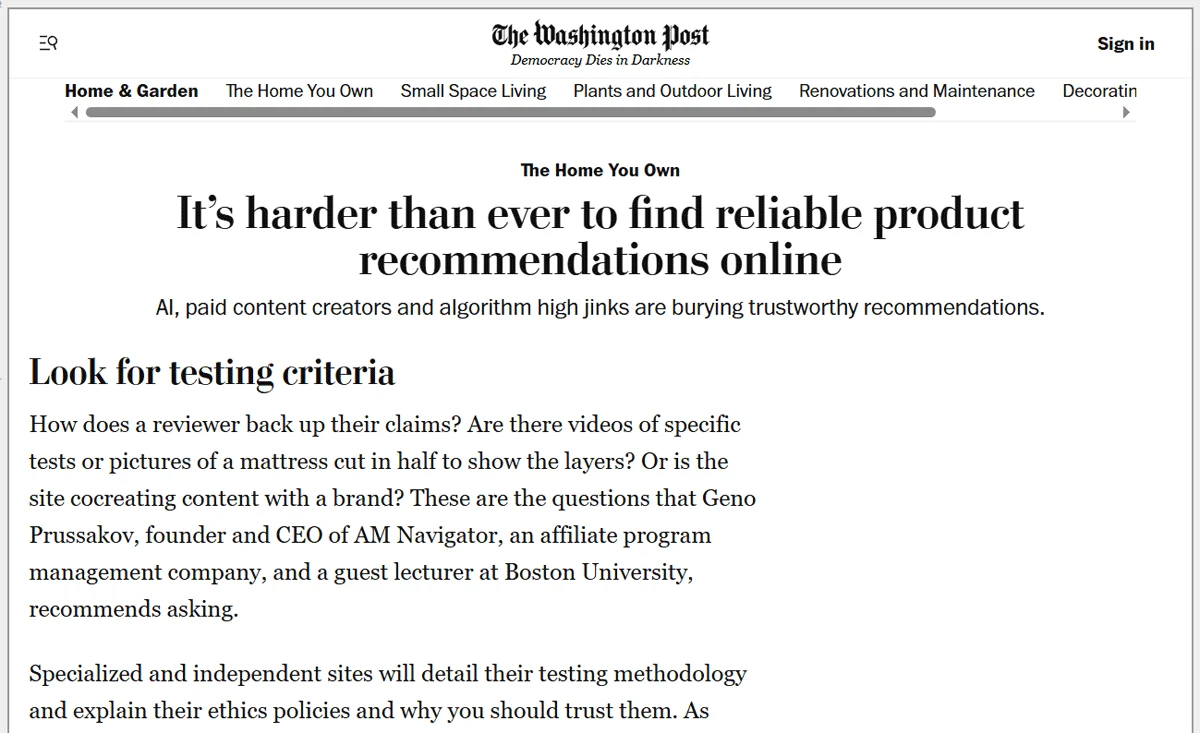
The digital publishing landscape has undergone a seismic shift over the last decade, transitioning from a primary reliance on display advertising to a sophisticated ecosystem of "commerce content" and affiliate monetization. This evolution was brought to the forefront recently when industry veteran Geno Prussakov, founder of AM Navigator, provided expert commentary to The Washington Post regarding the reliability of online product recommendation lists published by major media conglomerates. As legacy publications increasingly leverage their established brand equity to drive retail sales, the line between objective journalism and performance marketing has become a focal point for consumer advocacy and industry scrutiny.
The Rise of the Authority Economy in Digital Publishing
For nearly a century, the revenue models of major media outlets were built on a clear separation between the "church and state" of editorial and advertising. However, the decline of print circulation and the diminishing returns of programmatic display ads forced a pivot. Today, publications such as The New York Times, CNN, Forbes, and Rolling Stone have integrated affiliate marketing into the core of their business strategies. By creating dedicated commerce wings—such as Wirecutter, CNN Underscored, and Forbes Vetted—these organizations have successfully monetized their search engine authority and the inherent trust of their readership.
Search engine authority is a primary driver of this trend. Search engines like Google prioritize domains with high "Experience, Expertise, Authoritativeness, and Trustworthiness" (E-E-A-T) scores. When a high-authority domain publishes a "Best Of" list, it often captures the top search results for lucrative commercial keywords. This allows media giants to act as intermediaries between consumers and retailers, earning a commission on every sale generated through their links.
A Chronology of the Shift Toward Affiliate Journalism
The trajectory of this industry shift can be traced through several key milestones that redefined how information and commerce intersect:
- 2011: The Inception of Wirecutter: Founded by Brian Lam, Wirecutter pioneered the model of rigorous, long-form product testing funded by affiliate commissions rather than traditional ads.
- 2016: The New York Times Acquisition: The New York Times purchased Wirecutter for approximately $30 million, signaling to the broader industry that commerce content was a legitimate and scalable revenue stream for high-prestige media.
- 2017–2019: The Gold Rush: Major publishers including Hearst, Condé Nast, and Vox Media established internal "commerce labs." During this period, "Best Product" roundups became a staple of digital output, often outperforming traditional news articles in terms of lifetime revenue.
- 2020–2022: Pandemic Acceleration: The global shift toward e-commerce during COVID-19 lockdowns saw affiliate revenues for major publishers spike, in some cases representing more than 25% of total digital revenue.
- 2023–2025: The Search Engine Volatility Era: Google’s "Helpful Content Updates" and the rise of AI-generated search results forced publishers to further emphasize "first-hand experience" and "rigorous testing" to maintain their rankings against a sea of low-quality affiliate sites.
The Mechanics of Media Endorsements: Rigor vs. Revenue
While the integration of affiliate links introduces a potential conflict of interest, industry experts like Geno Prussakov note that many top-tier publishers treat this responsibility with significant gravity. To maintain their long-term brand value, these organizations typically employ four primary strategies to ensure the quality of their recommendations.
First, many maintain a "firewall" between their editorial teams and their affiliate management teams. The writers and editors testing the products are often unaware of the specific commission rates associated with each brand, theoretically ensuring that the "Best Overall" pick is chosen based on merit rather than margin. Second, major outlets invest heavily in physical testing labs. It is not uncommon for a publication to spend thousands of dollars purchasing products to test them in controlled environments, providing a level of scrutiny that individual bloggers or smaller sites cannot afford.
Third, there is a focus on long-term data. Publishers analyze return rates and consumer feedback; if a recommended product results in high return rates, it damages the publisher’s reputation and their bottom line, as affiliate commissions are typically clawed back upon a return. Fourth, many publishers have moved toward a "holistic" review process that includes interviewing subject matter experts, engineers, and long-term users to provide a comprehensive view of a product’s lifecycle.

Despite these safeguards, the influence of financial arrangements cannot be entirely discounted. Performance metrics such as Earnings Per Click (EPC), inflated commission rates, and "tenancy fees" (flat fees paid by brands for a spot on a list) can, at times, influence the visibility or ranking of certain products, particularly in "sponsored" or "featured" sections of a roundup.
Supporting Data: The Scale of the Affiliate Market
The scale of this industry is immense. According to data from the Performance Marketing Association and various industry reports, the affiliate marketing industry in the United States alone is estimated to be worth over $15 billion in 2024, a significant portion of which is driven by content publishers.
Surveys indicate that approximately 80% of brands now utilize affiliate marketing to drive sales, and nearly 90% of publishers say that affiliate marketing is an important part of their overall revenue strategy. For consumers, the impact is clear: a 2023 study found that over 60% of online shoppers consult a review or "Best Of" list before making a purchase exceeding $50. This reliance on third-party validation is exactly what big media outlets are capitalizing on.
Strategic Recommendations for the Informed Consumer
As the volume of commerce content continues to grow, consumers must develop a critical eye to distinguish between genuine editorial recommendations and paid placements. Prussakov and other industry analysts suggest a four-step framework for evaluating online product lists:
- Scrutinize the Disclosure Statements: Look beyond the standard "we may earn a commission" boilerplate. Check if the publication explains their testing methodology. Transparency regarding how products were acquired (purchased vs. provided by the brand) is a hallmark of high-integrity reviews.
- Verify Evidence of Hands-on Testing: Genuine reviews often include original photography and videos of the product in use, rather than just stock images provided by the manufacturer. Detailed descriptions of "fail points" or specific drawbacks are also indicators of an honest assessment.
- Cross-Reference Across Platforms: A product that is ranked #1 on a major media site but has consistently poor reviews on independent forums like Reddit or specialized hobbyist sites should be viewed with skepticism. High-authority sites are not immune to "brand momentum," where they recommend a legacy brand out of habit rather than current performance.
- Identify Financial Tiers: Be aware of the difference between "Editorial Picks" and "Featured Partners." Often, the first one or two items on a list may be paid placements, while the rest of the list follows editorial guidelines. Distinguishing between these categories is essential for an unbiased purchase.
Broader Implications and the Future of Media Trust
The trend toward monetizing authority has broader implications for the future of the internet. As big media outlets dominate the first page of search results, smaller, independent review sites often find themselves pushed out of the market. This creates a "rich get richer" dynamic where only the largest corporations can afford the SEO infrastructure and testing labs required to compete.
Furthermore, there is an ongoing debate regarding the "commoditization of trust." If a consumer follows a recommendation from a major outlet and receives a sub-par product, the damage to that outlet’s brand is significant. However, in an era of fragmented media, some publishers may prioritize short-term affiliate revenue over long-term credibility.
The reactions from the industry suggest a growing awareness of these risks. In response to the Washington Post article and the ongoing discourse, some media advocacy groups have called for clearer labeling standards for affiliate content, similar to the FTC’s guidelines for social media influencers. There is also a push for "Verified Purchase" badges or third-party audits of testing methodologies to restore consumer confidence.
Ultimately, the marriage of media authority and e-commerce is a permanent fixture of the digital economy. While it provides publishers with the necessary capital to continue their investigative and hard-news reporting, it requires a new level of "media literacy" from the public. As Geno Prussakov noted, the responsibility lies both with the publisher to maintain ethical standards and with the consumer to remain vigilant in an increasingly commercialized information landscape. The "Comments" sections of these articles, often overlooked, remain one of the few places where real-world peer feedback can challenge the polished narratives of big media, serving as a vital check on the power of the authority economy.