
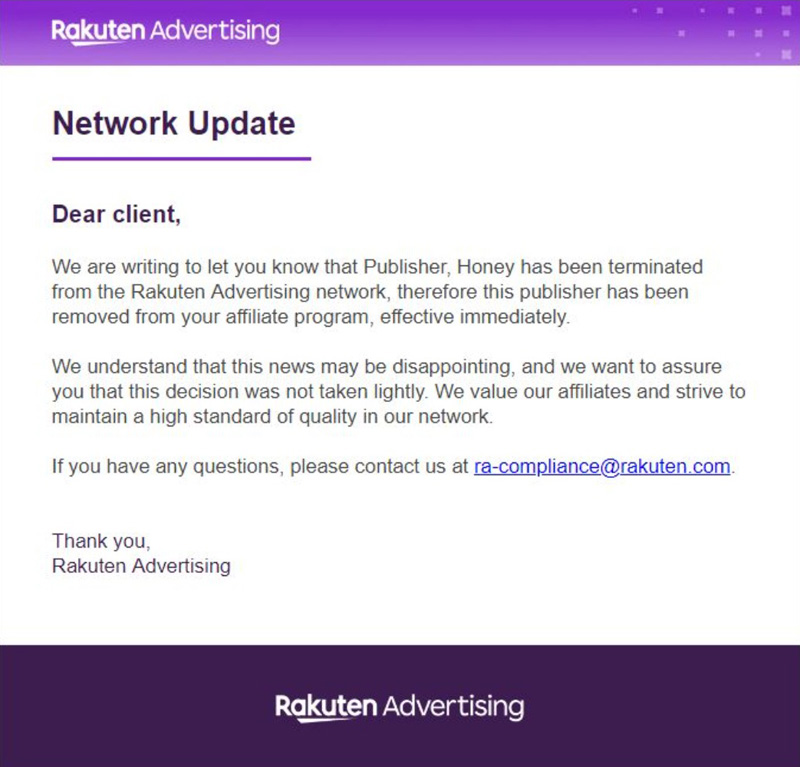
In an unprecedented shift within the digital marketing landscape, PayPal Honey, one of the most prominent players in the e-commerce and affiliate space, has been removed or suspended from two of North America’s largest affiliate networks. The enforcement actions, taken by Rakuten Advertising and impact.com, signal a tightening of regulatory standards and a renewed focus on attribution integrity within the multi-billion-dollar partnership economy. This development follows high-profile investigations into the technical operations of the Honey browser extension, alleging systematic violations of industry-standard "stand-down" rules designed to prevent attribution manipulation.
The fallout began in mid-January 2026, coinciding with the industry’s premier gathering, Affiliate Summit West. The timing of the announcements served as a catalyst for widespread debate among brand managers, network executives, and performance marketers regarding the future of downloadable software publishers (DSPs) and the necessity of rigorous compliance monitoring.
The Acquisition Context and Scale of Influence
To understand the gravity of these removals, one must look at the scale of PayPal Honey’s operations. In early 2020, PayPal completed its acquisition of Honey Science Corp. for approximately $4 billion. At the time, it was PayPal’s largest acquisition to date, intended to integrate shopping tools directly into the payment giant’s ecosystem. Honey, primarily known for its browser extension that automatically discovers and applies coupon codes at checkout, boasted over 17 million monthly active users and partnerships with approximately 30,000 retailers.
For years, Honey was considered a "top-tier" publisher, often driving significant volume for major retail brands. However, its dominance has long been a point of contention for smaller content creators and "top-of-funnel" affiliates who argued that browser extensions often "poached" credit for sales that were already in the process of being completed.
Chronology of Disciplinary Action
The recent crisis for PayPal Honey was precipitated by two major external investigations. The first was a detailed video report by the investigative creator MegaLag, which highlighted potential discrepancies in how the extension interacted with affiliate links. This was followed by a forensic investigation by Ben Edelman, a well-known expert in web transparency and digital marketing ethics. Edelman’s findings suggested that Honey was engaging in "attribution manipulation" by failing to adhere to mandatory "stand-down" protocols.
The official network responses followed shortly thereafter:
- January 12, 2026: Rakuten Advertising, one of the world’s leading affiliate networks, officially announced that Honey had been "terminated from the network." In a statement to its partners, Rakuten framed the move as a necessary step to "maintain a high standard of quality," suggesting that the publisher’s activities no longer aligned with the network’s integrity requirements.
- January 16, 2026: Impact.com, another dominant platform in the partnership space, followed suit. The network informed its users that Honey was found to be "out of compliance" with platform policies. Impact.com removed Honey from its "Discovery Marketplace" and suspended its activity. Unlike Rakuten’s outright termination, Impact.com’s initial move was characterized as a suspension, though the platform’s leadership was vocal about the underlying causes.
Understanding the Technical Violations: Stand-Down Rules and Attribution
The core of the controversy centers on "stand-down" rules. In the affiliate marketing world, most programs operate on a "last-click" or "last-touch" attribution model. This means the last affiliate to direct a user to a merchant’s site before a purchase is made receives 100% of the commission.

To prevent browser extensions from unfairly overwriting the cookies of other affiliates (such as bloggers, review sites, or influencers who did the initial work of introducing the customer to the product), networks implement "stand-down" rules. These rules mandate that if a browser extension detects that another affiliate’s cookie is already present in the user’s browser, the extension must "stand down" and not fire its own affiliate link.
The investigations into Honey alleged "intentional stand-down violations and concealment." Specifically, it was suggested that the extension was bypassing these safeguards to drop its own cookie at the very last second of the checkout process—effectively "hijacking" the commission from the original referrer. This practice, often referred to as "cookie stuffing" or "attribution sniping," undermines the economic viability of the entire affiliate ecosystem.
Official Responses and Industry Reaction
David Yovanno, CEO of impact.com, explicitly addressed the situation, noting that the suspension was a result of behavior that "undermines trust in the partnership economy." Yovanno’s comments highlighted a growing frustration among network providers regarding the "black box" nature of some large-scale technology publishers.
The reaction at Affiliate Summit West was one of cautious validation for many affiliate managers. For years, practitioners have raised concerns that large coupon extensions provided "negative incremental value"—meaning they were being paid commissions for sales that would have happened anyway, or worse, they were stealing commissions from the very content creators who drive brand discovery.
Implications for Affiliate Program Management
The removal of a $4 billion entity from major networks serves as a landmark case study in risk management. Industry experts suggest five critical lessons that affiliate managers and brands must internalize to protect their marketing budgets and partner relationships.
1. The "Bad Apple" Effect on Ecosystems
In affiliate marketing, the presence of a rule-breaking publisher does more than just drain commissions; it poisons the well for high-quality partners. Content-heavy affiliates, such as editorial sites and niche influencers, often use sophisticated tools to monitor which brands allow "cookie-sniping" extensions in their programs. If a brand is perceived to tolerate attribution manipulation, reputable affiliates will often cease promotion, fearing their efforts will never result in a payout. Consequently, a program dominated by one "bad apple" eventually loses its diversity and reach.
2. The Limits of Network Policing
A common misconception among brand managers is that the affiliate network (the platform provider) is solely responsible for policing compliance. However, networks face an inherent conflict of interest: they often earn a percentage of the total revenue generated by publishers. While Rakuten and Impact.com eventually took action, the Honey investigation suggests that violations may occur for extended periods before network-level intervention. Brands are urged to conduct their own independent audits and include specific, enforceable clauses in their Terms and Conditions (Ts & Cs) to allow for immediate termination of non-compliant partners.
3. The Necessity of Technical Literacy
The Honey case highlights the complexity of modern affiliate technology. Managers can no longer afford to be "platform-only" users; they must understand the nuances of browser extension behavior, "soft clicks," and the difference between various attribution rules. Organizations like the Performance Marketing Association (PMA) and the Affiliate & Partner Marketing Association (APMA) have begun providing independent audits to help brands distinguish between legitimate value-add technology and predatory scripts.
4. Avoiding Broad Generalizations
While the Honey situation has cast a shadow over the "Software/Extension" category, experts warn against "de-averaging"—the practice of banning an entire class of affiliates due to the actions of one. Not all browser extensions are predatory. Some focus on price tracking, loyalty points, or charitable giving without violating stand-down rules. The key for managers is individual evaluation based on transparent data rather than categorical exclusion.
5. The Critical Need for Base Diversification
The most significant vulnerability exposed by the Honey suspension is the lack of diversification in many corporate affiliate programs. Audits frequently reveal that a staggering 80% or more of a program’s revenue is often driven by a single-digit number of publishers, often all within the "coupon and deal" or "extension" categories.
To build a resilient program, brands are encouraged to explore a wider spectrum of the 28 identified affiliate types, including:
- Content Producers: High-authority blogs and news sites.
- Card-Linked Offers: Integrating rewards directly with consumer credit cards.
- Complementary Brands: Strategic partnerships with non-competing companies in the same vertical.
- Mass Media: Large-scale publishing houses like Meredith or Ziff Davis.
- Niche Educators: Influencers and consultants who provide deep product tutorials.
Broader Market Impact and the Future of 2026
The suspension of PayPal Honey is likely to trigger a "flight to quality" within the industry. As brands move to reclaim commissions lost to attribution manipulation, there is a projected increase in investment toward "top-of-funnel" content creators. This shift aligns with broader trends in digital privacy and the phasing out of third-party cookies, where first-party data and direct, transparent partnerships become the gold standard.
Furthermore, this event may prompt PayPal to overhaul Honey’s technical architecture to regain entry into major marketplaces. For the broader industry, the "Honey Precedent" serves as a warning: no publisher, regardless of its parent company’s size or its historical volume, is immune to the rules of the partnership economy. As we move further into 2026, the focus will remain squarely on "incremental value"—the proof that an affiliate truly influenced a purchase that otherwise would not have occurred.
In conclusion, while the removal of PayPal Honey represents a significant disruption for many retail programs, it also offers a unique opportunity for a "reset." By prioritizing transparency, investing in diverse partner types, and taking an active role in compliance policing, brands can ensure their affiliate programs drive genuine growth rather than merely reshuffling existing revenue.