Two years ago, a three-person paid search team at a German agency specializing in complex, explanation-heavy sectors like finance, insurance, and B2B lead generation found themselves managing three to four Google Ads accounts each. Today, that same team handles six to seven accounts apiece. This significant increase in output, delivering enhanced client revenue and more sophisticated results, has been achieved without any new human hires. The crucial addition has been an AI assistant, a tireless, decision-making entity that has been integrated as a "second brain" for the agency. However, the focus of this discussion is not solely on the AI collaborator, but on a different kind of non-human entity that has profoundly reshaped the agency’s operational dynamics: Google.
Google, in this context, is not a chosen partner but more akin to an unpredictable roommate. The relationship is characterized by a lack of explicit selection and occasional disagreement, yet it necessitates a shared operational space and a strategic adaptation to its evolving rules. The agency has moved from actively fighting against Google’s algorithmic shifts to managing them, recognizing that the traditional playbook for paid search is no longer sufficient. This transformation is driven by three simultaneous, fundamental shifts: the way people search, the location where answers are presented, and the entity that ultimately makes the critical decisions.
The Evolution of Search Queries: From Keywords to Contextual Situations
The nature of user queries has undergone a dramatic metamorphosis. Gone are the days of simple, keyword-driven searches. Today, individuals articulate complex needs and scenarios in natural language, often through voice search. For instance, a query once might have been "best ETF portfolio." Now, a user might articulate, "I’m 42, I have 50k in savings, I want to invest 1k a month at moderate risk and retire early. How should I allocate?" This shift necessitates a move from targeting discrete keywords to understanding and targeting the underlying "situations" or intent behind these elaborate queries. These comprehensive contextual signals are no longer directed solely at one search engine; they are increasingly sent to multiple AI-powered platforms simultaneously, including Google, ChatGPT, and Perplexity. This broad dissemination of user intent demands a more nuanced approach to campaign structure and audience segmentation within Google Ads.
The Changing Landscape of Search Results: The Rise of AI Overviews
The visibility of search results has also been fundamentally altered by the integration of artificial intelligence. AI Overviews are now appearing not just for informational queries but also for transactional ones. Searches like "best ETF for retirement" or "compare business accounts" may now yield a direct answer within the search engine results page (SERP), potentially bypassing the need for a user click. This means that when a click does occur, it carries significantly higher value. The user has already been served a potential solution, so the subsequent landing page and supporting content must be exceptionally compelling to convert. This blurring of lines between paid and organic search means that both disciplines are now integral to a unified conversation about earning user trust and delivering value. The ultimate goal remains to secure the click, but the effort required to justify that click has intensified.
The Shift in Decision-Making Authority: The Ascendancy of the Algorithm
Perhaps the most profound change is the transfer of decision-making power. Google now dictates which query matches which ad, which ad placement is chosen, and which combination of bid, placement, and creative assets emerges victorious. Product names like Performance Max, Broad Match, and AI Max all signal a clear directive: relinquish control to the algorithm. This trend has been evident for years, with Google systematically introducing automated features and making them default settings. Each quarter, advertisers find another lever of direct control disappearing, replaced by algorithmic recommendations that become the de facto standard. This creates an environment of reduced direct control and increased uncertainty, all while performance targets remain as ambitious as ever.
Managing the Machine: A New Paradigm for Paid Search Professionals
In light of these seismic shifts, the role of the paid search professional is evolving from that of an operator to that of a manager and architect. The traditional tasks of manually adjusting bids, crafting ad copy, and selecting keywords are diminishing. The new imperative is to manage the "worker" – the algorithm itself. This requires adopting the principles of good human management, applied to a highly sophisticated, data-processing entity. Just as a manager provides clear direction, sets goals, conducts regular check-ins, and intervenes to prevent costly mistakes, paid search professionals must now guide Google’s algorithms with precision.
The core competencies of effective management translate directly into this new digital realm. These include meticulous briefing, diligent verification of work, and pre-determined strategies for both success and failure. The primary difference lies in the nature of the direct report: an algorithm that operates at unprecedented speed and scale.
Rule 1: Briefing the Machine with Precision
A flawed brief, whether for a human or an algorithm, does not lead to a slightly imperfect outcome; it leads to a confidently incorrect outcome, with significant resources expended on the wrong objectives. The algorithm is only as effective as the signals it receives. Many accounts suffer from a fundamental lack of proper conversion tracking. This can manifest as counting page visits as conversions, double-counting leads, triggering lead forms on every scroll, or conflating soft and hard conversions without assigning them appropriate values.
For Google’s algorithms to function optimally, they require accurate and valuable data. This includes:
- Accurate Conversion Tracking: Ensuring that conversions are defined and tracked correctly, reflecting genuine user actions that contribute to business goals. This means differentiating between micro-conversions (e.g., form submissions) and macro-conversions (e.g., closed deals).
- Value-Based Optimization: Assigning monetary values to different types of conversions. This allows the algorithm to understand the relative importance of each conversion and prioritize efforts accordingly. Without this, Google may optimize for the cheapest lead, not the most valuable one.
- Offline Conversion Data Integration: Feeding back data on conversions that occur offline (e.g., phone calls leading to sales, in-person appointments) into the Google Ads platform. This provides a crucial link between online ad interactions and ultimate business outcomes, allowing for more informed optimization.
A compelling example of this principle in action comes from the insurance client mentioned earlier. With a 90-day sales cycle from initial click to closed deal, the agency had historically focused on optimizing for lead form submissions due to their ease of tracking. This resulted in an abundance of leads, but not necessarily more closed deals. Google lacked the data to discern the quality of these leads and consequently chased cheaper, less qualified form fills. By implementing offline conversion tracking with actual closed-deal values, Google’s algorithm was equipped to identify genuinely valuable leads, leading to a more efficient and effective lead generation strategy. The core lesson is that if Google is unaware of who the best customer is, it will default to optimizing for the cheapest one. Therefore, refining the measurement of what constitutes success must precede any adjustments to bids or budgets.

Rule 2: Structured and Strategic Testing
The operation of advanced automated systems like Performance Max often resembles a "black box." A common, yet ineffective, response is to implement multiple changes simultaneously and then be unable to ascertain which modification yielded the desired outcome. Each campaign launched should be treated as a hypothesis, demanding a structured testing methodology.
Before initiating any test, critical questions must be addressed:
- What is the specific hypothesis? Clearly define what change is being tested and the expected impact.
- What is the key performance indicator (KPI) for success? Identify the metric that will definitively indicate whether the test has succeeded or failed.
- What is the duration of the test? Establish a predetermined timeframe for data collection and evaluation.
- What is the pre-defined action if the test fails? Crucially, commit to a specific course of action (e.g., pausing the campaign, reverting changes) if the test does not meet the success criteria.
This fourth question is frequently overlooked, leading to wishful thinking rather than rigorous experimentation. The author recounts a personal failure where Broad Match was tested on a top-performing campaign, resulting in a 30% CPA increase. Instead of making the objective decision to pause, the response was to rationalize the poor performance with external factors. Pre-committing to an action removes the emotional bias of future-self and ensures objective decision-making.
Testing should focus on inputs rather than outputs. This includes variations in match types, audience signals, value rules, feed data, and the activation of features like AI Max. It’s important to treat AI Max, for instance, as a reach-expansion tool rather than an efficiency driver. Expecting the same CPA at increased volume can lead to premature termination of potentially beneficial tests. Therefore, the principle of one test per campaign, with one variable at a time, is paramount. Altering two variables simultaneously renders the learning inconclusive.
Rule 3: Framework-Driven Decisions Over Emotional Responses
The author admits to being weakest in this area, acknowledging a tendency to react to weekly data rather than acting proactively. While reactive adjustments can be effective with clear targets and experienced teams, they carry a cost: spending excessive time explaining data instead of leveraging it for strategic action.
Google’s algorithms now manage thousands of micro-decisions per second, freeing up human professionals to focus on the larger strategic calls: scale, hold, or cut. A simple framework for these decisions can be established:
- Scale: Identify campaigns that consistently exceed performance benchmarks and have the potential for significant growth. Define clear thresholds for scaling budgets or expanding reach.
- Hold: Campaigns that are meeting their objectives but do not present immediate opportunities for significant growth. These require ongoing monitoring but not necessarily aggressive intervention.
- Cut: Campaigns that consistently underperform and fail to meet defined success metrics, despite optimization efforts. These represent wasted resources and should be terminated decisively.
The common pitfall is over-investing time and resources in "Hold" campaigns while neglecting to terminate underperforming ones. The solution is to establish decision criteria before reviewing the data. On a Monday morning, before opening any dashboards, one should define the conditions that would trigger scaling, cutting, or maintaining a campaign. This structured approach removes the influence of pressure and fatigue that can cloud judgment when faced with live data. Implementing this into a workflow ensures that decisions are made based on pre-defined logic, not on immediate emotional responses to fluctuating metrics.
The Architect’s Role in the Algorithmic Era
The paid search professional is no longer the operator but the architect of digital advertising strategies. This new role encompasses three key hats:
- Signal Architect: Determining the quality and relevance of the data fed to the algorithms, ensuring they learn from meaningful insights.
- Test Designer: Formulating the hypotheses and structuring the experiments that the dashboards cannot inherently answer.
- Decision Maker: Making the critical strategic calls that the algorithms are not empowered or designed to handle.
The automation of routine tasks – keyword expansion, bid adjustments, initial ad copy generation, and weekly reporting – has freed up valuable time. This reclaimed time can now be dedicated to higher-impact activities: truly understanding what constitutes a valuable lead, meticulously auditing landing pages in an era where each click is more valuable, and refining the core offer and messaging.
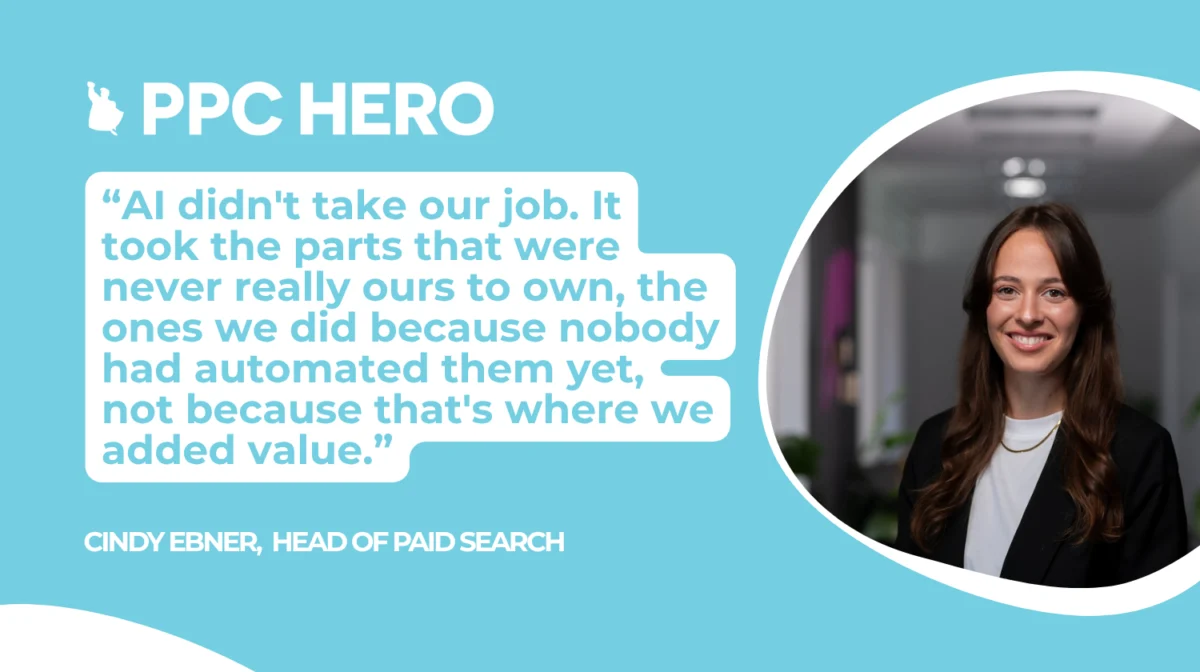
The advent of AI in advertising has not led to job displacement; rather, it has liberated professionals from the drudgery of tasks that were never their core value proposition. Instead, AI has taken over the operational components that were automated because they lacked intrinsic human value or strategic complexity.
Moving Forward: Embracing the Managerial Role
The path forward for paid search professionals involves embracing this managerial and architectural role. The advice for the upcoming week is simple yet profound: fix one signal, launch one test with a defined kill date, and document one decision-making rule. The non-human team members, whether explicit AI assistants or the complex algorithms of Google, require skilled management. The future of successful paid search lies not in manual execution, but in strategic oversight, data-driven decision-making, and a deep understanding of how to best collaborate with increasingly sophisticated algorithmic partners. The ability to effectively brief, monitor, and direct these powerful tools will define success in the evolving digital advertising landscape.