

A SWOT analysis is a cornerstone of strategic planning, offering businesses a structured method to assess their current standing before committing resources to future initiatives. This powerful framework meticulously maps an organization’s internal Strengths and Weaknesses against external Opportunities and Threats within a concise four-quadrant grid. Its enduring relevance is underscored by a 2023 report from the Competitive Intelligence Alliance, which revealed that nearly half of respondents had conducted at least one SWOT analysis in the preceding two months, with a significant 76% asserting that no other framework could adequately replace it. This consistent adoption highlights SWOT’s position as the default starting point for strategic endeavors, though the challenge often lies in transforming a static list into actionable strategies. This comprehensive guide will navigate the process of conducting a SWOT analysis, providing illustrative examples, probing questions, and a free template, ultimately demonstrating how to translate the completed grid into tangible strategies using the complementary TOWS matrix.
Understanding the SWOT Analysis Framework
At its core, a SWOT analysis is a strategic planning tool designed to map a business’s internal strengths and weaknesses against external opportunities and threats. The resulting four-quadrant grid provides a clear, consolidated view of what aspects to leverage, what requires improvement, what avenues to pursue, and what potential dangers to mitigate. While its precise origins are a subject of historical debate among management scholars, the framework is widely attributed to Albert Humphrey’s research at Stanford Research Institute during the 1960s. Regardless of its exact genesis, its widespread adoption and longevity in business planning for over half a century are undeniable.

SWOT analyses are versatile, applicable to an entire corporation or specific projects within a single department. Most commonly, they are employed at the organizational level to gauge progress against growth benchmarks. However, their utility extends to campaign-level assessments, such as evaluating the performance of a paid search program against initial projections. The inherent structure of the SWOT matrix offers two significant advantages: it clearly delineates internal factors from external ones at a glance, and it distills complex information into an easily digestible format for team-wide comprehension within minutes.
Deconstructing the SWOT Analysis Definition
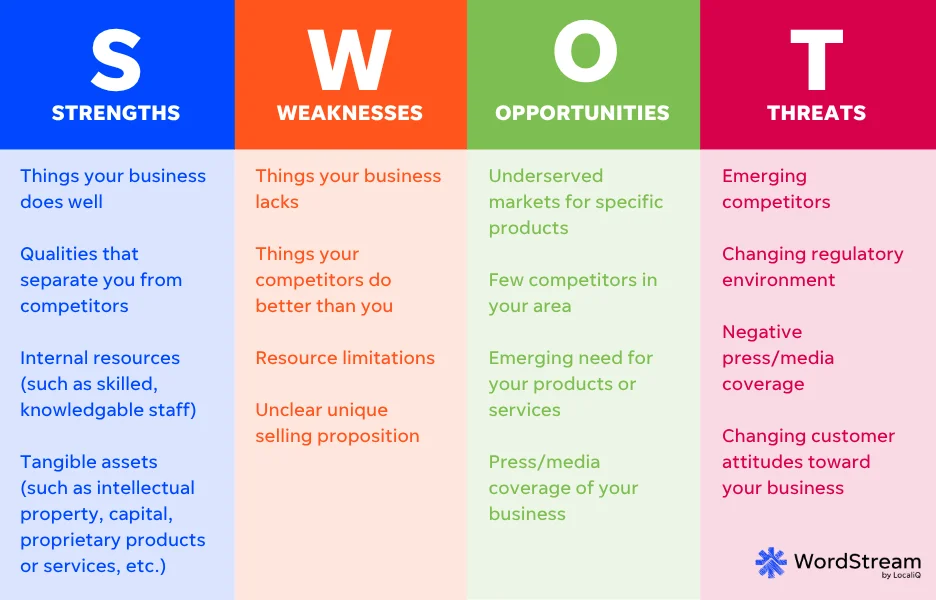
The acronym SWOT represents four critical components: Strengths, Weaknesses, Opportunities, and Threats. Each element provides a distinct lens through which to view a business’s position.
Strengths
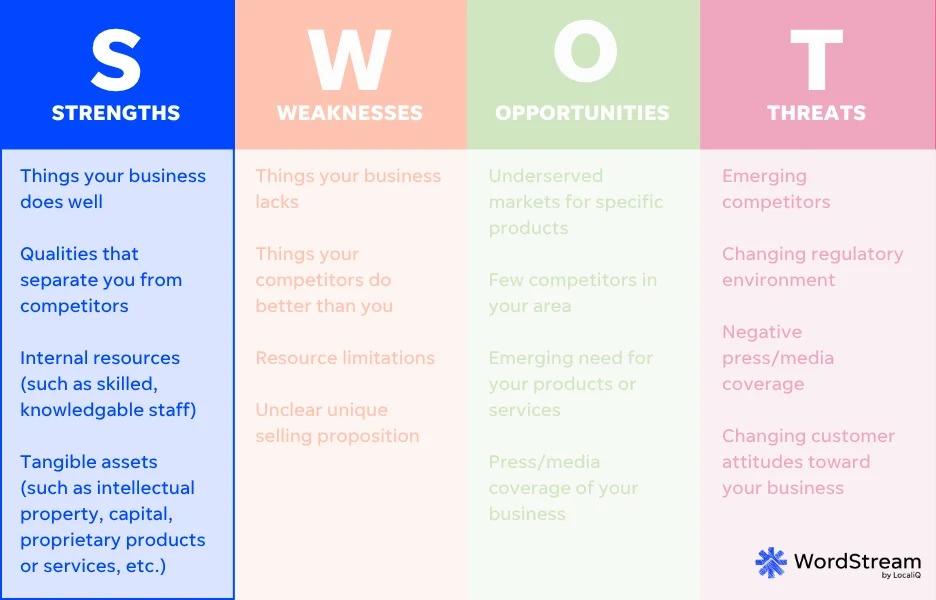
Strengths represent the internal, positive attributes of a business or project. These can be tangible assets, such as proprietary technology or a robust distribution network, or intangible qualities like a strong brand reputation or a highly skilled workforce. The key differentiator for a strength is whether a competitor would acknowledge it as an advantage. For instance, a company with a deeply loyal customer base and a consistently positive customer satisfaction score would identify these as significant strengths.
Weaknesses
Conversely, Weaknesses are internal factors that hinder a business’s progress or performance. These are often gaps that prevent a company from reaching its full potential. Examples include a lack of essential technical expertise, insufficient marketing budget, outdated operational processes, or a poorly defined unique selling proposition (USP). Identifying weaknesses requires an honest self-assessment of areas where the business falls short.
Opportunities
Opportunities are external, favorable factors present in the business environment that a company can leverage for growth or advancement. These might include emerging market trends, underserved customer segments, technological advancements that can be adopted, or favorable regulatory changes. An abundance of qualified leads generated by marketing efforts that the sales team struggles to keep up with, for example, presents a clear opportunity to optimize sales processes. Similarly, developing a new product that opens up a previously inaccessible market demographic signifies a significant opportunity.
Threats
Threats are external, unfavorable factors that could jeopardize a company’s success or growth. These can range from intensified competition and changing consumer preferences to economic downturns, unfavorable regulatory shifts, or disruptive technological innovations. Financial risks, market volatility, and anything that could negatively impact the company’s future prospects, often outside of its direct control, fall into this category.
Internal vs. External Factors in SWOT Analysis
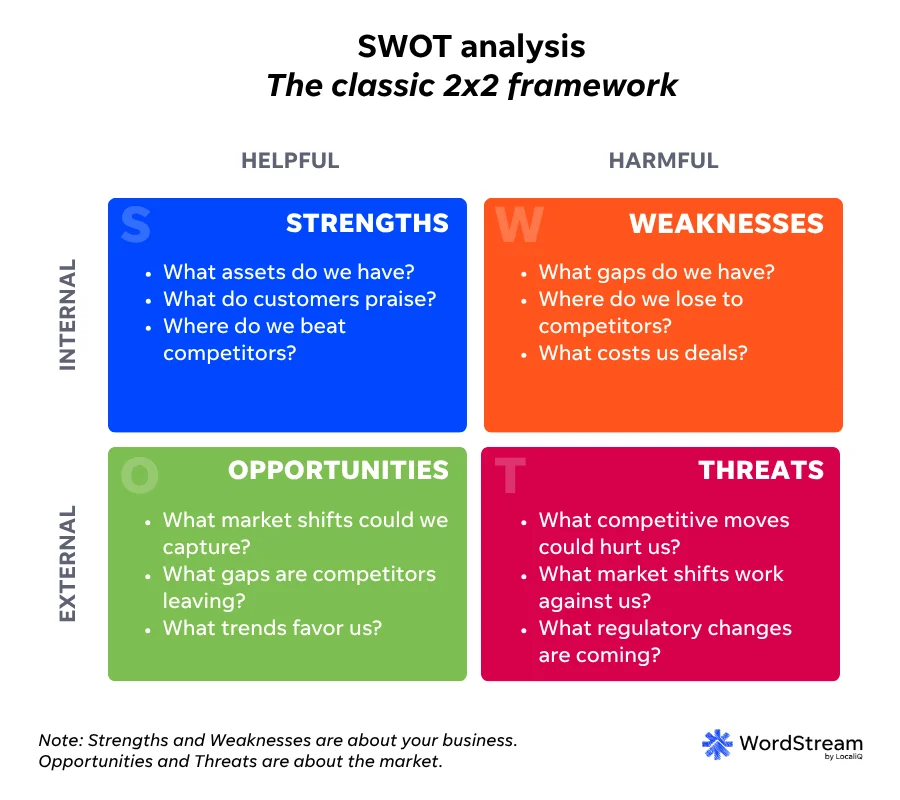
A crucial distinction within the SWOT framework is the categorization of its elements into internal and external factors. This dichotomy provides practical insights into the degree of control a business has over each identified item, which in turn influences the strategic approach.
Internal Factors
Strengths and Weaknesses are considered internal factors. They stem from decisions made within the organization and conditions that are, to a significant extent, under the company’s control. For example, a high customer churn rate is a weakness, but implementing strategies to improve customer retention falls within the company’s purview, making it an internal factor.
External Factors
Opportunities and Threats, on the other hand, are external factors. An emerging competitor, for instance, is a threat, but a business typically has limited ability to prevent a competitor from existing or entering the market. This inherent lack of direct control over external forces is why SWOT analyses are sometimes referred to as Internal-External (IE) matrices. Understanding this distinction is vital, as it informs the strategic response: internal factors can often be directly addressed and modified, while external factors require adaptation, mitigation, or strategic positioning.
Conducting a SWOT Analysis: A Step-by-Step Process
To effectively conduct a SWOT analysis, a cross-functional team should be assembled. The process involves setting up the four quadrants of the grid, populating each with specific, evidence-backed entries, prioritizing the top three to five items in each quadrant, and then transforming the completed grid into actionable strategies with assigned owners and deadlines.
The initial step involves gathering a diverse group of stakeholders representing different departments and perspectives within the organization. This ensures a comprehensive and well-rounded analysis. The four quadrants of the SWOT matrix are then clearly defined.
SWOT Analysis Questions to Guide the Process
To efficiently populate the grid, a structured series of questions for each quadrant is essential.
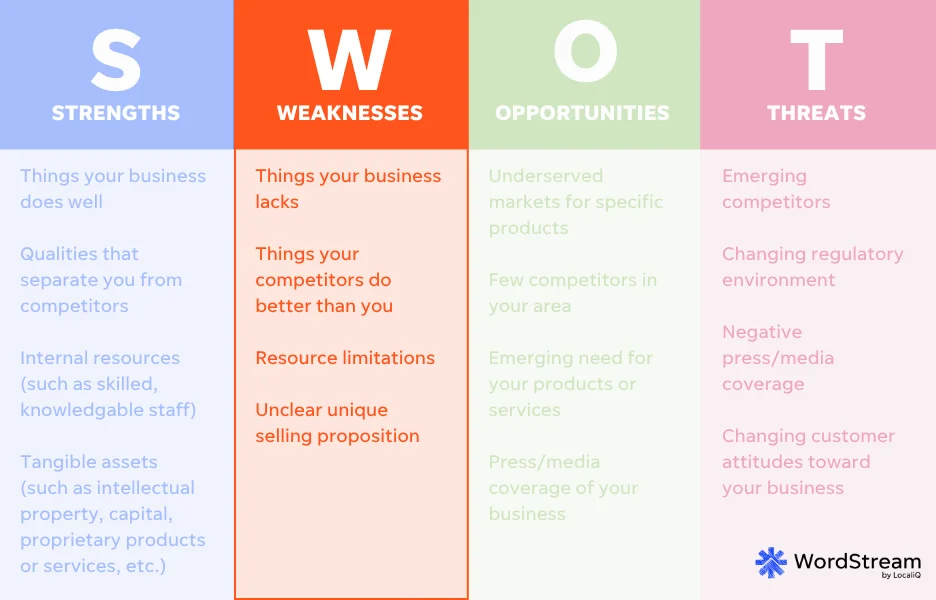
Strengths Questions:
- What unique advantages does our business possess?
- What do we do exceptionally well compared to competitors?
- What valuable resources or assets do we have (e.g., intellectual property, patents, unique talent)?
- What do our customers or clients praise most about us?
- What are our core competencies?
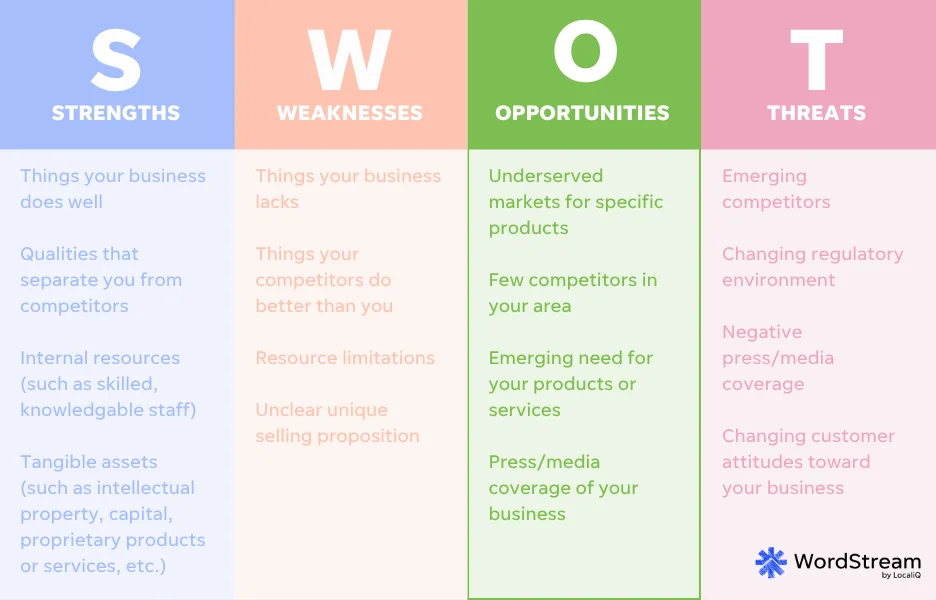
Weaknesses Questions:
- What areas need improvement within our business?
- What do our competitors do better than us?
- What internal limitations do we face (e.g., budget constraints, skill gaps, inefficient processes)?
- What are customers or clients complaining about?
- Where are we losing ground or falling behind?
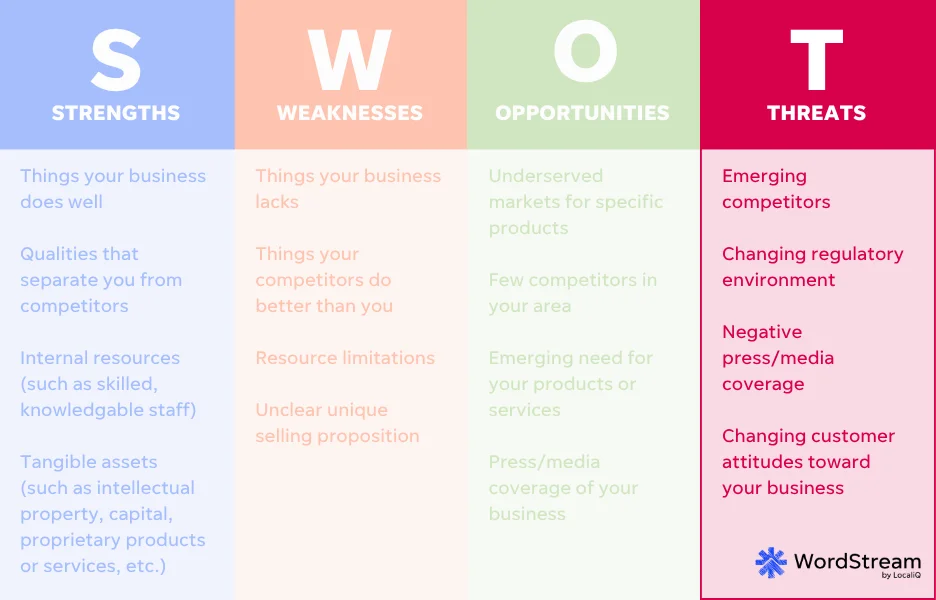
Opportunities Questions:
- What emerging market trends can we capitalize on?
- Are there underserved customer segments we can target?
- What technological advancements could benefit our business?
- Are there favorable changes in regulations or policies?
- Can we form strategic partnerships or alliances?
Threats Questions:
- Who are our emerging or established competitors, and what are their strategies?
- Are there changing customer preferences or market demands that could negatively impact us?
- What economic conditions (e.g., inflation, recession) could pose a risk?
- Are there potential regulatory changes that could hinder our operations?
- What technological disruptions could threaten our business model?
Identifying opportunities often necessitates thorough competitive analysis and an understanding of broader economic trends. However, opportunities can also arise internally, directly from leveraging existing strengths or addressing weaknesses.
What Constitutes a High-Quality SWOT Entry?
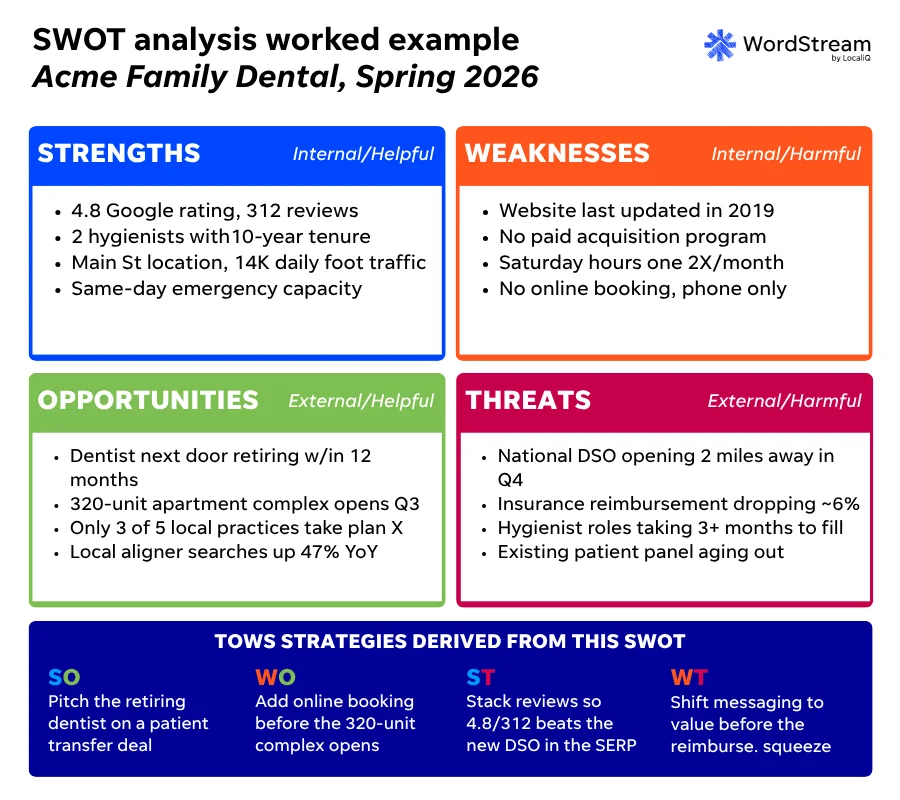
A robust SWOT analysis hinges on specific, evidence-backed, and prioritized entries. Vague statements, such as "outdated web presence," are less effective than concrete details like "website last updated in 2019." This specificity ensures clarity and actionable insights.
Three critical tests for evaluating each SWOT entry include:
- Specificity: Is the entry precise and detailed, or is it a general observation?
- Evidence-Based: Is the entry supported by data, customer feedback, or observable facts?
- Actionability: Can this entry directly inform a strategic decision or action?
A score of 75% or higher on a comprehensive eight-point checklist for SWOT entry quality is recommended before proceeding to the strategic planning phase. This rigorous evaluation prevents the exercise from yielding superficial results.
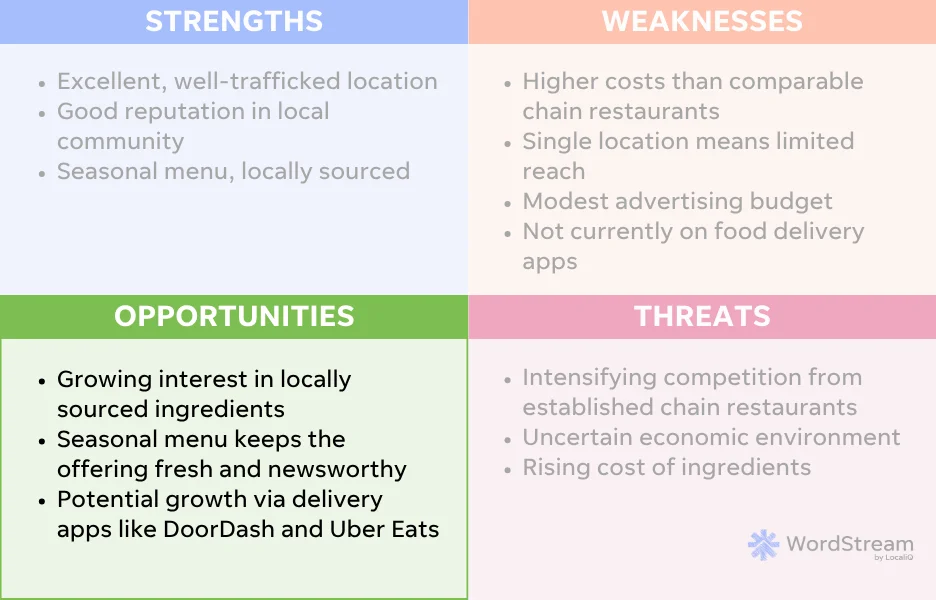
A Comprehensive SWOT Analysis Example: A Fictional Restaurant
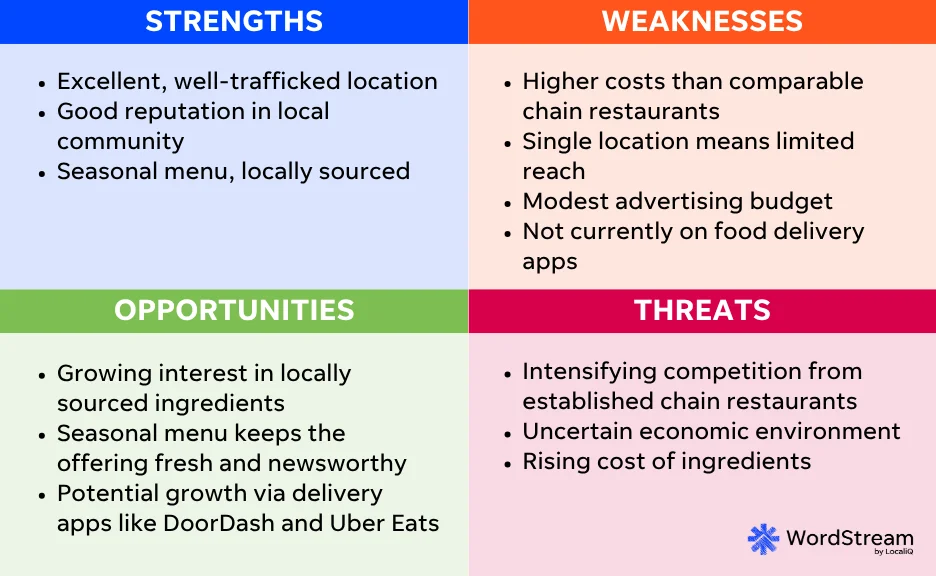
To illustrate the practical application of a SWOT analysis, consider a fictional family-owned restaurant operating as a single location in an urban area, facing competition from larger chains.
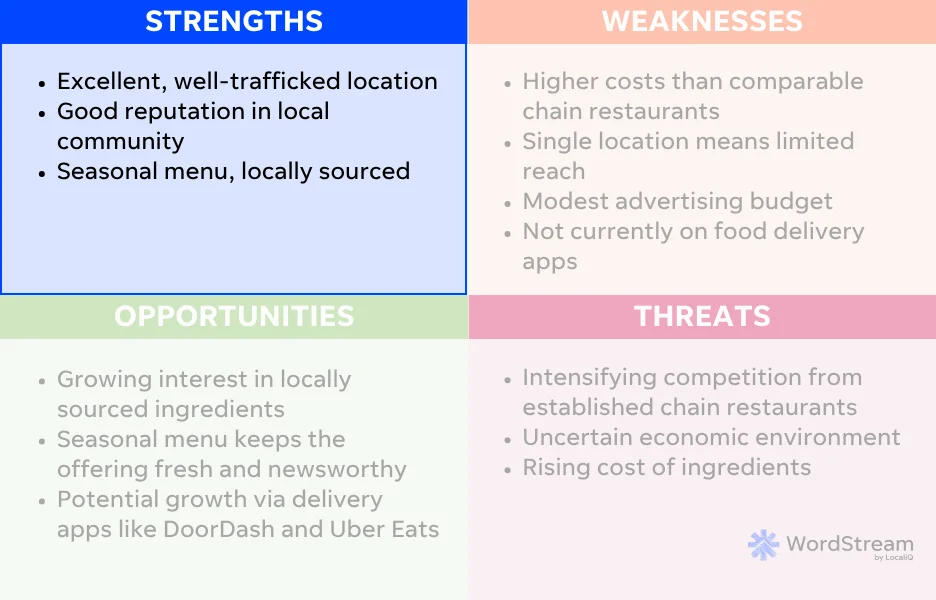
Strengths:
- Strong local brand reputation and loyal customer base.
- High-quality, seasonal menu featuring locally sourced ingredients.
- Experienced and dedicated staff with deep product knowledge.
- Prime urban location with good foot traffic.
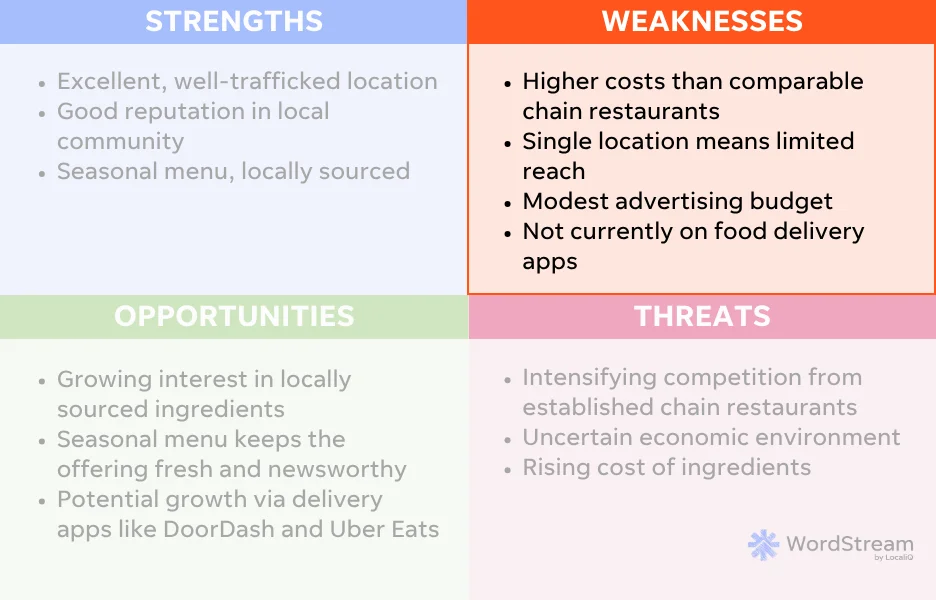
Weaknesses:
- Limited marketing budget compared to national chains.
- Lack of presence on popular third-party delivery platforms.
- Operational inefficiencies due to manual inventory tracking.
- Reliance on word-of-mouth for customer acquisition.
Opportunities:
- Growing consumer demand for locally sourced and sustainable food options.
- Expansion of online food delivery services and potential for partnerships.
- Opportunity to leverage social media for targeted marketing campaigns.
- Potential to offer catering services to local businesses.
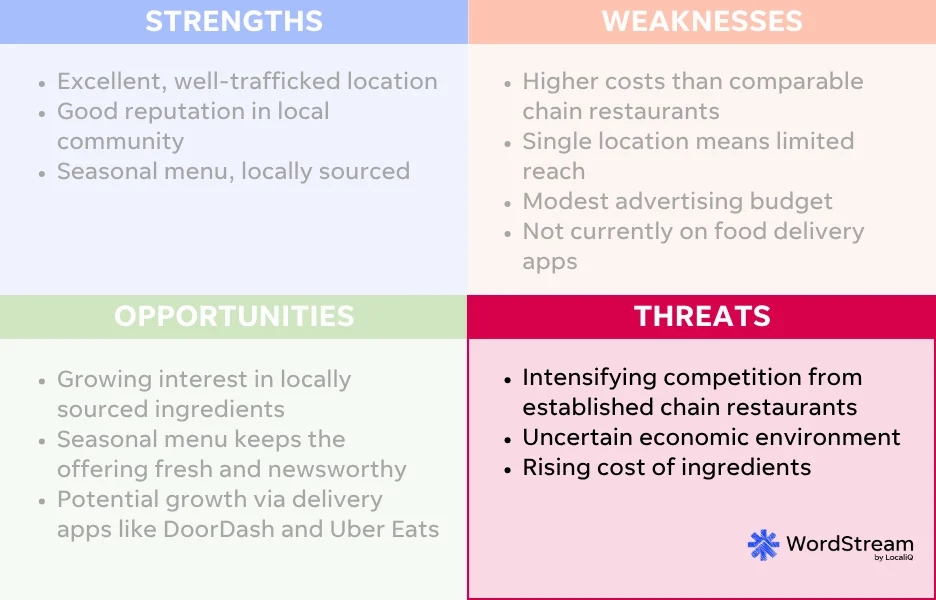
Threats:
- Intense price competition from large chain restaurants.
- Economic uncertainty impacting discretionary spending on dining.
- Increasing operational costs (e.g., rent, labor, food supplies).
- Potential for new competitors to enter the local market.
This matrix format provides an immediate overview of the restaurant’s strategic landscape. For instance, the restaurant boasts a strong local brand and a commitment to seasonal, local ingredients—a significant advantage. However, it faces considerable cost and reach disadvantages compared to national chains, coupled with the challenge of growing delivery demand in the current market.
Translating SWOT Analysis Results into Strategy
A completed SWOT matrix serves as a diagnostic tool, but its true value is realized when it is converted into a strategic plan. This typically involves two key strategic moves: matching strengths with opportunities and addressing weaknesses to leverage opportunities.
1. Harnessing Strengths
The most straightforward strategic path involves leveraging existing strengths. For the restaurant example, strengths like its reputation, seasonal menu, and location can be further amplified. This means continuing to invest in the quality and variety of the seasonal menu, actively nurturing customer relationships that underpin its strong reputation, and optimizing the utilization of its prime location. Acting on strengths often involves a deliberate amplification of existing successful practices.
2. Addressing Weaknesses
Tackling weaknesses can be more challenging, requiring an honest appraisal and strategic adjustments. While the single-location restaurant cannot directly compete with the purchasing power of a chain, it can differentiate itself by focusing on deep, personal customer relationships. For instance, the absence of a presence on delivery platforms was a clear weakness. Addressing this by joining services like DoorDash or Uber Eats directly converts this weakness into an opportunity captured.
3. Seizing Opportunities
The opportunities quadrant is inherently designed to be the most actionable part of the SWOT grid. For the restaurant, the rising consumer interest in locally sourced ingredients presents a significant opening. This could translate into more aggressive sourcing of local produce to potentially reduce costs or expanding its delivery app presence to broaden its customer reach. It is crucial to remember that opportunities, if not actively pursued and funded, can diminish over time. Every business requires a clear roadmap for capitalizing on its identified opportunities.
4. Mitigating Threats
Threats are largely external, making complete mitigation often impossible. The goal here is primarily focused on monitoring and strategic positioning. The restaurant faces significant threats from chain price competition, economic uncertainty, and rising operational costs. While direct price matching might be unfeasible, highlighting its commitment to locally sourced ingredients can strengthen its community positioning and counter the perceived advantage of larger competitors. When a single strategic move can simultaneously capitalize on an opportunity and mitigate a threat, it often represents the highest priority.
Transforming SWOT into Strategy with a TOWS Matrix
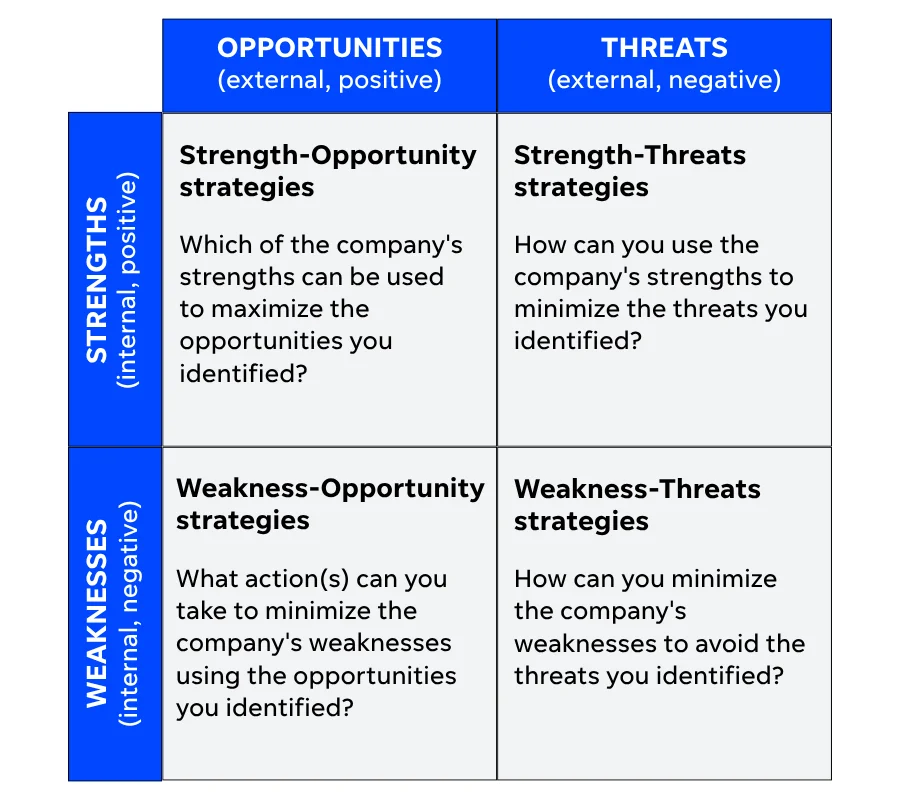
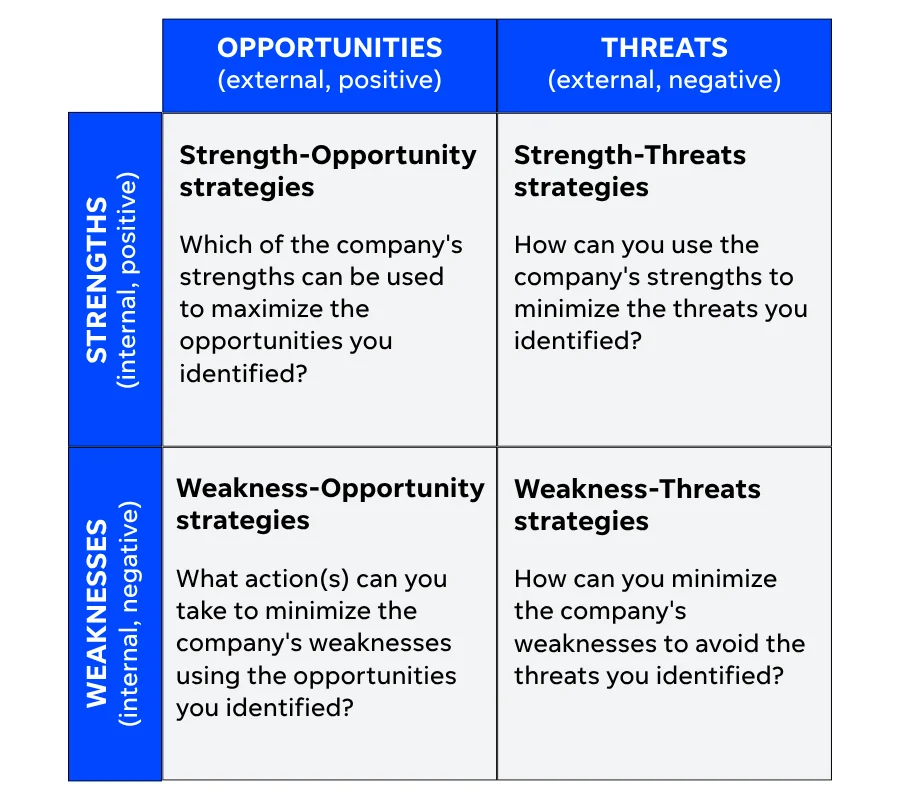
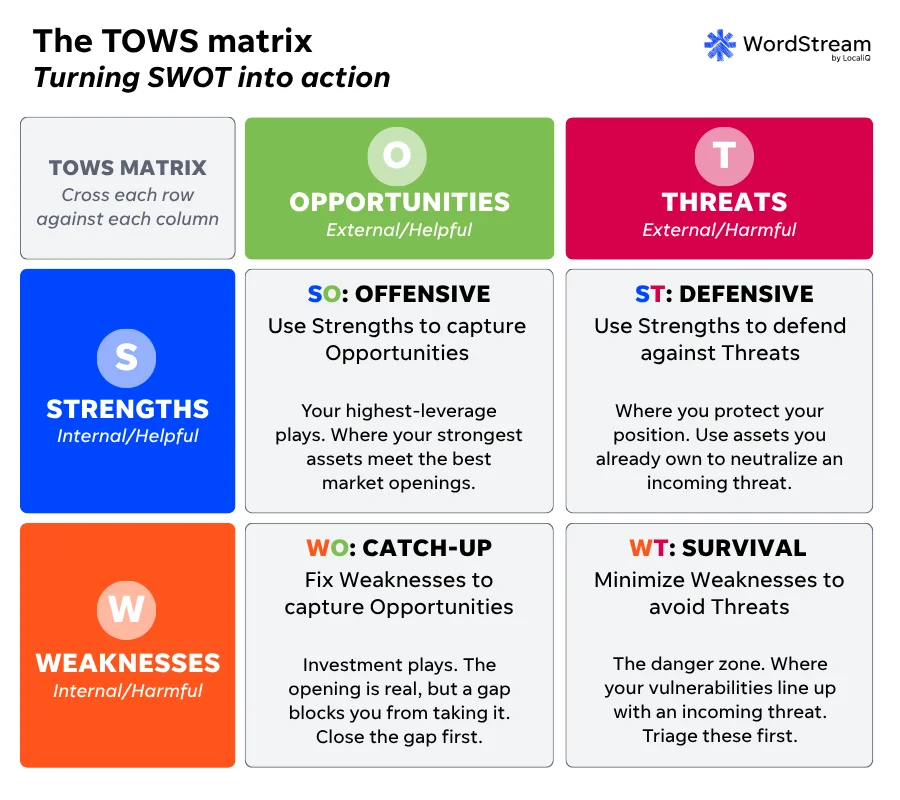
To bridge the gap between analysis and action, the TOWS matrix offers a powerful method for converting a SWOT analysis into concrete strategies. Developed by Heinz Weihrich, this framework systematically combines internal factors (Strengths, Weaknesses) with external factors (Opportunities, Threats) to generate four distinct strategic approaches:
- SO (Strengths-Opportunities) Strategies: These strategies leverage internal strengths to capitalize on external opportunities. For the restaurant, this could involve using its strong local brand and loyal customer base to promote its new catering services to local businesses.
- WO (Weaknesses-Opportunities) Strategies: These strategies aim to overcome internal weaknesses by taking advantage of external opportunities. For the restaurant, this might mean addressing the lack of presence on delivery platforms by partnering with third-party services to reach a wider customer base.
- ST (Strengths-Threats) Strategies: These strategies utilize internal strengths to defend against or minimize the impact of external threats. The restaurant could leverage its reputation for high-quality, local ingredients to differentiate itself from lower-priced chain competitors, thereby mitigating the threat of price wars.
- WT (Weaknesses-Threats) Strategies: These are defensive strategies designed to minimize weaknesses and avoid threats. For the restaurant, this could involve seeking operational efficiencies through better inventory management to counter rising costs and reduce vulnerability to economic downturns.
The TOWS matrix provides a structured approach to identifying strategic options that might otherwise be overlooked. It helps in developing a comprehensive plan that addresses both internal limitations and external challenges while maximizing potential growth avenues.
Common Pitfalls in SWOT Analysis and How to Avoid Them
Despite its widespread use, SWOT analyses can fall short of their potential due to several common mistakes. These include:
- Vague Entries: Lack of specificity renders the analysis impractical.
- Mixing Internal and External Factors: Confusing what can be controlled with what cannot.
- Unfiltered Brainstorming: Treating the exercise as an unstructured idea dump rather than a focused analysis.
- Skipping Supporting Evidence: Relying on assumptions rather than data.
- Stopping at the List: Failing to translate the findings into actionable strategies.
- Conducting it Solo: Missing out on diverse perspectives from a cross-functional team.
- Allowing it to Go Stale: Not updating the analysis regularly to reflect current conditions.
- Confirmation Bias: Overemphasizing strengths and downplaying weaknesses.
Two particularly critical mistakes to avoid are the lack of actionable strategies and the tendency to create overly optimistic strength assessments. A SWOT analysis that does not lead to concrete, assigned actions is ultimately an academic exercise with little practical value. Similarly, an inflated view of strengths can lead to strategic missteps and a failure to address critical areas for improvement.
Frequency of SWOT Analysis Updates
A recommended cadence for refreshing a SWOT analysis is quarterly, with a full rebuild conducted whenever a significant event reshapes the market. This includes the emergence of a new competitor, a substantial regulatory change, a major pricing shift by a key player, or a significant alteration in the company’s capabilities. An annual offsite SWOT analysis, while a common practice, can quickly become outdated, particularly the external factors, as market dynamics are constantly evolving.
A practical approach for most small businesses involves:
- Quarterly Reviews: Focus on updating the external quadrants (Opportunities and Threats) and reassessing the priority of existing internal factors.
- Annual Rebuilds: A comprehensive review and refresh of all four quadrants, incorporating new data and strategic insights.
Regularly monitoring competitors between formal SWOT updates can streamline the quarterly review process.
The Complementary PEST Analysis
While SWOT focuses on internal and external factors directly impacting a business, the PEST analysis delves deeper into the broader external environment. PEST stands for Political, Economic, Sociocultural, and Technological forces. It provides a macro-level view of the factors that shape the business landscape.
- Political: Government policies, regulations, trade restrictions, and political stability.
- Economic: Economic growth, inflation rates, interest rates, exchange rates, and consumer spending power.
- Sociocultural: Demographic trends, cultural norms, lifestyle changes, and consumer attitudes.
- Technological: Innovation, automation, research and development, and technological infrastructure.
While external pressures identified in a PEST analysis can be listed as threats in a SWOT, PEST offers a more granular understanding of the underlying drivers. For most small businesses, a robust SWOT analysis combined with quarterly updates suffices. However, businesses operating in highly regulated industries or heavily influenced by macro-economic shifts may benefit from incorporating a PEST analysis into their strategic planning.
Benefits of SWOT Analysis for Small Businesses
For small businesses, a SWOT analysis offers several key advantages:
- Strategic Clarity: It provides a clear, shared understanding of the business’s current position and future potential.
- Informed Decision-Making: It forms the basis for data-driven strategic decisions, reducing guesswork.
- Resource Allocation: It helps prioritize initiatives and allocate limited resources effectively to areas with the highest potential impact.
The investment in a SWOT analysis—typically one or two meetings—yields a tangible return in the form of a collaboratively built, prioritized view of the business that aligns stakeholders and guides strategic direction.
Free SWOT Analysis Template
To facilitate the implementation of this powerful framework, a free, editable SWOT analysis template is available. This Google Sheet template allows users to customize rows, answer guiding questions, and easily export the completed grid for use in presentations or further analysis. A blank version is also provided for those who prefer a fresh start. Interactive SWOT builders are also available, offering the flexibility to export data in various formats.
Frequently Asked Questions About SWOT Analysis
What does SWOT stand for?
SWOT stands for Strengths, Weaknesses, Opportunities, and Threats. Strengths and Weaknesses are internal factors within a company’s control, while Opportunities and Threats are external factors originating from the market or operating environment.
What is a SWOT analysis used for?
It’s used to assess a business, department, or project before making strategic decisions, aiding in annual planning, campaign evaluation, market entry assessments, and building a unified understanding of the business.
How do you conduct a SWOT analysis?
Gather a cross-functional team, create a four-quadrant grid, and populate it with specific, evidence-backed Strengths, Weaknesses, Opportunities, and Threats. Prioritize key items and translate the grid into actionable strategies with assigned owners and deadlines.
What’s the difference between SWOT and TOWS?
SWOT is the diagnostic tool listing S, W, O, T. TOWS is the strategic application that crosses these quadrants (SO, WO, ST, WT) to generate action plans.
How often should you update a SWOT analysis?
Review quarterly and rebuild annually. Update external quadrants immediately after significant market events.
What’s the difference between SWOT and PEST analysis?
SWOT includes internal and external factors. PEST is exclusively external, focusing on Political, Economic, Sociocultural, and Technological forces.
Who invented the SWOT analysis?
Commonly attributed to Albert Humphrey’s research in the 1960s, with the TOWS matrix extension by Heinz Weihrich in 1982.
What are examples of strengths and weaknesses in a SWOT analysis?
Strengths: High customer ratings, experienced staff, prime location. Weaknesses: Outdated website, lack of digital marketing, limited hours. The key is specificity and verifiability.
Moving Forward with Strategic Action
A SWOT analysis is a valuable exercise, but its true impact is realized when it’s translated into actionable strategies. This involves prioritizing entries, employing tools like the TOWS matrix to generate strategic options, and ensuring that each strategy has a designated owner and a clear deadline. Establishing a recurring calendar for quarterly reviews is essential to maintain the analysis’s relevance and prevent strategic drift. Further steps might include conducting in-depth competitive analysis, refining competitive positioning, and, for businesses operating in search, performing a competitor keyword analysis to identify potential areas for market capture.









