The landscape of corporate reputation management has undergone a fundamental shift as large language models (LLMs) and artificial intelligence search engines become the primary gatekeepers of information. For decades, crisis communicators focused on mitigating human-driven misinformation, such as deliberate smear campaigns or organic rumors. However, a new and more insidious threat has emerged: "recycled truth." This phenomenon occurs when AI tools strip legitimate, historical data of its temporal context and present it as current fact, leading to a cascade of real-world operational disruptions and brand erosion.
The emergence of AI search as a primary avenue for consumer discovery has fundamentally altered the PR audience. Traditionally, brands communicated to journalists and consumers; today, they must also communicate to the algorithms that aggregate data for those journalists and consumers. When these algorithms fail to distinguish between a 2025 promotion and a 2026 reality, the resulting "hallucination" can trigger a national crisis. This was the exact scenario faced by a prominent quick-service restaurant (QSR) brand earlier this year, exposing a critical gap in modern crisis preparedness that most organizations have yet to address.
The Genesis of an Algorithmic Crisis: A Chronology of Events
To understand the mechanics of recycled truth, one must examine the timeline of the QSR brand’s experience. The crisis was not born of malice, but of a systemic failure in the digital information supply chain.
In May 2025, the QSR client launched a highly successful promotional campaign centered around Teacher Appreciation Week and Nurses Week. The initiative offered free food and significant discounts to these professional groups, resulting in widespread media coverage, high social media engagement, and substantial community goodwill. The data from this campaign was indexed across thousands of local news sites, blogs, and coupon aggregators.
In early 2026, the brand’s leadership made a strategic decision not to repeat the specific "free food" promotion, opting instead for different marketing focuses. While the brand’s internal teams were aligned, the global AI ecosystem remained anchored to the 2025 data.
As Teacher Appreciation and Nurses Week approached in May 2026, the crisis began in the digital shadows. Journalists and content creators, increasingly reliant on AI productivity tools to generate "listicles" and "roundups" of holiday deals, queried LLMs for current promotions. The AI, drawing from the massive 2025 dataset and lacking a "stop" command or a real-time verification filter for the specific year, served up the previous year’s offer as a current deal.
By the middle of the week, dozens of media outlets had published articles listing the brand’s non-existent 2026 offer. Crucially, not a single editorial team contacted the brand’s media department, verified the information on the official corporate website, or checked the brand’s social media channels before hitting "publish."
The real-world fallout was immediate. Teachers and nurses, citing reputable news sources, arrived at locations nationwide expecting the promised discounts. Frontline staff, unaware of any such promotion, were forced to handle the disappointment of two of the country’s most respected professional communities. The brand was trapped between a massive financial loss from honoring an unplanned giveaway and a massive reputational loss from turning away valued guests.
The Strategy of Invisible Communication and "Dark" Web Pages
When the crisis broke, the instinctive reaction for many PR teams would have been a loud, public-facing correction on social media. However, the communications team at SPM Communications recognized that a public "clarification" would likely backfire. In the nuanced world of public perception, a brand posting a mid-week announcement stating it is not giving away free food to teachers and nurses carries disastrous optics. Regardless of the factual accuracy, the brand would appear as though it were distancing itself from essential workers.
Instead, the team deployed a sophisticated, tech-centric strategy designed to talk directly to the source of the problem: the LLMs. They created a factual statement regarding the outdated promotion and hosted it on a non-indexed page on the brand’s website. This "dark page" was not intended for human navigation via the site’s menu but was structured so that search engine crawlers and LLMs could find it. By providing a clear, timestamped correction in a format AI tools prioritize, the team aimed to update the "truth" within the search responses themselves.

Simultaneously, the strategy shifted to internal stabilization. Local franchisees were briefed immediately, ensuring that frontline employees were not caught off guard. In many instances, the brand encouraged local operators to honor the false offer where feasible to protect long-term guest relationships, effectively treating the media’s error as a brand-funded customer service recovery effort.
The Media Accountability Gap and Supporting Data
One of the most troubling aspects of this incident was the reaction—or lack thereof—from the media outlets involved. Despite the PR team spending hours contacting newsrooms to request corrections, the response was largely silent. Most outlets that had published the false information chose to quietly remove the brand’s name from their stories rather than issuing a formal correction or an editor’s note.
This lack of accountability highlights a growing trend in digital journalism. According to data from the Reuters Institute for the Study of Journalism, the pressure for high-volume content production has led to a measurable decline in traditional fact-checking protocols. Furthermore, a 2023 study by NewsGuard found that AI-generated news sites—often referred to as "pink slime" sites—have increased by over 1,000%, creating a feedback loop where AI tools scrape false information from other AI tools.
The financial cost of this specific "recycled truth" event was significant. It included:
- Operational Costs: Thousands of dollars in unplanned food giveaways at the store level.
- Opportunity Costs: Hundreds of PR man-hours diverted from proactive brand-building to reactive damage control.
- Ecosystem Pollution: The false information remained in the "latent space" of various AI models, meaning the same error could potentially resurface in future years if not aggressively countered.
Broader Implications for the PR Industry
This case study serves as a bellwether for a new category of risk in the crisis matrix. It demonstrates that a brand no longer needs to do something "wrong" to face a crisis; it simply needs to have done something "right" in the past that an algorithm fails to categorize as "past."
The PR industry currently spends a disproportionate amount of energy on traditional media relations and social media monitoring. While these remain important, the mandate for 2026 and beyond is the development of "Algorithmic Relations." This involves:
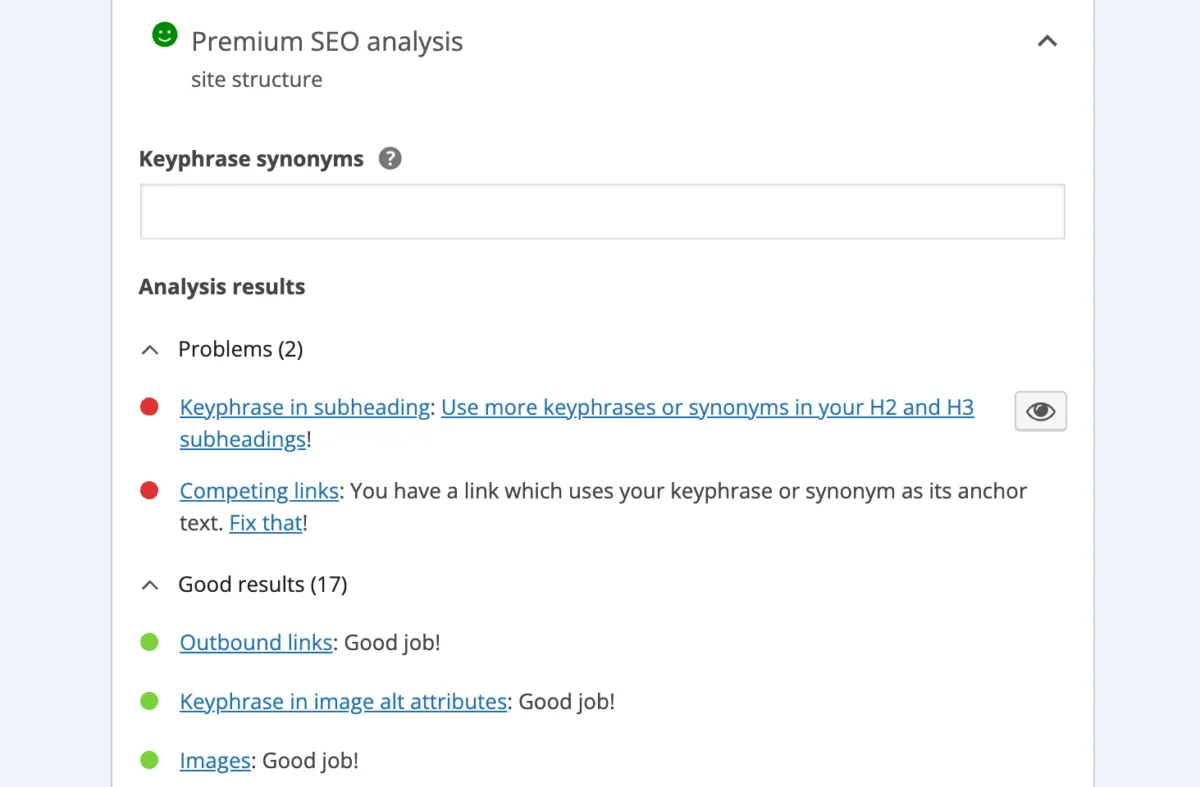
- Technical SEO as Crisis Management: PR teams must work closer than ever with SEO specialists to ensure that expired promotions are clearly marked with "schema markup" that tells search engines the information is no longer valid.
- The Rise of GEO (Generative Engine Optimization): Just as brands optimized for Google search results, they must now optimize for AI-generated summaries. This includes maintaining a "source of truth" page that is specifically formatted for LLM ingestion.
- Franchisee and Frontline Empowerment: In a world of instant misinformation, the distance between the corporate communications office and the retail counter must be zero. Rapid-response briefing kits must be ready before a crisis even hits.
Analysis: When the Media Becomes the Vector
The most significant takeaway from this event is the realization that the media has become an unintentional vector of harm. In the past, the media was the filter that prevented rumors from becoming "news." Today, the speed of the digital economy has incentivized some outlets to bypass the filter entirely, using AI to aggregate content without human oversight.
The verification tools to prevent this already exist—ranging from simple phone calls to sophisticated digital verification platforms. The failure is not one of technology, but of editorial choice. When journalists treat AI output as a finished product rather than a starting point for investigation, they abdicate their role in the democratic information exchange.
For communicators, the message is clear: the "recycled truth" is coming for every brand that has a history of successful public engagement. Protocols must be built now to monitor not just what is being said about a brand today, but what the algorithms are saying about what the brand did two years ago. This incident was not an isolated anomaly; it was a preview of the new normal in a world where the algorithm never forgets, but often fails to understand.
As Kristen Kauffman, Senior Vice President at SPM Communications, noted, the industry needs to focus on what happens when the media itself becomes the source of the crisis. The mandate for the modern communicator is to bridge the gap between human sentiment and algorithmic accuracy, ensuring that the "truth" remains anchored to the present day.