


Sales and marketing misalignment rarely presents itself as a clear strategy problem; instead, it manifests as "qualified" leads that sales representatives do not trust, marketing campaign messaging that remains foreign to the sales floor, and a pipeline that appears healthy on the surface until closed revenue begins to decelerate. According to the "2026 Anatomy of Aligned Go-To-Market Teams" report released by Unbounce, which surveyed over 500 small-to-medium business (SMB) go-to-market (GTM) professionals, the disconnect between expectation and reality is stark. While 87% of teams expect improved alignment to significantly lift organizational performance, only 56% currently describe themselves as "highly aligned." This 31-point gap represents a critical inefficiency in the modern B2B landscape, where the cost of customer acquisition continues to rise and the margin for operational error continues to shrink.
The Evolution of the Alignment Gap: A Brief Chronology
The tension between sales and marketing is not a new phenomenon, but the nature of the conflict has evolved alongside the digital transformation of the mid-2020s. In the early 2020s, the "growth at all costs" mentality often masked misalignment through sheer volume; if marketing generated enough leads, sales would eventually find enough deals to hit targets. However, as capital became more expensive and efficiency became the primary metric for venture-backed and bootstrapped SMBs alike, the "leaky bucket" of misaligned GTM teams became an existential threat.
By 2024, the rise of Revenue Operations (RevOps) began to centralize data, yet the Unbounce 2026 report suggests that structural changes have not yet fully resolved the human and process-oriented friction. The current era is defined by "The Information Lag," where leadership believes alignment has been achieved through technology, while frontline staff remain encumbered by fragmented workflows. The data from July 2026 indicates that we have moved past a lack of tools and into an era of "tool bloat," where the sheer volume of software has become a barrier to, rather than an enabler of, synchronization.

Dissecting the Perception Gap: Executives vs. The Frontline
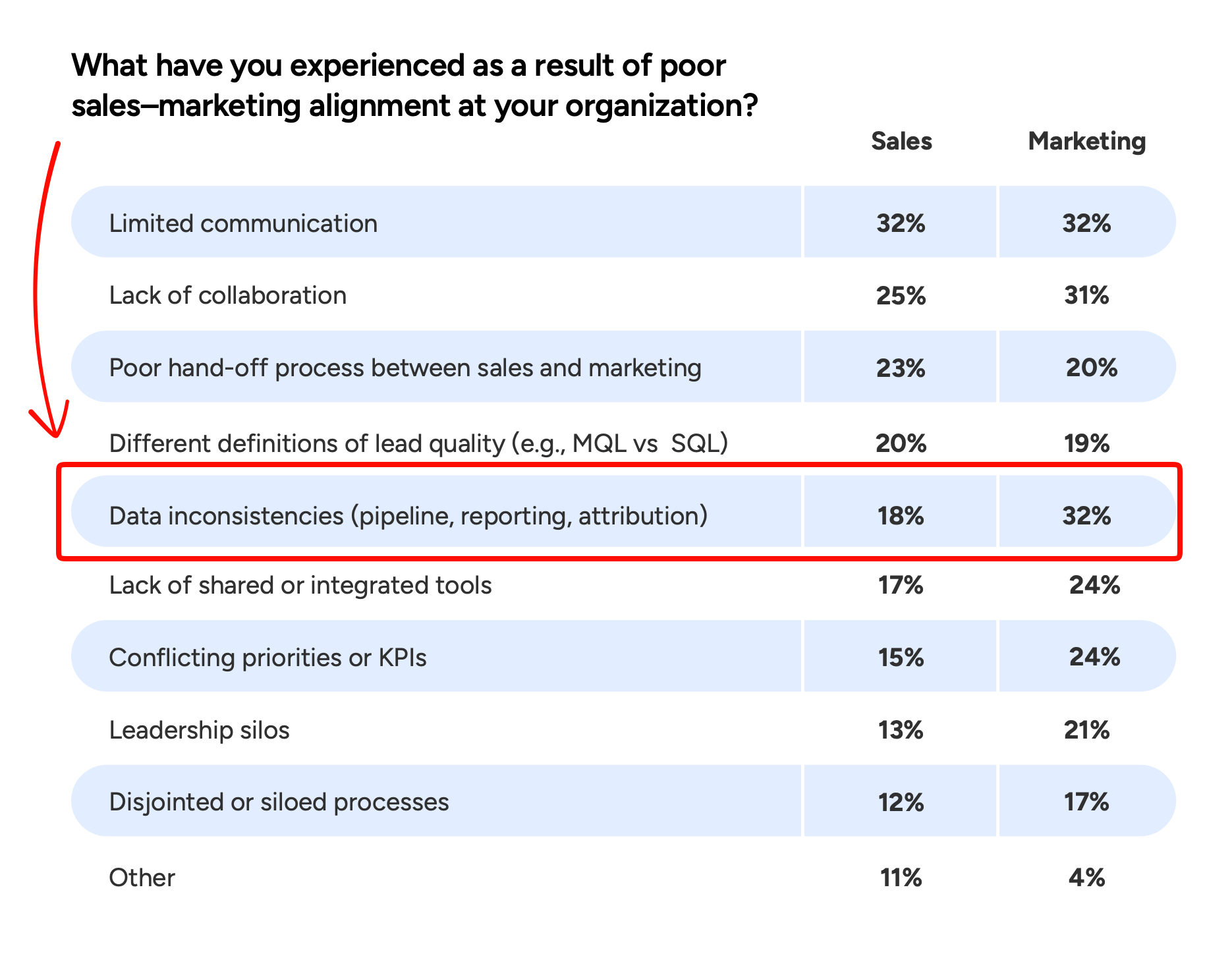
One of the most striking revelations in the 2026 report is the disparity in how different levels of an organization perceive their own alignment. Approximately 69% of executives report strong sales and marketing alignment, whereas only 47% of non-executive staff agree with that assessment. This 22% "perception gap" suggests a significant structural information lag. Executives often view alignment through the lens of strategy decks, high-level KPIs, and the existence of recurring sync meetings. In contrast, non-executives experience misalignment through daily operational hurdles, such as data inconsistencies and broken handoff rules.
The functional divide remains equally persistent. The report finds that 62% of sales professionals feel highly aligned, compared to only 53% of marketing professionals. This discrepancy often stems from the different pressures each department faces. Marketing teams frequently feel their efforts are undervalued when sales ignores generated leads, while sales teams feel marketing is "throwing leads over the wall" without regard for actual closing potential.
The Operational Cost of Discord
Misalignment is frequently dismissed as a "culture problem," but the 2026 data quantifies it as a direct operational expense. When GTM teams fail to synchronize, the consequences are immediate and compounding:
- Employee Frustration (29%): Misalignment leads to burnout, as staff feel their work is being wasted or ignored by their counterparts.
- Delayed Lead Follow-up (28%): A lack of clear handoff protocols results in "speed to lead" decay, which is a primary driver of lost deals in competitive SMB markets.
- Stalled Deal Cycles (20%): When sales and marketing do not share a unified message, prospects receive conflicting information, leading to hesitation and prolonged decision-making processes.
The report highlights that marketers feel these pains more acutely in specific areas. For instance, 32% of marketers flag delayed follow-up as a major issue, compared to only 22% of sales reps. Similarly, 29% of marketing professionals cite a lack of clarity regarding target customers as a primary barrier, while only 16% of sales professionals share that concern. This suggests that marketing is often operating in a vacuum, attempting to find an audience that sales has not yet validated.

The Data Paradox and the Tech Stack Dilemma
In 2026, the primary barrier to alignment is no longer a lack of data, but the inconsistency of that data. While 40% of GTM teams claim to have "excellent" cross-functional data sharing, 68% of those same teams admit to encountering regular data inconsistencies. This paradox highlights a "confidence-reality gap." Marketing teams rely on attribution data to prove ROI, while sales teams focus on pipeline signals within the CRM. When these two sources do not reconcile, the result is a "lose-lose" scenario where marketing celebrates lead volume while sales laments a lack of revenue.
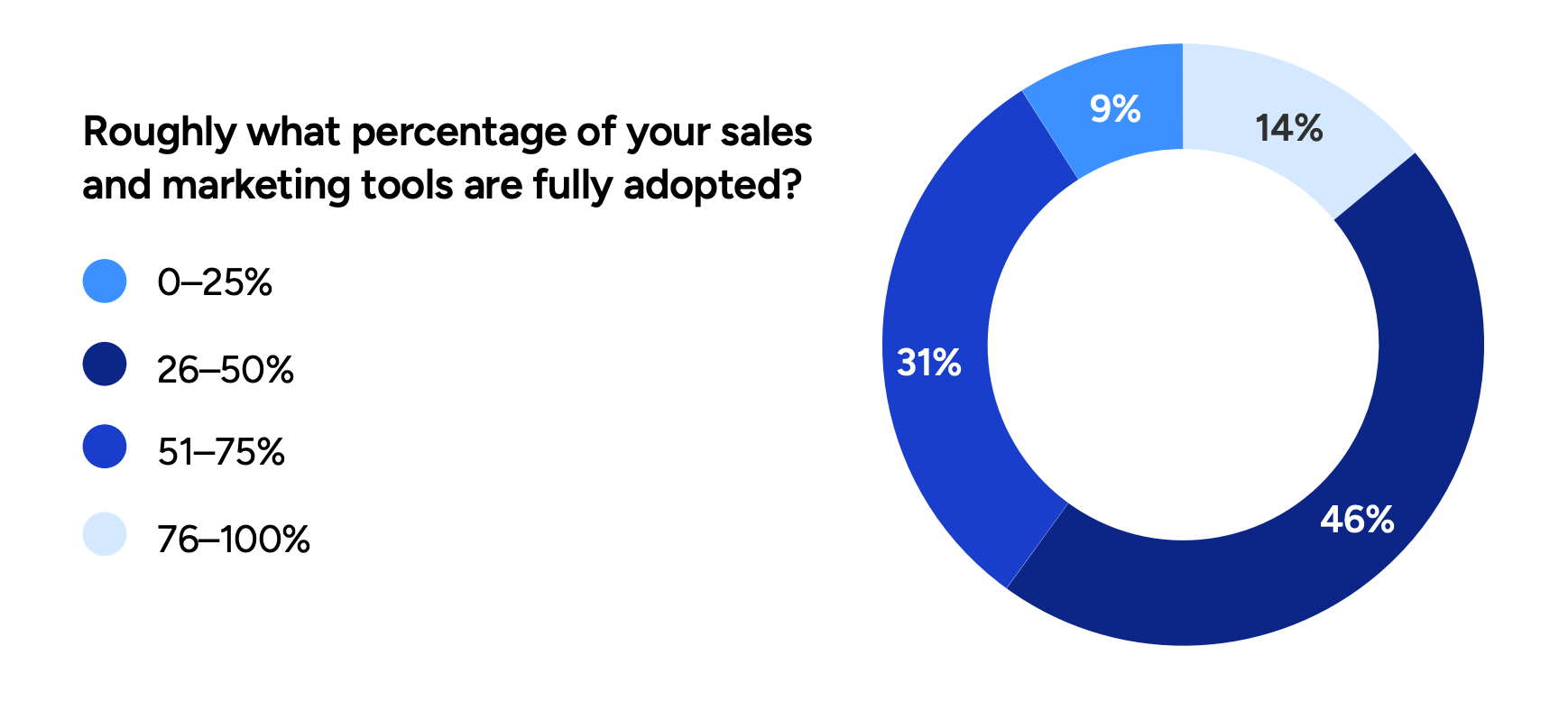
Furthermore, "tool bloat" has emerged as a self-inflicted wound for many SMBs. The report finds that 56% of GTM professionals view tool bloat as a significant issue, with an astounding 60% of respondents admitting they use less than half of their available software stack.
- Adoption Rates: 14% of teams use only 0-25% of their tech stack.
- The Lean Advantage: Aligned teams are twice as likely to describe their tech stacks as "lean and focused."
The data suggests a clear correlation: teams that consolidated their tech stacks were 2.5 times more likely to rate their lead quality as "excellent" (55% vs. 20%). This indicates that fewer, better-integrated tools are far more effective than a wide array of disconnected platforms.
Characteristics of High-Performing Aligned Teams
The 56% of organizations that successfully achieved high alignment in 2026 share several common operational traits. These "Top Performers" move beyond the "meeting cadence" layer and into the "operating model" layer.
1. Unified Data Sources: Aligned teams are 3.5 times more likely to have strong cross-functional data sharing (59% vs. 16%). They do not just "talk about" data; they work from a single source of truth where marketing and sales data are integrated at the architectural level.
2. Messaging Consistency: High-performing teams report significantly fewer messaging inconsistencies (17% vs. 28%). This is achieved by ensuring that marketing campaigns are built on the same buyer behavior data and customer insights that sales uses on discovery calls. In these organizations, marketing copy often undergoes a "sales review" to ensure it reflects the actual language and objections heard in the field.
3. Collaborative Lead Qualification: Instead of arguing over the definition of a Marketing Qualified Lead (MQL) vs. a Sales Qualified Lead (SQL), aligned teams create shared Service Level Agreements (SLAs). These agreements define exactly what information a lead must contain and how quickly it must be contacted.
Broader Impact and Future Implications
The findings of the 2026 Unbounce report suggest that the future of GTM success lies in "operationalizing" alignment rather than merely "communicating" it. As AI-driven insights and automated data integration become more prevalent—priorities for 44% of teams over the next 12 months—the human element of defining strategy remains the most significant bottleneck.
The shift toward profitability over raw volume means that SMBs can no longer afford the luxury of siloed departments. The "alignment tax"—the lost revenue and wasted budget resulting from internal friction—is becoming too high to ignore. Industry analysts suggest that the rise of the Chief Revenue Officer (CRO) role in the SMB sector is a direct response to these findings, as companies seek a single point of accountability for the entire customer journey.
In conclusion, the 2026 landscape of go-to-market teams is one of high ambition but fragmented execution. The path forward requires a ruthless consolidation of technology, a unification of data definitions, and a cultural shift where sales and marketing are incentivized by the same end-goal: closed-won revenue. Organizations that bridge the gap between executive perception and frontline reality will not only improve their lead quality but will also build a sustainable competitive advantage in an increasingly efficient global market. For the 87% of professionals expecting alignment to drive performance, the message is clear: stop buying more tools and start building better processes.







