The digital landscape is undergoing a profound transformation, driven by the rapid ascent of generative artificial intelligence (AI). As AI systems become increasingly adept at synthesizing information and providing direct answers to user queries, businesses are facing a new imperative: ensuring their presence is recognized and credited in these AI-generated responses. However, many businesses are mistakenly focusing their efforts solely on their websites, believing that optimizing website copy, expanding FAQ sections, and implementing schema markup are sufficient. This approach, while important, addresses only a fraction of the complex mechanisms that govern how generative AI surfaces information and attributes credit.
Generative AI operates by analyzing a comprehensive, holistic view of a business’s digital footprint. This includes not only its own website but also the myriad places its name has appeared across the web, what third-party sources have reported about it, how it has described itself across various platforms, and crucially, the consistency of these self-descriptions. A well-optimized website is merely one input into this multifaceted digital persona. For the vast majority of small and medium-sized businesses (SMBs), it remains the only input they actively consider.
Businesses that consistently appear in AI-generated answers typically share common characteristics: they maintain active profiles on platforms where their target customers are engaged, their names are frequently mentioned in third-party content, and their information remains consistent across all digital touchpoints that AI systems might examine. In essence, these businesses have provided AI with a sufficient volume of corroborated, coherent data, building the trust necessary for AI to confidently cite them.
This article delves into five critical AI search trust signals that many business owners overlook or underinvest in when it comes to Generative Engine Optimization (GEO). By understanding and addressing these often-ignored areas, businesses can significantly enhance their visibility and ensure they are discovered in the evolving landscape of AI-powered search.

The Five Pillars of AI Search Visibility: Signals Businesses Frequently Overlook
To effectively navigate the new era of AI search, businesses must look beyond traditional website optimization and embrace a more comprehensive strategy. The following five signals are crucial for building trust and credibility with AI systems, yet they are frequently neglected.
1. Earned Media: Beyond Traditional Public Relations
In the context of AI search, "earned media" transcends the traditional notion of securing features in prestigious publications like Forbes or engaging expensive PR firms. For a small business, earned media signifies any instance where its name, expertise, or opinions are featured on a platform or property that the business does not own. This is where AI systems find independent validation.
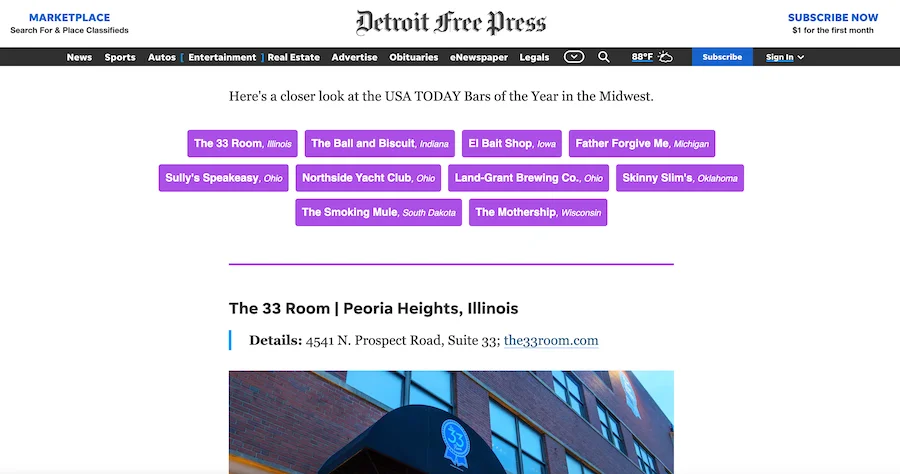
Examples of this crucial form of earned media include mentions in local news articles, features in industry-specific blogs, inclusion in "best of" lists compiled by reputable organizations, and guest appearances on podcasts or webinars. For instance, a local bakery that is featured in a city magazine’s "best bakeries of the year" list, complete with a link to its website, is generating a powerful GEO signal. This third-party endorsement carries significantly more weight with AI than the bakery’s own self-promotion on its website.
The principle of corroboration is central to how AI systems function. A business asserting its specialization in a particular service on its own website is a self-reported claim. However, when three independent sources mention that same business in the context of that specialization, it creates a far more robust signal of credibility. The more diverse and reputable the third-party content that links a business’s name with its core expertise, the more confident an AI becomes when surfacing that business in response to relevant queries.
Consider a hypothetical dental practice owner in a mid-sized city who is interviewed by a popular local parenting blog about strategies for managing children’s dental anxiety. If this article is published on a third-party domain, mentions the dentist by name and specialty, and includes a link back to the practice’s website, it serves as a potent GEO signal. This single piece of earned media can contribute more to the practice’s AI visibility than a dozen meticulously optimized service pages on its own website. The accessibility of such opportunities is often underestimated; it doesn’t necessitate a substantial PR budget or extensive media connections, but rather a willingness to engage and be present.
Actionable Steps for Earning Media:
- Proactively Seek Third-Party Mentions: Identify local publications, industry blogs, and community forums relevant to your business and explore opportunities for expert commentary or contributions.
- Engage with Online Communities: Participate in relevant online discussions and forums, offering valuable insights and establishing yourself as a knowledgeable resource.
- Respond to Media Opportunities: Be prepared to respond promptly and professionally when journalists or bloggers reach out for expert opinions or case studies.
- Leverage Local Partnerships: Collaborate with complementary businesses or local organizations on joint initiatives that could lead to shared publicity.
2. The Unconventional Power of LinkedIn
Many local businesses tend to either completely ignore LinkedIn or treat their company pages as mere bulletin boards for generic announcements. This passive approach fails to generate meaningful GEO signals. In reality, LinkedIn has emerged as a critical platform for AI search visibility.
An analysis of over 325,000 prompts across major AI platforms, including ChatGPT, Google’s AI Mode, and Perplexity, revealed that LinkedIn is the second most frequently cited domain, trailing only Reddit. On average, AI systems referenced LinkedIn content in more than 13% of their responses. For queries related to professional services and local businesses, LinkedIn often ranks as the primary source.
Two key aspects of LinkedIn contribute to its significance for GEO:
- Company Pages: A complete and actively managed LinkedIn company page serves as a structured repository of information about a business. This includes its mission, services, industry focus, and any news or updates. AI systems can readily parse this information, contributing to a comprehensive understanding of the business.
- Personal Profiles: The personal profiles of business owners and key employees are equally vital. When these individuals share their expertise, engage in industry discussions, and post content related to their work, they create valuable signals that AI can interpret. These personal endorsements and contributions often carry a strong sense of authority.
"Active" on LinkedIn does not imply a demanding daily posting schedule or a pursuit of viral content. It signifies a fully updated and current profile, a consistent pattern of posting a few times a month that offers specific insights into the work performed, and genuine perspectives rather than purely promotional copy.
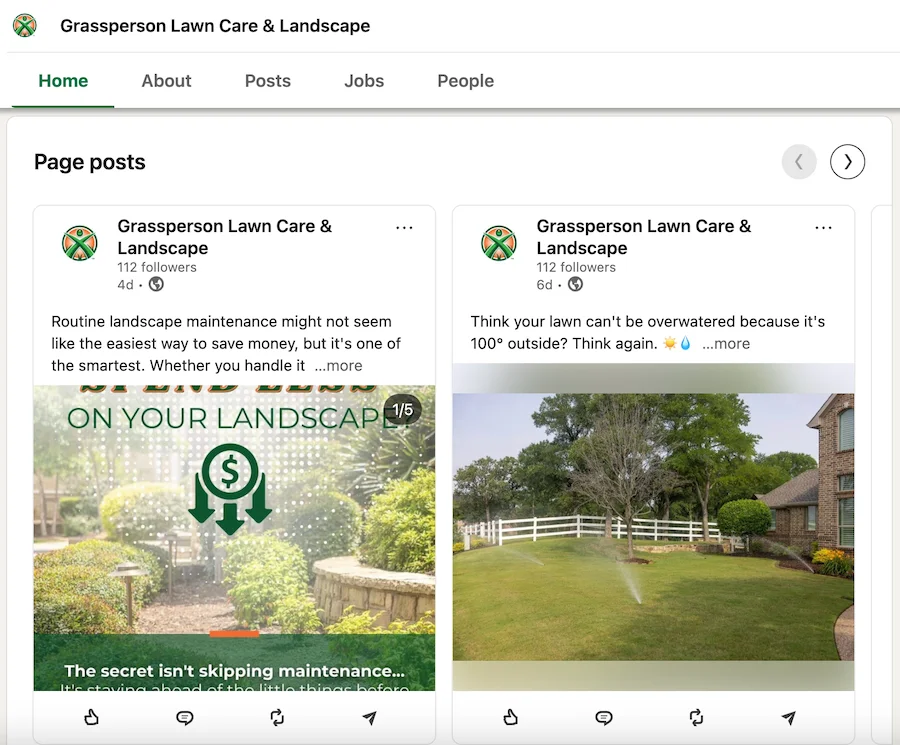
Research from Semrush, examining 89,000 LinkedIn URLs cited in AI search, found that approximately 75% of authors whose content is frequently cited post at least five times within a four-week period. Crucially, follower count appears to be less impactful than the consistency and demonstrable expertise conveyed through content. For example, a plumber with a modest following of 300 individuals who regularly shares practical, job-specific advice is more likely to be cited by AI than a competitor with 3,000 followers who posts infrequently.
Actionable Steps for LinkedIn Optimization:
- Complete Your Company Page: Ensure all sections are filled out accurately and comprehensively, including services, industry, and company description.
- Encourage Employee Participation: Foster an environment where employees are encouraged to create and share content related to their professional expertise on their personal profiles.
- Post Consistently and Strategically: Share updates, insights, and relevant industry news on your company page and personal profiles with a regular cadence. Focus on providing value and demonstrating expertise.
- Engage with Your Network: Participate in discussions, comment on relevant posts, and connect with industry peers and potential clients.
3. Google Business Profile: The Foundation of Local Discovery
While many small businesses are aware of Google Business Profile (GBP), they often treat it as a one-time setup task, neglecting its ongoing potential. Claiming and verifying the profile is merely the first step; failing to actively manage and update it significantly hinders its effectiveness for AI search.
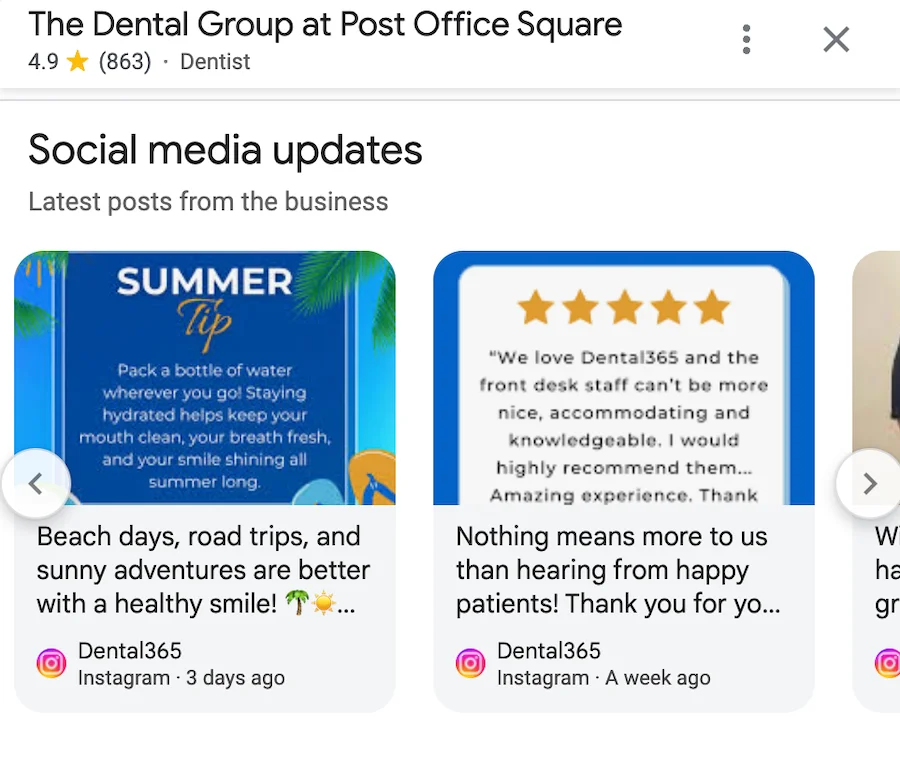
Google Posts, which are brief updates published directly to a business’s GBP, are a powerful, yet often underutilized, feature. Most SMBs post an update upon initial setup and then abandon it. Consistent posting, even as infrequently as once a week, signals to both users and AI systems that the business is active and relevant, contributing to its topical authority.
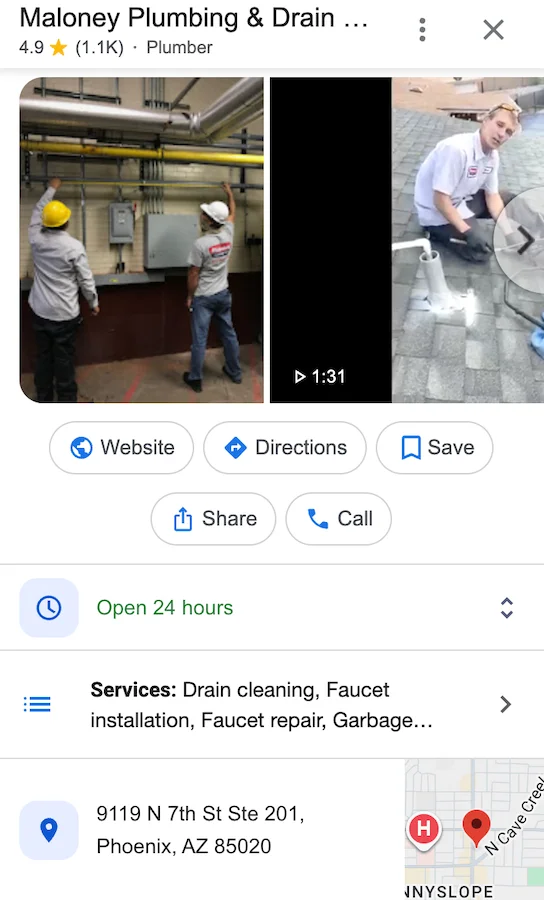
The recency and relevance of photos and videos on a GBP are more impactful than many owners realize. A profile featuring current, high-quality images of recent work or the business premises communicates vitality and operational activity. For instance, an HVAC company that uploads photos of a recent installation job provides tangible evidence of its current services, a stark contrast to a competitor relying on generic stock photos from years past.
Categories and service descriptions are often set during the initial setup and rarely revisited. A plumber listed solely under the broad category of "Plumber" misses opportunities to be surfaced for more specific, high-intent searches like "Water Heater Installation," "Drain Cleaning," or "Emergency Plumbing." Each unselected or unoptimized service category represents a missed citation opportunity, limiting the business’s ability to appear in targeted AI queries.
Reviews and the corresponding responses are another underused vocabulary signal. The language customers use in their reviews expands the lexicon that AI associates with a business. Thoughtful responses that reference specific services or job types add structured text to the GBP record. For example, a dental practice whose responses to reviews consistently mention specific treatments like "Invisalign" or "root canal" is actively building topic associations with every reply, enhancing its discoverability for related AI queries.
Actionable Steps for Optimizing Google Business Profile:
- Regularly Post Updates: Utilize Google Posts to share promotions, new services, company news, or helpful tips relevant to your industry. Aim for at least weekly updates.
- Maintain a Fresh Photo and Video Gallery: Upload current, high-quality images and videos showcasing your products, services, team, and business environment.
- Optimize Categories and Service Listings: Thoroughly review and update your business categories and service offerings to accurately reflect all the services you provide.
- Actively Solicit and Respond to Reviews: Encourage customers to leave reviews and respond promptly and professionally to all feedback, using specific service language where appropriate.
4. The Underrated Influence of YouTube
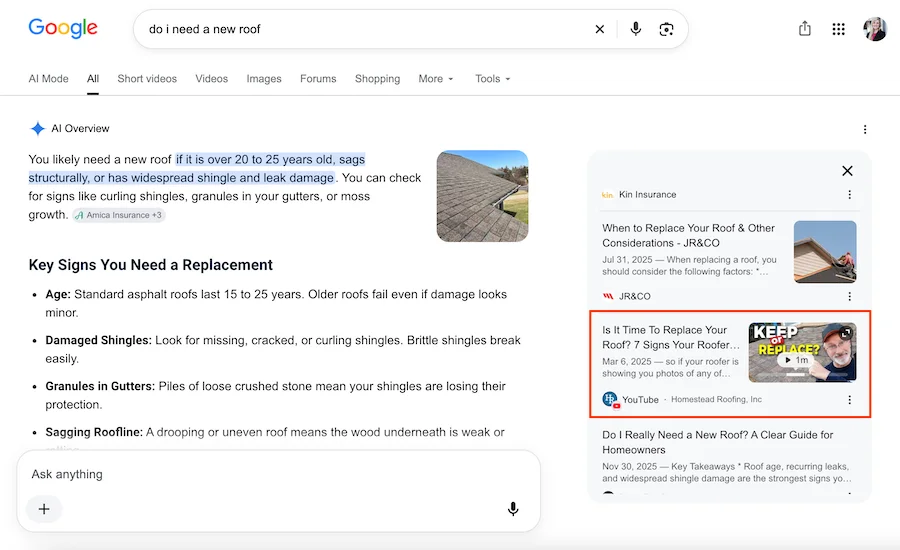
YouTube stands out as perhaps the most underestimated GEO signal on this list, often dismissed due to the perceived production demands. This perception, however, is costing businesses valuable visibility. YouTube is not just a video-sharing platform; it is the second-largest search engine globally and is owned by Google. Across AI search platforms, YouTube content is cited approximately 200 times more frequently than that of its closest video competitors.
The reason for this dominance extends beyond mere distribution. Both OpenAI and Google have extensively trained their AI models on YouTube transcripts. This means that the spoken content within videos, along with their titles, descriptions, and channel histories, becomes readily accessible and interpretable by AI.
Consider a scenario where a user asks an AI how to determine if they need a new roof. If a local roofing contractor in their area has a two-minute video specifically addressing this question, that video creates a powerful citation opportunity. The contractor’s website service page, while informative, may not be as directly accessible or as rich in contextual data for AI as the transcribed video content.
Businesses that consistently appear in AI-generated answers, particularly for local and trade-specific queries, often employ a minimalist production approach. This frequently involves simple phone footage, natural lighting, and an unscripted delivery. What truly matters is specificity. A lawn care company posting a video titled "Why Your Lawn Has Yellow Patches in July," filmed on an actual client’s property, offers a far more compelling trust signal than a polished, generic brand video that lacks concrete detail.
Content Ideas for YouTube GEO:
- "How-To" and Tutorial Videos: Demonstrate how to use your products or perform common tasks related to your services.
- Problem/Solution Videos: Address common customer pain points and explain how your business provides effective solutions.
- Behind-the-Scenes Content: Offer a glimpse into your operations, team, or process to build authenticity and trust.
- Customer Testimonials and Case Studies: Share success stories and positive experiences from satisfied clients.
5. The Crucial Role of Cross-Platform Consistency
The efficacy of all the aforementioned GEO signals is fundamentally undermined if the information across a business’s various online platforms is contradictory. Consistency acts as the connective tissue, transforming a disparate collection of online profiles into a cohesive and trustworthy digital presence that AI systems can confidently cite.
AI systems meticulously corroborate information before presenting a business as an answer. A Google Business Profile listing one city while a LinkedIn profile indicates another creates significant uncertainty. A website phone number that does not match the listing on GBP introduces a discrepancy. When faced with conflicting signals about a business, an AI will exhibit less confidence in citing it compared to a business whose information is uniform across all digital surfaces.
This consistency extends beyond the foundational NAP (Name, Address, Phone Number) data, although that remains critically important. It encompasses the way a business describes its offerings, the categories and specialties it claims across platforms like GBP, LinkedIn, Yelp, and industry-specific directories, its operating hours following any changes, and the consistent use of its logo and visual branding.
A quick audit of a business’s online presence will often reveal numerous inconsistencies that may have gone unnoticed. For example, outdated business hours on a directory listing, a slightly different business name on social media, or a phone number that has been changed on the website but not on other platforms. These seemingly minor issues can introduce doubt into every AI query concerning the business.
Actionable Steps for Ensuring Platform Consistency:
- Conduct a Comprehensive Audit: Regularly review all online listings, social media profiles, and website information to identify and rectify any discrepancies.
- Centralize Information Management: Utilize a system or process for managing and updating business information consistently across all platforms.
- Standardize NAP Data: Ensure that your business name, address, and phone number are identical across every online presence.
- Maintain Uniform Branding: Use the same logo, color palette, and brand messaging across all digital touchpoints.
Conclusion: Embracing GEO for Future Success
The rise of AI-generated answers is not a fleeting trend; it represents a fundamental shift in how users will seek and receive information. The signal footprint a business builds today across earned media, LinkedIn, Google Business Profile, YouTube, and through consistent platform presence will directly determine its confidence score in the eyes of AI systems tomorrow.
The strategies outlined here do not require vast marketing teams or substantial budgets. They demand consistency, specificity, and a deep understanding of the business’s offerings – qualities that a dedicated business owner is uniquely positioned to deliver. By focusing on these crucial GEO signals, businesses can move beyond the limitations of website-centric optimization and ensure they are not only found but also trusted and cited by the AI systems shaping the future of online discovery. The businesses that proactively invest in these areas today will undoubtedly be the ones that thrive in the AI-driven search landscape of tomorrow.