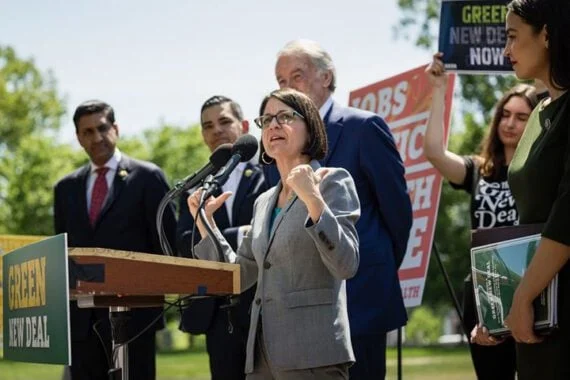
Proposed legislation introduced last week in the U.S. House of Representatives could fundamentally alter the relationship between major e-commerce marketplaces and the millions of small and medium-sized businesses that rely on them, offering new protections against alleged policy violations that can lead to frozen revenue and stranded inventory. The "Online Sellers’ Bill of Rights Act of 2026," introduced on July 21st by Representative Becca Balint (D-Vt.) and a bipartisan group of co-sponsors, seeks to establish federal standards for how platforms like Amazon, Walmart, and others handle account suspensions, policy enforcement, and the associated financial and logistical repercussions for third-party sellers.
The current e-commerce landscape, dominated by a handful of powerful online marketplaces, has democratized access to global markets for businesses of all sizes. A small artisan or a niche product manufacturer can, with relative ease, reach an audience of millions, a feat previously unimaginable without significant investment in physical retail or extensive marketing campaigns. This accessibility has fueled a surge in entrepreneurship and provided consumers with unparalleled choice. However, this reliance on third-party platforms also creates a significant vulnerability. When a marketplace alleges a policy violation, even a minor or mistaken one, the consequences can be swift and devastating. A seller’s revenue can be frozen, their inventory held indefinitely, and their business model, built upon consistent sales through these platforms, can be threatened with collapse.
The "Online Sellers’ Bill of Rights Act of 2026," designated as H.R. 9799, aims to inject a measure of fairness and predictability into this often opaque system. While the bill explicitly states it would not impede marketplaces from taking necessary actions against counterfeit goods, fraudulent sellers, or violations of product safety policies, it seeks to establish clear federal guidelines for the enforcement process. These guidelines would encompass inventory holds, payment freezes, communication of policy changes, the conduct of investigations, and the crucial process of seller appeals.
Background and Chronology of the Legislation
The introduction of H.R. 9799 comes after years of increasing concern from small business advocates and sellers themselves regarding the arbitrary nature of some marketplace enforcement actions. Anecdotal evidence and reports from seller communities have frequently highlighted instances where legitimate businesses have faced severe repercussions for what they perceive as minor infractions or misunderstandings of complex platform policies. The lack of transparency and a robust appeals process has often left sellers feeling powerless.
The legislative process for H.R. 9799 began with its introduction in the House of Representatives on July 21, 2026. Following its introduction, the bill was referred to the House Judiciary Committee, a key body responsible for overseeing legislation related to commerce, consumer protection, and the judicial system. The committee’s review will involve hearings, expert testimony, and potential amendments before the bill could be brought to a vote on the House floor. If passed by the House, it would then proceed to the Senate for consideration.
Key Provisions of the Online Sellers’ Bill of Rights Act of 2026
The core of H.R. 9799 lies in its specific provisions designed to create a more equitable framework for marketplace enforcement. These protections address the most critical pain points for sellers impacted by policy disputes:
-
Inventory Holds: Under current practices, marketplaces can hold a seller’s inventory for extended periods when allegations of counterfeiting or policy violations arise. H.R. 9799 proposes a strict 30-day limit on such inventory holds. After this period, the marketplace would be required to release the merchandise unless it can present clear evidence that the goods are indeed counterfeit or otherwise unlawful. This provision aims to prevent businesses from having their stock tied up for months, leading to lost sales and increased storage costs. For instance, a seller might have thousands of dollars worth of seasonal merchandise in a marketplace’s fulfillment center; a prolonged hold could mean missing the entire sales window.
-
Payment Holds: Similarly, the bill seeks to impose a 30-day limit on the freezing of seller funds. Marketplaces would need to demonstrate, with concrete evidence, that the frozen funds are derived from unlawful transactions. Mere suspicion would no longer be sufficient grounds for prolonged financial paralysis. This protection is vital, as many small businesses operate on thin margins and rely on timely access to their earnings to cover operational expenses, replenish inventory, and pay employees. The impact of a protracted payment freeze can be catastrophic, leading to a cascade of financial difficulties.
-
Gated Products and Policy Changes: The legislation also addresses the challenge of products that become restricted after being accepted into a marketplace’s fulfillment network. If a platform introduces new restrictions on a product or category, sellers would be granted at least 30 days’ notice. During this period, they would have the option to sell their remaining inventory or have the merchandise returned at no cost. This provision acknowledges the operational complexities of managing inventory and allows sellers time to adapt to evolving platform rules without incurring undue financial loss.
-
Notification Requirements: H.R. 9799 mandates that e-commerce marketplaces provide at least 30 days’ written notice before implementing any material changes to product eligibility criteria, listing restrictions, compliance requirements, commissions, or fees. This advance warning would empower sellers to proactively adjust their business strategies, packaging, documentation, pricing, or inventory levels to comply with new regulations, thereby avoiding unexpected enforcement actions. The ability to plan and adapt is crucial for maintaining business continuity.
-
Seller Appeals and Transparency: A cornerstone of the proposed legislation is the requirement for marketplaces to provide detailed, individualized information when investigating a seller, deactivating an account, or suspending a listing. This includes identifying the specific policy violated, disclosing the relevant facts and documentation supporting the alleged violation, clearly outlining the proposed penalty, and explaining the process for appealing the decision. Furthermore, marketplaces would need to provide an anticipated timeline for resolving such matters. Generic, templated responses would be deemed insufficient. This emphasis on transparency and individualized communication aims to ensure sellers understand the basis of any enforcement action and have a clear path to seeking redress.
Commercial Due Process: Balancing Enforcement and Fairness
Proponents of the bill argue that H.R. 9799 is designed to inject a sense of "commercial due process" into marketplace operations. The legislation is not intended to strip marketplaces of their necessary authority to combat fraud, remove illicit goods, or safeguard consumers from unsafe products. Instead, it seeks to formalize and standardize the process by which these actions are taken. Amazon, Walmart, and other major platforms would still be able to suspend businesses that violate their terms of service or legal requirements. However, they would be compelled to provide clear justifications and evidence for their decisions, and offer a meaningful opportunity for the affected seller to respond and appeal. This shift from opaque, often unilateral decision-making to a more structured and transparent process is expected to benefit legitimate businesses while still allowing platforms to maintain the integrity of their marketplaces.
Legal Framework and Enforcement Mechanisms
Should H.R. 9799 be enacted into law, it would establish a robust enforcement framework. The Federal Trade Commission (FTC) would be granted 180 days post-enactment to promulgate specific rules and regulations to implement the legislation. Violations of these FTC rules would be treated as unfair methods of competition under the Federal Trade Commission Act, a significant enforcement mechanism. Additionally, state attorneys general would be empowered to bring civil actions on behalf of their residents who have been harmed by marketplace violations.
Perhaps one of the most impactful provisions for sellers is the creation of a private right of action in federal court. This means that individual sellers, even if their marketplace agreements contain mandatory arbitration clauses, would have the ability to pursue legal recourse directly. Successful plaintiffs could be awarded treble damages (three times the amount of their actual losses), along with court costs and reasonable attorney’s fees. This provision is designed to provide a strong incentive for marketplaces to comply with the law and offers a powerful tool for sellers seeking justice. The prospect of significant financial penalties and the ability for sellers to bypass arbitration clauses are likely to be areas of intense scrutiny and potential challenge from marketplace operators.
Uncertainty in Coverage and Potential Legal Challenges
Despite its aims, the legislation faces potential challenges, particularly concerning its scope of coverage. The bill defines a "critical trading partner" broadly as any entity capable of restricting a business’s access to customers or essential tools and services. This broad definition could encompass a wide array of e-commerce marketplaces. However, the definition of a third-party seller is tied to operating on a "dominant platform," a term for which the legislation does not provide a clear, measurable threshold such as revenue, transaction volume, user base, or market share.
While Amazon and Walmart appear to be the primary targets of this legislation, the lack of specific criteria for "dominance" creates ambiguity regarding its applicability to other platforms like eBay, Etsy, Poshmark, or smaller, niche marketplaces. The FTC’s rulemaking process could help clarify some of these ambiguities. However, the absence of a defined metric for dominance could also lead to legal challenges, as businesses may contest whether they fall under the purview of the law. This uncertainty could create a patchwork of interpretations and enforcement, potentially limiting the bill’s intended widespread impact.
The introduction of the "Online Sellers’ Bill of Rights Act of 2026" marks a significant development in the ongoing dialogue surrounding the power dynamics between major e-commerce platforms and the businesses that fuel their growth. By proposing clear standards for transparency, due process, and accountability, the bill aims to create a more equitable and sustainable environment for the millions of entrepreneurs who have come to rely on online marketplaces as essential conduits for their products and livelihoods. The coming months will reveal whether this legislative effort can translate into tangible protections for sellers navigating the complexities of the digital marketplace.