Google has recently updated its documentation concerning website crawling infrastructure, introducing a pivotal new section titled "Optimize your crawl budget." This comprehensive guide offers website owners and SEO professionals strategic pointers on how to ensure their pages are more accessible to Google’s search bots. The significance of this guidance cannot be overstated, as a page must first be successfully crawled and indexed by Google to have any chance of appearing in the search engine’s vast index and, consequently, in search results.
The introduction of a "crawl budget" concept acknowledges the sheer scale of the internet and the finite resources Google employs to explore and catalog it. For website owners, a poorly organized or inefficient site can significantly hinder this process, leading to a longer crawling time and, ultimately, a reduced number of indexed pages. This directly impacts a website’s visibility and its potential to attract organic traffic. The updated documentation provides a framework for understanding and managing this crucial aspect of website performance in the eyes of Google.
Understanding the Fundamentals of Google’s Crawl Budget
At its core, a crawl budget represents the number of URLs Googlebot can and is willing to crawl on a website within a given period. This budget is not static; it fluctuates based on several factors, including the perceived importance of a website, its size, the frequency of its content updates, and its overall health and performance.
Initial Crawl Budget: A Conservative Approach
Google emphasizes that every new website begins with a "conservative" crawl budget. This means that upon a site’s launch, Googlebot will approach it with a degree of caution, aiming to crawl a limited number of pages. The primary objective during this initial phase is to assess the site’s stability and server capacity. Google’s documentation states that this conservative approach ensures that "Google can cover all the important content without overloading your servers." This initial phase is critical for establishing a positive relationship with Googlebot, demonstrating that the website is a reliable and well-managed entity. A sudden surge of poorly implemented pages or an unstable server environment during this early stage can lead to a negative perception and a permanently constrained crawl budget.
Dynamic Growth: Crawl Budget Expansion Over Time
The good news for website owners is that the crawl budget is not fixed. Over time, it can and typically does increase, contingent on the website’s growth in size and the regularity of its content updates. Googlebot is designed to revisit websites periodically to check for new or modified content. When a website consistently provides fresh, valuable content, especially if these updates are clearly communicated to Googlebot, for instance, through updated XML sitemaps, it encourages more frequent revisits. This increased activity and the perceived value of the content signal to Google that the website is a dynamic and relevant resource, leading to a higher crawl budget.
The strategy of gradual content updates is highlighted as particularly effective. Instead of launching a massive amount of new content – such as 100 new product pages in a single day – a more measured approach, like introducing three products per day over a month, can yield better results. This gradual rollout allows Googlebot to process and index the new content without overwhelming the site’s resources or the crawling mechanism. It also provides a continuous stream of fresh signals to Google, reinforcing the site’s activity and relevance.
Factors Influencing Crawl Frequency and Budget
Several key factors directly influence how frequently Googlebot crawls a website and, by extension, its crawl budget. Understanding and optimizing these factors is paramount for any website aiming for optimal search engine visibility.
Site Performance and Load Time: A Direct Correlation
The performance of a website, particularly its load time, has a long-established correlation with how efficiently it is crawled by search engines. Faster websites are inherently better crawled. This is because Googlebot, like any user, benefits from quick access to content. A slow-loading website consumes more of Googlebot’s resources and time per page, effectively reducing the number of pages it can crawl within its allocated budget.
Website owners are strongly advised to monitor their site’s performance rigorously. Tools such as Google PageSpeed Insights, GTmetrix, and WebPageTest can provide invaluable data on load times, server response times, and other performance metrics. The goal should be to identify bottlenecks and implement strategies to improve speed, such as optimizing images, leveraging browser caching, minifying CSS and JavaScript files, and utilizing a Content Delivery Network (CDN). As Google continues to prioritize user experience, site speed is not just a technical optimization but a fundamental element of SEO that directly impacts crawlability.
Page Popularity and Link Equity: The Power of Inbound Links
Googlebot prioritizes crawling pages that are perceived as more important or popular. One of the strongest indicators of a page’s popularity is the number and quality of inbound links it receives. Pages with a significant number of both external links from other reputable websites and internal links from within the same website are crawled more frequently.
External links act as votes of confidence, signaling to Google that a page contains valuable or authoritative content. Building a strong backlink profile through ethical and effective link-building strategies is therefore crucial. Equally important are internal links. A well-structured internal linking strategy ensures that Googlebot can easily navigate through the website and discover all its important pages. By linking relevant pages together, website owners guide the crawler, distribute link equity, and signal the interconnectedness and hierarchy of content.
Other Strategies to Enhance Crawl Frequency and Speed
Beyond site performance and link equity, several other actionable strategies can improve crawl frequency and speed:
- XML Sitemaps: Regularly updated and accurately formatted XML sitemaps are essential. They act as a roadmap for search engines, listing all the important URLs on a website. Including new or updated pages in the sitemap ensures that Googlebot is aware of their existence and can prioritize crawling them.
- Robots.txt File: While primarily used to disallow crawling of certain pages, the robots.txt file can also be used to guide Googlebot by specifying sitemap locations. However, care must be taken not to inadvertently block important pages.
- URL Structure: A clean, logical, and user-friendly URL structure can aid in crawlability. Short, descriptive URLs that reflect the content of the page are generally preferred.
- Content Freshness and Updates: Regularly publishing new content and updating existing content signals to Google that the website is active and relevant. This encourages more frequent revisits by Googlebot.
- Broken Links and Redirect Chains: Identifying and fixing broken links (404 errors) and minimizing long redirect chains are crucial. These issues can waste crawl budget and frustrate Googlebot, leading to a less efficient crawling process.
- Duplicate Content: Minimizing duplicate content across a website is important. When multiple pages have identical or very similar content, Google may struggle to determine which version to index and may waste crawl budget on redundant pages.
The Nuance of "URL Caching" and HTTP Status Codes
A notable addition to Google’s guidelines is the recommendation regarding "URL caching" and the support of HTTP status codes, specifically the 304 (Not Modified) status code.
Understanding the 304 Status Code
The 304 Not Modified status code is an HTTP response header that a web server sends to a client (in this case, Googlebot) when the requested resource has not been modified since the last time it was requested. Essentially, it tells Googlebot, "You already have the latest version of this page cached on your servers; you don’t need to download it again."
Google’s documentation suggests supporting this code to "save your server bandwidth and resources." From a technical standpoint, this is sound advice for efficient server management. When Googlebot receives a 304 response, it can reuse its cached version of the page, thus reducing the load on the website’s server. This can, in theory, free up resources for crawling other pages.
A Word of Caution: Potential Impact on Visibility
However, as indicated by the original article’s author’s experience, there is a strategic consideration when implementing 304 status codes. The author advises following this recommendation "only for unimportant pages, such as expired products and policy pages." The reasoning behind this caution is that consistently returning a 304 code for a page might inadvertently signal to Google that the page is stale or unchanging.
While not explicitly stated as a penalty, this could potentially affect a page’s visibility in Search Engine Results Pages (SERPs) or even its index status over time. If Google perceives a page as static and infrequently updated, it might deprioritize its crawling and, consequently, its freshness in search results. For pages that are critical to a website’s business objectives or content strategy, and where regular updates are desirable to maintain relevance, relying on 304 codes might not be the optimal approach. It is a trade-off between server efficiency and signaling content dynamism to search engines. Website owners must carefully evaluate the nature of their content and their SEO goals before broadly implementing 304 responses.
Leveraging Google Search Console for Crawl Budget Insights
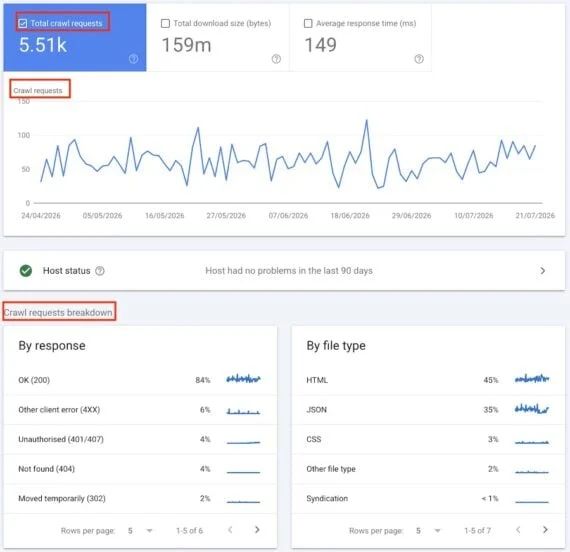
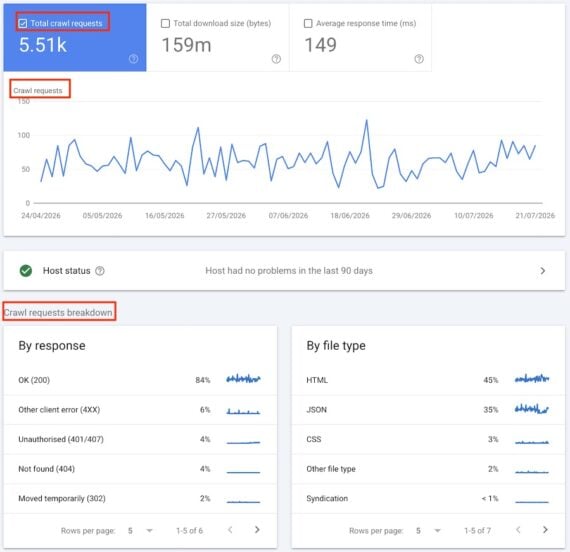
Google Search Console, a free service offered by Google that helps website owners monitor their site’s performance in Google Search, provides tools that can offer valuable insights into crawl activity. The "Crawl stats" report within Google Search Console is particularly relevant.
The Crawl Stats Report: A Diagnostic Tool
This report reveals crucial data about how Googlebot is crawling a website. It typically displays metrics such as:
- Total crawl requests: The total number of requests Googlebot made to the site.
- Average response time: The average time it took for the server to respond to Googlebot’s requests.
- Average page size: The average size of the pages crawled.
- Crawl errors: Any issues encountered during the crawling process, such as 404 errors, server errors (5xx), or redirect errors.
- Crawl frequency: How often Googlebot is visiting specific URLs or sections of the site.
By regularly reviewing the Crawl stats report, website owners can identify potential problems that might be hindering their crawl budget. For instance, unusually high response times can indicate server issues or poor site performance. A large number of crawl errors suggests technical problems that need immediate attention. An unexpectedly low crawl frequency for important pages might point to poor internal linking or a lack of fresh content signals. This data-driven approach allows for targeted optimization efforts, ensuring that resources are directed towards improving the most impactful areas.
Broader Implications for Website Management and SEO
The emphasis on crawl budget optimization by Google underscores a broader trend in search engine optimization: the increasing importance of technical SEO and website health. In an era where user experience is paramount, Google is rewarding websites that are not only content-rich but also technically sound, fast, and easy for search engines to navigate.
For businesses, this means that SEO is no longer solely about keyword research and content creation. It requires a holistic approach that encompasses:
- Technical Audits: Regularly conducting technical SEO audits to identify and fix issues related to crawlability, indexability, site speed, and mobile-friendliness.
- Content Strategy Integration: Ensuring that content updates are planned and executed in a way that signals freshness and value to search engines.
- Link Building and Internal Linking: Developing robust strategies for both external and internal link building to enhance page authority and site navigation.
- Performance Monitoring: Continuously monitoring website performance metrics and implementing optimizations to improve load times and server response.
- Understanding Search Engine Behavior: Staying abreast of Google’s guidelines and algorithmic updates, such as those related to crawl budget, to adapt SEO strategies accordingly.
The updated "Optimize your crawl budget" documentation is not just a set of technical recommendations; it is a strategic guide that empowers website owners to take more control over their site’s visibility in Google Search. By understanding and actively managing their crawl budget, businesses can ensure that their valuable content is discoverable, indexed, and ultimately, seen by their target audience, driving organic growth and achieving their online objectives. The evolving nature of search engines means that a proactive and technically informed approach to website management is no longer optional but essential for success.