


The digital landscape has undergone a fundamental transformation in how businesses interpret user intent, moving beyond traditional traffic metrics toward a nuanced understanding of visitor behavior. For over a decade, two primary contenders have dominated the conversion rate optimization (CRO) market: Crazy Egg and Hotjar. As of 2025, the competitive dynamic between these platforms has shifted significantly, driven by Crazy Egg’s expansion into native experimentation and Hotjar’s high-profile acquisition and integration into the Contentsquare ecosystem. Choosing between these platforms now requires a strategic evaluation of whether a business needs an all-in-one experimentation engine or a modular, enterprise-grade behavioral suite.
The Historical Context and Market Evolution
To understand the current state of these tools, one must look at their trajectories. Crazy Egg, co-founded by Hiten Shah and Neil Patel in 2005, was a pioneer in heatmap technology, introducing the concept of visualizing clicks long before it became a standard industry practice. Its primary mission has remained consistent: providing accessible, high-impact data for marketers to improve website performance without requiring deep technical expertise.
Hotjar entered the market in 2014 with a "freemium" model that disrupted the industry, quickly becoming the most popular behavioral tool for small-to-medium businesses (SMBs). However, the narrative for Hotjar changed drastically in recent years. Following its acquisition by the digital experience analytics giant Contentsquare, Hotjar has transitioned from a scrappy standalone tool into a specialized entry point for the broader Contentsquare platform. This merger, finalized in July 2025, has led to a significant restructuring of Hotjar’s product roadmap, moving toward a modular "Experience Analytics" and "Voice of Customer" framework.
Feature Comparison: Visualizing the User Journey
At the core of both platforms are heatmaps and session recordings, yet the technical execution differs in ways that impact data utility for different team structures.
Heatmap Depth and Segmentation
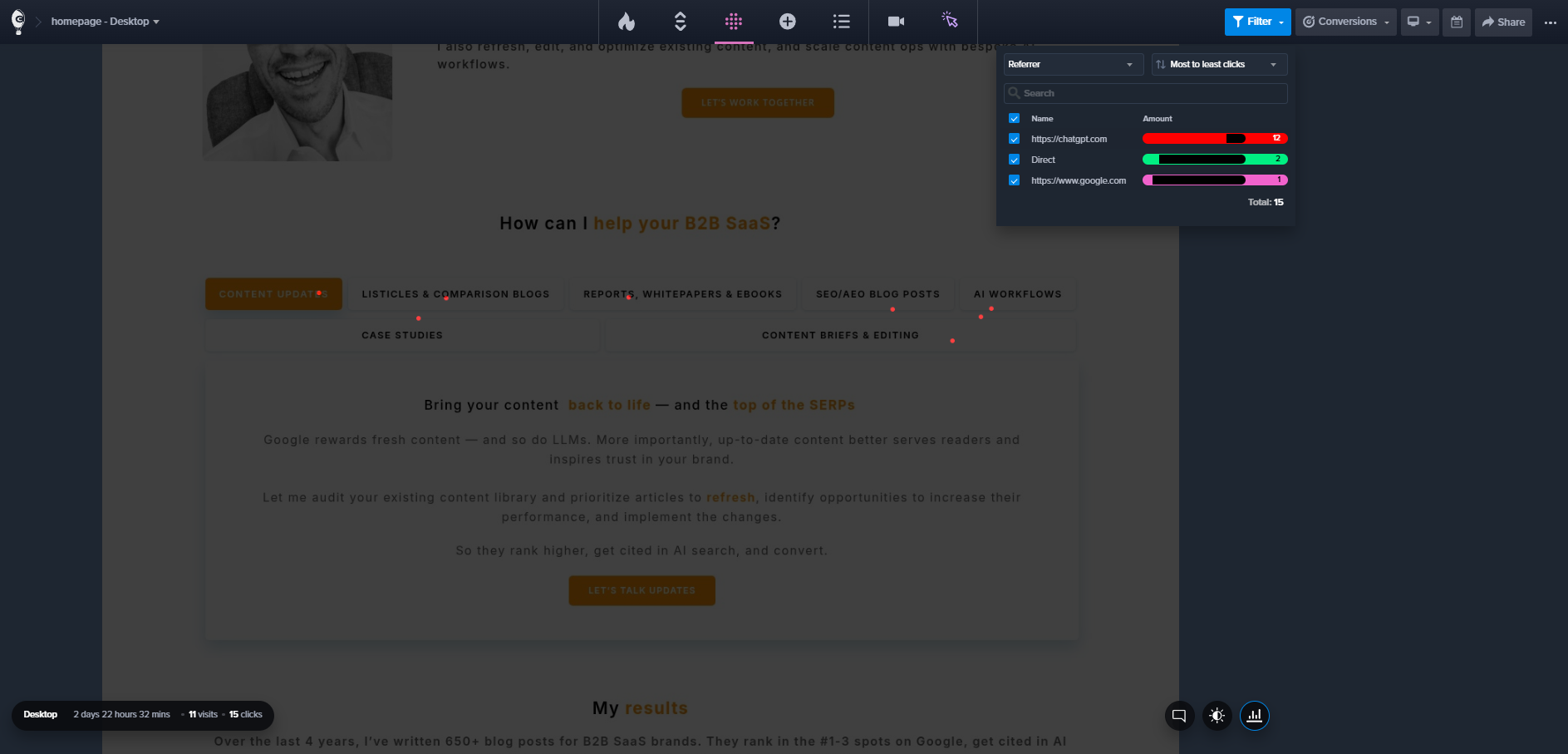
Crazy Egg’s competitive edge in visualization lies in its proprietary "Confetti Map." While both tools offer standard click and scroll maps, the Confetti Map allows users to segment individual clicks based on over 20 variables, including referral source, search terms, and visitor country, directly on the visual overlay. This allows a marketer to see, for example, that users arriving from a specific LinkedIn campaign are clicking on a different call-to-action (CTA) than those arriving via organic search.
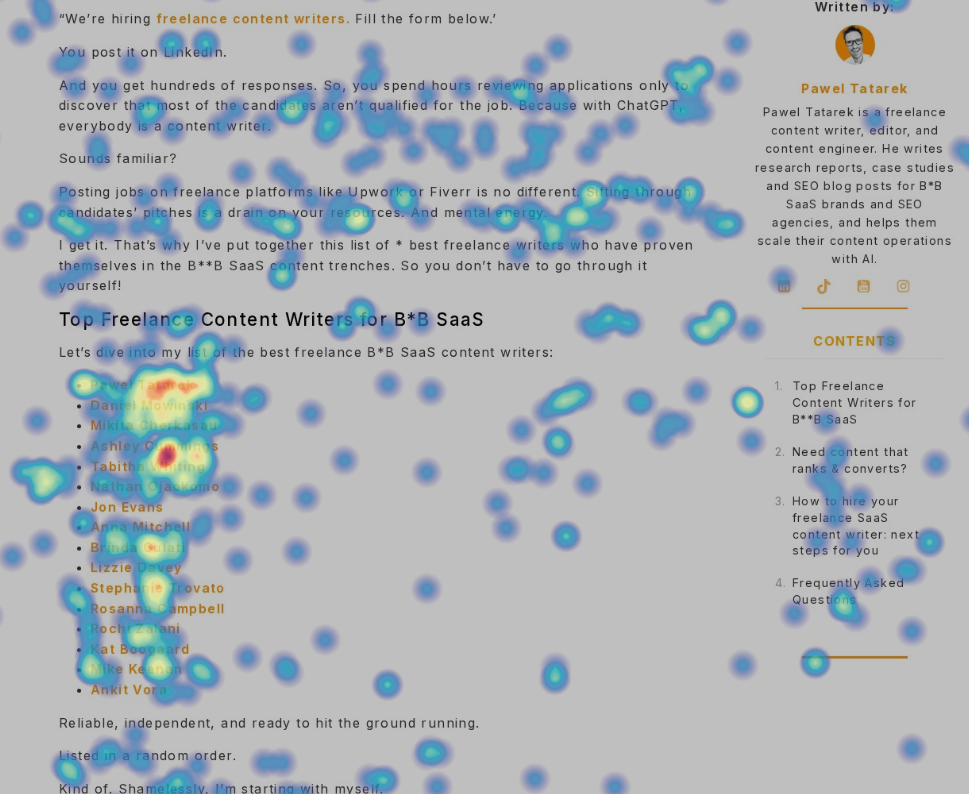
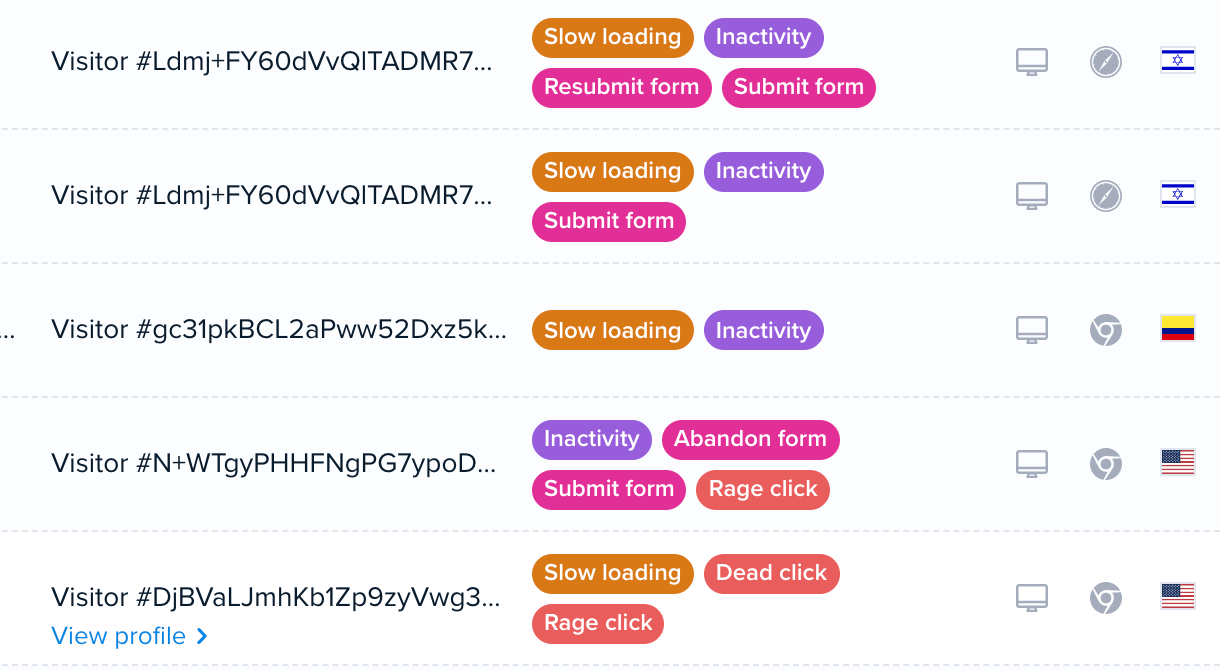
Hotjar, conversely, has leaned into "Frustration Signals." Its heatmaps are integrated with automated detection of "rage clicks" and "u-turns." While Crazy Egg allows for similar analysis through its segmentation filters, Hotjar’s interface is designed to surface these friction points automatically, making it highly effective for UX designers looking for immediate technical hurdles.
Session Recordings and Data Retention
In the realm of session recordings, the two tools represent different philosophies regarding data volume versus data longevity. Hotjar offers a high volume of session captures—up to 200,000 per month on its free tier—but limits the depth of analysis unless users upgrade to higher-paid modules. Crazy Egg takes a "quality over quantity" approach, providing more robust automatic tagging for ecommerce events and form interactions. Crucially, Crazy Egg offers retention periods ranging from six months to two years, whereas Hotjar’s standard tiers often require additional costs for long-term data storage.
The Experimentation Gap: Native vs. Integrated A/B Testing
Perhaps the most significant differentiator in 2025 is the approach to A/B testing. For a conversion specialist, the ability to act on data is as important as the data itself.
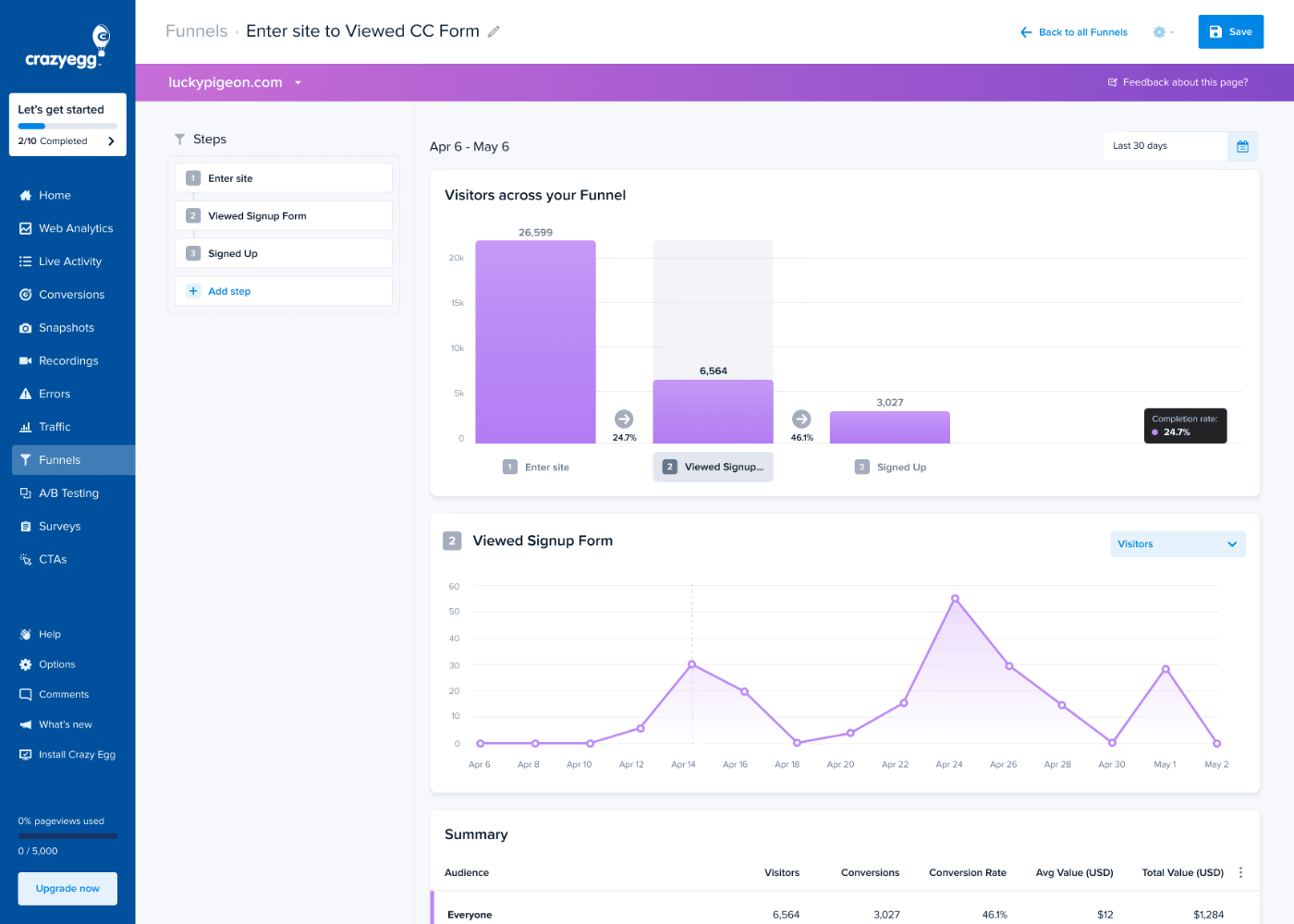
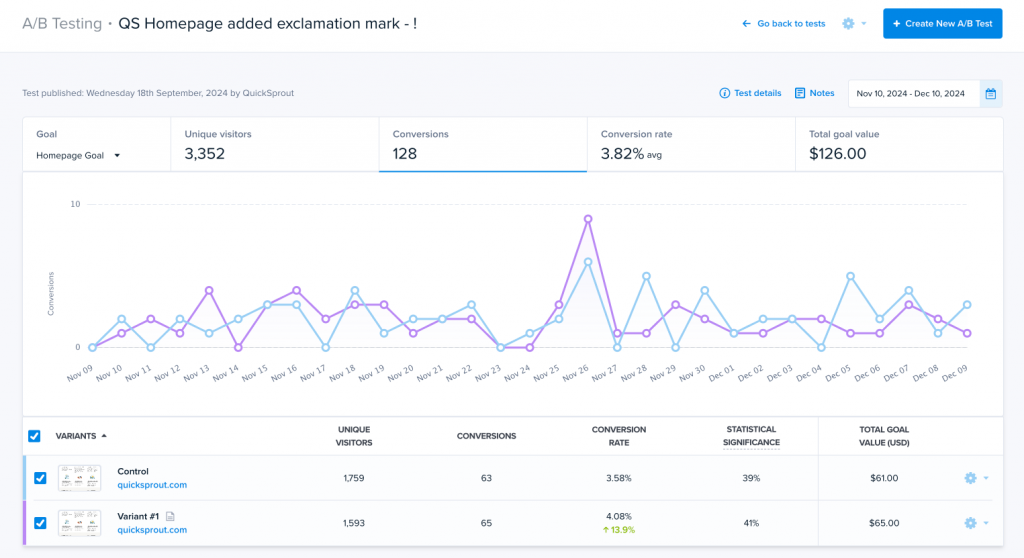
Crazy Egg includes a native A/B testing engine within its core subscription. This allows users to identify a problem via a heatmap, launch a visual editor to change a headline or button color, and start a split test immediately. Because the testing tool is native, the platform automatically generates separate heatmaps and recordings for each variant of the test. This provides a "closed-loop" system where the "why" (behavioral data) and the "what" (test results) are housed in the same dashboard.

Hotjar has moved away from native testing. Following the Contentsquare merger, Hotjar relies on third-party integrations with platforms like AB Tasty, Optimizely, or Adobe Target. While Hotjar’s "Sense AI" can analyze the results of these external tests, the user is required to maintain two separate subscriptions and manage data synchronization between platforms. This modularity appeals to enterprise teams that already have a dedicated testing stack but may be a barrier for smaller teams looking for efficiency.
Voice of the Customer and Qualitative Feedback
Both platforms have expanded into qualitative data collection, recognizing that heatmaps show what people do, but surveys show why they do it.
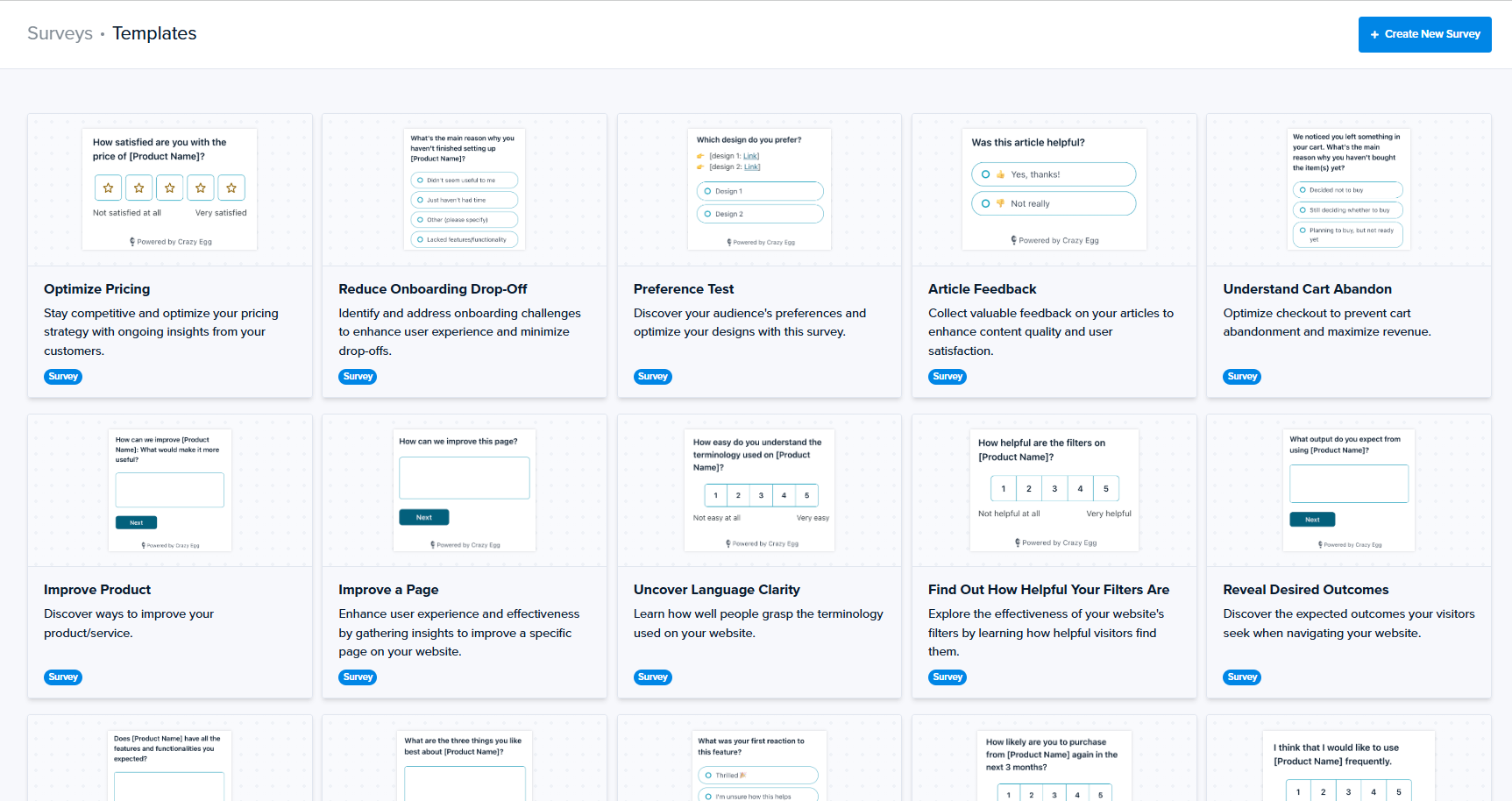
Crazy Egg’s survey tool is designed for rapid deployment, offering over 50 templates and unlimited responses on all plans. Its primary innovation here is the use of AI sentiment analysis, which categorizes open-ended text responses into positive, neutral, or negative categories automatically. This allows marketers to scan thousands of feedback entries to find common pain points without manual reading.
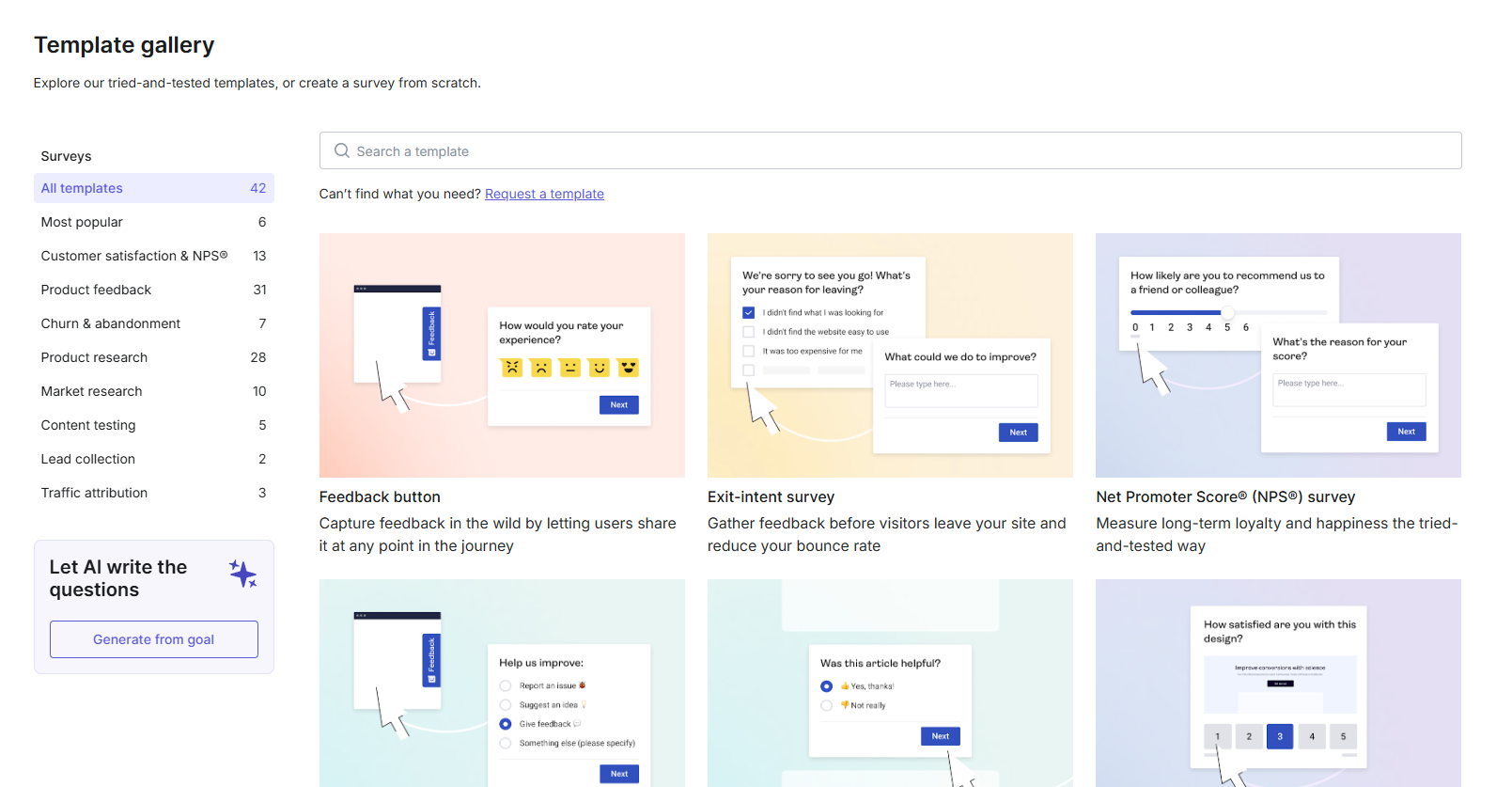
Hotjar’s "Voice of Customer" (VoC) module is more extensive but carries a separate price tag. It includes advanced survey logic, feedback widgets, and a dedicated "User Interviews" recruitment tool. This positions Hotjar as a more comprehensive solution for dedicated user research (UR) teams who need to recruit participants for live moderated sessions, a feature Crazy Egg does not currently offer.
The Role of Artificial Intelligence in 2025
AI has become the new frontline for behavioral analytics. Crazy Egg has introduced "Tasks," an early-access feature that acts as an automated research assistant. "Tasks" can identify a page with declining conversion rates, set up a heatmap, analyze the resulting data, and suggest a specific A/B test variant to fix the issue. This move toward "autonomous optimization" is aimed at reducing the manual workload for lean marketing teams.
Hotjar’s "Sense AI" focuses on synthesis. It provides AI-generated summaries of session recordings, allowing a user to read a paragraph describing a user’s struggle rather than watching a five-minute video. It also assists in survey creation and provides a chat-based interface where users can ask questions like, "What are the top three reasons people are leaving the checkout page?"
Economic Implications and Pricing Structures
The pricing models of 2025 reveal the target demographics for each tool. Crazy Egg maintains a transparent, all-in-one pricing structure ranging from $29 to $599 per month. This flat-fee approach includes unlimited domains and team members, making it highly attractive for agencies and multi-site owners who need predictable overhead.
Hotjar’s pricing has become increasingly modular and usage-based. Since the Contentsquare integration, users must often purchase separate subscriptions for "Experience Analytics" (heatmaps/recordings) and "Voice of Customer" (surveys/interviews). Furthermore, its "Product Analytics" module (built on the Heap acquisition) is now a sales-led enterprise product with no self-serve entry point as of late 2024. This suggests a strategic shift toward capturing larger corporate accounts with complex, multi-departmental needs.
Data Privacy and Security Compliance
As global data privacy regulations like GDPR, CCPA, and DMA (Digital Markets Act) tighten, both companies have fortified their security postures. Crazy Egg and Hotjar both offer SOC-2 Type 2 compliance. They employ automated field masking, ensuring that sensitive information—such as credit card numbers or passwords—is never captured by session recordings.
Hotjar offers a slight edge for European-based enterprises by providing more granular control over data residency, a requirement for certain high-compliance industries like banking and healthcare. Crazy Egg, while fully GDPR compliant, remains a more centralized US-based operation, though it provides Data Processing Agreements (DPAs) for all international clients.
Chronology of Recent Developments
- September 2021: Contentsquare acquires Hotjar, signaling a consolidation in the behavioral analytics market.
- January 2023: Crazy Egg launches its native A/B testing visual editor, moving beyond pure analytics.
- August 2024: Hotjar announces the sunsetting of several standalone legacy features in favor of Contentsquare’s integrated modules.
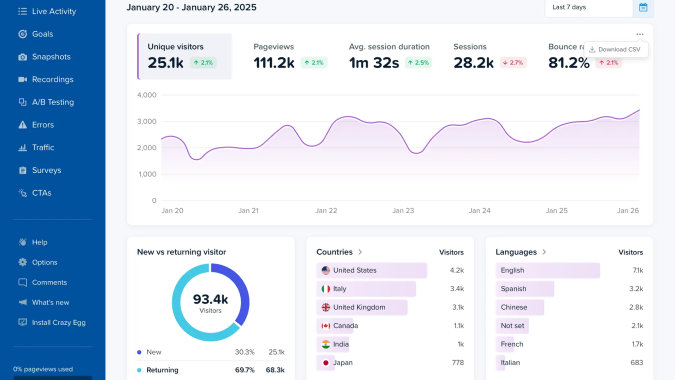
- April 2025: Crazy Egg releases "Astro Map" and "Live Activity," providing real-time visualization of site traffic.
- July 2025: Full integration of Hotjar into the Contentsquare "Sense AI" ecosystem is completed.
Broader Impact and Final Implications
The divergence of Crazy Egg and Hotjar represents a broader trend in the software-as-a-service (SaaS) industry: the split between the "All-in-One" suite and the "Best-of-Breed" integration.
For businesses that prioritize speed, ease of use, and a single point of billing, Crazy Egg is the pragmatic choice. Its ability to handle analytics, feedback, and experimentation under one roof makes it an ideal "growth engine" for mid-market companies.

For organizations that are part of a larger enterprise ecosystem, Hotjar offers a pathway into the high-end world of Contentsquare. While it may be more expensive and require more tools to achieve the same results as Crazy Egg, its depth in user research and its integration with enterprise product analytics tools like Heap make it a powerful component of a larger data strategy.
In the final analysis, the "better" tool is defined by the user’s workflow. If the goal is to find a problem and fix it in the same afternoon, Crazy Egg’s native testing wins. If the goal is to conduct deep, cross-departmental user research that feeds into a global corporate strategy, Hotjar’s place in the Contentsquare family provides the necessary scale.







