


The divide between sales and marketing departments within small and medium-sized businesses (SMBs) has reached a critical juncture in 2026, as new data reveals a significant disconnect between strategic expectations and operational reality. According to a comprehensive study conducted by Unbounce, which surveyed more than 500 go-to-market (GTM) professionals, a staggering 87% of teams believe that better alignment between sales and marketing is essential for driving performance. However, despite this near-universal consensus, only 56% of organizations currently describe themselves as "highly aligned."
This misalignment is not merely a conceptual hurdle but a tangible operational drain that manifests as "qualified" leads that sales representatives do not trust, marketing messages that sales teams are unaware of, and a revenue pipeline that appears robust until the actual closed revenue begins to stagnate. As SMBs navigate a volatile economic landscape where efficiency is the primary driver of growth, the cost of this internal friction is becoming impossible to ignore.
The Perception Gap: A View from the Executive Suite
One of the most striking revelations in the 2026 report is the "perception gap" between leadership and the frontline staff. The data indicates that 69% of executives report strong sales and marketing alignment within their organizations. In contrast, only 47% of non-executive staff—those responsible for the day-to-day execution of campaigns and sales calls—agree with that assessment.
This discrepancy suggests a structural information lag. Executives often view alignment through the lens of high-level strategy decks and the existence of recurring synchronization meetings. Meanwhile, frontline employees experience the granular friction points that leadership may overlook: inconsistent data, unclear handoff rules, and fragmented communication.

Functional differences also play a role in how alignment is perceived. Approximately 62% of sales professionals feel their teams are highly aligned, compared to 53% of marketing professionals. This suggests that marketing teams may feel the weight of misalignment more heavily, often because they are tasked with generating the leads that sales ultimately decides whether or not to pursue.
The Hidden Costs of Operational Friction
Misalignment is frequently dismissed as a "culture problem," but the 2026 findings categorize it as a severe operational expense. When sales and marketing teams operate in silos, the consequences are immediate and compounding. According to the survey, the most prevalent outcomes of poor alignment include:
- Employee Frustration (29%): Constant friction over lead quality and communication leads to burnout and turnover within GTM teams.
- Delayed Lead Follow-up (28%): When handoff processes are not clearly defined, leads often sit in a queue, losing value with every hour of inaction.
- Stalled Deal Cycles (20%): A lack of messaging consistency between what a lead hears from marketing and what they hear from a sales rep creates confusion, slowing the prospect’s decision-making process.
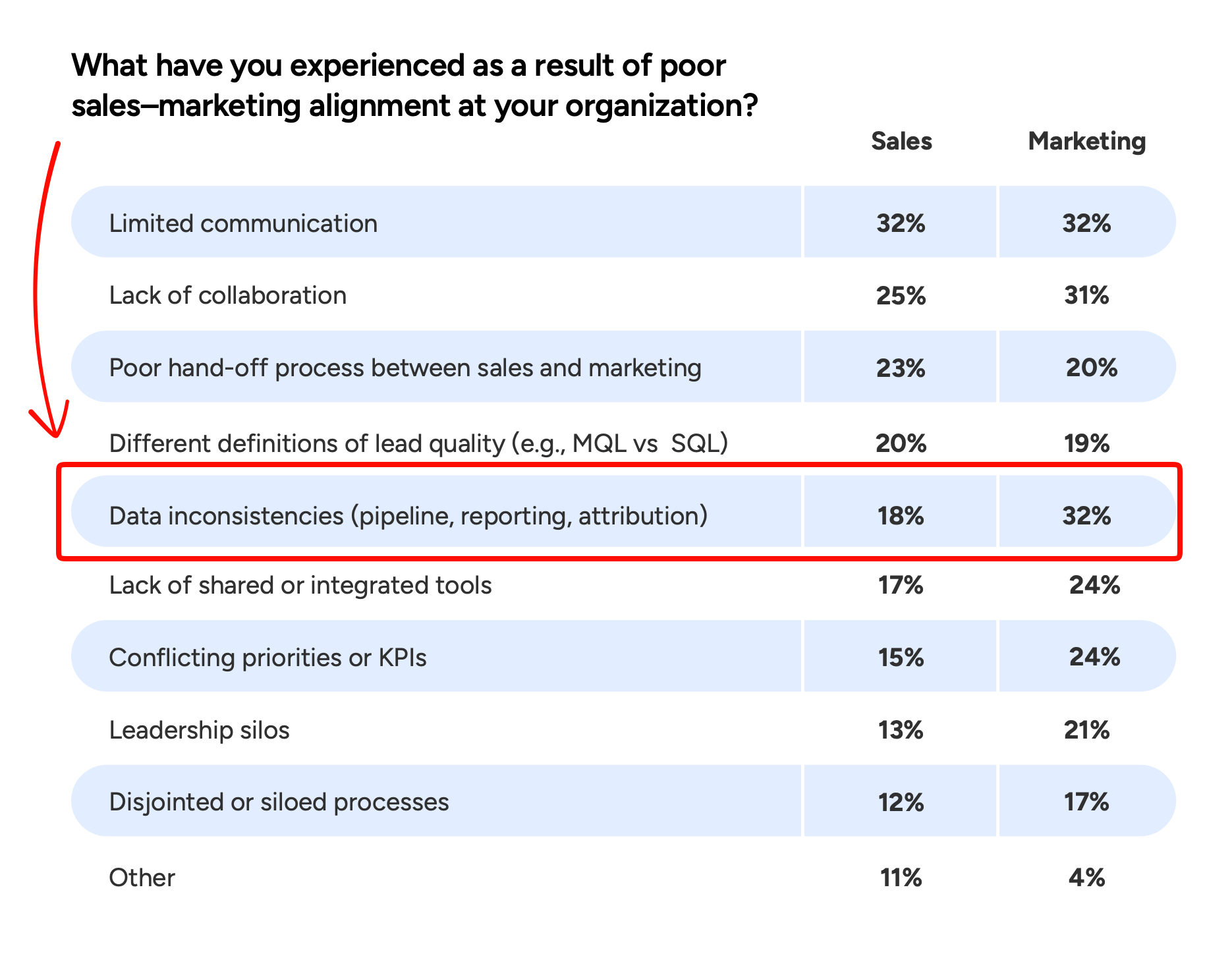
The financial implications are particularly stark regarding lead quality. Only 29% of GTM teams currently rate their lead quality as "excellent." This suggests that a vast majority of marketing spend is being directed toward leads that the sales team deems unusable or low-priority. This "MQL vs. SQL" (Marketing Qualified Lead vs. Sales Qualified Lead) debate remains a primary blocker, with 20% of sales and 19% of marketing professionals citing different definitions of lead quality as a major barrier to success.
The Paradox of Tool Bloat and Technology Underutilization
In an attempt to bridge the alignment gap, many SMBs have turned to technology, yet the report suggests that "buying your way out" of the problem may be exacerbating it. The 2026 data shows that 56% of GTM professionals identify "tool bloat" as a significant issue within their organizations.
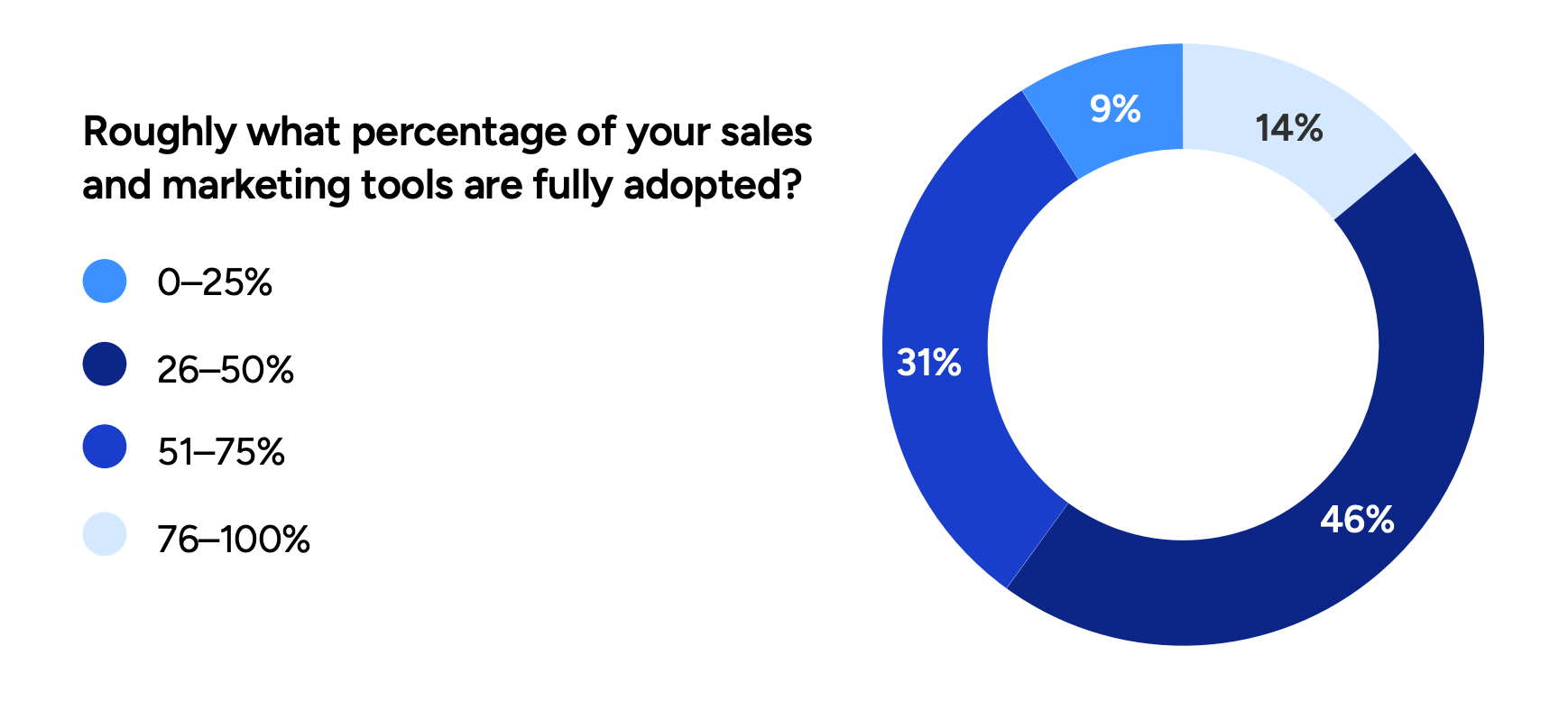
Perhaps more concerning is the rate of underutilization: 60% of teams report using less than half of the tools available in their tech stack. Specifically, 14% of teams use only 0% to 25% of their software, while 46% use between 26% and 50%. This fragmented tech stack creates data silos where marketing automation platforms do not communicate effectively with CRM systems.

The survey found that 68% of professionals encounter regular data inconsistencies. Marketing teams are particularly sensitive to this, with 32% citing data inconsistency as a barrier compared to 18% of sales. When the two departments cannot agree on a single source of truth for customer data, every report becomes a point of contention rather than a tool for growth.
Characteristics of High-Performing Aligned Teams
The report also analyzed the 56% of organizations that successfully achieved high alignment to identify what they do differently. These top performers prioritize integrated operating models over simple communication frequency. While 54% of all teams try to solve misalignment by increasing the number of meetings, high-performing teams focus on structural changes.
Data Integration as a Foundation
Aligned teams are 3.5 times more likely to have strong cross-functional data sharing (59% versus 16% for misaligned teams). In these organizations, data is not just discussed; it is unified. Marketing data feeds directly into sales workflows, and pipeline definitions are agreed upon before a single campaign is launched.
Messaging Consistency
Top-performing teams report significantly fewer messaging inconsistencies (17% vs. 28%). They achieve this by building buyer personas as a joint artifact. Instead of marketing creating a persona in isolation, sales provides direct input based on actual customer objections and conversations. This ensures the buyer’s journey feels seamless from the first advertisement to the final contract signature.
Leaner Tech Stacks
Counterintuitively, highly aligned teams tend to have leaner tech stacks. Thirty percent of aligned teams describe their technology as "lean and focused," compared to only 15% of other teams. Furthermore, teams that significantly consolidated their tech stack were twice as likely to rate their lead quality as "excellent" (55% vs. 20%). By reducing the number of tools, these teams increase the adoption and accuracy of the ones that remain.
A Chronology of the 2026 GTM Shift
The shift toward deeper alignment has been accelerating throughout the mid-2020s. In early 2024, the focus for most SMBs was on lead volume. However, as the cost of customer acquisition (CAC) rose, the focus shifted toward lead conversion and retention.
By 2025, the rise of AI-driven insights began to highlight the gaps in siloed data. Teams realized that AI could only provide valuable predictions if the underlying data from both sales and marketing was clean and unified. This led to the 2026 landscape revealed in the Unbounce report, where data integration and shared KPIs have become the primary investment priorities for 44% of GTM teams.
Strategic Recommendations for SMB Leaders
To move toward a more aligned state, the report suggests three high-impact actions that SMB leaders can implement immediately:
1. Establish Formal Service Level Agreements (SLAs)
Alignment requires a formal agreement on what marketing will deliver and how sales will respond. A functional handoff must include a minimum data requirement for every lead, a maximum timeframe for sales follow-up, and a mandatory feedback loop for sales to report on lead quality.
2. Unify Goal Architectures
As long as marketing is incentivized solely on lead volume and sales on closed deals, friction is inevitable. Aligned organizations are moving toward shared KPIs, such as "pipeline contribution" or "revenue per lead," which force both teams to care about the entire funnel.
3. Prioritize Tool Adoption Over Acquisition
Before adding new software, organizations should audit their current stack to ensure maximum adoption. The 2026 data clearly indicates that better-adopted, leaner stacks outperform bloated ones. Consolidation should be viewed as a strategic advantage rather than a budget cut.
The Future of GTM Alignment
Looking ahead to the remainder of 2026 and into 2027, the role of AI in alignment will likely expand. Currently, 24% of GTM teams are prioritizing landing page optimization and data integration tools as their next major investments. The goal is to move toward "predictive alignment," where systems can identify potential handoff friction before it impacts the revenue pipeline.
The 2026 Unbounce report serves as a wake-up call for SMBs. In an era where 87% of professionals recognize the power of alignment, the 44% of companies still struggling with silos are at a significant competitive disadvantage. The path forward is not found in more meetings, but in shared data, unified incentives, and a relentless focus on the customer’s journey. As the report concludes, true alignment is built in the operating model—the meetings only serve to broadcast the success or failure of that underlying system.







