Selling print-on-demand (POD) stickers on Shopify might seem like a straightforward path to passive income, but a closer examination reveals a common pitfall that can lead to unexpected losses. The allure of low startup costs and no inventory risk, coupled with an impulse-friendly price point, often overshadows the complex economics of fulfilling single sticker orders. This guide aims to demystify the process, offering a step-by-step approach to establishing a profitable sticker business, from initial costing to marketing strategy, ensuring entrepreneurs avoid the costly mistakes that plague many new ventures in this burgeoning market.
The global print-on-demand market is experiencing significant growth, with projections from Grand View Research and Mordor Intelligence estimating its value to reach between $13 billion and $15 billion by 2026. Stickers, in particular, remain a top entry-level product due to their minimal startup capital requirements, lack of inventory risk, and attractive impulse purchase price. However, the success of such a venture hinges on meticulously fixing the offer and pricing strategy before launching. This comprehensive guide is designed for individuals with no prior experience in e-commerce, Shopify, or design, promising a complete setup from a live store and synced product to a chosen supplier and profitable pricing.
Step 1: The Crucial Sticker Math – Understanding Your Costs Before Designing
The foundational principle for a profitable sticker business lies in understanding the true cost of fulfilling an order, which often exceeds the sticker’s base production cost. For instance, a $4.99 kiss-cut sticker, when sold individually with free shipping through a popular POD provider like Printful, can result in a net loss of $1.69 per order. This scenario arises from a combination of factors: a base cost of $1.95, a substantial first-item US shipping fee of $4.29, and Shopify’s payment processing fee of $0.44. This calculation highlights a critical oversight in many online guides: the significant impact of shipping costs, especially for individual items.
The key to mitigating these losses lies in understanding the difference between per-item and per-order costs. While the first sticker in an order incurs a shipping fee of $4.29, subsequent stickers in the same order often ship for a significantly lower rate, such as $0.99. This disparity transforms shipping from a per-sticker expense into a per-order cost, fundamentally influencing product strategy. Beginners often overlook three crucial costs: platform subscription fees, payment processing fees, and the often-underestimated shipping costs, particularly for international orders or expedited shipping options.
Typical pricing formulas circulating online, suggesting a 2x to 3x markup on base cost, fail to account for these essential expenses. For example, a $1.20 base cost with a 40% margin and a $0.30 processing fee results in a $2.10 retail price. This calculation completely omits shipping, platform subscriptions, and processing fees – the very elements that determine actual profit margins. At current rates, a single sticker with free shipping would need to retail for nearly $8 to break even, a price point rarely achievable for an impulse buy. The solution is not a higher price, but a fundamental shift in the unit of sale.
Step 2: Redefining the Offer – Sticker Sheets, Packs, and Strategic Free Shipping
The profitability of a sticker business can be dramatically altered by how the offer is structured. The same five stickers, priced at $14.99, can either result in an $8.45 loss or a $4.92 profit, solely based on the fulfillment method. This underscores the importance of deciding the order’s composition before committing to designs.
Consider these three scenarios for selling five stickers:
- Five Individual $4.99 Stickers (5 Separate Orders): With each order incurring the first-item shipping cost, the total fulfillment cost rises to $33.40, while the retail revenue is $24.95, leading to a substantial net loss of $8.45.
- One 5-Sticker Pack (Fulfilled as Five Loose Stickers): This scenario still incurs the higher per-sticker shipping cost five times, resulting in a fulfillment cost of $18.73 for a $14.99 retail price, still a loss of $3.74.
- One Printed Sticker Sheet (5.83 x 8.25 inches): This format, treated as a single item, incurs the first-item shipping cost only once. The fulfillment cost drops to $10.07 for a $14.99 retail price, yielding a healthy profit of $4.92, approximately a 33% gross margin.
The sticker sheet emerges as the clear winner because it is processed as a single unit, circumventing multiple high shipping charges. Three key strategies can optimize this:
- Sticker Sheets: Consolidating multiple designs onto a single sheet is the most effective way to leverage the lower per-order shipping costs. This format appeals to buyers looking for variety or a curated aesthetic.
- Sticker Packs: Offering curated sets of stickers in a single pack also streamlines fulfillment, though it’s crucial to ensure these are packaged and sold as one SKU to avoid individual shipping charges.
- Free Shipping Threshold: Implementing a free shipping threshold, typically around $15 or more, encourages customers to purchase multiple items, thereby consolidating shipping costs and increasing average order value.
It is important to note that Printful’s bulk discounts only become significant at 25 units. For higher volumes, dedicated sticker printers like Sticker Mule can offer substantially lower unit costs. For instance, at 50 units, a die-cut sticker might cost $1.20, dropping to approximately $0.12 each at 10,000 units. However, this requires pre-purchasing inventory, introducing financial risk. This strategy becomes viable only when a business has validated demand and sufficient capital.
Sticker sheets are particularly effective for niches where buyers appreciate a cohesive aesthetic or collect multiple designs, such as planner enthusiasts, journal keepers, or fans of specific pop culture themes. Conversely, for large, statement stickers like bumper stickers, where a single item commands a higher price ($12-15), the "sheet gymnastics" are unnecessary.
Step 3: Identifying Profitable Niches – Beyond Trends to Buyer Behavior
The prevalent advice on identifying "trending sticker niches" often focuses on what’s popular rather than what’s profitable. The crucial filter for a successful Shopify sticker store is not just popularity, but whether buyers within that niche tend to purchase multiple items at once.
Utilizing free tools can help in this analysis:
- Etsy Search: Observing the number of listings and the "Customer reviews" count for sticker-related keywords can indicate demand and seller success.
- Google Trends: Identifying search volume for specific sticker themes and related terms.
- Pinterest: Analyzing popular pins and boards related to stickers can reveal visual trends and buyer preferences.
- Reddit/Forums: Engaging in communities where target audiences discuss their interests can provide direct insights into purchasing habits.
Based on 2026 Etsy trend data, certain niches demonstrate strong potential:
- Planner & Journal Stickers: These buyers often purchase multiple decorative or functional stickers for their planning systems.
- Nurse & Healthcare Stickers: Professionals in these fields frequently buy themed stickers for their badges, water bottles, or scrubs.
- Aesthetic & Lifestyle Stickers: This broad category encompasses trends in home decor, fashion, and personal expression, where multiple small items are often purchased to create a desired look.
- Pet & Animal Lovers: The strong emotional connection people have with pets translates into a desire for multiple themed stickers.
- Hobby & Interest Stickers: Whether it’s gaming, reading, or crafting, enthusiasts often seek out multiple designs related to their passions.
These niches are successful precisely because their buyers are inclined to add four to six stickers to their cart, aligning with the economic viability of POD shipping. Niches focused on single, large statement stickers face a steeper uphill battle due to the high initial shipping costs.
A crucial legal consideration before sketching any design is to strictly avoid fan art, brand logos, and copyrighted characters. The legal ramifications can be severe, ranging from takedown notices to costly lawsuits. For beginners, focusing on original artwork is the safest and most sustainable path. A recommended strategy is to select one aesthetic niche and one occupation niche, creating 8 to 12 designs for each, and offering them as both individual stickers and bundled on a sheet SKU.
Step 4: Choosing Your Print-on-Demand Sticker Supplier – Balancing Cost and Consistency
When selecting a POD sticker supplier, the emphasis often falls on vague adjectives like "reliable." However, for profitability, concrete pricing is paramount. Several Shopify-compatible suppliers offer distinct advantages and disadvantages:
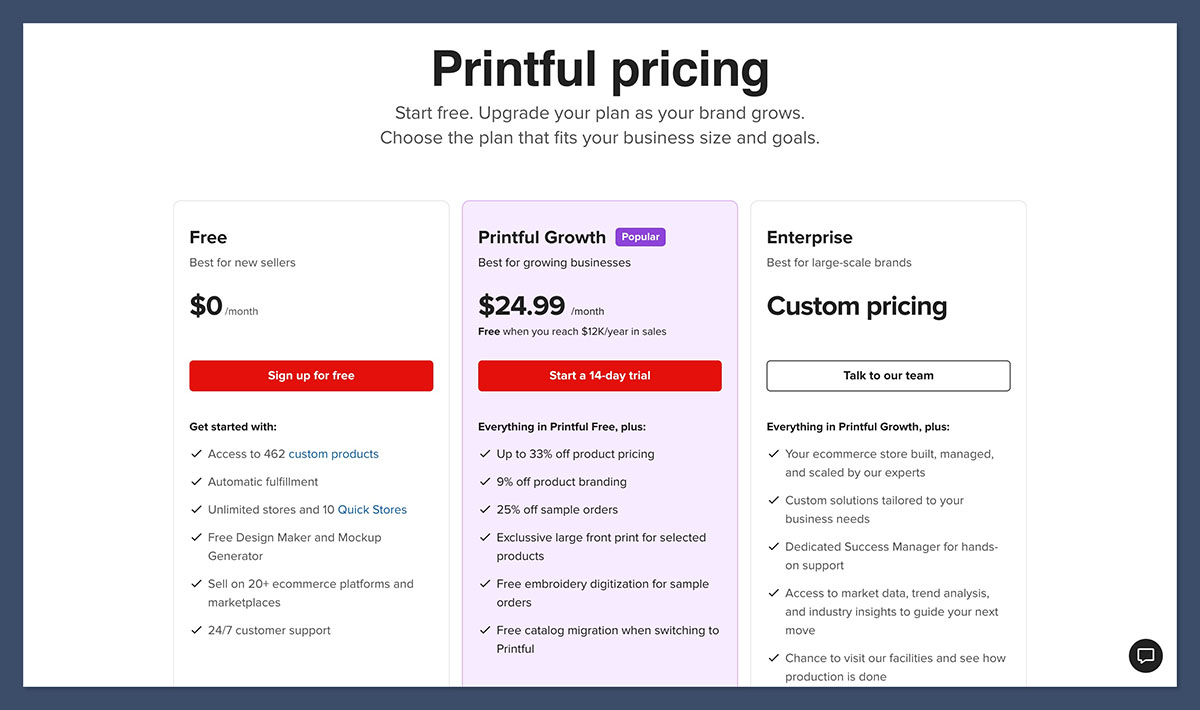
- Printful: Offers a wide range of sticker types (kiss-cut, die-cut, holographic, bumper, sheets) with a base cost for a 3x3in kiss-cut at $1.95. Shipping is a flat $4.29 for the first sticker and $0.99 for each additional item within the US. Their free plan is suitable for startups, with paid tiers offering additional benefits. Printful boasts a high Shopify app rating (4.8 stars based on over 3,600 reviews), largely due to its consistent quality control, as they operate their own printing facilities.
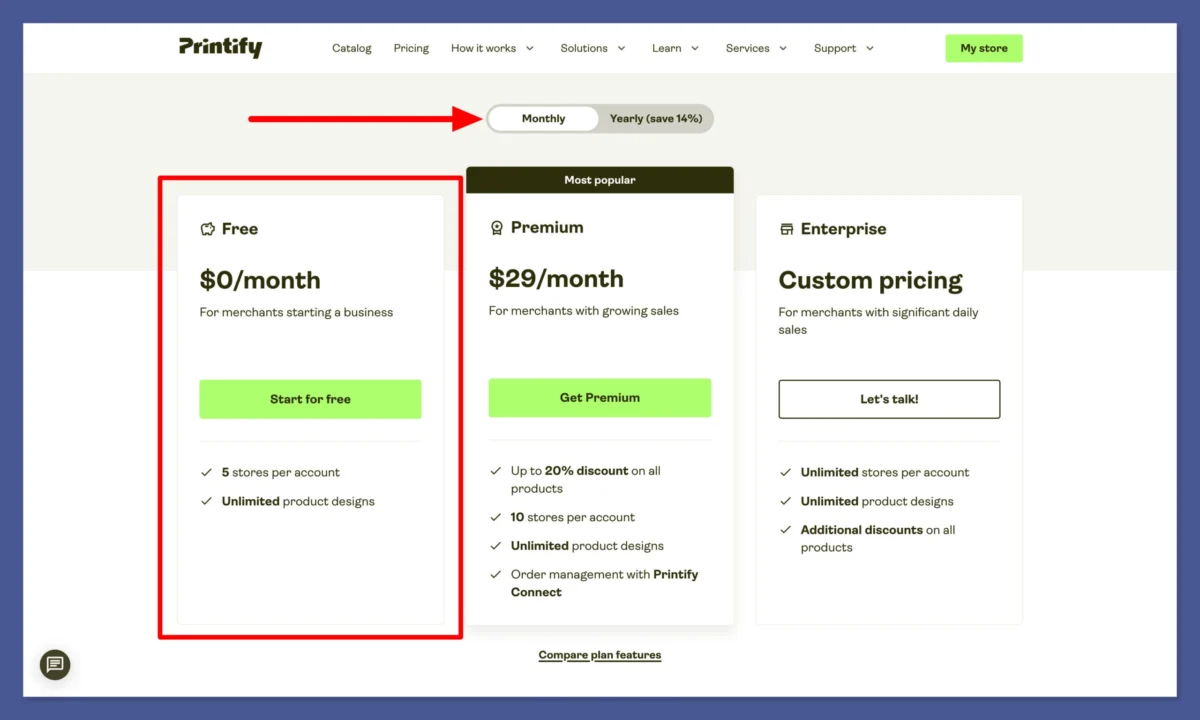
- Printify: Provides kiss-cut, die-cut, and sheet stickers, with kiss-cut options ranging from approximately $1.02 to $1.39 on their Premium plan. Shipping costs vary significantly by the chosen print provider. Printify offers a free plan for up to five stores, with a Premium plan at $39/month (or $24.99/month billed annually) that offers up to 33% product discounts. It has a strong Shopify app rating (4.7 stars from over 4,200 reviews). A key difference is that Printify routes orders to a network of third-party providers, which can lead to variations in quality.
- Gelato: Utilizes a local production network for kiss-cut and die-cut stickers, potentially reducing international shipping costs and transit times. Base costs are not publicly listed, and their Shopify app rating is not available. Gelato offers a free plan, with paid tiers providing deeper discounts.
- Sticker Mule: While not a traditional POD supplier, Sticker Mule excels in bulk orders of die-cut vinyl stickers, offering highly competitive per-unit pricing at volume ($1.20 each at 50 units, dropping to around $0.12 at 10,000 units). They offer free shipping and rapid production times (approximately 4 days). This option is best for businesses that can invest in inventory upfront.
The decision between Printful and Printify often boils down to a trade-off between base cost and consistency. Printful’s higher base cost for a 3x3in kiss-cut sticker ($1.95) is roughly double Printify’s ($1.02-$1.39). However, Printful’s in-house production ensures greater quality control and fewer variations compared to Printify’s distributed network. For a new store, starting with Printful’s free plan is advisable to maintain consistent product quality without the added stress of managing multiple print providers. As order volume grows, Printify can become more cost-effective, but thorough vetting of individual print providers with sample orders is crucial.
Step 5: Crafting Print-Ready Sticker Files – Technical Specifications for Quality
The quality of your printed stickers depends heavily on the accuracy of your design files. Six critical checks ensure that what you see on screen translates accurately to the final product:
- Resolution: Files must be set to 300 DPI (dots per inch) for sharp, clear prints.
- Color Profile: Use the sRGB color profile, as most POD printers use this for their output. Using CMYK or other profiles can lead to color discrepancies.
- Bleed: Include a 3mm bleed around the design. This ensures that any design elements extending to the edge of the sticker are not cut off during the printing process.
- Safe Zone: Maintain a 3mm safe zone within the cut line. This area prevents important design elements, such as text, from being too close to the edge and potentially being trimmed.
- Cut Lines: For die-cut stickers, a clean silhouette is essential. For kiss-cut stickers, the backing border is forgiving. For sticker sheets, ensure sufficient spacing between designs for the cutter.
- File Format: Transparent PNG files are generally preferred for stickers, especially for kiss-cut designs where the background should be invisible.
Common mistakes include using low-resolution images, incorrect color profiles, and failing to account for bleed and safe zones. The phrase "the printer ruined my colors" is often a result of the seller’s file setup, specifically incorrect color profiles.
Free design tools like Canva (with its free tier and Photopea workaround for transparent backgrounds) and Photopea itself can be utilized, bringing the total design spend for a bootstrapper to $0. Understanding the difference between die-cut (trimmed to the artwork’s outline) and kiss-cut (cut through the vinyl layer only, leaving a backing border) is vital, as it impacts file preparation.
Step 6: Setting Up Your Shopify Store – Essential Elements for Launch
The initial setup of a Shopify store can be overwhelming, with many beginners getting bogged down in theme customization. However, for selling stickers, six core elements are essential before any advanced design work:
- Store Name and Branding: A memorable name and a simple logo.
- Essential Pages: About Us, Contact Us, Privacy Policy, and Terms of Service.
- Payment Gateway: Setting up Shopify Payments or another compatible processor.
- Shipping Zones and Rates: Configuring where you ship and at what cost.
- Basic Theme Selection: A clean, functional theme is sufficient initially.
- POD App Installation: Connecting your chosen print-on-demand provider.
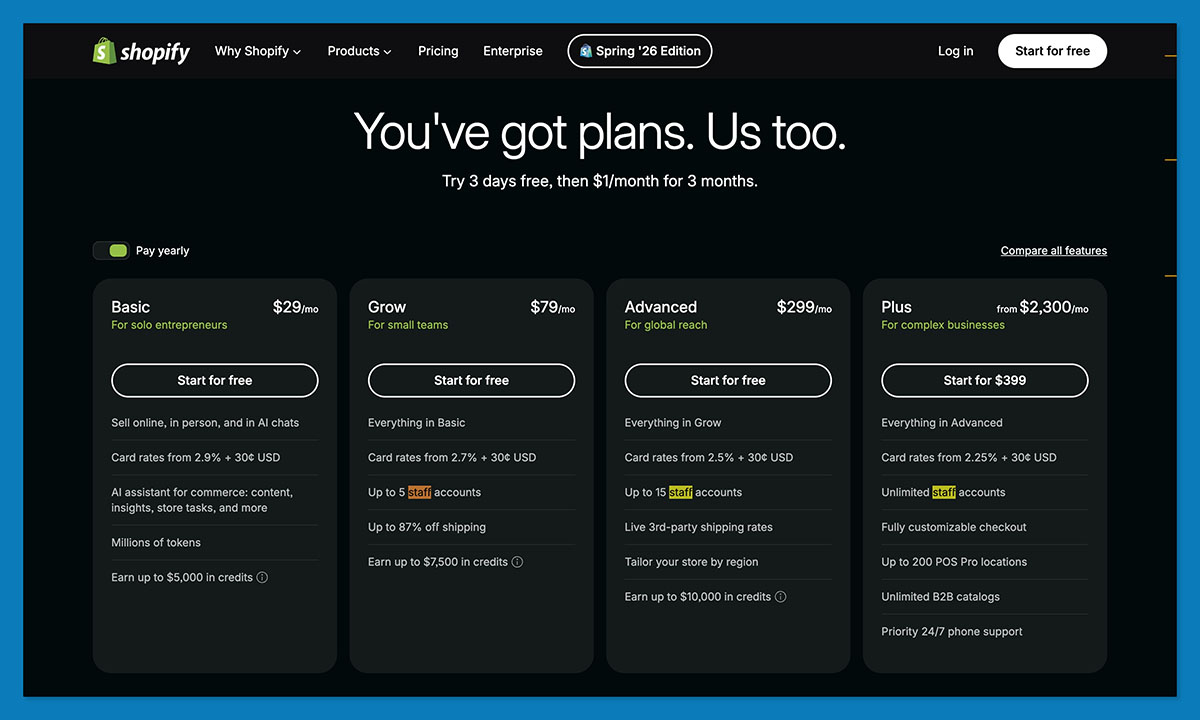
Shopify offers various pricing plans. The Shopify Starter plan at $5/month is attractive for its low cost but incurs a 5% transaction fee on every sale, even with Shopify Payments. The Basic plan, at $39/month (or $29/month billed annually), includes 2.9% + $0.30 processing fees and no additional transaction fees. For sticker businesses with order values around $15, the Starter plan remains cheaper until approximately 45 orders per month, at which point the Basic plan becomes more economical due to the absence of the hefty 5% fee.
It’s advisable to skip theme customization, upsell apps, and complex analytics dashboards initially. Design tweaks and advanced features should be addressed after the first sale and as the business scales.
Step 7: Connecting Your POD App and Publishing Your First Sticker
Connecting a POD app to Shopify is a straightforward process, typically taking only a few minutes. However, careful review of the synced product details is crucial to prevent future issues. There are two primary methods for this connection:
Method A: Starting in Printify (or similar POD platform)
- Create an account on the POD platform.
- Browse and select the desired sticker product.
- Design your sticker using their tools or upload your own artwork.
- Publish the product to your connected Shopify store.
- Configure product details, pricing, and variants.
Method B: Starting in Shopify
- Install the POD app (e.g., Printful, Printify) from the Shopify App Store.
- Connect your POD account to Shopify.
- Create a new product within Shopify.
- Select "Print on demand" as the fulfillment service.
- Choose the specific sticker product from your POD provider’s catalog.
Once the product is built and published, a thorough check is imperative:
- Product Title and Description: Ensure they are accurate and appealing.
- Images: Verify that your design mockups or photos are correctly displayed.
- Variants: Confirm that all size and style options are correctly set up.
- Pricing: Double-check that the retail price in Shopify matches your desired pricing.
- Collections: Ensure the product is added to the appropriate collection for easy navigation.
Upon receiving a sale, the POD provider charges your linked payment card for fulfillment. It’s crucial to understand that payouts from sales take several days, creating a cash flow gap where your card funds the order before you receive the revenue. This is a significant consideration for businesses operating on tight budgets.
Step 8: Strategic Pricing and Understanding Shopify’s True Monthly Costs
Establishing accurate retail prices is paramount, and this should be driven by the fulfilled cost, not arbitrary markups. The retail price must encompass the base cost, shipping, processing fees, and then a margin on top of all these expenses. The common advice to price at 2x or 3x base cost is fundamentally flawed because it ignores the significant shipping and processing overheads.
After setting retail prices in your POD app or directly in Shopify, configure your shipping settings. For a beginner sticker store, understanding the monthly financial commitment is critical:
| Cost | Cheapest Path | Comfortable Path | Notes |
|---|---|---|---|
| Shopify Plan | $5 Starter | $39 Basic ($29 annually) | Starter adds a 5% transaction fee per sale. |
| Payment Processing | 2.9% + $0.30 | 2.9% + $0.30 | Third-party gateways may incur additional Shopify fees. |
| POD App | $0 Free Plan | Printify Premium $39 ($24.99 annually) | Paid plans offer discounts and features; Printful’s Growth becomes free at $12K/yr sales. |
| Design Tools | $0 (Canva free + Photopea) | Canva Pro | Free tier requires workarounds for specific features. |
| Samples | ~$7-15 (once per format) | One per format sold | A crucial one-time investment. |
| Marketing | $0 Organic | $100-300 to test | Premature for new stores without proven conversion rates. |
| Total Live | ~$5 | ~$45-80/mo | Excludes per-order fulfillment costs. |
On the comfortable path, with $39 for Shopify Basic and $39 for Printify Premium, the fixed monthly cost is approximately $78. With a gross margin of $4.92 per $14.99 sticker sheet, approximately 16 sheet orders are needed monthly to break even. The cheapest path, using Shopify Starter and free POD plans, incurs a 5% transaction fee that reduces the margin to about $4.17 per sheet, requiring just over one order to cover fixed costs. This analysis highlights the significant cost advantage of the Starter plan for low-volume businesses.
Printify Premium’s savings need to be factored in; a 33% discount on a $5.05 sheet base cost saves about $1.67 per order. This means the $39 monthly fee requires roughly 23 orders to be profitable. The recommendation is to start on the cheapest path and upgrade only when order volume justifies the increased expenditure.
Step 9: Sample Orders and Quality Assurance – The Cheapest Insurance
Before investing in marketing or driving traffic, ordering a physical sample of your product is the most critical step in print-on-demand. A $7-$15 sample order is an invaluable investment that prevents costly returns, customer dissatisfaction, and reputational damage. Order at least one unit of every product format you intend to sell.
Upon receiving the sample, conduct a thorough inspection:
- Print Quality: Check for color accuracy, sharpness, and any smudging or pixelation.
- Cut Accuracy: Ensure the cuts are clean and precise, especially for die-cut stickers.
- Material Quality: Assess the durability and feel of the sticker material.
- Adhesive: Verify that the sticker adheres well without leaving excessive residue.
- Packaging: If the POD provider includes packaging, check its quality and presentation.
If the sample quality is unsatisfactory, diagnose the issue before redesigning. With Printify, variations in quality can stem from different print providers; switching providers might resolve the problem. With Printful, issues might relate to shipping carriers or customer support, requiring different troubleshooting steps.
A significant benefit of ordering samples is the ability to capture high-quality, real-world photographs. These authentic product images, showcasing the stickers on actual items like water bottles or laptops, convert far better than generic mockups and cost nothing to produce beyond the sample itself.
The first 90 days for a new Shopify store are often a period of validation, not revenue. Over 80% of stores launched on Shopify generate zero revenue in this initial period, primarily due to a lack of visibility. Unlike marketplaces like Etsy, which have established customer bases actively searching for products, Shopify stores start with zero organic discovery.
Effective marketing tactics for stickers include:
- SEO Optimization: Using relevant keywords in product titles, descriptions, and tags.
- Social Media Marketing: Engaging content on platforms like Instagram, TikTok, and Pinterest.
- Influencer Collaborations: Partnering with micro-influencers in relevant niches.
- Email Marketing: Building a list and nurturing customer relationships.
A strategic approach for beginners is to first establish a presence on Etsy for one to three months, leveraging its existing traffic to gain initial sales and validate designs. Subsequently, launch a dedicated Shopify store around months 6 to 12, once an audience and brand recognition have been cultivated.
Frequently Asked Questions (FAQ)
- Kiss-Cut vs. Die-Cut Stickers: Kiss-cut stickers are cut only through the vinyl layer, leaving a backing shape. Die-cut stickers are cut through the entire material to the artwork’s outline. Kiss-cut is generally more cost-effective for multi-design sheets, while die-cut offers a custom aesthetic at a slightly higher cost.
- Startup Costs for POD Stickers on Shopify: The initial investment can be under $60, covering Shopify’s basic plan, free POD app subscriptions, a physical sample, and free design tools. There are no upfront inventory costs.
- Profit Margins on POD Stickers: A well-structured sticker sheet can yield a gross profit of around 33%. However, poorly structured orders, like individual stickers with free shipping, can result in negative profit margins. The format of the sale is more critical than the price.
- Impact of Free Shipping on POD Sticker Profits: Free shipping is detrimental to single-sticker orders due to high individual shipping costs. However, implementing a free shipping threshold (e.g., $15) encourages larger orders and can be profitable for sticker sheets and packs.
- Legality of Selling Fan Art/Logo Stickers: It is not legally safe to sell fan art or logo stickers through POD without explicit licensing agreements. This can lead to takedown notices and legal action. Focus on original artwork.
- Etsy vs. Shopify for Beginners: For absolute beginners without an existing audience, Etsy is recommended first due to its built-in traffic. Shopify offers better long-term growth with higher margins and brand control, but requires driving one’s own traffic. Many sellers operate both platforms.
In conclusion, establishing a profitable print-on-demand sticker business on Shopify requires a deep understanding of fulfillment costs, strategic offer structuring, and careful supplier selection. By focusing on sticker sheets, implementing smart pricing strategies, and prioritizing quality assurance through sample orders, entrepreneurs can navigate the complexities of this market and build a sustainable and successful online store. The key takeaway is that profitability hinges not on the price of a single sticker, but on the strategic packaging and sale of multiple designs, ensuring that every order contributes positively to the bottom line.