

For decades, the bedrock of digital marketing strategy and measurement rested firmly on two pillars: website traffic and search engine rankings. These key performance indicators (KPIs) were the undisputed arbiters of online success, signifying visibility and reach in the burgeoning digital landscape. A high volume of visitors and a coveted spot on the first page of search engine results pages (SERPs) were synonymous with a thriving online presence. However, the rapid ascent of artificial intelligence (AI) in search has fundamentally disrupted this established paradigm, compelling marketers to re-evaluate what truly constitutes success in the modern digital ecosystem. The very metrics once celebrated as indicators of robust performance are increasingly being relegated to the status of "vanity metrics" – impressive numbers that fail to reflect genuine business impact or profitability.
The Evolution of Search: From Keywords to Conversational AI
To fully grasp the current seismic shift, it’s crucial to contextualize the journey of search. In the early days of the internet, search engines primarily operated on keyword matching and basic indexing. SEO practices focused heavily on keyword stuffing, backlinks, and technical optimizations to manipulate rankings. As Google rose to dominance in the late 1990s and early 2000s, algorithms became more sophisticated, emphasizing content quality, user experience, and domain authority. Marketers adapted, shifting their focus to creating valuable content and building authentic online relationships, all while meticulously tracking organic traffic, bounce rates, and conversion paths. The goal remained clear: drive users to websites, capture their attention, and guide them towards a desired action.
This model, while evolving, largely held sway for over two decades. The rise of mobile search, voice search, and personalized results introduced nuances, but the core principle of a user clicking a link to visit a website remained central. Then, in late 2022, the public release of ChatGPT marked a pivotal moment, unleashing large language models (LLMs) and generative AI into the mainstream. This technology rapidly began integrating into search experiences, most notably with Google’s introduction of AI Overviews (formerly Search Generative Experience, or SGE) and similar features across other platforms like Microsoft’s Copilot (integrating OpenAI’s technology into Bing) and Perplexity AI.
These AI-powered search interfaces don’t just provide a list of links; they synthesize information, generate direct answers, summarize content, and even recommend products or services within the chat interface itself. This shift has profound implications. Users are increasingly finding answers directly within the AI, reducing the need to click through to external websites. This phenomenon, often referred to as "zero-click searches," means that a brand can rank highly for a query, yet still see a significant drop in direct website traffic if the AI provides the answer directly.
The Erosion of Traditional Metrics: Traffic and Rankings as Vanity
The data unequivocally supports this re-evaluation. While conventional wisdom still champions high traffic volumes and top search rankings, their correlation to actual business outcomes has weakened considerably in the AI era. According to a study by Semrush, visitors who arrive via AI-powered search convert at an astonishing 4.4 times the rate of those from standard organic traffic. This suggests a fundamental difference in user intent and qualification; AI often acts as a pre-filter, delivering highly relevant and pre-vetted leads to a brand’s digital doorstep. Consequently, a brand could experience a 40% reduction in overall traffic and still achieve superior results in terms of conversions and revenue if that traffic originates from AI search. Conversely, a brand might retain its coveted #1 organic ranking on Google but remain virtually invisible to users engaging with AI answer engines.
The prevalence of AI Overviews further underscores this challenge. BrightEdge reports that AI Overviews now appear on approximately 48% of all Google searches, a significant increase from 31% just a year prior. When these AI Overviews are present, organic click-through rates (CTRs) for even the top-ranked traditional organic results can plummet by as much as 61%, as highlighted by research from Seer Interactive. This dramatic drop signifies that the user journey is increasingly diverging from the classic "search, click, visit" model. The traditional metrics, while not entirely obsolete, no longer tell the full story of digital performance. They lack the context necessary to understand true business impact in an AI-driven world.
The Imperative for New KPIs: Measuring AI Search Performance
In response to this paradigm shift, marketers must adopt a new suite of AI search performance KPIs that accurately measure visibility, attribution signals, conversions, and the ultimate revenue impact derived from AI-driven discovery. These metrics move beyond superficial numbers, focusing on actionable insights that directly correlate with a brand’s bottom line. The measurement framework for AI search typically encompasses three distinct layers: Direct Metrics, Proxy Metrics, and Revenue Impact Metrics.
Direct Metrics: Understanding Your AI Presence
-
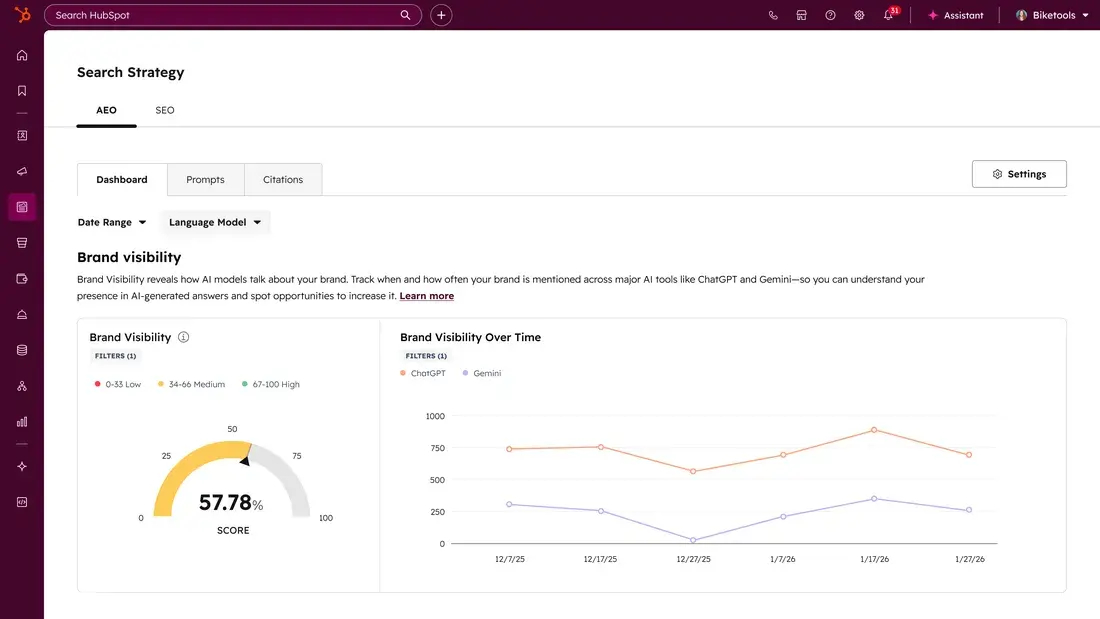
AI Visibility Rate: This foundational metric quantifies how frequently a brand appears in AI-generated answers across a defined set of user prompts. It directly addresses the question: "Are we being seen by our target audience in AI search?" Measuring this involves a consistent process of inputting relevant prompts into various AI platforms (e.g., ChatGPT, Google Gemini, Perplexity AI) and tracking instances where the brand is explicitly or implicitly cited. Given the non-deterministic nature of AI (where the same prompt can yield different answers), it’s crucial to run prompts consistently (time of day, location, multiple repetitions) and track trends over several weeks rather than isolated instances.
- Calculation: (Number of prompts where brand is cited / Total number of prompts in set) x 100%.
-
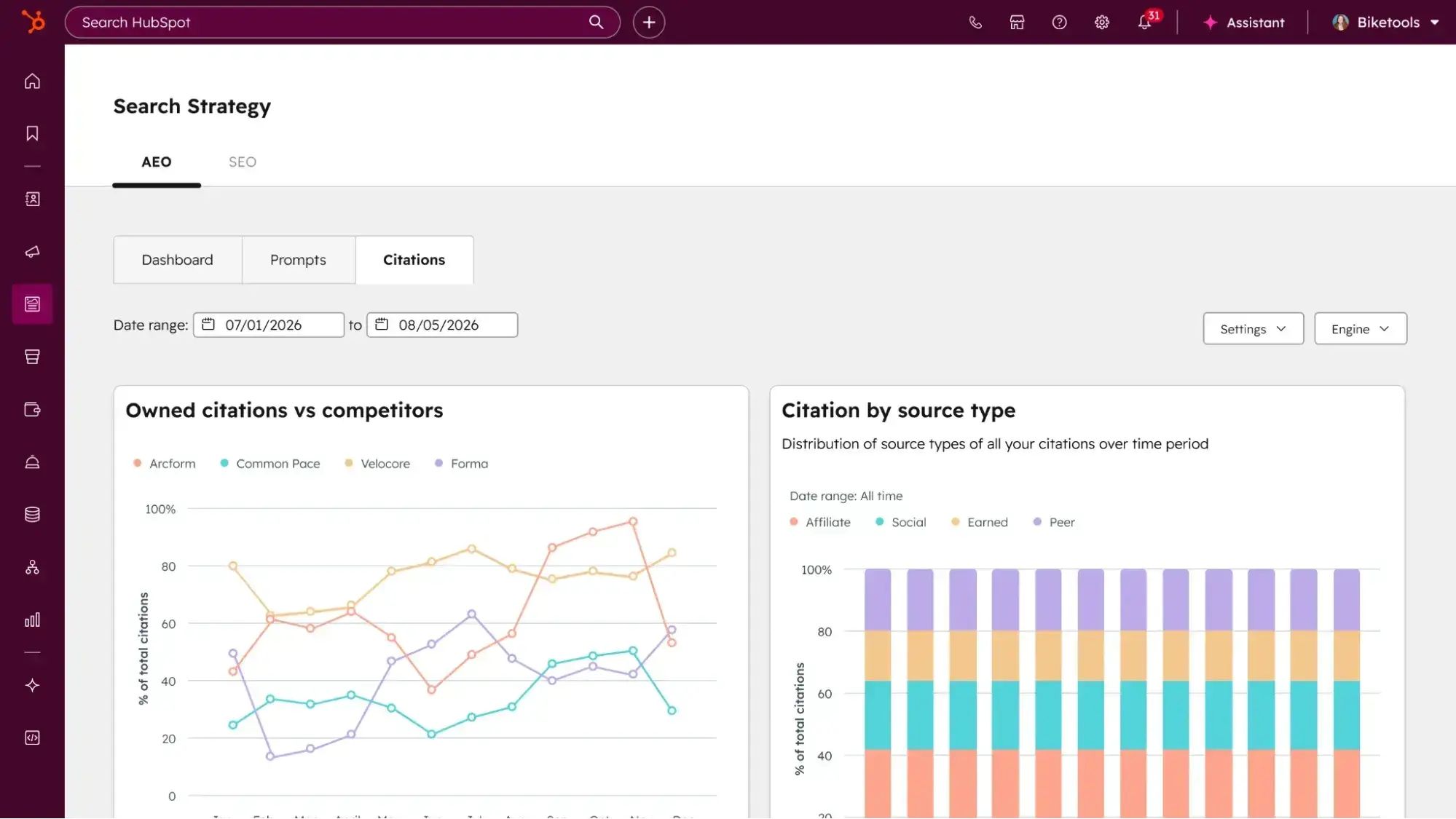
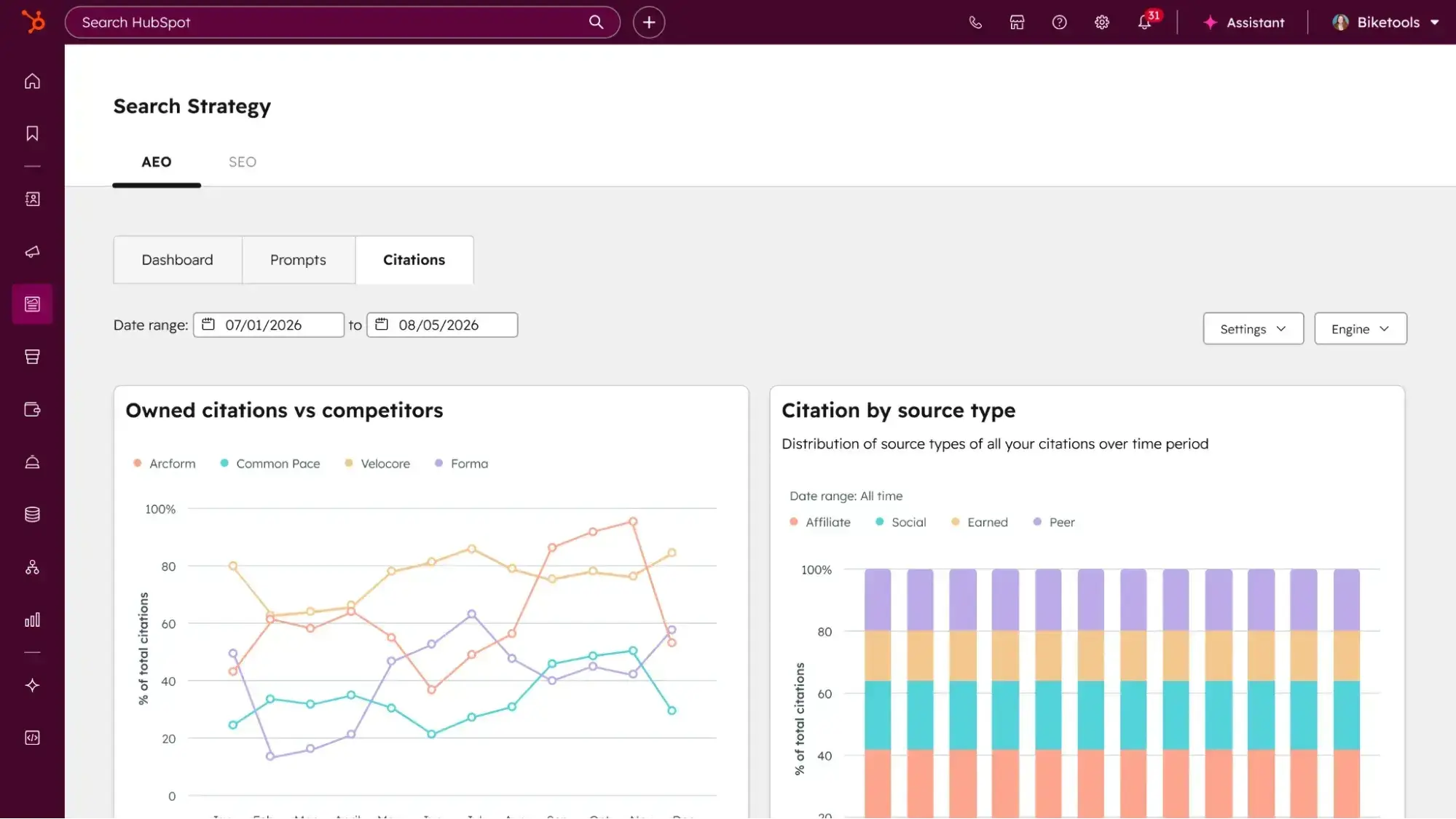
Citation Share: Analogous to "share of voice" in traditional marketing, citation share measures a brand’s percentage of citations relative to its direct competitors for the same prompt set. A brand might have a 30% AI visibility rate, which sounds positive, but if a competitor consistently achieves 60%, the brand is losing the competitive battle for AI mindshare. This metric provides crucial competitive benchmarking.

- Calculation: (Brand’s total citations / Total citations across all tracked brands including competitors) x 100%.
-
Answer Accuracy and Sentiment: While quantitative metrics are vital, the qualitative assessment of AI answers is equally critical. A brand frequently cited but inaccurately (e.g., incorrect product specifications, outdated pricing, misaligned use cases) can suffer significant reputational damage and negatively impact conversion rates. This metric involves human review of AI-generated answers to assess:
- Accuracy: Is the information about the brand correct and up-to-date?
- Sentiment: Is the tone positive, neutral, or negative? Does it align with brand messaging?
Tracking these elements proactively can prevent pipeline problems before they escalate.
Proxy Metrics: Inferring AI’s Influence
Given the current limitations in direct referral data from many AI platforms, proxy metrics become invaluable for inferring AI’s influence on user behavior.
-
Branded Search Lift: This is arguably one of the most powerful yet underutilized proxy metrics. Research by Scrunch, analyzing millions of search events, found that when an AI platform recommends a brand to a user with no prior exposure, that user becomes 182% more likely to search for the brand directly on Google within the following week, and 117% more likely to visit the brand’s website directly. This highlights a crucial "dark funnel" where AI discovery leads to direct branded searches or website visits, which traditional analytics would simply categorize as "organic branded" or "direct traffic," completely obscuring AI’s initial influence.
- Measurement: Track trends in branded search volume (via Google Search Console) and direct website traffic (via Google Analytics 4) alongside changes in AI visibility. A positive correlation suggests AI’s indirect impact.
-
AI-influenced Engagement: AI-referred traffic often exhibits distinctly different engagement patterns compared to standard organic traffic. Similarweb data shows ChatGPT-referred visitors spending an average of 15 minutes on-site versus Google’s 8 minutes, viewing 12 pages per session versus 9, and converting at 7% compared to 5% on transactional sites. This indicates a higher quality, more engaged audience.
- Measurement: Segment analytics data (e.g., in GA4) by AI referral sources (where available, or inferred via proxy metrics) and track metrics like average session duration, pages per session, and bounce rate. Strong engagement metrics, even with lower initial volume, signal high-quality traffic worth nurturing.
Revenue Impact Metrics: Connecting AI to the Bottom Line
Ultimately, marketing efforts must demonstrate a tangible return on investment. AI search is no exception, and connecting its influence to pipeline and revenue is paramount.
-
AI-influenced Conversion Rate: This metric directly quantifies the efficiency of AI-driven traffic in achieving desired outcomes. Ahrefs reported that AI-referred visitors, while accounting for only 0.5% of website sessions, drove 12.1% of all sign-ups – a staggering 23x conversion differential. This underscores the high intent of users pre-qualified by AI.
- Measurement: Segment conversion data in analytics platforms (like GA4) by AI traffic sources (direct referrals or inferred via branded search lift/direct traffic). Compare these conversion rates against other channels to highlight AI’s superior performance.
-
AI Revenue Contribution (via CRM): This is the holy grail of AI search measurement, directly linking AI visibility to closed-won deals and revenue. Since direct attribution is challenging, a multi-pronged approach is necessary:
- Self-Reported Attribution: Integrate a "How did you first hear about us?" field on lead forms, contact pages, and post-purchase surveys, explicitly including AI engines (e.g., "ChatGPT recommendation," "AI Search Overview") as options. This captures the zero-click discovery path invisible to traditional trackers. Semrush found 55% of U.S. consumers use AI weekly for product research, and Fairing reported a tenfold increase in customers citing LLMs in "how did you hear about us" surveys from January to July 2025.
- CRM Integration: Configure your CRM (e.g., HubSpot Smart CRM) to capture and track these AI discovery signals at the contact level. Create custom properties like "AI Discovery Source" and use automation to populate these fields. This allows marketers to filter deals by AI influence, track close rates for AI-sourced contacts, and calculate the exact pipeline and revenue contribution over time. This enables concrete reporting to leadership: "AI search influenced $X in pipeline last quarter."
Establishing a Robust AI Search Measurement Practice
Building an effective AI search measurement practice requires consistency and a systematic approach:
- Define Your Prompt Set: This is the cornerstone. Develop a curated list of 30-50 questions reflecting how your target audience searches in AI engines. Categorize them into informational (e.g., "What is X?"), navigational (e.g., "Brand Y customer service"), and transactional (e.g., "Best software for Z").
- Utilize AI Visibility Tools: While manual testing across ChatGPT, Gemini, Perplexity, and others is possible, specialized tools like HubSpot AEO can automate the process, tracking citations daily across multiple platforms. This multi-platform approach is crucial as AI search visibility is no longer a single-platform story; Goodie’s 2026 Wave 2 report showed ChatGPT’s B2B AI referral share dropping from 89% to 63% in eight months, with Claude reaching 18.5% and Gemini 10.6%.
- Evaluate and Document Findings: Regularly analyze changes in your brand’s and competitors’ citations. Document the context (e.g., specific content cited, accuracy, sentiment). This data directly informs content strategy, allowing identification of content gaps and opportunities to improve AI performance. HubSpot’s research on AI search experiments provides frameworks for validating content’s impact on citation metrics.
- Iterate and Repeat: AI search is dynamic. Consistent, scheduled tracking (weekly or bi-weekly) and continuous refinement of strategies based on insights are essential for sustained performance.
Connecting AI KPIs to Conversions and Revenue: Bridging the Attribution Gap
The biggest hurdle remains attribution. Most AI engines don’t provide granular referral data, making it challenging to directly link an AI interaction to a conversion. Therefore, a layered approach is necessary, combining direct tracking, proxy signals, and self-reported data within a robust CRM system.
- Leverage Self-Reported Attribution: This method, often overlooked in the pixel-tracking era, becomes paramount. By explicitly asking "How did you hear about us?" and providing AI options, brands can capture valuable first-touch data that analytics tools miss.
- Monitor Branded Search Lift and Direct Entrances: These proxy signals serve as indirect yet reliable indicators of AI’s influence. A surge in branded searches or direct website visits coinciding with increased AI visibility strongly suggests AI played a role in initial discovery.
- Integrate AI Signals into Your CRM: This is the ultimate step for connecting AI visibility to revenue. By creating custom contact properties for "AI Discovery Source" and integrating this data into deal tracking, businesses can quantify AI’s contribution to pipeline and closed-won revenue, providing concrete figures for leadership.
Addressing Common Challenges
- Variations in AI Answers: AI answers are non-deterministic. To mitigate this, run prompts consistently (same time, location, multiple repetitions) and focus on trends over weeks, not single sessions.
- Lack of Referral Data: While some platforms like ChatGPT are starting to append UTMs, for others, rely on branded search lift, direct traffic trends, and self-reported attribution.
- Preventing Vanity Metrics: Always pair visibility metrics with business outcome metrics. AI visibility rate is only meaningful when linked to conversion rates or pipeline data. If a metric doesn’t connect to leads, deals, or revenue, it should be treated as a supporting signal, not a headline number.
Conclusion: A New Era of Measurement and Strategy
The rise of AI search is not merely an incremental update; it’s a fundamental re-architecture of how users find information and interact with brands online. This necessitates a radical rethinking of digital marketing measurement. By moving beyond the traditional reliance on traffic and rankings and embracing a comprehensive suite of AI search performance KPIs – encompassing direct visibility, proxy signals, and robust revenue attribution via CRM – marketers can navigate this new landscape effectively.
The HubSpot AI Search Grader and related AEO tools represent a step forward in providing businesses with the means to benchmark their current AI visibility, identify competitive gaps, and build a solid foundation for an AI-first measurement strategy. The future of digital marketing demands not just adaptation, but a proactive embrace of these new measurement frameworks, ensuring that every marketing dollar spent contributes meaningfully to pipeline and revenue in the age of intelligent search.








