

The digital marketing landscape in 2026 demands more than basic email functionalities, pushing many businesses and creators to look beyond traditional platforms like AWeber. While AWeber has served as a reliable entry point for newsletters and foundational email flows, its inherent limitations—specifically the complete absence of native SMS capabilities and automation triggers restricted to opens, clicks, and tags rather than real-time cart value or comprehensive product data—have prompted a significant shift in user demand. This comprehensive guide delves into ten leading alternatives, providing an in-depth analysis of their pricing structures, automation sophistication, user-friendliness, and integration ecosystems, to help businesses identify the optimal solution for their evolving marketing needs.
The Digital Marketing Evolution and the Quest for AWeber Alternatives
AWeber has historically been recognized for its ease of use, making it a popular choice for small businesses and individuals venturing into email marketing. Its strengths lie in straightforward email creation, list management, and basic autoresponders. However, the modern e-commerce and creator economies necessitate a more dynamic, data-driven, and multichannel approach. Brands today require platforms that can deeply integrate with their sales channels, leverage real-time customer behavior for hyper-personalized communication, and offer diversified outreach options like SMS and web push notifications, all within a unified automation framework. This strategic imperative is the primary driver behind the increasing search for more robust AWeber alternatives. The shift reflects a broader industry trend towards integrated marketing stacks that prioritize customer lifecycle management, advanced segmentation, and measurable return on investment (ROI) across all touchpoints.
Why Brands Seek Alternatives: AWeber’s Current Landscape
AWeber’s core offering, while functional, often falls short for businesses aiming for aggressive growth and sophisticated customer engagement. Its primary drawbacks include:
- Lack of Native SMS: In an era where SMS marketing boasts high open rates and immediate engagement, AWeber’s complete absence of native SMS is a critical gap.
- Limited Automation Triggers: The platform’s automation capabilities are largely confined to email opens, clicks, and tag applications. This pales in comparison to alternatives that offer triggers based on shopping cart value, specific product views, purchase history, customer lifecycle stages, or even predictive analytics.
- E-commerce Integration Depth: While AWeber offers some integrations, it lacks the deep, native connections required for advanced e-commerce personalization seen in platforms designed specifically for online stores. For instance, without native Shopify integration, extracting granular customer data for targeted campaigns becomes challenging.
- Pricing Structure for Advanced Features: The Lite plan, while seemingly affordable, significantly restricts access to behavioral automation and email sales tracking. To unlock these more advanced, yet standard, features, users are often pushed into the Plus plan, which at $30/month, can be less cost-effective than competitors offering more features at a similar or lower price point.
These limitations collectively lead many brands to "outgrow" AWeber once their marketing strategies mature beyond basic newsletters and simple welcome sequences. They seek platforms that can scale with their operations, offer richer customer insights, and provide a more comprehensive toolkit for nurturing customer relationships and driving repeat purchases.
The Contenders: A Deep Dive into Top AWeber Alternatives for 2026
The market offers a diverse range of platforms, each excelling in specific areas. The following ten alternatives cater to various needs, from dedicated e-commerce solutions to comprehensive CRM platforms and tools for the burgeoning creator economy.
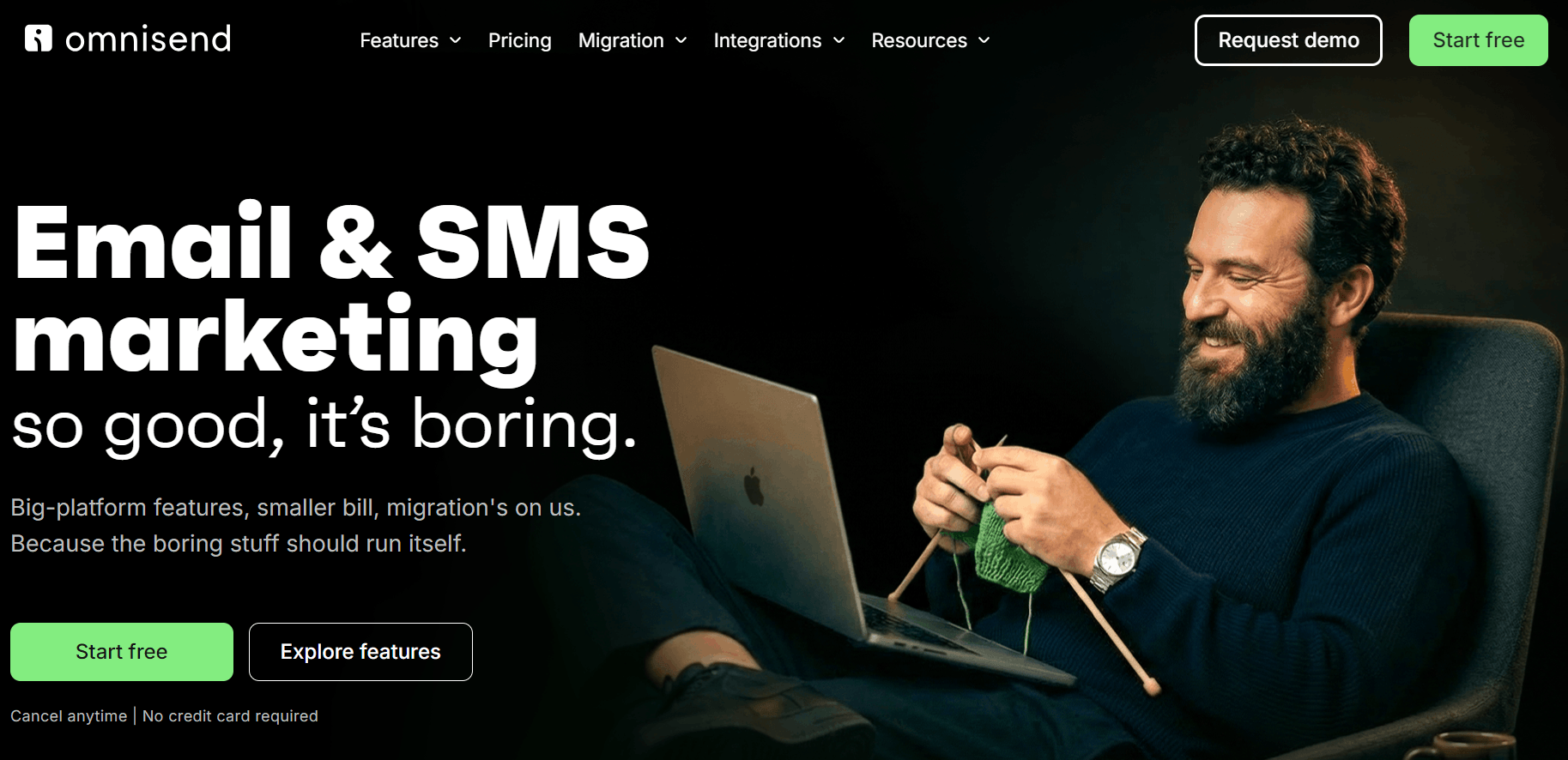
1. Omnisend: The E-commerce Powerhouse
- Best for: E-commerce stores of all sizes, lifecycle marketers, and multichannel brands.
- Overview: Omnisend is purpose-built for e-commerce, offering deep integrations with popular store platforms. It enables highly personalized email, SMS, and web push notifications, allowing marketers to combine all three channels into cohesive automation flows. This omnichannel approach ensures customers are reached at optimal moments, significantly enhancing engagement and conversion. Omnisend excels in leveraging customer data for sophisticated segmentation and automation sequences, turning one-time buyers into loyal customers.
- Key Features: Advanced e-commerce automation triggers (e.g., abandoned cart value, product browsing, purchase frequency), pre-built e-commerce templates, robust segmentation, global SMS, and comprehensive analytics with revenue attribution.
- Pricing: Omnisend offers three contact-based plans, including a Free Forever plan. Its Standard plan starts at $16/month, which is competitive, especially when considering AWeber’s Plus plan at $30/month is required to match Omnisend’s unlimited landing pages, lists, email automations, and segments.
- G2 Rating: 4.6/5 based on 1230+ reviews.
- Analysis: Omnisend’s focus on e-commerce, combined with its multichannel capabilities, makes it a superior choice for online retailers seeking to maximize their marketing ROI. The reported 79:1 ROI across email, SMS, and web push notifications for Omnisend customers in 2025 underscores its effectiveness.
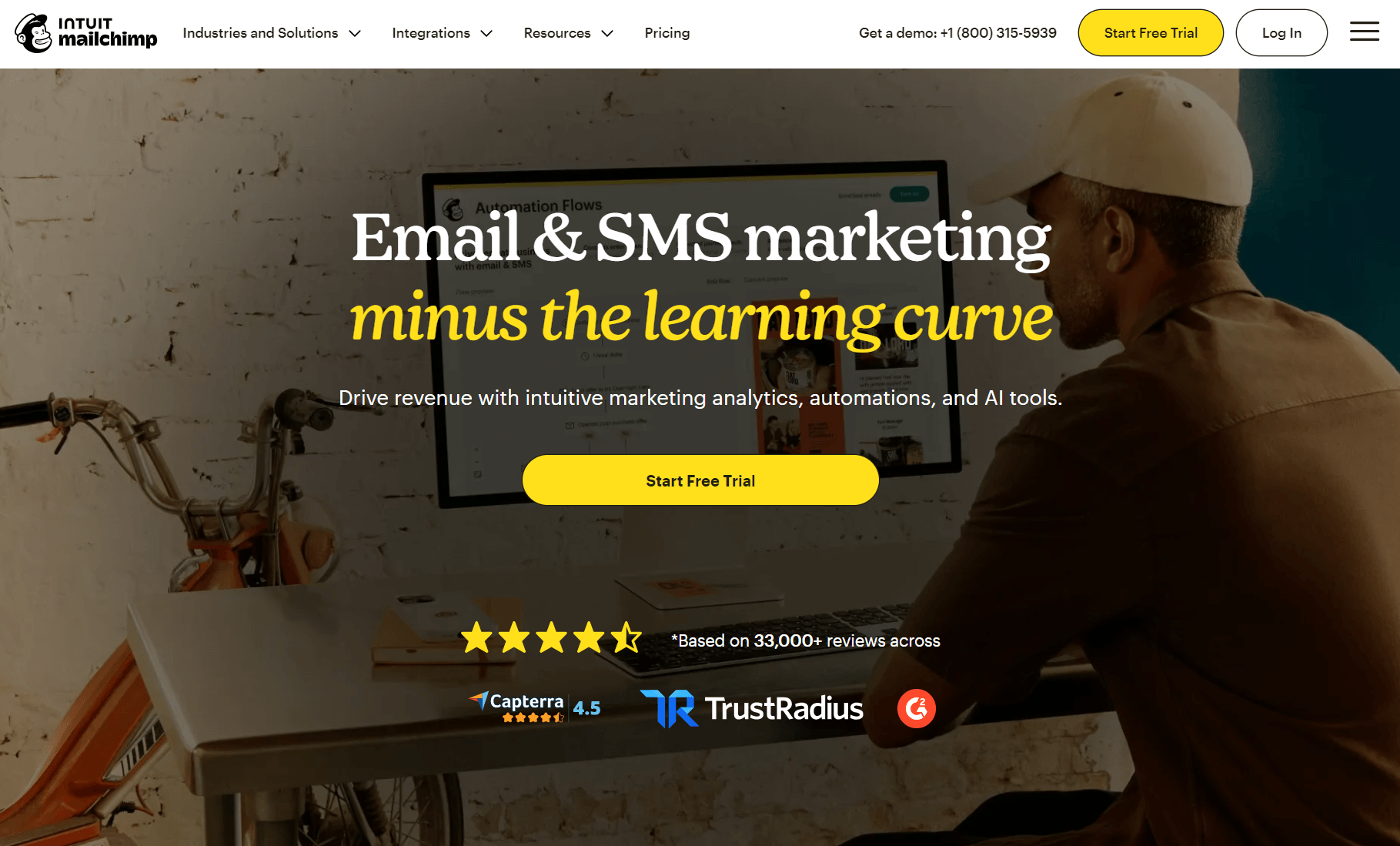
2. Mailchimp: Small Business & Starter E-commerce Champion
- Best for: Basic automations and list-growth for small businesses and new e-commerce ventures.
- Overview: Mailchimp has long been a go-to for small businesses due to its user-friendly interface and comprehensive free plan. It offers more sophisticated multi-step journeys than AWeber, incorporating starting points, branching rules, and delays for more complex automations. Mailchimp also provides valuable revenue attribution insights for connected e-commerce stores, making it easier to track the direct impact of email campaigns on sales.
- Key Features: User-friendly drag-and-drop editor, diverse template library, basic e-commerce integrations, landing page builder, and audience segmentation tools.
- Pricing: Mailchimp provides four contact-based plans, including a generous free plan. Paid plans start from $13/month.
- G2 Rating: 4.3/5 based on 12,980+ reviews.
- Analysis: Mailchimp’s low learning curve and robust free tier make it an excellent choice for businesses taking their first steps into email marketing or those with simpler automation needs. However, as e-commerce operations scale, users might find its advanced automation and multichannel options less extensive than specialized platforms.
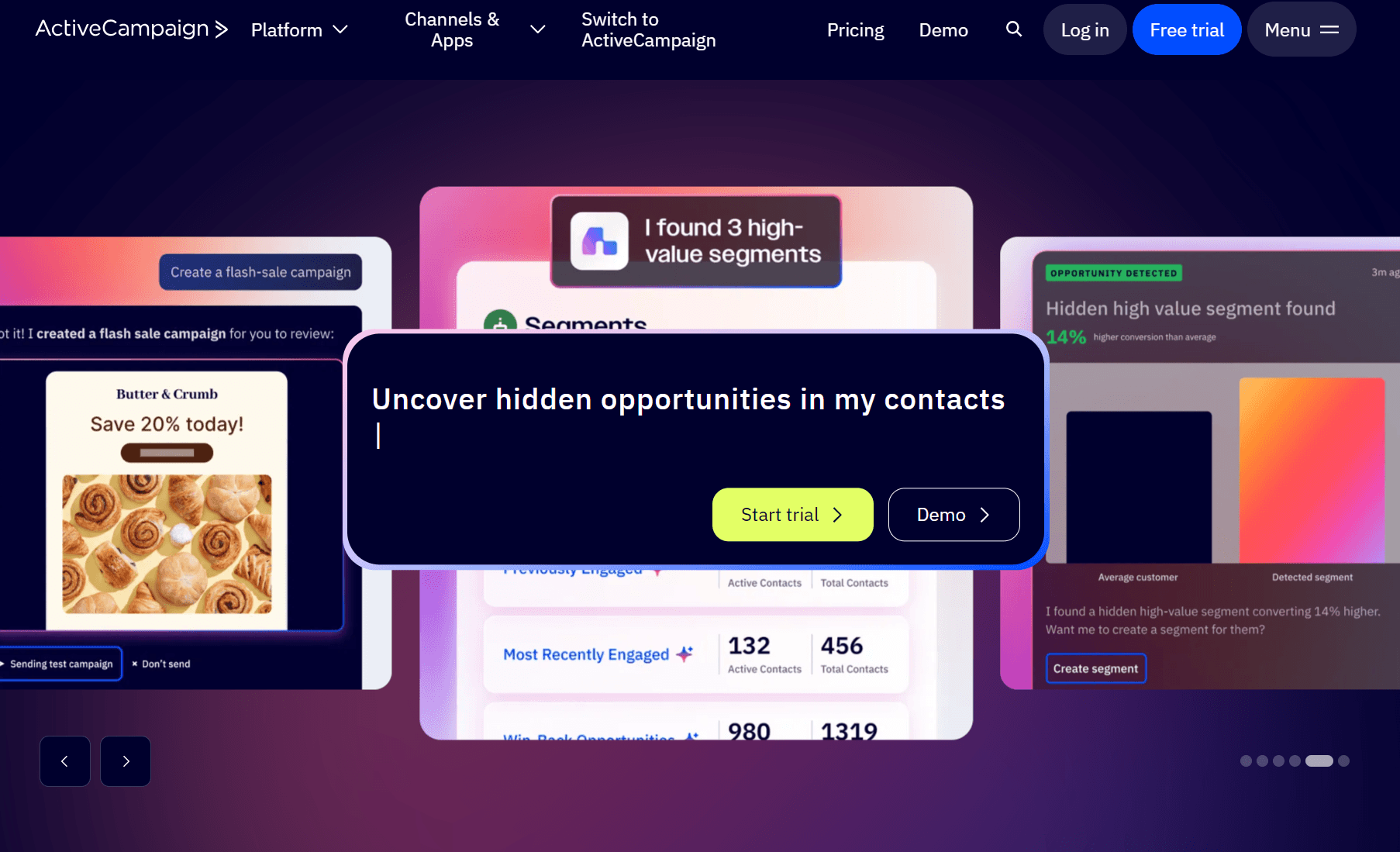
3. ActiveCampaign: CRM and Automation Mastery
- Best for: E-commerce stores requiring sophisticated CRM capabilities, such as lead scoring, in addition to advanced email automation.
- Overview: ActiveCampaign stands out for its powerful marketing automation and integrated CRM, making it ideal for enterprise-level e-commerce operations. It offers unparalleled depth in customer data management and highly customizable automation workflows, allowing for intricate sales pipelines and lead nurturing sequences. While it presents a steeper learning curve than AWeber, its capabilities in customer journey mapping and personalization are vastly superior.
- Key Features: Advanced visual automation builder, built-in CRM, lead scoring, site tracking, conditional content, and a wide array of integrations.
- Pricing: ActiveCampaign offers four contact-based plans, starting at $19/month for 1,000 contacts. Unlike Omnisend and Mailchimp, it does not provide a free plan.
- G2 Rating: 4.4/5 based on 14,720+ reviews.
- Analysis: For businesses that prioritize a deep understanding of their customer base and require highly tailored, automated interactions across complex sales cycles, ActiveCampaign is a formidable alternative. Its CRM functionalities provide a holistic view of customer interactions, driving more effective and personalized communication.
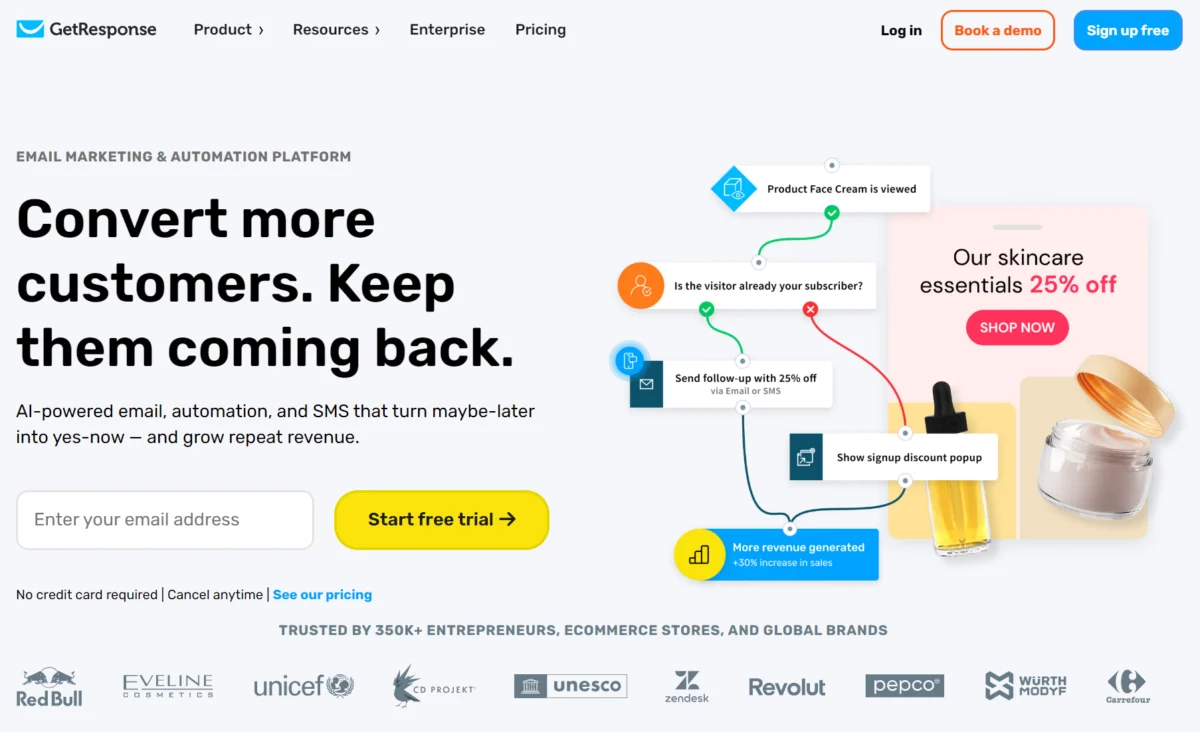
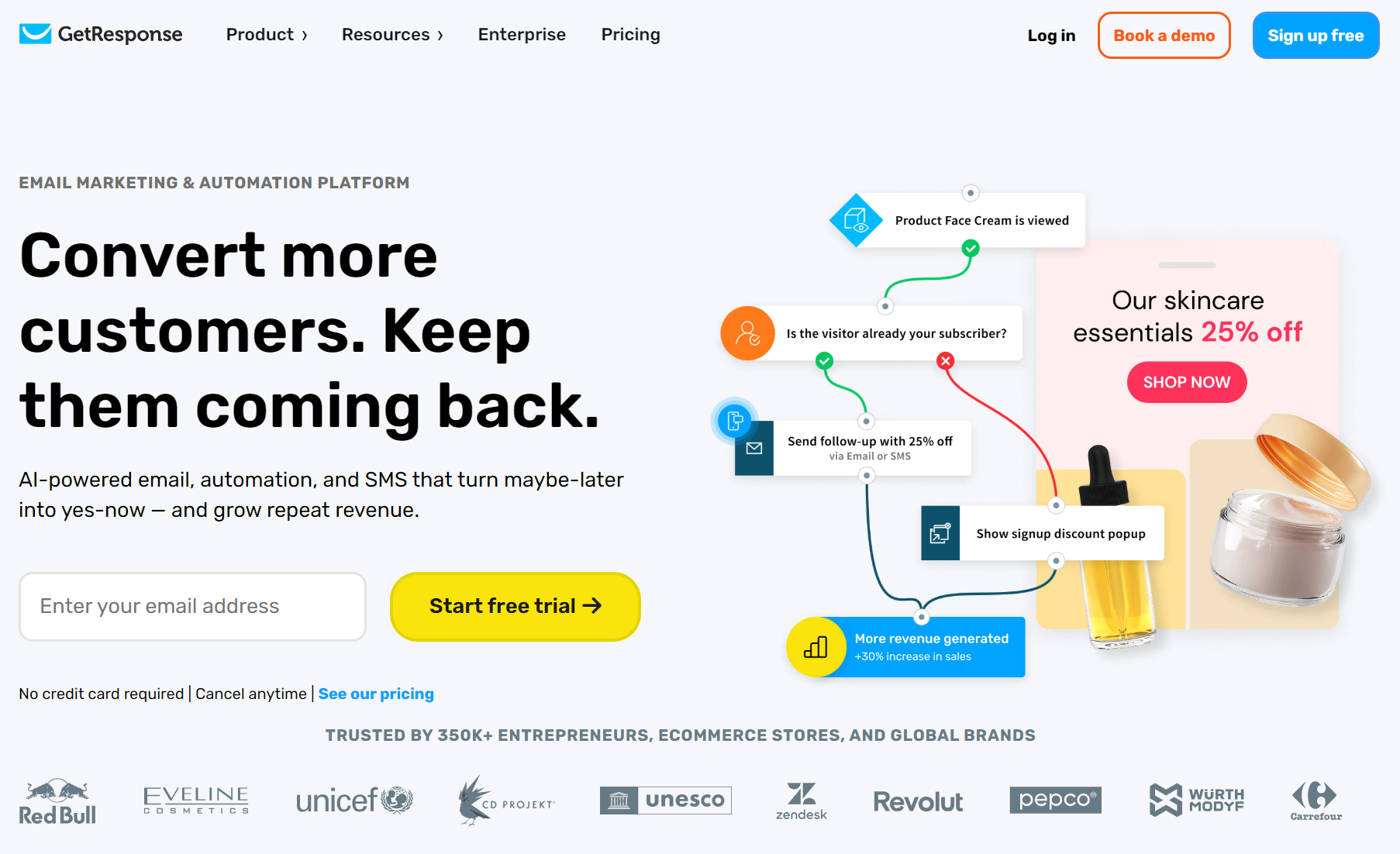
4. GetResponse: All-in-One for Marketers & Creators
- Best for: Marketers and creators seeking basic email automation alongside integrated landing pages, websites, and monetization features.
- Overview: GetResponse positions itself as an all-in-one marketing platform, bringing together email, automation, website building, and monetization tools. It’s particularly valuable for creators looking to build an online presence, grow their audience, sell courses or memberships, host webinars, and engage their community, all within a single ecosystem.
- Key Features: Email marketing, marketing automation, landing page builder, website builder, webinar hosting, sales funnels, and paid content monetization.
- Pricing: GetResponse offers four plans with unlimited email sends, with pricing based on contact count and feature access. It includes a free plan, and paid plans start from $19/month.
- G2 Rating: 4.3/5 based on 1,130+ reviews.
- Analysis: GetResponse’s integrated approach makes it an attractive option for individuals and small businesses that need to consolidate multiple marketing functions into one platform, especially those involved in content creation and digital product sales.
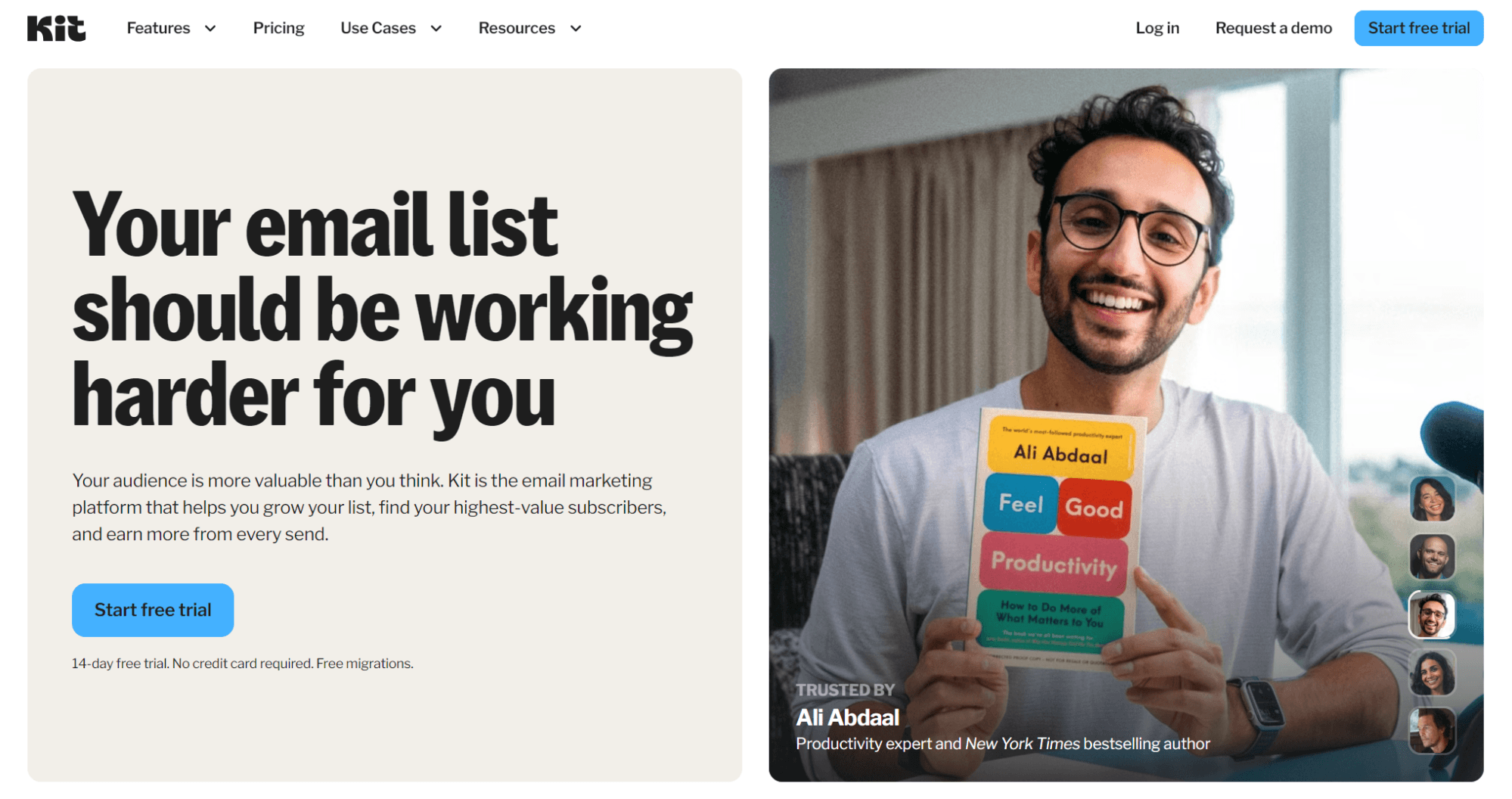
5. Kit: Tailored for the Creator Economy
- Best for: Creators with paid newsletters and recurring subscriptions seeking a unified tool for marketing and sales.
- Overview: Kit is specifically designed for the creator economy, offering a robust monetization ecosystem. It enables creators to build websites with sales pages, implement secure checkouts, manage paid newsletters, collect tips, and even earn through content recommendations. This makes it a comprehensive platform for content creators looking to directly monetize their audience and streamline their marketing efforts.
- Key Features: Website and sales page builder, paid newsletter management, subscription billing, tipping functionality, and affiliate recommendations.
- Pricing: Kit offers a free plan for newsletters and two paid plans tailored for creators, with paid options starting at $33/month.
- G2 Rating: 4.4/5 based on 230+ reviews.
- Analysis: For individual creators, bloggers, and influencers who prioritize direct monetization and community engagement, Kit offers a specialized set of tools that far exceed AWeber’s capabilities in this niche.
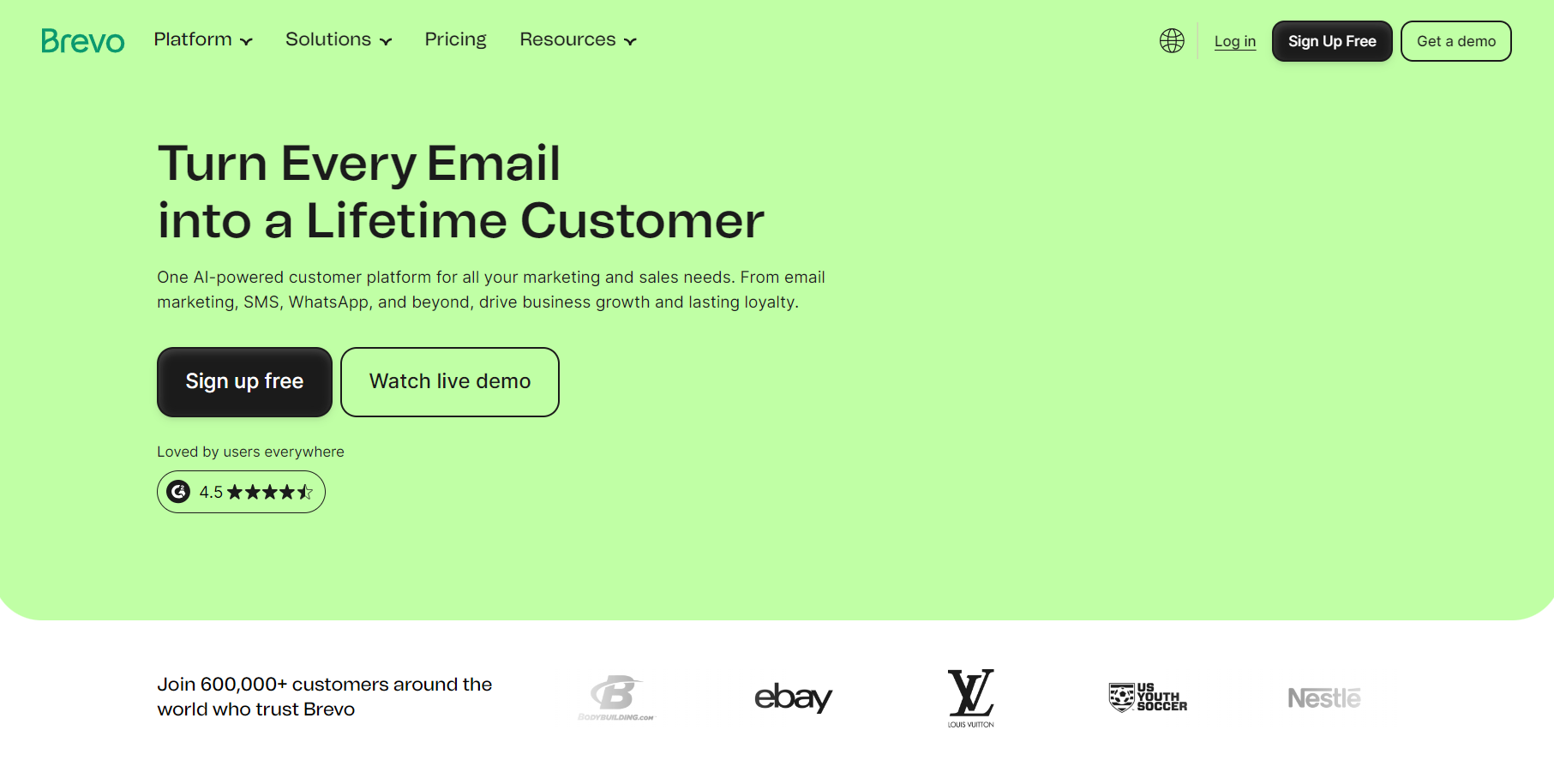
6. Brevo: Budget-Friendly Send-Based Solution
- Best for: Businesses needing a single platform for sales and basic automation, particularly those whose marketing volume aligns with send-based pricing.
- Overview: Brevo (formerly Sendinblue) combines email, SMS, and light sales tools into one platform. Its send-based pricing model is a distinguishing factor, allowing users to pay for the volume of emails sent rather than the number of contacts. This can be highly cost-effective for businesses with large contact lists but lower send frequencies. Brevo is more e-commerce-focused than AWeber, providing a better foundation for transactional and automated e-commerce communications.
- Key Features: Email and SMS campaigns, marketing automation, transactional email, sales CRM, live chat, and landing page builder.
- Pricing: Brevo offers a free plan and four paid plans with send-based pricing, starting at $9/month. The contact limit increases with the selected email volume tier.
- G2 Rating: 4.5/5 based on 2,600+ reviews.
- Analysis: Brevo presents a compelling option for budget-conscious marketers, especially those who can accurately predict their monthly email send volume. Its integrated sales tools also provide added value for businesses looking to centralize their customer interactions.
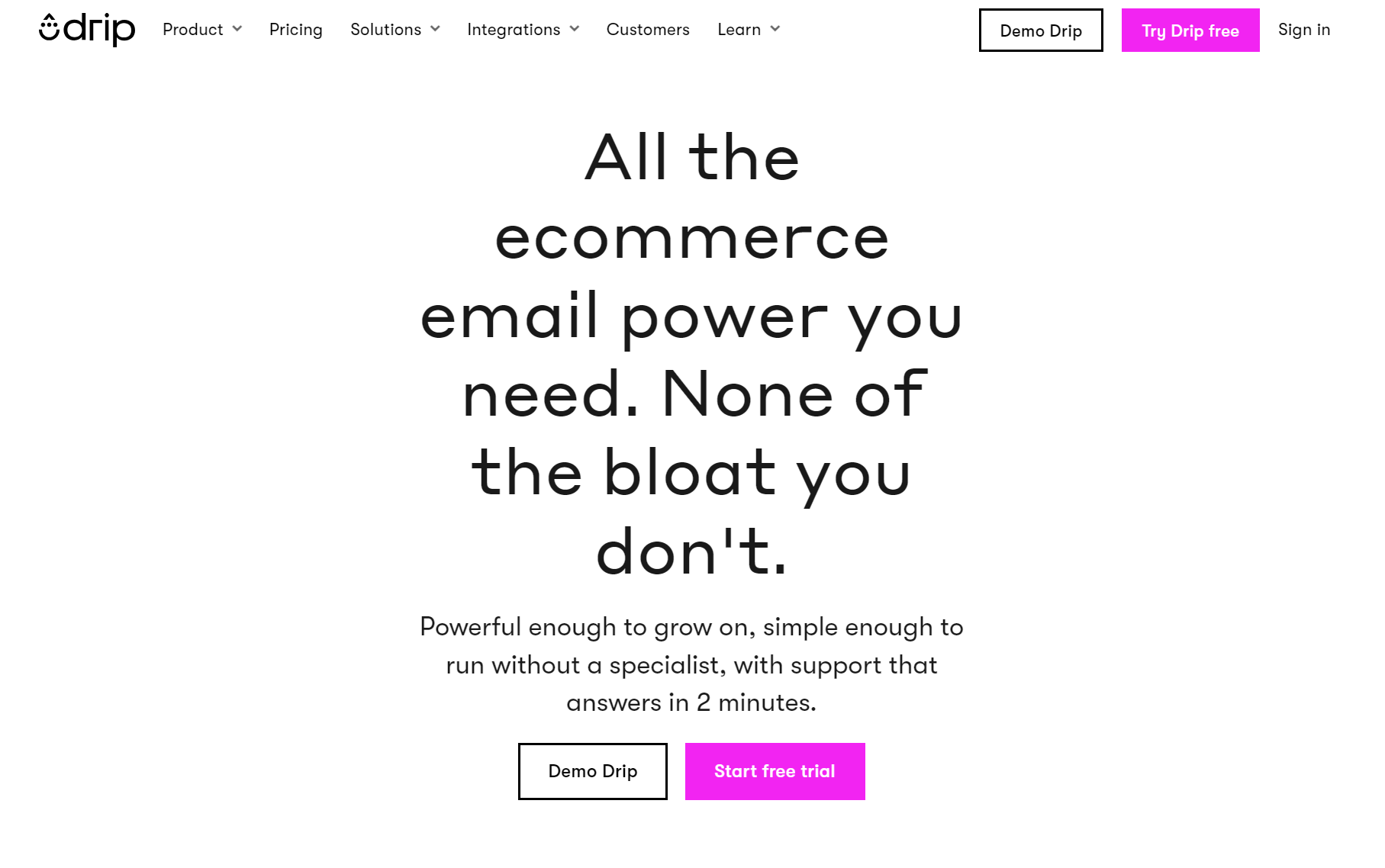
7. Drip: Unlimited Sends for Lean E-commerce
- Best for: Lean e-commerce stores that prioritize unlimited email sends and robust behavior-based automation.
- Overview: Drip offers a streamlined, feature-rich experience for growing e-commerce stores, providing every feature in a single paid plan. Its key differentiator is unlimited email sends, which is highly beneficial for high-volume marketers. While it may lack some of AWeber’s built-in selling tools, Drip excels in handling complex, behavior-based automation flows, allowing for highly personalized customer journeys based on site activity and purchase history.
- Key Features: Unlimited email sends, advanced e-commerce automation, detailed customer insights, SMS marketing (as an add-on), and integrations with major e-commerce platforms.
- Pricing: Drip does not offer a free plan and has one paid plan starting at $39/month.
- G2 Rating: 4.4/5 based on 480 reviews.
- Analysis: Drip is an excellent choice for e-commerce businesses that require the flexibility of unlimited email sends and sophisticated behavioral automation without the "bloat" of unnecessary features, making it a powerful yet focused tool for conversion-driven marketing.
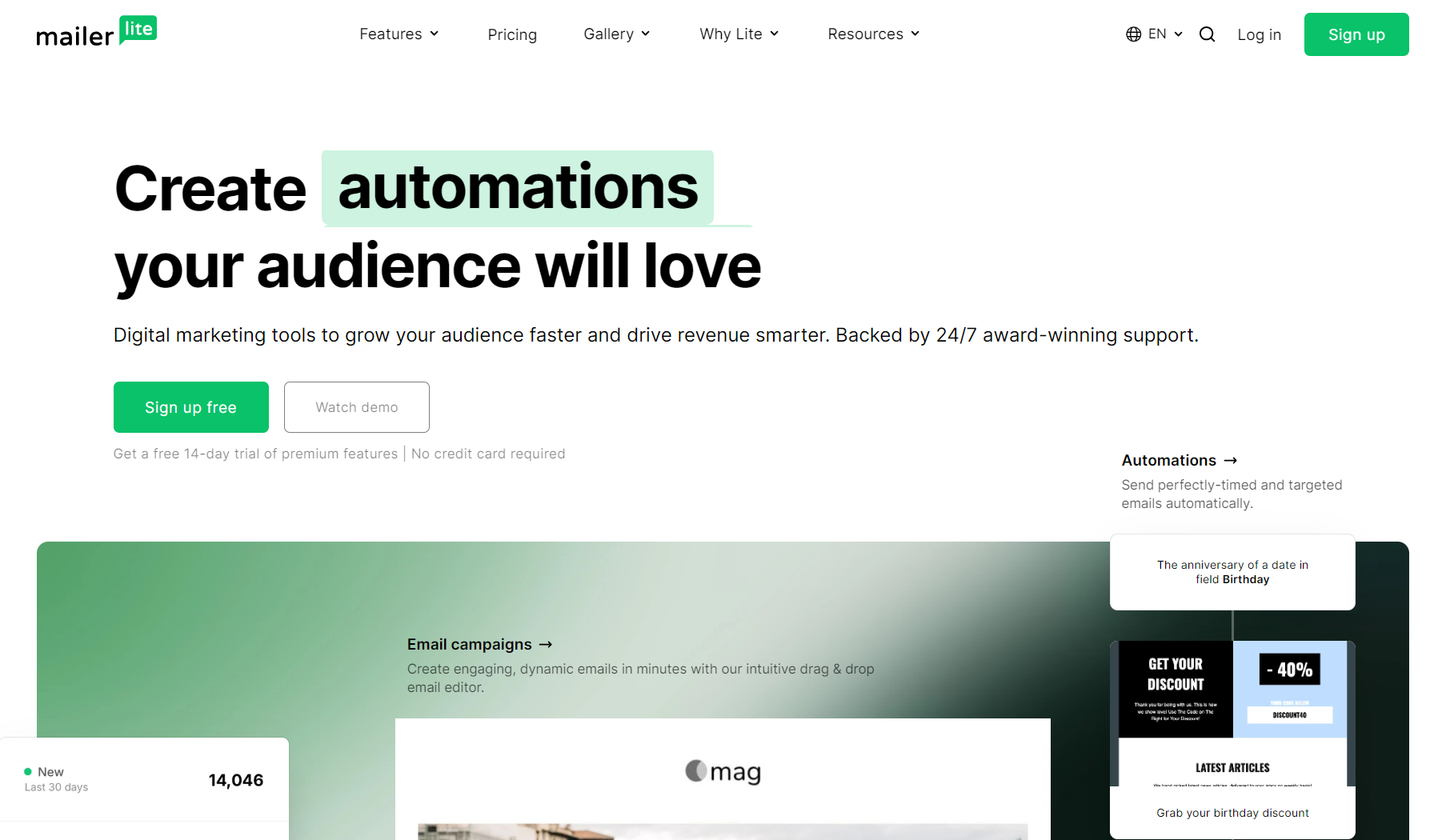
8. MailerLite: Ease of Use & Digital Product Monetization
- Best for: Small stores and businesses seeking a low learning curve for email features and strong monetization capabilities for digital goods.
- Overview: MailerLite is celebrated for its intuitive interface and ease of use, making it accessible for marketers of all skill levels. It offers solid email automation capabilities, including welcome series, abandoned cart reminders, and follow-up sequences, alongside core newsletter functionalities. Furthermore, MailerLite provides robust tools for monetizing digital content, making it a strong AWeber alternative for creators and small businesses selling online courses, e-books, or other digital products.
- Key Features: Easy-to-use drag-and-drop editor, marketing automation workflows, landing pages, websites, pop-ups, and tools for selling digital products.
- Pricing: MailerLite offers a free plan and two marketing plans, in addition to transactional email plans. Its marketing plans start from $12/month.
- G2 Rating: 4.6/5 based on 1,110+ reviews.
- Analysis: MailerLite strikes a balance between user-friendliness and comprehensive features, providing an effective and affordable solution for small businesses and creators who prioritize straightforward email marketing and digital product sales.
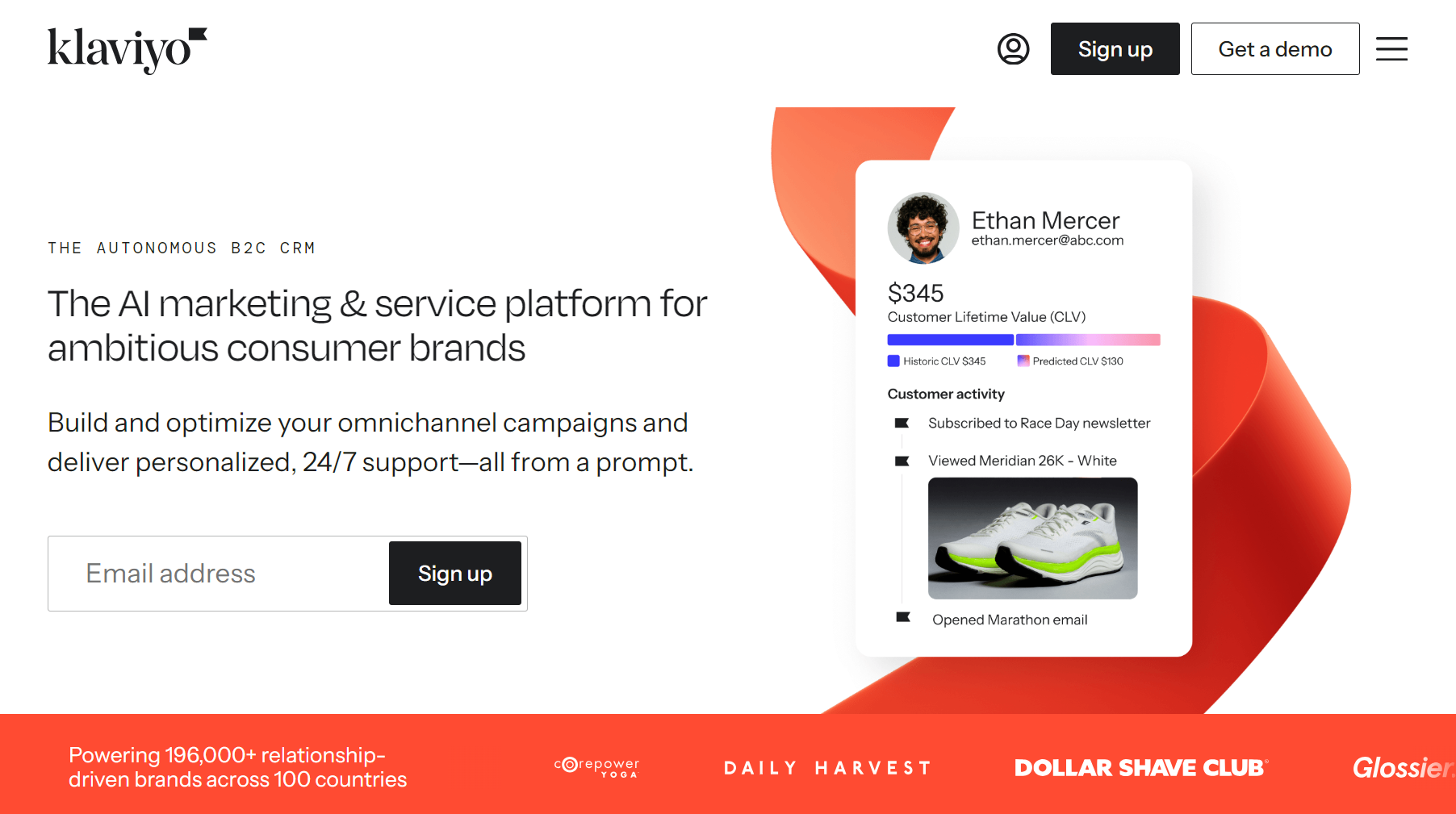
9. Klaviyo: Enterprise E-commerce & Data-Driven Insights
- Best for: Established e-commerce brands and enterprise stores requiring advanced data analytics, predictive insights, and robust B2C CRM functionalities.
- Overview: Klaviyo is a highly data-led platform tailored for sophisticated e-commerce operations. Its powerful B2C CRM underpins highly personalized email and SMS campaigns, advanced segmentation, and predictive analytics. Klaviyo excels in providing deep customer insights, including RFM (Recency, Frequency, Monetary) analysis, to optimize customer lifecycle management and drive significant revenue growth for large-scale online businesses.
- Key Features: Advanced e-commerce segmentation, predictive analytics, RFM analysis, email and SMS marketing, A/B testing, and a vast library of e-commerce integrations.
- Pricing: Klaviyo offers a free plan and an email marketing plan with add-ons. Prices scale based on the number of active profiles, with paid plans starting at $20/month.
- G2 Rating: 4.5/5 based on 1,350+ reviews.
- Analysis: For e-commerce enterprises that generate substantial customer data and require powerful analytical tools to inform their marketing strategies, Klaviyo is a top-tier choice. Its focus on data-driven personalization and customer lifecycle management makes it a critical tool for maximizing customer lifetime value.
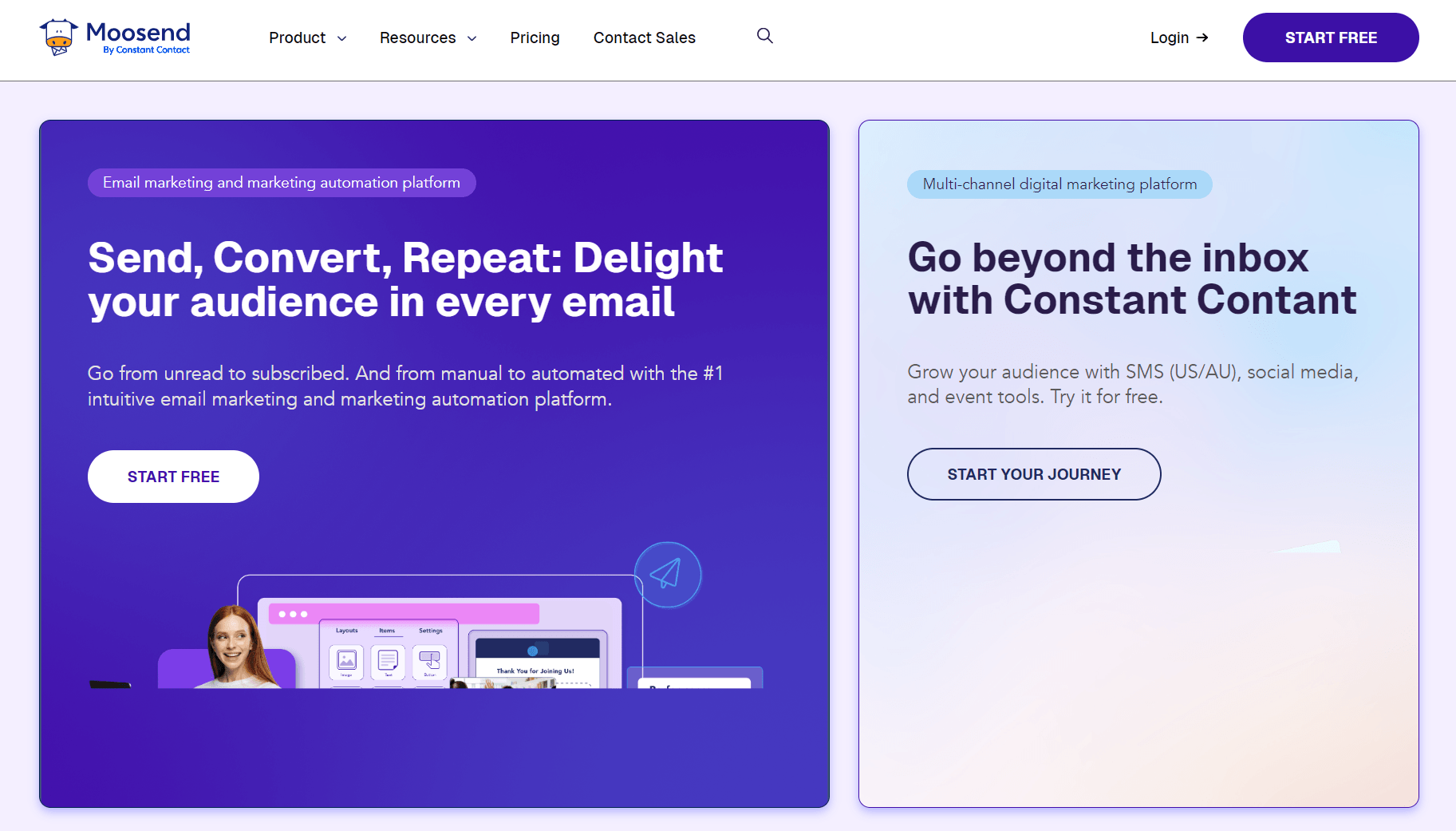
10. Moosend: Cost-Effective E-commerce Flows
- Best for: Budget-conscious senders who need e-commerce-specific automation flows and advanced segmentation capabilities.
- Overview: Moosend provides robust list-growth and email marketing features, including newsletters, multi-step automation workflows, and comprehensive audience management. Its strengths lie in its e-commerce focus, offering more extensive triggers and segmentation options than AWeber at a competitive price point. This makes it an attractive solution for businesses seeking sophisticated e-commerce marketing without a premium price tag.
- Key Features: Email marketing automation, advanced segmentation, landing page builder, subscription forms, and real-time analytics.
- Pricing: Moosend offers three paid plans, with no free plan available. The cheapest paid plan undercuts AWeber’s Lite plan, starting from $9/month for 500 subscribers.
- G2 Rating: 4.6/5 based on 740+ reviews.
- Analysis: Moosend is a strong contender for e-commerce businesses operating on a tighter budget but unwilling to compromise on essential automation and segmentation features. Its ability to offer multi-step workflows at a lower cost makes it a compelling alternative for growing online stores.
Key Considerations for Selecting Your Next Platform
Choosing the right AWeber alternative requires a careful evaluation of several critical factors that align with your business objectives and operational needs.
- E-commerce Integration & Features: For online stores, deep integration with platforms like Shopify, WooCommerce, or Magento is paramount. Look for tools that can pull in real-time order data, product catalog information, and customer browsing behavior to enable highly targeted campaigns like abandoned cart recovery, product recommendations, and post-purchase follow-ups.
- Automation Depth & Triggers: Assess the sophistication of the automation builder. Can it handle multi-step journeys? Does it offer a wide range of triggers beyond basic opens and clicks, such as specific page views, cart value thresholds, customer lifecycle stages, or even external CRM data?
- Multichannel Capabilities (SMS, Push): The modern customer journey often spans multiple channels. Platforms offering native SMS, web push notifications, and even social media integrations alongside email can provide a more cohesive and effective communication strategy.
- Pricing Models (Contact vs. Send-based): Understand how each platform charges. Contact-based pricing scales with your audience size, while send-based pricing scales with your email volume. One might be more cost-effective depending on your list growth rate and sending frequency. Always scrutinize what features are included at each tier.
- Ease of Use & Learning Curve: While advanced features are desirable, they shouldn’t come at the cost of usability. A platform with an intuitive interface and a reasonable learning curve will ensure faster adoption and more efficient campaign management. Consider the availability of templates, drag-and-drop builders, and helpful tutorials.
- CRM & Data Analytics: For businesses focused on long-term customer relationships, an integrated CRM or robust data analytics capabilities are crucial. These features allow for better customer segmentation, predictive insights, and a holistic view of each customer’s journey, enabling more personalized and impactful marketing efforts.
Strategic Implications: Investing in Growth-Oriented Marketing
The decision to switch from AWeber to a more advanced platform is not merely a technical upgrade; it’s a strategic investment in growth. By adopting a tool better suited to contemporary digital marketing demands, businesses can unlock several key advantages:
- Improved ROI: Platforms like Omnisend and Klaviyo, with their deep e-commerce integrations and advanced automation, consistently report higher ROI due to hyper-targeted campaigns and efficient customer lifecycle management.
- Enhanced Customer Experience: Personalization driven by rich customer data and behavioral triggers leads to more relevant communications, fostering stronger customer loyalty and satisfaction.
- Scalable Operations: As businesses grow, their marketing needs become more complex. Modern alternatives offer the flexibility and scalability to adapt to increasing audience sizes, diverse product catalogs, and evolving campaign strategies.
- Competitive Advantage: Leveraging cutting-edge marketing technology allows businesses to stay ahead of competitors who might still be relying on more basic tools, enabling faster market responsiveness and more effective customer acquisition and retention.
Conversely, clinging to an outdated platform can lead to missed revenue opportunities, inefficient marketing spend, and a gradual erosion of competitive standing. The digital consumer expects tailored experiences, and marketers must equip themselves with tools that can deliver on that expectation.
Conclusion: Charting Your Course for Digital Marketing Success
The landscape of email marketing software has evolved dramatically, moving far beyond the foundational offerings of platforms like AWeber. While AWeber remains a viable option for basic newsletters and simple automation, the demands of the modern e-commerce and creator economies necessitate tools with deeper integrations, multichannel capabilities, and advanced automation logic.
For e-commerce businesses seeking comprehensive multi-store support, multichannel capabilities (including global SMS), and enterprise-grade automation without an excessive learning curve, Omnisend emerges as a top contender. Businesses prioritizing a data-rich approach and predictive analytics might find Klaviyo or ActiveCampaign more suitable, though careful consideration of their pricing structures and potential add-on costs is essential.
For creators and those with robust digital commerce features, GetResponse, MailerLite, or Kit offer specialized tools that combine marketing with monetization. Budget-conscious senders can explore Brevo, MailerLite, or Moosend for low entry prices, or Drip for the unique advantage of unlimited email sends.
Ultimately, the "best" alternative is subjective and depends entirely on your specific business type, target channels, budget, and desired level of marketing sophistication. The next crucial step for any business considering a switch is to leverage the free trials and free accounts offered by these platforms. This hands-on experience will provide invaluable insight into their usability, feature sets, and how well they align with your unique marketing objectives. Remember to carefully review subscription terms and cancellation policies, especially for platforms that require credit card information upfront. By making an informed decision, businesses can ensure their digital marketing stack is truly built for growth and sustained success in the competitive landscape of 2026 and beyond.
Frequently Asked Questions (FAQs)
What is the best AWeber alternative?
Omnisend is widely considered the best AWeber alternative for e-commerce integration and multichannel automations driven by behavior and purchase activity. For enterprise-level data collection and predictive analytics, Klaviyo is a strong contender. If your focus is on creator features and monetization, Kit and GetResponse offer more specialized solutions.
Is Omnisend better than AWeber?
Yes, Omnisend is generally considered better than AWeber for Shopify and other e-commerce stores that prioritize lifecycle marketing, comprehensive SMS capabilities, and deep e-commerce-specific automation. While AWeber serves well for basic customer journeys and digital commerce features like subscriptions, Omnisend offers significantly more advanced tools for driving repeat purchases and enhancing customer lifetime value within an e-commerce context.
What is the best free AWeber alternative?
Omnisend’s Free Forever plan is an excellent choice for businesses seeking more advanced flows and segments, although it comes with a contact limit of 250 and 500 emails/month, which is less than AWeber’s free tier of 500 contacts and 3,000 emails. If email volume is a primary concern on a free plan, MailerLite’s free plan allows for up to 2,500 emails, making it a strong alternative in that regard.

Why do people switch from AWeber?
People primarily switch from AWeber due to its lack of native Shopify or deep e-commerce integrations, which hinders the implementation of complex, behavior-driven automation flows common in e-commerce, such as those offered by Omnisend and Klaviyo. Additionally, the limitations of AWeber’s Lite plan, which restricts access to crucial behavioral automation and email sales tracking, often forces users into the more expensive Plus plan (minimum $30/month) to gain competitive functionalities, prompting them to seek more feature-rich alternatives at similar or better price points.
Is AWeber good for e-commerce?
AWeber is not the optimal choice for most e-commerce businesses, particularly those aiming for significant growth or requiring sophisticated customer journey automation. While it can suffice for small stores with straightforward needs like basic welcome emails, follow-ups, newsletters, and landing pages for list growth, it lacks the advanced behavioral triggers, real-time product data integration, and comprehensive customer lifecycle management capabilities that are standard in dedicated e-commerce marketing platforms. Businesses will typically outgrow AWeber once they need to leverage granular shopping activity, customer segmentation based on purchase history, and other data-driven insights.








