

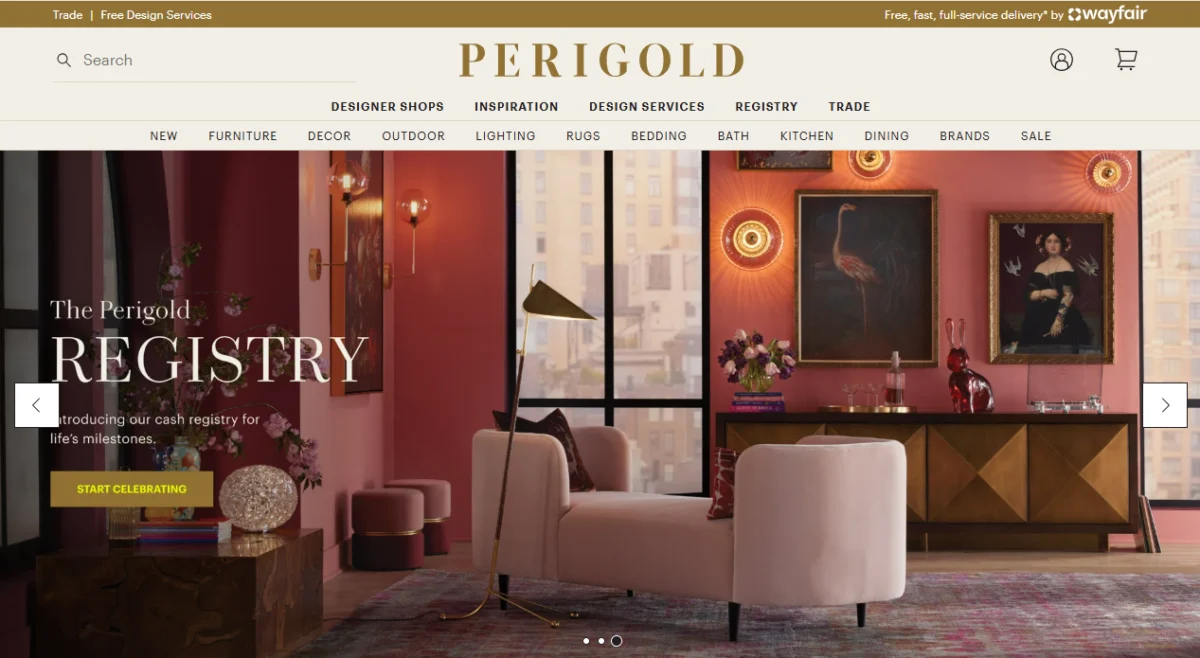
Wayfair CEO Niraj Shah has attributed the company’s recent momentum and revenue growth in fiscal Q2 to the strategic success of its luxury banner, Perigold, and its sophisticated application of artificial intelligence (AI). Perigold, launched in 2017, was specifically designed to capture the high-income U.S. consumer segment, a demographic that collectively spends over $100 billion annually on home furnishings and decor. Shah emphasized during Wayfair’s Q2 earnings call that this segment previously lacked a dedicated digital destination that truly catered to their sophisticated shopping preferences. The existing market, he noted, was characterized by exclusive showrooms accessible only to the trade or fragmented offerings from single-style, single-category competitors, leaving a significant unmet need.
Perigold was conceived to fill this void, now boasting an expansive catalog of approximately 3.5 million products from 1,500 distinct brands. This extensive selection is crucial for catering to the discerning tastes of luxury consumers. Shah further elaborated on the elevated service expectations of this customer base. To meet these demands, Perigold integrated complimentary white-glove delivery into its operational model. This premium service is complemented by proactive, high-touch order monitoring for larger purchases, a strategy that has demonstrably led to higher repeat purchase rates and improved post-delivery satisfaction scores, underscoring the brand’s commitment to exceptional customer experience.
While Perigold currently contributes over $400 million annually to Wayfair’s overall revenue, Shah acknowledged this figure is modest when compared to the colossal scale of Wayfair.com. However, he stressed that Perigold’s growth trajectory is rapid and, critically, profitable. This financial health and swift expansion position Perigold as a significant growth engine for the broader Wayfair enterprise.
A Deep Dive into Perigold’s Growth Trajectory and Market Positioning
Wayfair, a prominent player in the e-commerce landscape, holds the 11th position in the Digital Commerce 360 Top 1000 Database, a comprehensive ranking of North America’s largest online retailers based on annual e-commerce sales. Furthermore, the company’s commitment to technological innovation is reflected in its No. 267 ranking in Digital Commerce 360’s inaugural AI Rankings, highlighting its early adoption and integration of artificial intelligence across its operations.
Since its inception, Perigold has consistently achieved double-digit annual growth. Projections indicate this trend will continue, with anticipated growth exceeding 20% in both 2024 and 2025. This robust performance extends to physical retail as well, with Perigold having opened its first two brick-and-mortar stores within the past year, located in Houston, Texas, and West Palm Beach, Florida. These physical locations are already exceeding online performance metrics, demonstrating higher average order values, which further validates the brand’s appeal to its target demographic.
The active customer base for Perigold is nearing 400,000, representing a substantial 20% year-over-year increase. A key differentiator for Perigold customers is their higher spending power. On average, a Perigold customer spends nearly triple annually compared to a shopper of Wayfair’s core banner. Notably, approximately 40% of Perigold’s annual customers are new to the Wayfair family of brands, indicating that Perigold is successfully attracting and acquiring a distinct customer segment rather than merely cannibalizing existing demand.
This influx of new, affluent customers, who are generally more resilient to economic fluctuations, is a strategic advantage for Wayfair. While Perigold’s direct-to-consumer (B2C) offering is a significant component of its success, Shah also highlighted the growing importance of its business-to-business (B2B) segment. Earlier this year, Wayfair relaunched its trade program, introducing a simplified and more competitive discount structure for designers, architects, and other industry professionals. This strategic enhancement has propelled B2B sales to an all-time high as a proportion of Perigold’s overall volume.
Perigold’s competitive edge lies in its ability to offer an unparalleled breadth of selection without compromising on quality. The brand has established rigorous curation standards for materials and construction, ensuring that every product, from its entry-level offerings to high-end designer brands, meets a consistent benchmark of excellence. This commitment to quality assurance is fundamental to building trust and loyalty with luxury consumers.
The Transformative Power of AI within Perigold’s Operations
The synergy between Perigold and Wayfair.com is strategically managed to avoid significant product overlap, thereby offering customers a comprehensive home shopping experience under a single umbrella. This allows consumers to benefit from Wayfair’s established loyalty programs, efficient delivery capabilities, and advanced technological features, including its sophisticated search, personalization, and checkout technologies. Artificial intelligence plays a pivotal role in enhancing these technological capabilities.
A compelling example of AI’s impact is in Perigold’s visual merchandising. Traditionally, creating seasonal outdoor imagery spreads involved costly and time-consuming location shoots, travel, and styling crews, often running into millions of dollars and taking months to complete. Perigold has revolutionized this process by developing a proprietary, in-house AI pipeline. This system is capable of curating complementary products, composing them into realistic room settings, and rendering these scenes photorealistically using advanced image models. Automated quality checks are implemented for every generated image, with human stylists providing oversight to ensure adherence to Perigold’s luxury aesthetic standards. This AI-driven approach has drastically reduced costs, replacing an estimated $2 million in traditional production expenses with less than $10,000, representing a reduction of over 99%.
This AI capability allows Perigold to refresh and expand its visual content at an unprecedented pace, a critical factor in maintaining the visual appeal demanded by luxury shoppers. The emphasis on quality in AI-generated imagery is paramount, as luxury consumers expect a high standard of visual representation. Perigold is now extending these AI-powered tools to enhance product imagery and environmental visualizations across its platform, aiming to make product pages more comprehensive and engaging.
Expanding AI’s Reach Beyond Visual Content
Wayfair’s AI integration within Perigold extends far beyond visual content creation. The company is leveraging AI to significantly improve product content accuracy and merchandising across its entire catalog. Furthermore, AI-powered tools are being developed to assist Wayfair’s design consultants, both its virtual team and in-store professionals, in more efficiently sourcing and presenting the most suitable products to customers.
This strategic implementation of AI within Perigold exemplifies Wayfair’s broader, company-wide commitment to technological advancement. It demonstrates how platform-level AI capabilities can yield substantial returns in specific, high-value segments of the business. As AI continues to reshape how consumers discover and evaluate products, a curated luxury catalog like Perigold’s, with its inherent complexity and focus on craftsmanship, is an ideal environment for AI to generate outsized value. Wayfair’s leadership has indicated a firm intention to continue investing in and expanding its AI initiatives across the organization.
The strategic deployment of AI by Perigold not only enhances operational efficiency and reduces costs but also directly contributes to a superior customer experience. By enabling faster content creation, more accurate product information, and improved tools for design consultants, Wayfair is reinforcing its position in the competitive luxury home goods market. The success of Perigold serves as a testament to Wayfair’s ability to innovate and adapt, leveraging cutting-edge technology to meet the evolving demands of a sophisticated customer base and drive sustainable, profitable growth. The company’s ongoing investment in AI underscores its commitment to staying at the forefront of e-commerce innovation and delivering exceptional value to its customers and shareholders alike.








