The e-commerce landscape is in constant flux, with a steady stream of new services and technological advancements aimed at streamlining operations, enhancing customer experiences, and driving growth. This comprehensive overview highlights key recent releases and updates that are poised to reshape how online retailers manage their businesses, from cutting-edge AI-driven marketing and advanced search functionalities to revolutionary delivery methods and robust payment solutions. The updates cover a broad spectrum of merchant needs, including creative asset enhancement, site navigation optimization, logistics management, and cross-border commerce facilitation.
Revolutionizing Creative Content and Customer Engagement
In today’s visually driven online marketplace, high-quality images and videos are paramount. Wink has significantly expanded its creative toolkit, integrating AI-powered video and image enhancement with content cleanup capabilities into a unified, publish-ready workflow. This enhancement allows creators and businesses to not only elevate the visual appeal of their product imagery and promotional videos but also to refine their editing processes and efficiently remove unwanted elements. This move addresses a critical need for seamless content creation, enabling merchants to produce professional-grade assets more quickly and cost-effectively, thereby improving product presentation and viewer engagement. The platform’s ability to combine enhancement and cleanup suggests a future where sophisticated visual editing is accessible to a wider range of e-commerce businesses, regardless of their in-house creative resources.

Enhancing Site Discoverability and User Experience
For online retailers, ensuring customers can easily find what they’re looking for is fundamental to conversion rates. FunnelWon has launched SearchUs, a WordPress site search platform and plugin designed to deliver faster and more relevant search results. SearchUs indexes a comprehensive range of content, including pages, posts, WooCommerce products, PDFs, images, and videos. Its advanced configuration options allow website owners to prioritize search result rankings, implement promoted results, enable synonym and intent matching, and crucially, recover visitors from 404 errors by suggesting related content. The ability to customize search result pages further ensures brand consistency. In an era where user experience is a key differentiator, a robust and intelligent site search can significantly reduce bounce rates and increase average order values. This tool is particularly valuable for businesses with extensive product catalogs or a large volume of content, where generic search functions often fall short.
Streamlining Shipping and Logistics for Small Businesses
Efficient logistics remain a cornerstone of successful e-commerce. UPS has introduced a suite of new digital tools specifically designed to empower its small-business customers. These enhancements focus on improving pickup management, accelerating label creation, and expanding mobile capabilities. The new UPS dashboard centralizes the scheduling, management, and tracking of pickups, complete with real-time notifications, thereby reducing administrative burden. The simplification of label creation on UPS.com, now featuring a single-screen shipping experience, consolidates all necessary shipment details and service options, making the process more intuitive. Furthermore, the redesigned UPS mobile app empowers users to manage their entire shipping workflow—from label generation and pickup scheduling to shipment tracking—on the go. These updates reflect a strategic effort by UPS to cater to the evolving needs of SMBs, acknowledging their critical role in the e-commerce ecosystem and providing them with tools previously more accessible to larger enterprises.
The Dawn of Drone and Autonomous Deliveries
The future of last-mile delivery is rapidly taking shape, with autonomous technologies playing an increasingly prominent role. DoorDash has taken a significant leap forward by launching DoorDash Air, a drone delivery program, following its attainment of Part 135 air carrier certification from the Federal Aviation Administration. This certification authorizes DoorDash to operate as an air carrier, enabling it to offer an integrated drone delivery experience for local businesses. The program, housed within DoorDash’s in-house robotics and autonomy team, Labs, signals a growing investment in advanced delivery solutions. This development aligns with broader industry trends where companies are exploring faster, more efficient, and potentially more sustainable delivery methods. While regulatory hurdles and operational scaling remain challenges, the FAA certification marks a critical milestone, paving the way for more widespread adoption of drone delivery services in urban and suburban areas.

Complementing this, Flytrex, a pioneer in autonomous drone food delivery, has partnered with Nash, a logistics platform. This integration aims to create an "autonomous-first multi-modal delivery platform." Nash’s decision layer evaluates incoming orders against real-time conditions for optimal routing. Orders deemed suitable for drone delivery are dispatched to Flytrex’s autonomous fleet, while those better suited for ground transport are routed by Nash to on-demand couriers from its network. This collaborative approach leverages the strengths of both companies, optimizing delivery efficiency by matching the right mode of transport to each order. The partnership is already live across Flytrex’s Dallas-Fort Worth operational sites, demonstrating a tangible step towards integrated, intelligent logistics networks.
Advancing Warehouse Automation and Fulfillment Efficiency
The efficiency of warehouse operations directly impacts order fulfillment speed and cost. Unit, a company specializing in software for automating Direct-to-Consumer (D2C) inventory management and returns, has secured $12 million in funding. This capital infusion is earmarked to accelerate the commercial deployment of its platform. Unit’s predictive inventory software allows companies to store, retrieve, and manage individual items without necessitating costly redesigns of existing warehouse facilities. The significant investment, co-led by Prologis Ventures, Dynamo Ventures, and Ground Up Ventures, underscores investor confidence in the growing demand for intelligent warehouse automation solutions. As e-commerce volumes continue to surge, particularly for D2C brands, optimizing inventory management and returns processes is becoming a competitive imperative. Unit’s technology offers a flexible and scalable approach to tackling these challenges.
Transforming Cross-Border Payments and Financial Operations
Navigating the complexities of international commerce requires robust payment solutions. Manny Pay Global, a merchant payments company backed by boxing legend Manny Pacquiao, has launched its global payment facilitator platform. This platform is a collaborative effort, built in partnership with iMerchant, which provides the payment facilitator framework and orchestration layer, and powered by Adyen, a global leader in payment processing. The synergy between these entities promises merchants global acceptance, rapid onboarding, multi-currency settlement, intelligent routing, and advanced fraud prevention capabilities. Manny Pay Global offers merchants a choice between a dedicated merchant account or access to its PayFac facilitator platform, catering to diverse business needs. This initiative aims to simplify cross-border transactions, a critical factor for e-commerce businesses looking to expand their reach into international markets.

In Brazil, a rapidly growing e-commerce market, Ebanx, an international digital payments platform, has partnered with Pagaleve, a Brazil-based fintech, to introduce Pix 4x. This innovative offering combines the popular Pix instant payment system with a buy-now, pay-later (BNPL) option, extending installment plans to approximately 60 million consumers. At the heart of Pix 4x is Pagaleve’s advanced risk analysis engine, which utilizes machine learning and artificial intelligence for instant credit assessments. This partnership addresses the increasing consumer demand for flexible payment options in emerging markets, facilitating access to credit and potentially boosting online sales for merchants operating in Brazil.
AI-Powered Advertising and Product Discovery
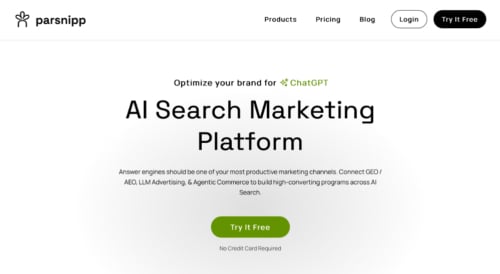
Artificial intelligence continues to be a driving force in e-commerce innovation, particularly in marketing and customer engagement. Parsnipp, a generative AI optimization and search marketing platform, has launched Smart LLM Ads, an integrated AI search advertising solution. This tool merges organic AI-driven product discovery with advertising campaigns, directly linking visibility intelligence to campaign creation. Marketers can now identify gaps in visibility across generative AI platforms and launch targeted campaigns to address these opportunities. This development signifies a shift towards more data-driven and responsive advertising strategies, where AI not only identifies potential customers but also helps create the campaigns to reach them effectively.
The evolution of AI in marketing is further highlighted by Netcore Cloud’s rebranding to Netcore.ai and the launch of its agentic marketing platform. The company’s seven AI agents are designed to autonomously manage the entire marketing campaign lifecycle, from planning and execution to analysis and optimization. This "agentic" approach promises a more proactive and intelligent marketing ecosystem, where AI agents work collaboratively to drive customer growth. The platform’s availability across major global markets, including India, Southeast Asia, the Middle East, North America, Europe, and Africa, indicates a global push towards AI-powered marketing automation.
Furthermore, Onton has debuted Ontology 1, a trust-and-authenticity model for agentic commerce, focusing on product discovery. This AI model goes beyond identifying products to evaluating the trustworthiness of the information surrounding them. By interpreting user preferences, including visual inputs, Ontology 1 aims to generate meaningful purchasing recommendations grounded in reliable data. In an online environment where misinformation can impact purchasing decisions, Onton’s focus on trust and authenticity is a critical step towards building more reliable AI-driven commerce experiences. This addresses a growing concern about the veracity of information presented by AI, particularly in product recommendations.
Integrated Platforms and Multichannel Commerce Solutions
The trend towards integrated solutions that simplify complex e-commerce operations continues. WP Engine, a provider of WordPress site tools, has formed a strategic partnership with Commerce, the parent company of BigCommerce and a provider of an AI-driven commerce ecosystem. This collaboration will introduce WP Engine Commerce Connect for BigCommerce, designed to assist mid-market brands in scaling their content-driven commerce strategies. This partnership aims to leverage the strengths of both platforms, providing enhanced capabilities for businesses operating on WordPress and BigCommerce, particularly in an increasingly competitive content-centric market.
MarketLeap, an e-commerce marketplace accelerator, has expanded its U.S. operations to help brands automate and scale their sales across global marketplaces. MarketLeap acts as the seller of record, managing compliance, logistics, advertising, customer experience, aftersales, and inventory management on behalf of brands. This comprehensive service aims to simplify international expansion, enabling U.S. consumer brands to diversify their presence in markets like Europe, moving beyond Amazon to platforms such as Walmart, eBay, and TikTok Shop. The expansion addresses the growing complexity of global e-commerce and the need for specialized expertise to navigate diverse marketplace requirements.
Goflow, a multichannel e-commerce operating system, has launched a USPS Direct Integration. This feature allows sellers to access eligible USPS services and commercial rates directly within the Goflow platform, streamlining the shipping workflow by keeping orders, labels, tracking, and fulfillment consolidated. The integration also supports sellers with existing USPS accounts or negotiated terms, offering greater flexibility and cost savings. This development is particularly beneficial for small to medium-sized e-commerce businesses that rely on USPS for their shipping needs and seek to optimize their operational efficiency.
Evolving Payment Flexibility and Consumer Options
Consumer demand for flexible payment options continues to shape the e-commerce landscape. PayPal and Amazon have launched PayPal Ratenzahlung (installments) for eligible customers in Germany and Austria. This allows customers to pay for eligible purchases on Amazon.de and within the Amazon app over time, with payment terms ranging from 3 to 48 months. This collaboration expands the availability of BNPL options, catering to a significant segment of European consumers who prefer to spread out their payments. The partnership between two major e-commerce players underscores the growing importance of flexible payment solutions in driving sales and enhancing customer purchasing power.
Analysis of Broader Implications
The collective advancements across these various sectors paint a picture of an e-commerce industry rapidly embracing automation, AI, and enhanced connectivity. The proliferation of AI-driven tools, from content creation and search optimization to marketing and product discovery, suggests a future where personalized and efficient customer journeys are the norm. The significant investments in warehouse automation and drone delivery highlight a relentless pursuit of speed and cost reduction in fulfillment, critical for meeting consumer expectations.

Moreover, the expansion of cross-border payment solutions and marketplace accelerators signals a maturing global e-commerce ecosystem, making it more accessible for businesses of all sizes to compete on an international stage. The emphasis on trust and authenticity in AI-driven product discovery, as seen with Onton, addresses emerging concerns about the responsible deployment of artificial intelligence.
These innovations are not merely incremental improvements; they represent a fundamental shift in how e-commerce businesses will operate. Merchants who strategically adopt these new services stand to gain a significant competitive advantage, improving operational efficiency, deepening customer relationships, and ultimately driving sustainable growth in an increasingly dynamic digital marketplace. The ongoing evolution of these tools suggests that the pace of innovation in e-commerce is only set to accelerate.