

The digital marketing landscape in 2025 has reached a critical juncture where the traditional methods of tracking user behavior are being systematically dismantled. As third-party cookies continue to fade into obsolescence and privacy regulations become more stringent, enterprises are pivoting toward the collection of zero-party data—information that consumers intentionally and proactively share with a brand. Within this context, the humble website poll, long maligned as a disruptive user experience (UX) obstacle, has emerged as one of the most potent tools for Conversion Rate Optimization (CRO). Industry experts at Invesp, a leading conversion optimization consultancy, have identified that while most polls fail due to poor timing and vague phrasing, a scientifically structured approach to on-site questioning can reveal the precise psychological barriers preventing visitors from converting.
The Strategic Shift: Zero-Party Data in 2025
For over a decade, marketers relied on passive data collection to infer user intent. However, the fragmentation of customer behavior across multiple devices and the increasing use of ad-blockers have created significant blind spots in traditional analytics. The resurgence of website polls represents a shift toward active data collection. Unlike first-party data, which is gathered through observation (such as click-stream data), zero-party data is volunteered by the user.
Khalid Saleh, CEO of Invesp and a veteran in the CRO space, emphasizes that the power of polls lies in their ability to provide high-volume qualitative insights. According to Saleh, polls are not intended to replace deep-dive qualitative research, such as one-on-one customer interviews, but rather to sharpen and validate those findings across a broader statistical sample. In an era where "why" is more important than "what," polls serve as a bridge between quantitative analytics and human psychology.
The Pre-Poll Research Phase: Moving Beyond Intuition
The primary reason for the failure of website polls is a lack of rigorous preparation. Most digital marketers initiate polls as a reactive measure to falling conversion rates without conducting the necessary groundwork. Experts suggest that writing poll questions should be the final step in a research-heavy process, not the starting point.
Before a single question is drafted, a comprehensive heuristic evaluation must be performed. This involves a professional audit of the website’s interface to identify potential friction points. This should be followed by an assessment of Google Analytics metrics, heatmaps, and session replay analysis. Only after these activities have highlighted a specific anomaly—such as a high exit rate on a checkout page or unusual lingering on a pricing table—should a poll be designed. By using these data points to form a hypothesis, marketers can ensure that their poll questions are rooted in observed behavior rather than gut feelings.
Mapping Polls to the Buyer’s Journey
To avoid irritating visitors, polls must be contextually relevant to the user’s current state. Casting a wide net by asking the same question to every visitor is a recipe for high bounce rates. Instead, the targeting must be segmented based on the buyer’s journey. Analysts categorize this journey into five distinct stages:
- Awareness: The visitor is identifying a problem and looking for general information.
- Interest: The visitor is researching potential solutions.
- Desire: The visitor is evaluating specific products or brands.
- Action: The visitor is ready to make a purchase or sign up.
- Post-Action: The visitor has completed the transaction and is now in the retention phase.
Determining which stage a visitor occupies requires sophisticated segmentation. For example, a first-time visitor landing on a blog post is likely in the Awareness stage, whereas a returning visitor who has viewed the pricing page three times in 48 hours is clearly in the Desire or Action stage. Asking a "Desire" stage question to an "Awareness" stage visitor results in a disconnect that diminishes brand trust.
A Taxonomy of Data-Driven Poll Questions
Effective polling requires a deep understanding of the four primary categories of questions: Motivators, Barriers, Hooks, and Satisfaction. Each serves a specific role in the optimization funnel.
Understanding Motivators
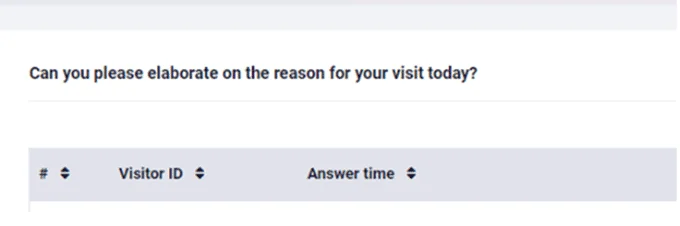
Motivator questions aim to uncover the underlying "job to be done" by the visitor. Invesp researchers recently documented a case study involving an e-commerce client where session replays showed users scrolling aimlessly without interacting with calls-to-action (CTAs). By deploying a poll asking, "What is the primary reason for your visit today?" the team discovered that users were looking for a specific compatibility chart that was buried deep in the footer. This insight, which analytics alone could not provide, allowed the brand to move the content and immediately increase engagement.
Identifying Barriers (FUDs)
Barriers are the "Fears, Uncertainties, and Doubts" (FUDs) that halt a transaction. If Google Analytics shows a high drop-off rate on a specific funnel page, a barrier poll can be deployed. Questions such as "Is there anything preventing you from completing your purchase?" or "What was your biggest concern about our checkout process?" allow the customers to act as consultants, identifying usability issues or trust gaps that the internal team may have overlooked.
Analyzing Hooks
Hooks are the unique value propositions that successfully persuade a customer to choose one brand over another. These are best deployed to returning customers or those who have just completed a purchase. Questions like "What was the one thing that almost stopped you from buying?" followed by "What ultimately convinced you to choose us?" provide the marketing team with the exact language and features they should highlight in their advertising copy.
Uncovering Missing Content
One of the most common mistakes in digital marketing is assuming the provided information is sufficient. Content-gap polls are particularly effective on category and product pages. By asking, "Were you able to find all the information you needed?" marketers can identify missing specifications, shipping details, or comparison charts that are essential for decision-making.
Validating Quantitative Trends with Qualitative Polling
A critical application of website polls is the validation of trends observed in smaller data sets. For instance, if a series of ten customer interviews suggests that a recent job change is a common trigger for subscribing to a service, this is a qualitative lead. However, ten people are not a representative sample of a million-visitor-per-month website.
By launching a targeted poll to validate this specific finding across thousands of users, the company can determine if the "job change" trigger is a universal motivator or a niche occurrence. If validated, the marketing department can then adjust its entire messaging strategy, including search engine marketing (SEM) keywords and social media targeting, to focus on individuals undergoing professional transitions.
The Technical Execution: Timing and Placement
The methodology of polling is as important as the content of the questions. In 2025, the "pop-up" has evolved into the "slide-in" or the "embedded micro-survey." Journalistic analysis of UX trends suggests that the most successful polls are those that do not obscure the primary content.
Timing is equally vital. A poll that appears the moment a page loads is often dismissed as spam. Conversely, a poll triggered by "exit intent" (when a user’s cursor moves toward the browser’s close button) or after a user has scrolled through 60% of a page has a significantly higher response rate. This behavioral triggering ensures that the user has had enough time to form an opinion or encounter a frustration before being asked for feedback.
Broader Implications and the Future of User Feedback
The move toward intentional, data-driven polling reflects a broader trend in the tech industry toward "consensual marketing." As consumers become more protective of their data, they are more willing to share it with brands that demonstrate they are using the information to improve the user experience.
The implications for the CRO industry are profound. We are moving away from an era of "A/B testing everything" toward an era of "informed experimentation." By using polls to gather direct feedback, the number of failed A/B tests can be drastically reduced, as the hypotheses being tested are already backed by user-confirmed pain points.
In conclusion, website polls are no longer mere annoyances; they are sophisticated diagnostic tools. When integrated into a broader CRO framework that includes analytics, heuristic evaluations, and session recordings, they provide the "why" behind the "what." For businesses looking to thrive in a post-cookie world, the ability to ask the right question, to the right person, at the right time, will be the ultimate competitive advantage. Through strategic implementation, these micro-interactions become a mirror, reflecting the unvarnished truth of the customer experience and providing a clear roadmap for digital growth.







