

The landscape of digital marketing is undergoing a fundamental shift as organizations move away from episodic campaign launches toward a model of continuous, data-driven refinement known as iterative testing. While traditional marketing often relies on large-scale A/B tests conducted at the end of a creative cycle, the iterative approach advocates for a perpetual loop of small, evidence-based improvements. This methodology, rooted in software development and agile project management, is becoming the standard for brands seeking to mitigate the rising costs of customer acquisition and adapt to rapidly changing consumer behaviors.
Industry data from the 2024 Conversion Benchmark Report highlights the necessity of this shift, revealing that subtle adjustments in content and delivery can result in disproportionate gains in engagement. For instance, the report found that landing pages written at a 5th-to-7th-grade reading level achieve an 11.1% conversion rate—more than double the rate of pages utilizing professional or academic language. Such insights underscore the importance of a testing framework that can identify and implement these granular findings in real-time.
The Evolution of Marketing Optimization: From Intuition to Iteration
The history of marketing optimization has transitioned through several distinct eras. In the mid-20th century, the "creative-led" era relied heavily on intuition and high-budget television or print campaigns with little immediate feedback. The advent of digital marketing in the late 1990s introduced the "data-informed" era, where basic metrics like click-through rates (CTR) provided the first glimpses into user intent. By the 2010s, A/B testing became a staple, allowing marketers to compare two versions of a page to determine a winner.
However, the current "iterative era" represents a more sophisticated evolution. Unlike a single A/B test, which often concludes with a "win" or "loss" followed by a return to the status quo, iterative testing treats every result as a data point for the next hypothesis. This approach acknowledges that consumer preferences are not static; a winning headline in January may fail by June due to changes in market sentiment or competitive pressure.
The Strategic Framework for Iterative Success
To implement a successful iterative testing program, marketing departments are restructuring their workflows to follow a six-stage cycle focused on speed and statistical rigor.

1. Hypothesis Formulation
The process begins with a laser-focused hypothesis derived from existing data or user observation. Rather than testing a complete page overhaul, marketers are encouraged to isolate variables. A typical iterative hypothesis might state: "Changing the call-to-action (CTA) from ‘Sign Up Now’ to ‘Start My Free Trial’ will increase conversion by 10% because it emphasizes the immediate value proposition." By isolating the variable, the team ensures that the resulting data is actionable and clear.
2. The Impact vs. Effort Prioritization
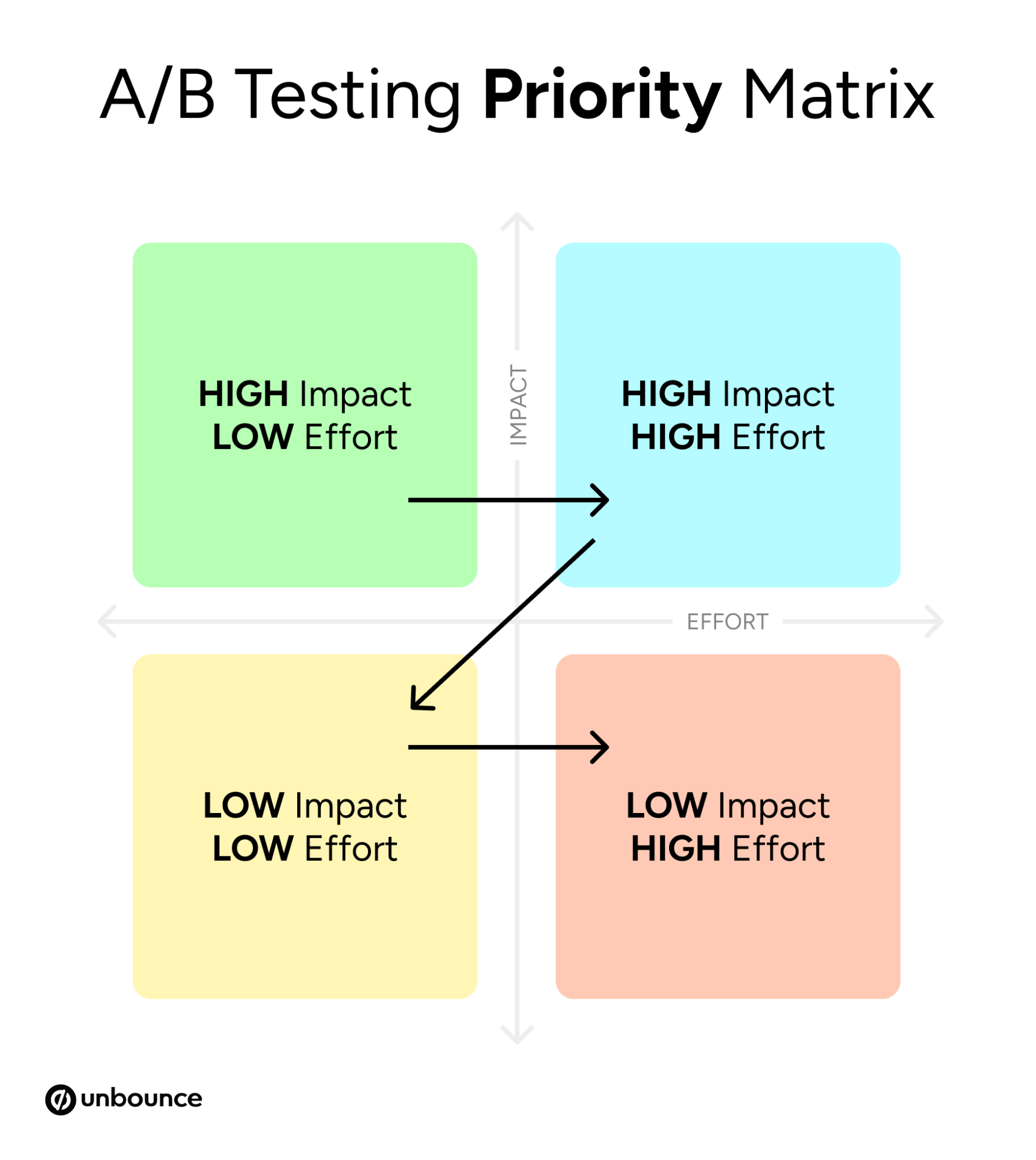
Resource management is a critical component of the iterative model. Using a 2×2 matrix, teams categorize potential tests based on "Impact" (potential to move the needle on KPIs) and "Effort" (hours of design, development, and copywriting required). The priority is given to "Quick Wins"—low-effort, high-impact changes—which build organizational momentum and provide immediate ROI.
3. Development of Minimal Testable Variations
Borrowing from the "Minimum Viable Product" (MVP) concept in tech, iterative marketing focuses on creating the simplest possible version of a test. This reduces the time-to-market and allows for more frequent experimentation. Modern tools, such as the Unbounce Smart Traffic system, have lowered the barrier to entry, allowing tests to begin producing significant results with as few as 50 visitors.
4. Data Collection and Statistical Validation
A primary pitfall in traditional testing is "peaking"—the tendency to end a test as soon as one version shows a slight lead. Iterative testing requires statistical significance, ensuring that results are not the product of random variance. Professionals typically look for a 95% confidence interval before declaring a test successful. This phase also requires patience to account for external variables, such as weekend versus weekday traffic patterns.
5. Analysis and Insight Extraction
The analysis phase goes beyond identifying a winner. Marketers ask "Why?" For example, if a simpler headline outperformed a clever one, the insight might be that the target audience values clarity over brand personality. This qualitative takeaway is often more valuable than the quantitative conversion lift because it informs future strategy across all channels, including email and social media.
6. Scaling and Future Iteration
Once a winning variation is identified, it is implemented as the new "control," and the cycle begins again. Successful findings are scaled—applied to other landing pages, ad sets, or product descriptions—ensuring that a single win contributes to a broad lift in organizational performance.

Supporting Data: The 2024 Conversion Benchmarks
Recent data provides a compelling case for why iterative testing is no longer optional. According to the 2024 Conversion Benchmark Report, there is a -24.3% negative correlation between high word complexity and conversion rates on landing pages. This suggests that many brands are inadvertently creating friction for their users through overly technical language.
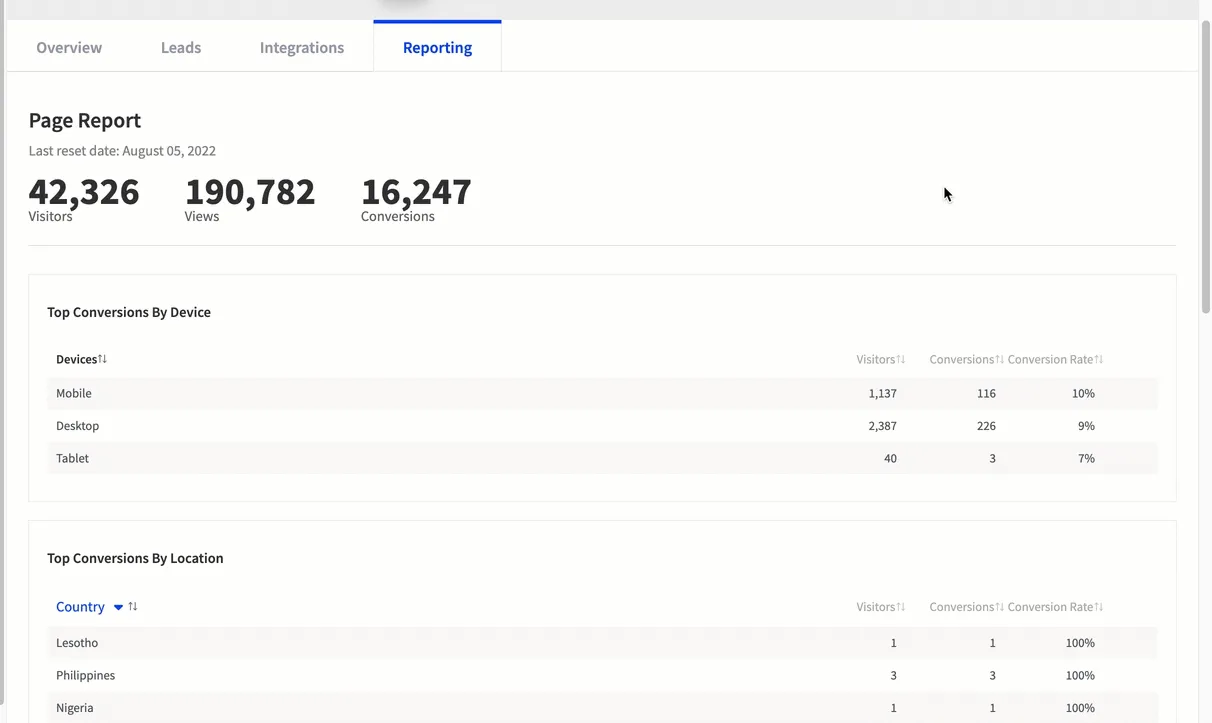
Furthermore, the report highlights a significant device-based discrepancy: while 83% of landing page visits now occur on mobile devices, desktop traffic still converts at an 8% higher rate on average. This gap presents a massive opportunity for iterative testing. Organizations that continuously refine their mobile user experience (UX)—testing shorter forms, larger buttons, and faster load times—stand to capture a significant portion of that 8% conversion gap.
Industry Perspectives and Organizational Impact
Growth experts and Chief Marketing Officers (CMOs) are increasingly advocating for a "culture of experimentation." Industry leaders suggest that the greatest barrier to iterative testing is not technology, but internal silos.
"Marketing doesn’t happen in a vacuum," noted Josh Gallant, founder of Backstage SEO and a contributor to the Unbounce guide. He emphasizes that the most successful programs involve cross-departmental collaboration. Customer support teams, for instance, can provide testing ideas based on common customer pain points, while sales teams can offer insights into the specific objections that prevent leads from converting.
By democratizing the testing process—allowing various team members to submit hypotheses based on their unique interactions with the customer—companies can build a robust backlog of experiments that reflect real-world user needs rather than executive hunches.
Broader Implications: The Role of AI and Automation
The future of iterative testing is inextricably linked with artificial intelligence. Machine learning algorithms are now capable of automating the "traffic routing" portion of the cycle. Tools like Smart Traffic can analyze a visitor’s attributes (device, location, time of day) and automatically direct them to the landing page variant most likely to convert for that specific profile.
This shift toward "automated iteration" allows marketing teams to focus on the creative and strategic aspects of the cycle—generating hypotheses and interpreting insights—while the software handles the heavy lifting of data analysis and traffic management.
Conclusion: The Long-Term Value of Incremental Gains
The cumulative effect of iterative testing is often compared to compound interest. While a 2% improvement in conversion rate from a single test may seem negligible, a series of twelve such improvements over a year can result in a transformative increase in total revenue.
In a digital economy characterized by high competition and volatile ad costs, the ability to rapidly test, learn, and adapt is the primary differentiator between brands that scale and those that stagnate. Iterative testing provides a repeatable, scientific framework for that adaptation, turning the uncertainty of marketing into a predictable engine for growth. As the industry moves toward 2025 and beyond, the companies that thrive will be those that view their marketing assets not as static billboards, but as living experiments in a constant state of improvement.







