The landscape of retail is undergoing a profound transformation, moving beyond the traditional website or app as the primary point of customer interaction. This evolution, dubbed "agentic commerce," is fundamentally altering how consumers discover and purchase products, potentially disintermediating retailers from the crucial moment of purchase decision. At its core, agentic commerce signifies a paradigm shift where artificial intelligence assistants act as sophisticated intermediaries, directly influencing consumer choices and placing the onus on product data quality rather than storefront appeal.
The genesis of this disruption can be traced to advancements in AI and the development of robust infrastructure that enables intelligent agents to navigate and transact within the commercial sphere. A pivotal demonstration of this emerging reality occurred at Vercel’s 2026 Ship conference, where a partnership with Shopify highlighted the tangible capabilities of agentic commerce. Shopify’s introduction of its "Catalog" product search API, a monumental undertaking that aggregates billions of products from millions of merchants into structured, agent-readable data, serves as the foundational plumbing for this new era. This open and accessible catalog democratizes access to product information, allowing any developer to build shopping experiences atop a universal product repository.
Vercel’s demonstrations at the conference showcased the practical applications of this technology. Imagine a running club app that intelligently suggests athletic gear based on real-time weather data and proximity to local stores, or a voice assistant capable of finding a child’s toy through natural conversation alone. These examples illustrate how commerce is no longer confined to a destination but is seamlessly integrated as a feature within broader applications, powered by AI agents drawing from a unified product catalog. This shift means that the curated brand pages, elaborate merchandising strategies, and meticulously planned promotions that retailers have long relied upon may become invisible to the end consumer, who interacts solely with the AI’s synthesized answer.
The Erosion of Retailer Control: From Destination to Option
For the better part of the last decade, retail marketing executives have operated under the assumption that their website or mobile application served as the ultimate destination for consumers. Significant investments were poured into driving traffic to these platforms, where retailers maintained complete control over the shopper’s experience and the information presented. AI agents, however, completely upend this dynamic. They insert themselves between the shopper and the product, performing the search and delivering a recommendation. Consequently, the retailer is relegated to being just one option within the agent’s answer, rather than the primary venue for the shopping journey. In essence, the AI agent is beginning to assume the role previously performed by the retail storefront itself.
This phenomenon bears a striking resemblance to "disintermediation," a term used to describe the removal of intermediaries in a transaction. Historically, travel agents, record stores, and physical bank branches have all experienced this disruption due to technological advancements and evolving consumer behaviors. The uncomfortable reality for contemporary retailers is that they are now the middlemen facing this risk.
The Infrastructure is Ready: A Universal Product Catalog Emerges
The notion of agentic commerce might have once seemed like a distant future, but the necessary infrastructure is already in place and operational. The Vercel and Shopify collaboration is a testament to this. Shopify’s Catalog API represents a significant technological achievement, addressing the complex challenge of standardizing vast amounts of diverse product data. It normalizes information about the same product sold by different retailers at varying prices and with different attributes, transforming it into clean, structured data that AI agents can readily interpret. Crucially, this catalog is open and does not require user logins, further lowering the barrier to entry for developers and AI assistants.
The implications of this universal catalog are far-reaching. Any developer, or indeed any individual, can now conceptualize and build a shopping experience by simply describing desired products in natural language. This fundamentally redefines the consumer journey, shifting it from a deliberate visit to a retail platform to a fluid integration of commerce within various applications. The quality of a retailer’s product data, rather than the aesthetic appeal or functionality of their website, becomes the primary competitive differentiator.
Data Quality as the New Currency: From Ranking to Eligibility
In the traditional search engine optimization (SEO) paradigm, incomplete or suboptimal data might result in a lower ranking, pushing a product from the first page to the eighth, for instance. This typically leads to a measurable loss in traffic. Agentic commerce operates on a starkly different principle. When an AI agent filters for specific attributes, such as "small bag organic whole wheat flour," the presence of that attribute in the product data is not a factor for ranking; it is a prerequisite for inclusion. If the attribute is missing, the product is not merely ranked lower; it is entirely excluded from the agent’s consideration set. The consumer never encounters the product, and the retailer may never realize the missed opportunity.
Empirical data underscores this critical point. Brands that maintain clean and enriched product feeds report an approximately 23% increase in eligibility for AI-driven product discovery. When product catalogs are meticulously optimized to near-total attribute completion – a state often referred to as a "Golden Record" (around 99.9% accuracy) – visibility in AI recommendations can surge by up to four times compared to basic, search-optimized feeds. Conversely, inaccurate pricing or availability data can lead to a significant revenue leakage of up to 42%, as agents learn to disqualify products with demonstrably stale information.
Achieving this "Golden Record" is not a glamorous undertaking but requires a systematic approach focused on four key areas:
- Data Standardization: Ensuring consistency in how product attributes are named and described across all products.
- Attribute Enrichment: Going beyond basic product descriptions to include detailed, granular information that AI agents can parse.
- Data Accuracy and Timeliness: Implementing robust systems to ensure pricing, stock levels, and other critical details are always up-to-date.
- Data Governance: Establishing clear ownership and accountability for product data quality within the organization.
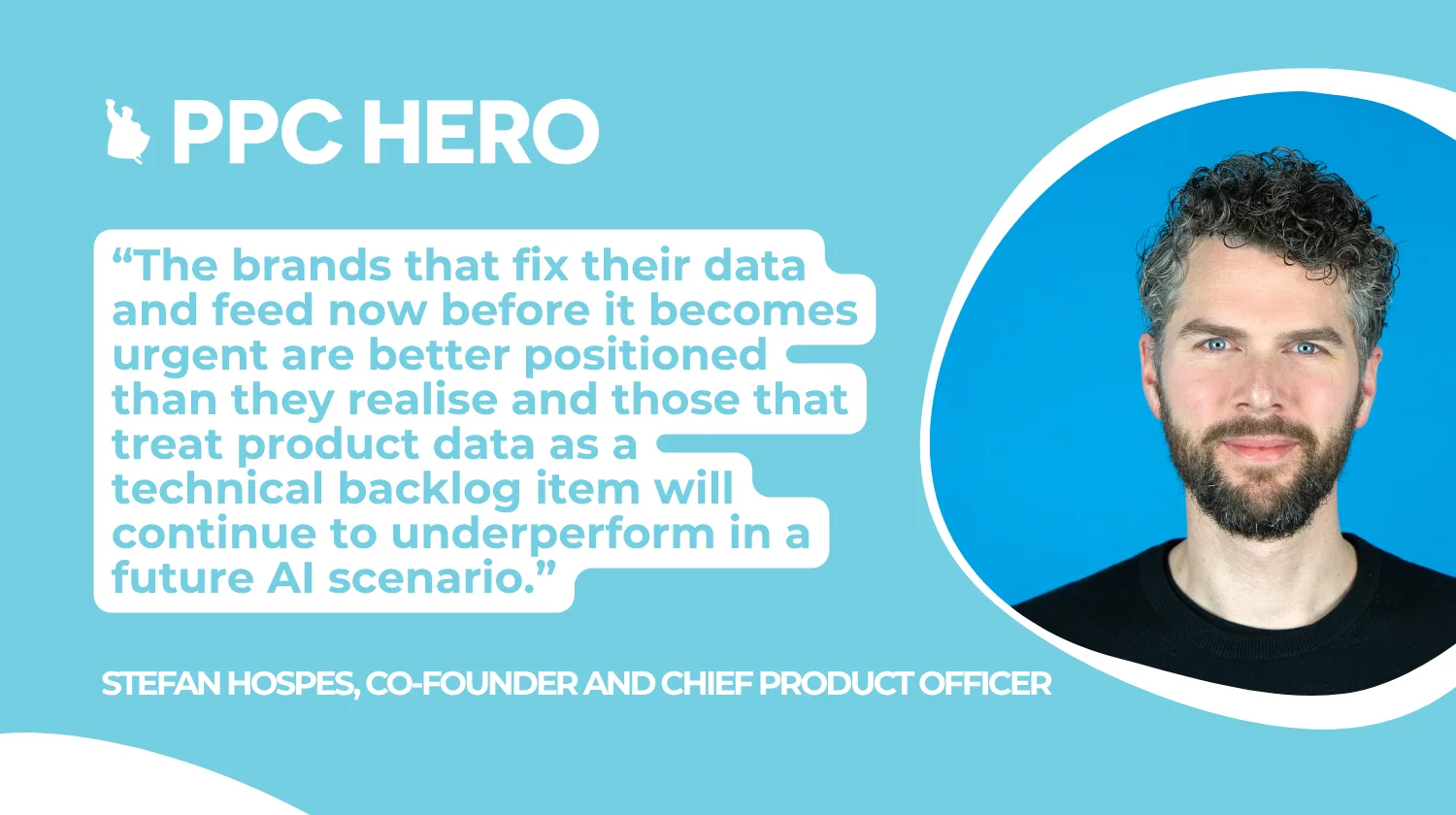
These requirements necessitate a fundamental shift in how organizations perceive and manage their product feeds. Instead of being an operational afterthought, the product feed must be treated as a vital marketing asset with dedicated ownership and resources.
Trust in the Machine: Accuracy as the Foundation for Reliability
The discussions at Vercel’s Ship conference consistently returned to a singular, crucial concept: trust. As the cost of code development continues to decline, the durable competitive advantage for businesses will lie in their ability to foster trust. Commerce has historically been built on a relay of trust: consumers purchase from a brand because someone they trust has vouched for it. Shopify’s entire business model, for example, is predicated on extending its established trust to the merchants operating on its platform.
Extending this logic to AI agents reveals a more nuanced and critical aspect of trust. When individuals delegate purchasing decisions to their AI assistants, they are entrusting these agents to select the most suitable options. The AI, lacking personal experience with each product, relies implicitly on the quality of the data it receives. A brand that consistently provides accurate, complete, and coherent information establishes itself as a reliable recommendation. Conversely, a brand that supplies outdated pricing or incomplete attribute data becomes a liability, which the AI learns to actively avoid. Brand trust, once cultivated through years of advertising and direct consumer engagement, is now partially forged, or irrevocably damaged, through the machine that sits between the brand and the shopper.
Agent Visibility: A New Frontier in Demand Generation
In the traditional retail funnel, e-commerce platforms were typically situated at the bottom, serving as the point where demand, generated by higher-funnel brand-building efforts, was captured. AI agents, however, compress this funnel. An AI assistant responding to queries like "best budget grocery delivery near me" or "what do I need for a Sunday roast" is actively shaping consumer decisions long before a shopper reaches a checkout page. Winning the opportunity to be the recommended answer in these scenarios effectively drives demand into a retailer’s own search results, applications, and physical stores.
Therefore, securing visibility within AI agent interactions should not be viewed as a bottom-funnel efficiency play. Instead, it functions as a powerful form of upper-funnel demand generation. The measurement and attribution of these efforts should evolve to reflect this reality, ideally integrated into mix models rather than being treated as negligible outliers.
The competitive race is already underway. Major players like Walmart, with its "Sparky" AI assistant, and Target, in collaboration with Instacart, are actively developing and deploying their own agent experiences. Furthermore, several of the largest retailers have been instrumental in shaping the new commerce protocols that these AI agents will utilize. Brands that were involved in these early discussions are now positioned to benefit from standards they helped define, while others may find themselves playing catch-up, adapting to protocols they had no hand in creating. Retailers that began strategizing for agent visibility a year ago are now ahead of those who have yet to integrate it into their roadmaps.
Actionable Steps: Preparing for the Agentic Future This Quarter
Navigating the transition to agentic commerce does not necessarily require a complete organizational overhaul. However, it does demand a reprioritization of certain initiatives that may have been relegated to the "someday" list. Key actions that retailers should consider initiating this quarter include:
- Appoint a Product Data Owner: Assign clear responsibility for the quality and completeness of product data. This individual or team should have the authority and resources to drive improvements.
- Audit and Enrich Product Feeds: Conduct a thorough review of existing product data to identify gaps, inconsistencies, and inaccuracies. Develop a plan to enrich feeds with granular attributes that AI agents can leverage.
- Invest in Data Quality Tools: Explore and implement technologies that can automate data validation, standardization, and enrichment processes.
- Develop an Agent Strategy: Begin formulating a strategy for how the brand will engage with AI agents, focusing on ensuring data readiness and exploring potential partnerships or integrations.
The storefront is evolving. In the coming years, the brands that thrive in the era of agentic commerce will be those whose product data is instantly recognizable and trustworthy to AI agents. While the work involved in achieving this level of data sophistication may be tedious, it is attainable and accessible to any organization willing to commit to starting now. By embracing these changes proactively, businesses can position themselves as the preferred recommendations for AI agents, while competitors remain focused on redesigning outdated interfaces that consumers may never even see.