The landscape of paid social media advertising has undergone a seismic shift with the introduction of Meta Ads AI Connectors, a groundbreaking innovation that fundamentally alters how advertisers create, manage, and analyze campaigns. For years, the operational hub for paid social efforts has been confined within Meta’s Ads Manager, a platform where performance was monitored, adjustments were made, and any auxiliary AI tools served primarily as interpretive aids, existing in a separate, disconnected sphere. This paradigm has been irrevocably broken, ushering in an era where artificial intelligence is not merely an observer but an active participant, seamlessly integrated into the campaign lifecycle.
The core of this transformation lies in Meta’s strategic decision to empower advertisers with the ability to conduct their entire paid social workflow directly within the AI tools they already utilize. This eliminates the traditional hurdles that have long encumbered advertisers: the complex setup of APIs, the arduous chase for developer credentials, and the frustrating dependencies on engineering teams for integration. Through Meta’s robust MCP (Meta Campaign Platform) server, these AI tools now securely connect to live campaign data. This direct pipeline facilitates everything from detailed performance reporting to the creation of entirely new campaigns, all orchestrated through the power of natural language. While the technical mechanics are impressive, the more profound implications lie in how this innovation will reshape the very practice of running paid social campaigns.
Execution Leaps Beyond the Platform’s Traditional Boundaries
Historically, campaign optimization has been inextricably linked to the platform itself. The process began with opening Ads Manager to review performance metrics, followed by navigating within its specific constraints to implement any necessary changes. AI tools, while adept at deciphering data, were largely impotent in directly influencing live campaigns. They could offer insights and recommendations, but the actionable execution remained a manual, platform-bound process.
Meta Ads AI Connectors dismantle this long-standing wall. The environment where advertisers now analyze campaign performance is the same environment from which they can enact immediate changes. This drastically reduces the lag time between identifying a performance issue and rectifying it. The laborious cycle of exporting data, analyzing it in a separate application, and then manually applying changes within Ads Manager is effectively eliminated. The new workflow streamlines the journey from identifying a strategic question to executing a decisive action, all within a unified, intelligent interface. This seamless transition is poised to accelerate iterative improvements and enhance campaign responsiveness in real-time.
Decision-Making Centers Evolve with Data Proximity
Beyond the immediate streamlining of execution, Meta’s initiative signals a deeper strategic shift: the relocation of decision-making to where the data resides. By granting AI tools direct access to Meta’s campaign data, the company acknowledges a long-held industry truth – that paid social campaigns do not operate in a vacuum. Their performance is intricately intertwined with other marketing channels, such as search advertising, retail media networks, and broader business objectives.
When an AI tool can pull and act upon Meta data in conjunction with information from these other critical sources, it naturally becomes the central nexus for strategic decisions. This integration is crucial for achieving the cross-channel visibility that marketing teams have strived for years to attain. Instead of optimizing Meta campaigns in isolation, advertisers can now weigh their performance within the context of the entire marketing ecosystem and implement adjustments without the need to constantly switch between disparate tools. This holistic approach promises more informed, integrated, and ultimately more effective marketing strategies.

Reduced Friction Democratizes Campaign Management and Elevates Strategic Skillsets
The third significant transformation ushered in by Meta Ads AI Connectors pertains to the reduction of operational friction. This, in turn, has a profound knock-on effect on the skills required for successful paid social management. Tasks that once necessitated intricate navigation of the platform, complex inter-team coordination, or lengthy technical setup processes can now be accomplished through simple, natural language commands.
This not only accelerates the pace of execution but also broadens the scope of who can effectively manage paid social campaigns. As the barrier to entry lowers, proficiency in platform mechanics begins to recede as the primary differentiator for professionals. Instead, the emphasis shifts towards higher-level strategic capabilities. What becomes paramount is a team’s ability to articulate clear inputs, interpret the nuanced outputs from AI, and skillfully guide the system towards desired outcomes. This evolution suggests a future where strategic thinking and prompt engineering become as vital as traditional analytical skills.
The Enduring Importance of Human Judgment in an AI-Driven World
While the efficiency gains and simplified workflows associated with Meta Ads AI Connectors are undeniable, they represent only one facet of this evolving landscape. The true opportunity lies not in treating these connectors as mere reporting shortcuts but as a fundamental new layer in the campaign workflow. The genuine value proposition is not simply asking an AI tool to generate a Meta report; rather, it is the seamless integration of Meta data into a comprehensive decision-making process that already encompasses other channels, key business metrics, and rigorous testing methodologies.
The teams that will truly benefit from this advancement are those that redesign their entire operational approach, rather than merely bolting AI onto existing routines. This necessitates a proactive reimagining of how work is accomplished, embracing the new possibilities for integrated strategy and execution.
Furthermore, this shift significantly elevates the stakes for human judgment. When campaigns can be built and modified with a single instruction, the precision with which the right inputs, signals, and guardrails are defined becomes critically important. The AI system will act with speed and efficiency, but it still requires intelligent direction. The ultimate guidance – the strategic compass that steers these powerful tools – remains a distinctly human prerogative. This underscores the enduring necessity of critical thinking, strategic foresight, and ethical considerations in the realm of digital advertising.
A New Center of Gravity for Paid Social
It is tempting to categorize Meta Ads AI Connectors as simply "another AI feature." However, such a classification significantly undersells the profound implications of this launch. This innovation is less about making existing campaign management processes incrementally easier and more about fundamentally redefining where that management resides.
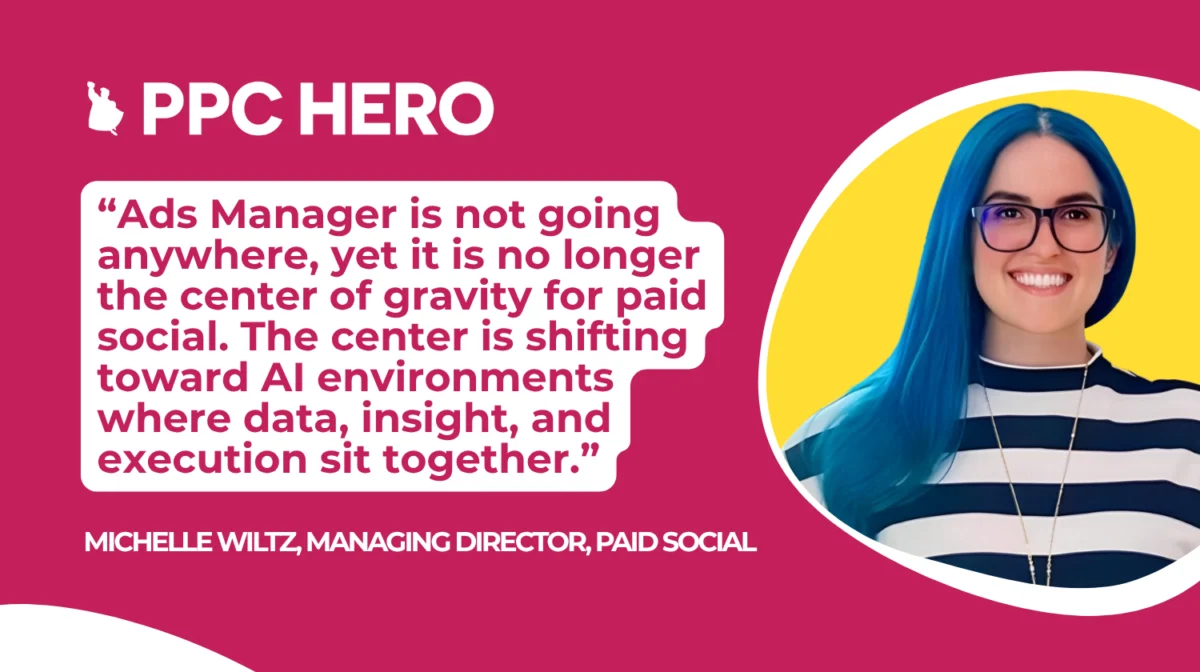
While Ads Manager will undoubtedly continue to be a vital tool, it is no longer destined to be the sole or even primary center of gravity for paid social advertising. The gravitational pull is shifting towards AI-powered environments where data, insightful analysis, and direct execution converge seamlessly. The marketing teams that adeptly adjust to this evolving paradigm will invariably move with greater speed, make more informed decisions, and ultimately achieve superior campaign performance. Conversely, those that cling to outdated workflows, continuing to log in, pull disparate reports, and manually reconcile data, risk finding themselves perpetually a step behind in an increasingly agile and intelligent advertising ecosystem. The future of paid social is here, and it is intrinsically linked to the intelligent integration of AI.