The enduring power of email is not merely anecdotal; it is substantiated by robust data. A recent 2024 email engagement report from industry leader Mailjet highlighted that a remarkable 75.4% of consumers across key markets including the U.S., UK, France, Germany, and Spain express a clear preference for receiving promotional messages via email. Furthermore, for transactional communications—such as order confirmations, shipping updates, and password resets—email is favored by 74% of consumers over all other channels. These figures underscore email’s established role not just as a marketing tool, but as a critical component of customer service and operational communication, cementing its status as an owned media channel that businesses can control and leverage without external gatekeepers.
However, the proliferation of email marketing platforms has created a landscape that can be bewildering for businesses seeking the optimal solution. The market offers a vast array of tools, ranging from lean, agile systems tailored for nascent startups to comprehensive, feature-rich ecosystems designed for expansive enterprise teams. Some platforms prioritize deep automation capabilities, while others champion simplicity and ease of use. Navigating this diverse marketplace to identify the ideal fit for specific business needs—whether for a solo founder, a burgeoning SME, or a rapidly expanding corporation—demands a clear understanding of what constitutes a truly effective platform in 2026.
The Evolution and Enduring Relevance of Email Marketing
The journey of email marketing has been one of continuous evolution, mirroring the broader shifts in digital communication and consumer behavior. From its rudimentary beginnings as a tool for mass, undifferentiated broadcasts, email has matured into a sophisticated channel capable of hyper-personalization, dynamic content delivery, and complex multi-channel automation. Early email campaigns often lacked segmentation and relied on a "spray and pray" approach, yielding modest engagement. However, advancements in data analytics, behavioral tracking, and CRM integration have transformed email into a precision instrument for customer relationship management.

By 2026, the industry has embraced artificial intelligence (AI) for predictive analytics, content generation, and audience segmentation, further enhancing the relevance and impact of email communications. The focus has shifted from mere delivery to deliverability optimization, ensuring messages land in inboxes rather than spam folders. This historical context illustrates why today’s platforms are not just "send buttons" but intricate engines designed to nurture leads, drive conversions, and build lasting brand loyalty. The strategic importance of an owned channel has also gained traction as businesses seek to diversify away from platforms where algorithms dictate reach and engagement, thus providing a stable, direct communication line with their audience.
Defining Excellence: Core Criteria for Top-Tier Email Marketing Platforms
To cut through the market noise, a rigorous evaluation framework is essential. Based on extensive testing and analysis of dozens of tools over several years, five fundamental criteria consistently emerge as hallmarks of a truly effective email marketing platform for contemporary businesses:
-
Intuitive User Experience (UX): A platform’s efficacy begins with its usability. In 2026, businesses cannot afford to dedicate excessive resources to deciphering complex software. The best tools offer clean, intuitive dashboards that allow users—regardless of technical proficiency—to quickly build subscriber lists, design compelling campaigns, and set up automated sends. Frictionless onboarding and straightforward campaign creation are paramount, ensuring that marketing efforts can be deployed swiftly and efficiently without the need for specialized training or external agency support.
-
Robust, Functional Automations: Beyond basic drip campaigns, modern email marketing thrives on sophisticated automation. The top platforms empower businesses to create intricate customer journeys, triggering personalized emails based on user behavior, purchase history, or demographic data. From welcome sequences and abandoned cart reminders to post-purchase follow-ups and re-engagement campaigns, these automations must be simple to configure and reliably execute, allowing marketers to scale their efforts without manual intervention. The ability to craft complex workflows without writing a single line of code is a non-negotiable feature.
-
Seamless Integration Ecosystem: An email marketing platform rarely operates in isolation. Its value is significantly amplified when it seamlessly integrates with a business’s existing technology stack. This includes critical connections with e-commerce platforms (Shopify, WooCommerce), CRM systems (Salesforce, HubSpot), booking software, analytics tools, and broader marketing automation suites. Robust native integrations, coupled with flexible options like Zapier for custom connections, ensure a cohesive data flow and prevent data silos, optimizing workflows and providing a unified view of the customer.
-
Strategic and Transparent Pricing: For small businesses and growing teams, cost-effectiveness is a primary concern. The "best" platforms offer transparent, predictable pricing models that cater to various budget constraints. This includes generous free tiers for nascent operations, affordable entry-level plans, or flexible pay-as-you-go options that avoid expensive commitments or prohibitive minimum volume requirements. The pricing structure should allow businesses to start small and scale their email marketing efforts without encountering prohibitive cost jumps, fostering sustainable growth.
-
Scalability for Future Growth: A truly effective email marketing solution must be capable of evolving with the business. As subscriber lists expand and campaign complexity increases, the platform should accommodate these changes without forcing a costly migration to a new system. This means offering advanced features like sophisticated segmentation, A/B testing, dynamic content, and enhanced reporting in higher tiers, ensuring that businesses have a clear growth path within the same ecosystem. The platform should be a partner in growth, not a bottleneck.
Strategic Pricing Models in the Email Marketing Landscape
Understanding the financial implications of different email marketing platforms is as critical as evaluating their feature sets. While many providers offer free plans, these often come with limitations on contact numbers, send volumes, or advanced features, which can impede growth. Businesses must carefully weigh their current needs against long-term objectives to select a pricing model that is sustainable and scalable. Common pricing structures in 2026 include:

- Contact-Based Pricing: The most prevalent model, where costs are determined by the number of unique subscribers in a business’s list. As the list grows, so does the monthly fee. This model can become expensive for businesses with large, but potentially less active, contact databases.
- Send-Based Pricing: Less common but highly advantageous for certain business models, this structure charges based on the total number of emails sent per month, irrespective of the contact count. This offers predictability for businesses with fluctuating list sizes or those who prioritize frequent, targeted communication.
- Feature-Tiered Pricing: Most platforms combine contact-based or send-based pricing with feature tiers. Basic plans offer core functionalities, while higher-tier plans unlock advanced automations, CRM integrations, dedicated support, and higher send limits. Understanding which features are locked behind higher tiers is crucial for budget planning.
- Hybrid Models: Some providers offer a blend, perhaps a free tier up to a certain number of contacts and sends, with paid plans then scaling on one or both metrics.
When evaluating, businesses should look beyond the initial cost and consider the total cost of ownership as they scale. A platform that seems cheaper initially might quickly become more expensive if its pricing model penalizes growth or if essential features are locked behind significantly higher tiers.
Leading Email Marketing Platforms: A Curated Review for 2026
The following platforms have distinguished themselves by meeting the rigorous criteria outlined, each offering unique strengths tailored to specific business needs.
1. Best for Budget-Conscious Teams: Mailjet
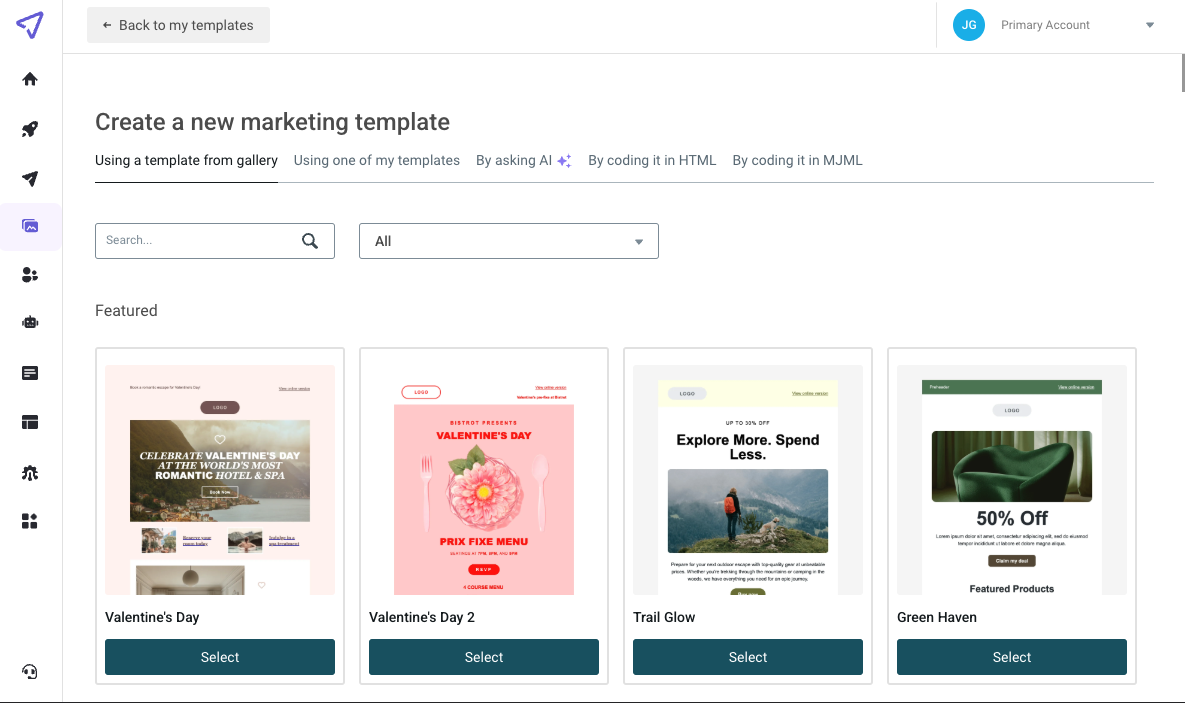
Mailjet stands out for its unique, predictable pricing model, which charges based on the number of emails sent rather than the number of contacts. This makes it an attractive option for startups and growing teams that require robust features without the escalating costs associated with a rapidly expanding contact list. Mailjet offers an intuitive platform for creating and sending both marketing and transactional emails, alongside tools for building forms and landing pages. Its user interface is lauded for its clarity, minimizing the learning curve.
- Key Strengths: Send-based pricing, combined marketing & transactional email, intuitive UI, solid deliverability.
- Considerations: Analytics might be less granular than some enterprise solutions.
- Pricing: Free plan available; paid plans scale by email volume.
2. Best for Getting Started: Mailchimp
Mailchimp remains a go-to for beginners, celebrated for its user-friendly interface and generous free plan (up to 500 contacts). It serves as an excellent entry point into email marketing, offering easy campaign creation and basic automation. While it has expanded its offerings into a broader marketing suite, its foundational strength lies in its accessibility.
- Key Strengths: Exceptional ease of use, strong brand recognition, good template library, robust free plan.
- Considerations: Pricing can become steep as contact lists grow; advanced automation might feel limited compared to dedicated automation platforms.
- Pricing: Free plan; paid plans scale by contact count and feature access.
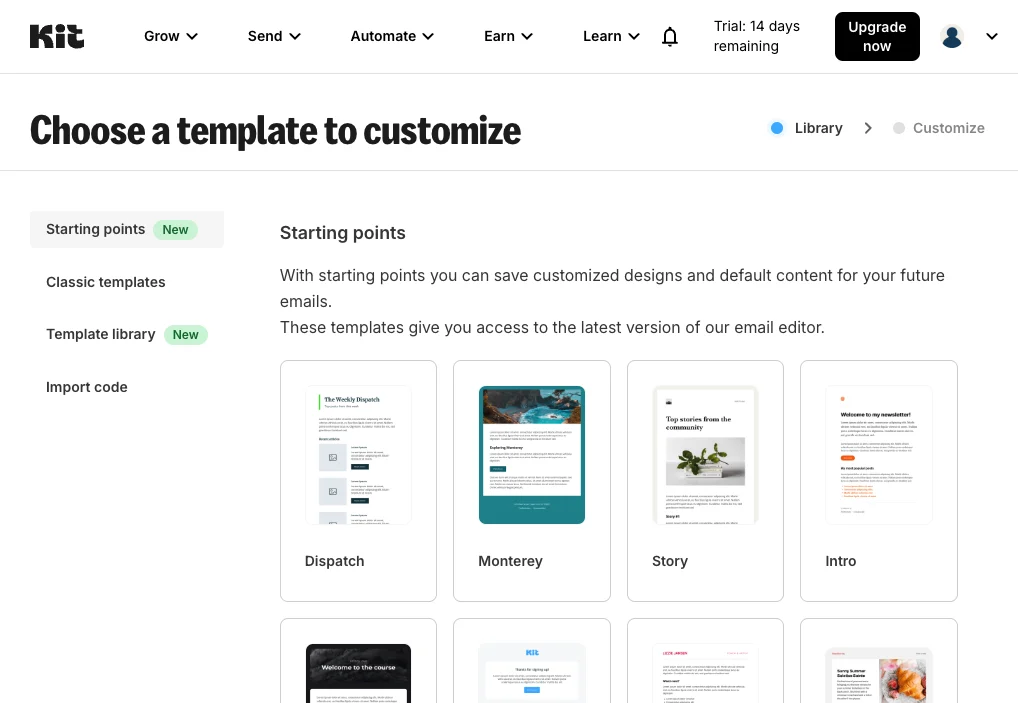
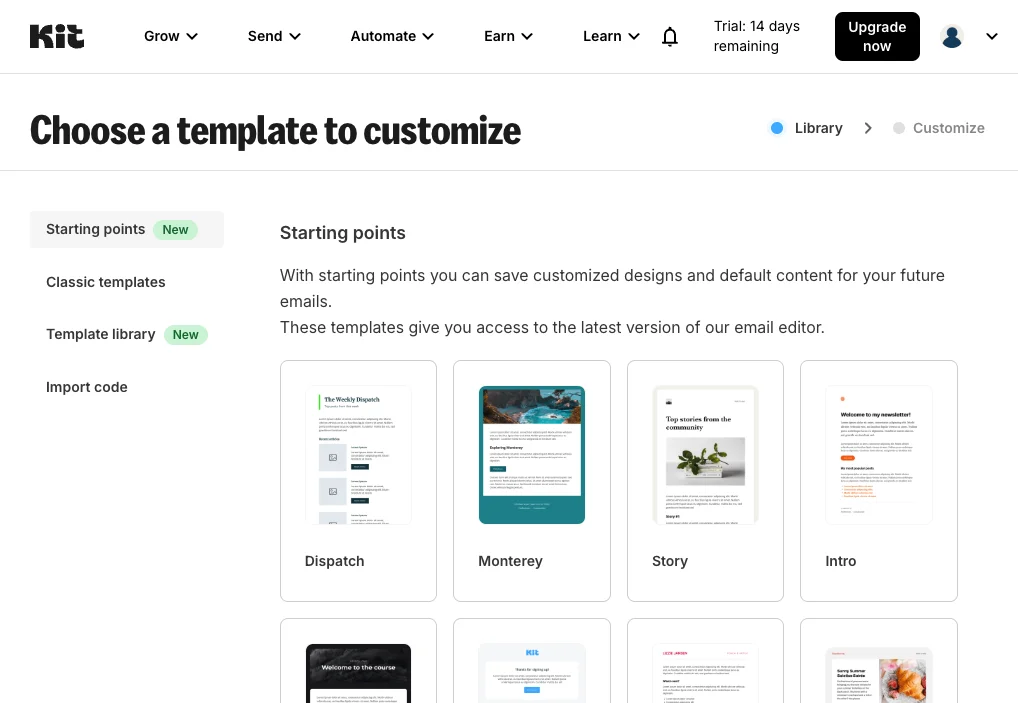
3. Best for Digital Creators: Kit (formerly ConvertKit)
Designed specifically for bloggers, YouTubers, and solo entrepreneurs, Kit (formerly ConvertKit) excels at list growth and automated follow-ups. Its free version supports up to 10,000 subscribers, making it highly accessible for creators. The platform emphasizes audience segmentation and building email funnels, critical for selling digital products and memberships.
- Key Strengths: Creator-focused tools, robust segmentation, visual automation builder, landing pages & forms.
- Considerations: Less emphasis on traditional marketing campaign design; some advanced features require paid tiers.
- Pricing: Generous free plan; paid plans unlock advanced automation and higher send limits.
4. Best for Social-Savvy Brands: Constant Contact
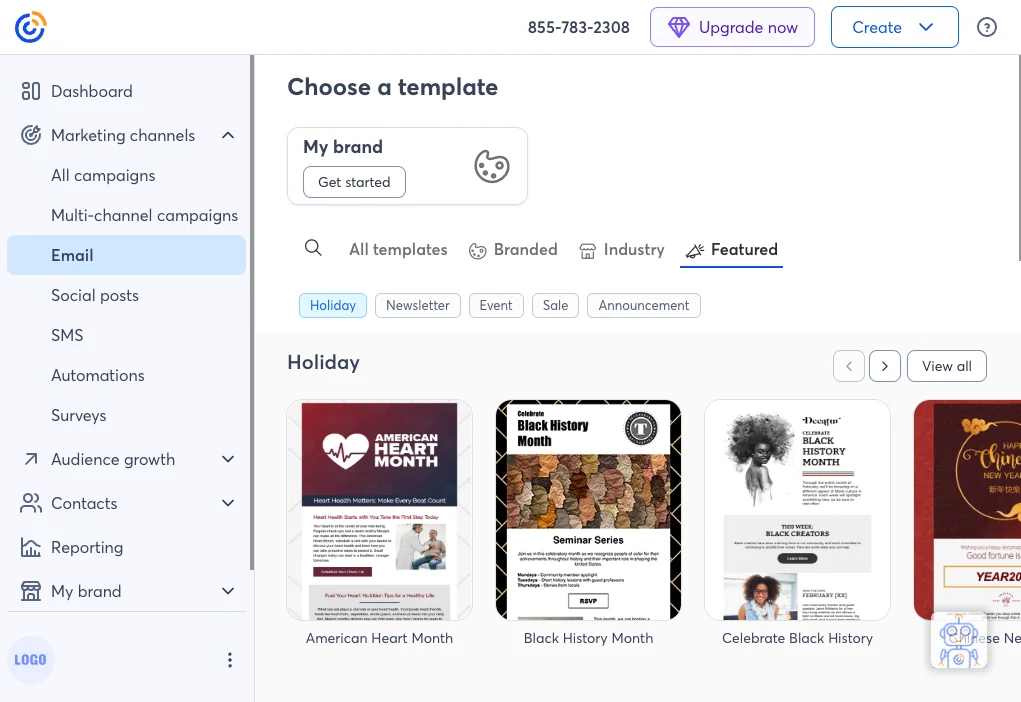
Constant Contact is ideal for businesses that wish to tightly integrate their email campaigns with social media strategies. Its drag-and-drop editor facilitates easy campaign creation, and it boasts consistently strong email delivery rates. It’s particularly well-suited for small businesses and organizations that rely heavily on social presence for engagement and customer acquisition.
- Key Strengths: Strong social media integration, excellent deliverability, user-friendly editor, event management tools.
- Considerations: Can be pricier for larger contact lists; automation features are solid but not as deep as specialized automation tools.
- Pricing: Paid plans scale by contact count and feature set.
5. Best for Long-Standing Reliability: AWeber
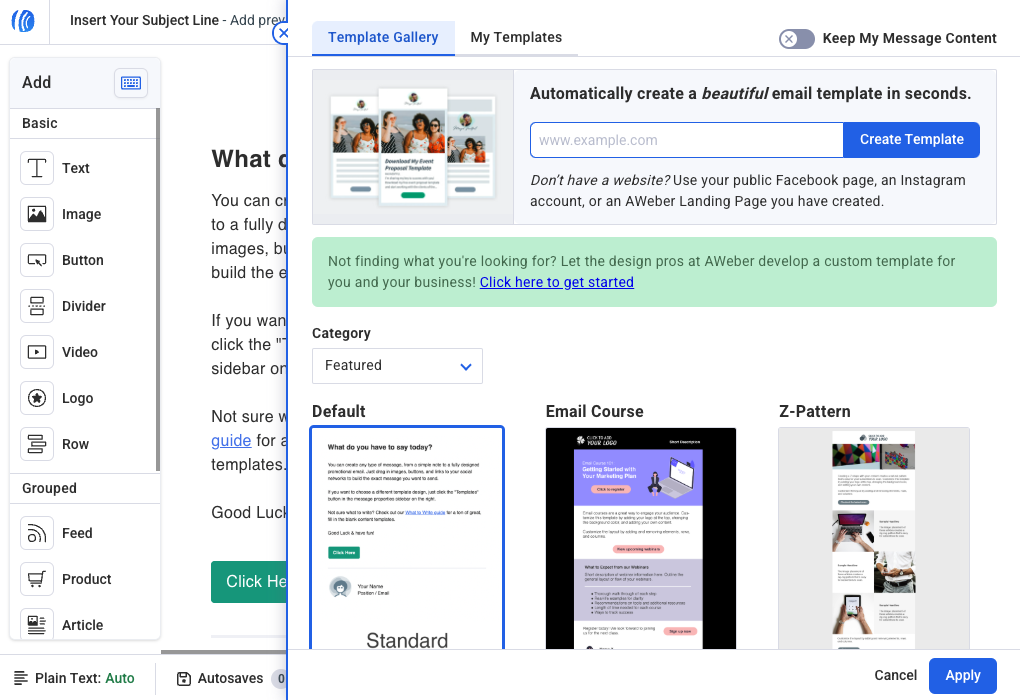
With over two decades in the market, AWeber is a trusted name for solo entrepreneurs and small business owners. It provides a reliable, easy-to-use platform with a strong suite of core features including pre-built templates, automation, and integrations with platforms like Etsy and YouTube. AWeber focuses on delivering the essentials exceptionally well, backed by solid analytics.
- Key Strengths: Proven reliability, excellent customer support, solid basic automation, strong analytics.
- Considerations: Not the most cutting-edge in terms of advanced features; UI might feel slightly dated to some.
- Pricing: Free plan; paid plans scale by subscriber count.
6. Best for All-in-One Marketing: HubSpot
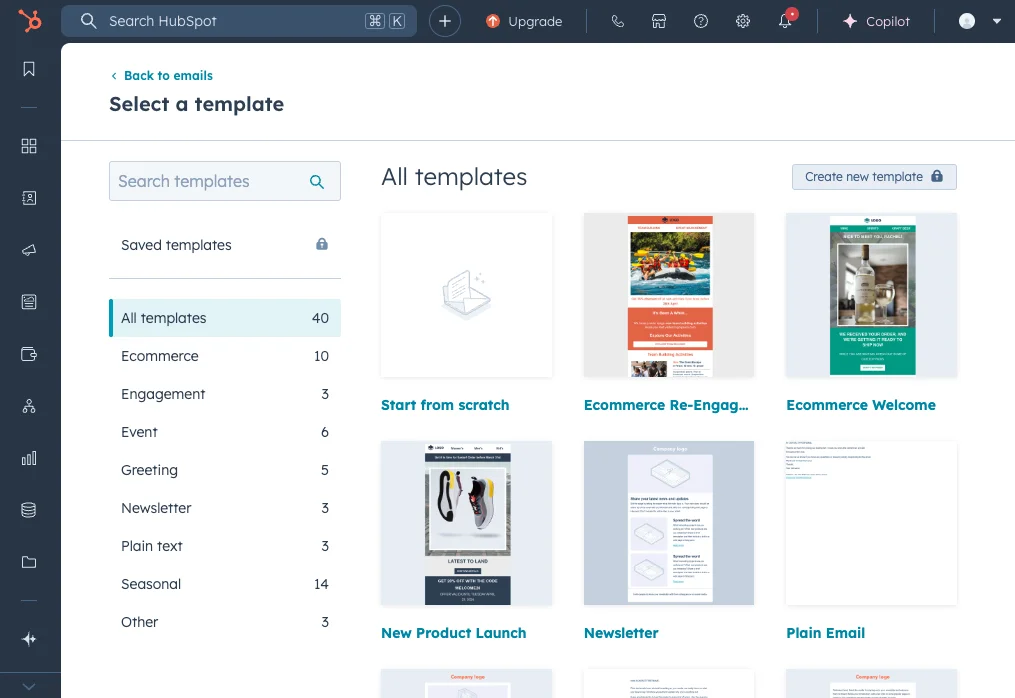
HubSpot transcends mere email marketing, offering a comprehensive CRM and marketing suite. Its email capabilities are deeply integrated into a larger ecosystem for contact management, sales, and service. The free tier is surprisingly robust, providing a taste of its integrated power, but unlocking advanced automation and CRM functionalities requires a significant investment.
- Key Strengths: Full CRM integration, extensive marketing automation, sales & service hubs, robust analytics.
- Considerations: Can be expensive for full functionality; steeper learning curve due to breadth of features.
- Pricing: Generous free tools; paid plans scale by contact count and hub functionality.
7. Best for Online Stores: Omnisend
Purpose-built for e-commerce brands, Omnisend offers omnichannel marketing tools including email, SMS, and push notifications, even on its free plan. It excels at driving retail conversions through features like abandoned cart emails, product recommendations, and sophisticated customer segmentation based on purchase behavior.
- Key Strengths: E-commerce specific automations (abandoned cart, product recommendations), omnichannel capabilities (SMS, push), seamless integration with e-commerce platforms.
- Considerations: Deliverability could be better; template diversity is somewhat limited.
- Pricing: Free plan; paid plans scale by contact count and send volume.
8. Best for Multi-Channel Campaigns: Brevo (formerly Sendinblue)
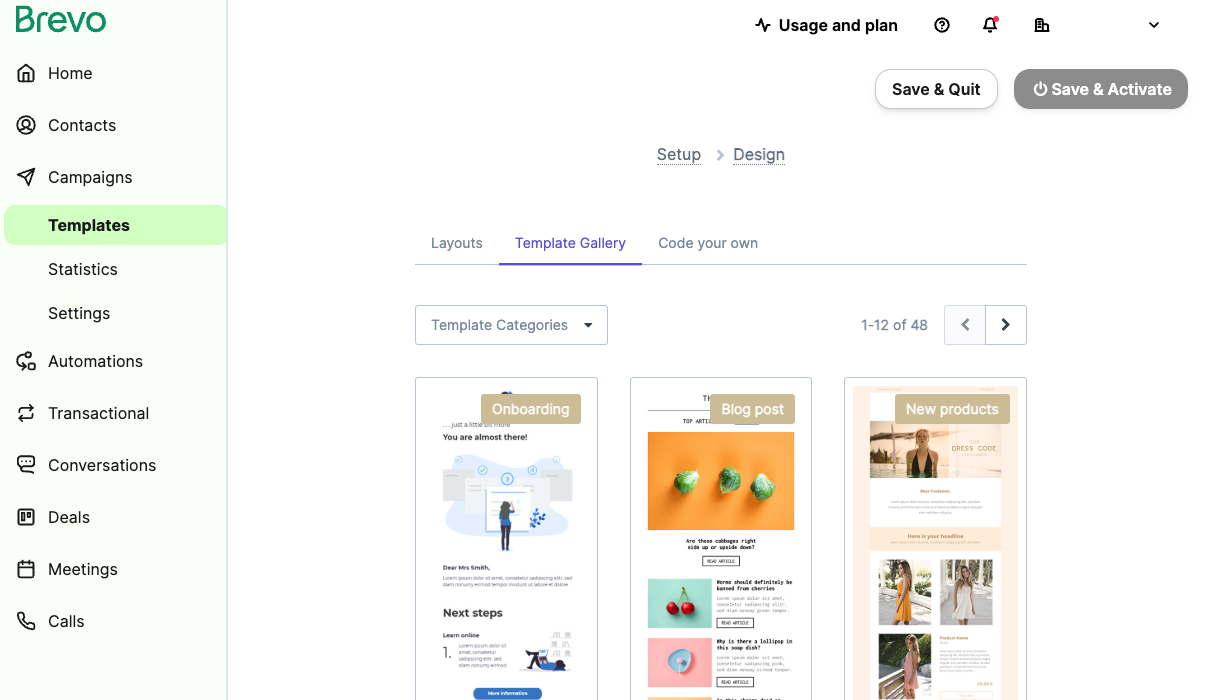
Brevo (formerly Sendinblue) provides a unified platform for email, SMS, and live chat, making it ideal for businesses seeking to consolidate their communication channels. Its clean and intuitive UI enhances usability, offering a powerful solution for integrated customer engagement.
- Key Strengths: Multi-channel integration (email, SMS, chat), CRM functionality, marketing automation, transactional email.
- Considerations: Analytics capabilities are more robust on higher-tier plans.
- Pricing: Free plan; paid plans scale by email volume and feature access.
9. Best for Serious Automation: ActiveCampaign
ActiveCampaign is a powerhouse for businesses demanding advanced marketing automation and a built-in CRM. It offers unparalleled control over the customer journey through detailed workflows, dynamic content, and smart segmentation. While it comes with a steeper learning curve and a higher price tag, its depth of features is unmatched for complex, data-driven strategies.
- Key Strengths: Industry-leading marketing automation, integrated CRM, deep segmentation, site tracking, lead scoring.
- Considerations: Higher price point; significant learning curve; can be overwhelming for beginners.
- Pricing: Paid plans scale by contact count and feature set.
Tailoring the Platform to Your Business Ecosystem and Use Case
The optimal email marketing platform is not a universal solution but rather a strategic choice deeply aligned with a business’s specific operational context and objectives.
Small Businesses: For lean teams or solo entrepreneurs, simplicity, affordability, and time-saving tools are paramount. Platforms offering intuitive dashboards, robust support, and "set-it-and-forget-it" automation are crucial. Scalable pricing that accommodates growth without punitive cost increases is also a key differentiator. Mailjet and Mailchimp often serve these needs effectively due to their balance of features and accessibility.
E-commerce Brands: For online retailers, email is a direct revenue engine. This necessitates advanced features like abandoned cart recovery, intelligent product recommendations, and deep integrations with platforms like Shopify or WooCommerce. Behavioral triggers and hyper-personalized automations are critical for maximizing conversion rates and customer lifetime value. Omnisend and ActiveCampaign are strong contenders here due to their commerce-centric features and automation prowess.
Nonprofits: Nonprofits operate with stringent budget constraints and unique communication goals centered around fundraising, advocacy, and community engagement. Email tools offering discounted rates or specialized nonprofit plans, coupled with customizable templates, donor segmentation capabilities, and integrations with fundraising platforms, are essential for efficient outreach and supporter nurturing. Constant Contact or Brevo might offer suitable features with potentially favorable pricing.
B2B Companies: B2B email strategies focus on lead nurturing, pipeline progression, and account-based marketing. Integration with a CRM is non-negotiable, alongside features for lead scoring, advanced segmentation, and detailed analytics to track engagement through long sales cycles. The ability to create highly targeted, personalized content that resonates with specific business personas is also vital. HubSpot and ActiveCampaign excel in these complex, integrated B2B environments.
Deciding on the Best Email Marketing Platform for You: A Strategic Approach
Choosing the right email marketing service is a pivotal decision that impacts customer engagement, operational efficiency, and ultimately, business growth. It demands a thoughtful evaluation of your unique requirements, strategic goals, and available resources. By focusing on core features, understanding pricing models, aligning with your specific use case, assessing integration possibilities, and considering scalability, you can confidently select a platform that serves as a powerful engine for your digital marketing strategy.
Key takeaways for this critical decision include:
- Prioritize Core Functionality: Ensure the platform offers essential features like an intuitive editor, list management, segmentation, and basic automation without unnecessary complexity.
- Evaluate Pricing Transparency and Scalability: Understand the full cost implications as your subscriber list and send volumes grow. Opt for models that offer predictability and align with your long-term budget.
- Assess Integration Capabilities: Confirm seamless connections with your existing CRM, e-commerce platforms, and other critical business tools to avoid data silos and streamline workflows.
- Consider Deliverability and Support: A strong sender reputation and responsive customer support are crucial for ensuring your emails reach their intended audience and for resolving any technical challenges promptly.
- Look for Growth Enablers: Choose a platform that offers advanced features like A/B testing, dynamic content, and sophisticated analytics in its higher tiers, allowing you to mature your strategy without migrating platforms.
- Review User Experience and Learning Curve: A platform that is easy to navigate and understand will reduce onboarding time and empower your team to execute campaigns efficiently.
By adhering to these guidelines, businesses can select an email marketing service that not only meets current demands but also provides the flexibility and power to adapt to the evolving digital landscape. The right platform will be a strategic asset, fostering engagement, nurturing customer relationships, and driving sustained business objectives.
Finding the Right Email Platform for Your Business: A Final Checklist
The quest for the "best" email marketing tool is not about identifying the most feature-rich or technologically advanced option; it is about discovering the perfect fit for your unique business context. Your specific goals, operational workflows, and budgetary constraints all play an integral role in this decision.
To guide your final selection, focus on these critical considerations:
- Ease of Use: Is the interface intuitive? Can your team create and send campaigns efficiently without extensive training?
- Automation Capabilities: Does it support the level of automated customer journeys you envision, from simple welcome emails to complex behavioral sequences?
- Integration Ecosystem: Does it connect seamlessly with your CRM, e-commerce platform, analytics tools, and other essential software?
- Pricing Structure: Is the pricing transparent, affordable for your current stage, and scalable without prohibitive cost jumps as you grow?
- Scalability: Can the platform accommodate your business’s future growth in terms of subscriber volume, campaign complexity, and advanced feature requirements?
- Specific Use Case Alignment: Is it optimized for your business type (e-commerce, B2B, nonprofit, content creator) with relevant specialized features?
- Deliverability Reputation: Does the provider have a strong track record for ensuring emails land in the inbox, not the spam folder?
- Customer Support: Is reliable and accessible customer support available to assist with setup, troubleshooting, and strategic advice?
- Reporting and Analytics: Does it offer detailed insights into campaign performance, subscriber behavior, and ROI to inform future strategies?
- Compliance and Security: Does it adhere to relevant data privacy regulations (e.g., GDPR, CCPA) and offer robust security features?
The right email platform will do more than just facilitate email sends; it will empower you to cultivate genuine connections with your audience, drive meaningful engagement, and accelerate sustainable business growth. Invest the time to test various options and select the one that truly resonates with your operational style and strategic aspirations.
Frequently Asked Questions: Navigating the Email Service Landscape
As businesses delve into email marketing, several common questions arise, often reflecting concerns about functionality, cost, and strategic application.
What defines an effective email marketing service in 2026?
An effective email marketing service in 2026 is a sophisticated platform that enables businesses to manage, automate, and analyze email campaigns. Key features include intuitive drag-and-drop editors, advanced segmentation, robust automation workflows, comprehensive reporting, and seamless integrations with other business tools. Its core purpose is to simplify complex email operations, allowing even non-technical users to execute professional, personalized campaigns that drive engagement and conversions.
How do email send limits impact platform choice?
Email send limits are a critical factor, especially for businesses with large lists or high-frequency sending strategies. Providers typically offer different monthly or daily send limits across their plans. Some, like Mailjet, base pricing primarily on sends, offering flexibility, while others bundle sends with contact limits. Businesses must accurately project their anticipated email volume to avoid unexpected overage charges or the need for frequent plan upgrades. Unlimited send options are usually reserved for higher-tier or enterprise plans.
Why are transactional emails distinct, and are they essential?
Transactional emails are automated, system-triggered messages that respond to a specific user action, such as purchase confirmations, password resets, shipping notifications, or account updates. Unlike marketing emails, their primary purpose is informational and functional, not promotional. For any business involved in e-commerce, user accounts, or service delivery, transactional emails are absolutely essential for maintaining trust, providing critical information, and ensuring smooth customer experiences. Many modern email marketing platforms now integrate transactional email capabilities directly into their automation workflows.
Are there genuinely affordable email marketing solutions for small businesses?
Yes, the market offers numerous affordable options for small businesses. Many leading platforms provide generous "forever-free" plans with core features, allowing businesses to start building their list and sending basic campaigns at no cost. Paid entry-level plans are also typically very cost-effective, often including essential automation, a wider range of templates, and increased send limits. Platforms like Mailjet, Brevo, and MailerLite are particularly popular among budget-conscious users due to their value proposition.
What advanced features should a growing business prioritize?
Beyond the basics, growing businesses should seek platforms that offer:
- Dynamic Content: Personalizes email elements based on recipient data.
- A/B Testing: Optimizes subject lines, content, and calls-to-action for better engagement.
- Lead Scoring: Ranks subscribers based on engagement and demographic data to identify high-potential leads.
- CRM Integration: Deeply links email data with customer relationship management for a unified view.
- Predictive Analytics: Uses data to forecast customer behavior and inform targeted campaigns.
- Multi-channel Orchestration: Coordinates email with SMS, push notifications, and social media for cohesive campaigns.
These features are crucial for sophisticated customer segmentation, personalized communication, and maximizing conversion funnels, particularly beneficial for e-commerce, content creators, and digital product sellers.
How critical is email deliverability, and what should I look for?
Email deliverability is paramount; if emails don’t reach the inbox, marketing efforts are futile. Poor deliverability means messages end up in spam folders or are blocked entirely. Businesses should choose platforms with a strong sender reputation, robust deliverability tools (e.g., dedicated IP addresses for high-volume senders, authentication protocols like SPF/DKIM/DMARC), and proactive monitoring. Reliable platforms invest heavily in ensuring their infrastructure supports high inbox placement rates.
What types of email marketing exist, and when should each be used?
Email marketing encompasses several types, each serving distinct strategic goals:
- Promotional Emails: Announce sales, new products, or special offers, aiming to drive immediate purchases or engagement.
- Newsletter Emails: Provide valuable content, industry news, or updates, fostering community and brand loyalty.
- Transactional Emails: System-triggered messages like order confirmations or password resets, providing essential information.
- Lifecycle Emails: Automated sequences triggered by customer milestones (e.g., welcome series, birthday discounts, re-engagement campaigns), designed to nurture relationships over time.
- Lead Nurturing Emails: Sequences designed to educate prospects and move them through the sales funnel, common in B2B.
The choice of email type depends entirely on your marketing objectives, audience segment, and the specific stage of the customer journey.