The digital advertising arena is undergoing a seismic shift with the official launch and phased rollout of OpenAI’s advertising platform, enabling businesses to place sponsored content directly beneath ChatGPT responses. This groundbreaking development marks a pivotal moment, offering brands an unprecedented avenue to engage with a massive, actively querying user base. As adoption accelerates, understanding the nuances of this new advertising frontier is becoming paramount for marketers seeking to maintain a competitive edge.
A Global Rollout and a Nascent Marketplace

OpenAI’s strategic expansion of its advertising capabilities began in March 2026, with initial availability in Australia and New Zealand. This was followed by the full self-service platform’s opening to advertisers in the United States on May 5, 2026. The momentum continued in June 2026, as the platform extended its reach to Japan and South Korea, and notably, the United Kingdom, becoming the first European market to integrate ChatGPT advertisements. This carefully orchestrated global release suggests a deliberate effort by OpenAI to gather diverse market feedback and refine the platform before a wider, potentially instantaneous, global launch.
While the underlying technology of Large Language Models (LLMs) remains a subject of considerable discussion and sometimes mystery, the advertising platform built upon it is designed for accessibility. As is often the case with emerging digital marketing tools, there can be an initial period of apprehension or confusion among advertisers. However, the fundamental logic of advertising campaign management tends to follow established patterns across different platforms. For seasoned media buyers, the transition to the OpenAI Ads Manager is expected to be a familiar, albeit novel, experience.
Navigating the OpenAI Ads Manager: A Deep Dive

The OpenAI Ads Manager presents a user-friendly interface, beginning with a "Performance Trend" dashboard. This central hub provides advertisers with an at-a-glance view of key metrics such as spend, impressions, clicks, and Cost Per Click (CPC) over customizable date ranges, including default options like 7, 14, and 30 days. For a more granular analysis, the platform allows users to segment campaign data by device or country, offering deeper insights into performance variations across different demographics and geographies.
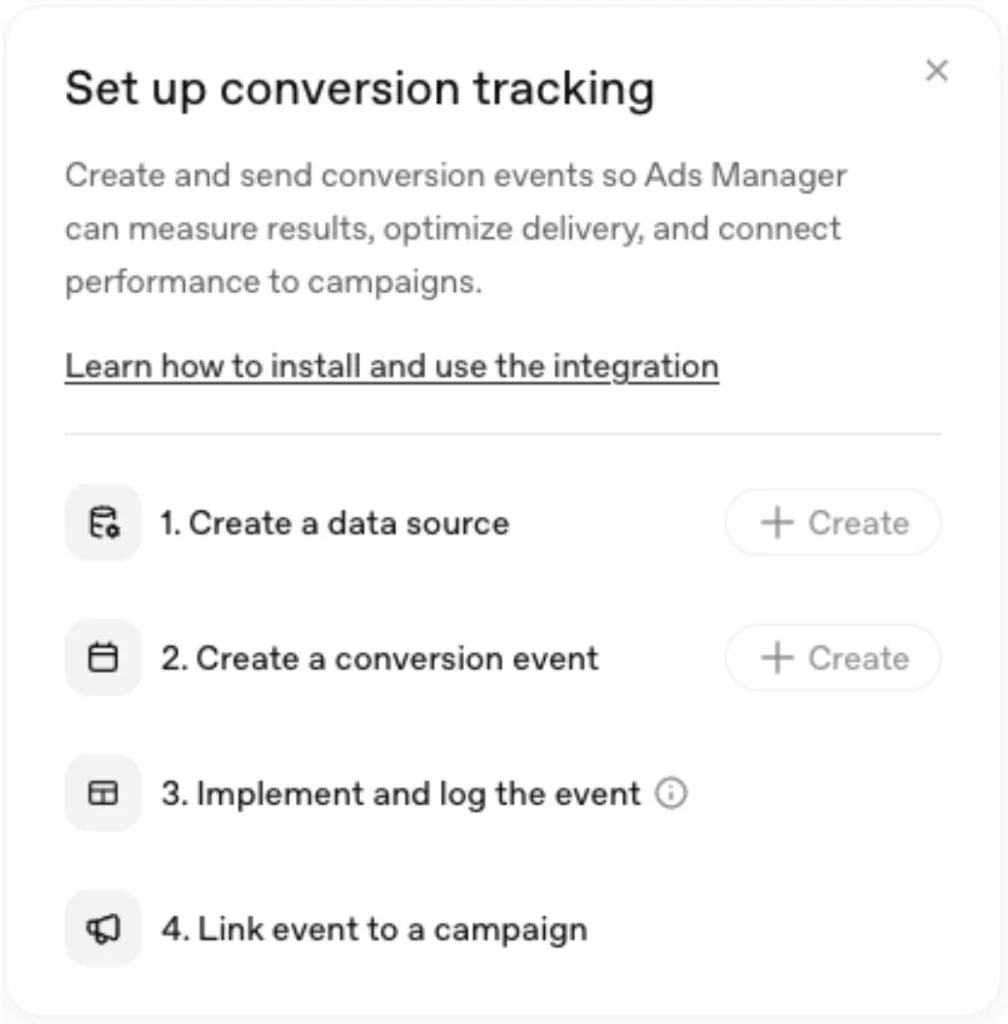
The left-hand navigation menu within the Ads Manager serves as the control center for campaign management. It includes "Overview," alongside sections for campaign setup, ad group management, and ad creation. A crucial element for performance tracking and optimization is the conversion tracking feature. This functionality is designed to be set up through a guided, step-by-step process, ensuring that advertisers can accurately measure the effectiveness of their campaigns in driving desired actions.
Another significant aspect of the platform involves API keys. These keys act as secure credentials, enabling programmatic interaction with OpenAI’s models. For advertisers and developers, this opens up a world of automation possibilities, including the generation of ad copy, sophisticated campaign analysis, the creation of diverse content variations, and the seamless integration of AI-powered advertising into broader marketing workflows. Essentially, API keys serve as a digital passport for leveraging OpenAI’s capabilities at scale.

The Campaign Creation Lifecycle: From Objective to Ad
The process of creating an advertising campaign on OpenAI’s platform mirrors the logical structure familiar to users of other major ad networks. The fundamental hierarchy involves creating a campaign, followed by an ad group, and finally, the individual ad creative.
Campaign Setup:

- Campaign Naming: The initial step, campaign naming, is often underestimated but is critical for maintaining organizational hygiene and enabling effective tracking and optimization. Clear, descriptive names allow marketers to quickly identify the purpose and performance of individual campaigns within a larger account.
- Objective Selection: Advertisers are prompted to select a campaign objective, which can be Reach, Clicks, or Conversions. This choice is paramount, as the AI algorithm is designed to optimize towards the specified goal. Selecting "Clicks" will prioritize driving traffic, while "Conversions" will focus on achieving predefined user actions on the advertiser’s website or app.
- Conversion Event Setup: For campaigns with a "Conversions" objective, advertisers must first configure conversion events within the dedicated "Conversion" section of the platform. This ensures that the AI has clear targets to optimize for.
- Location Targeting: A key differentiator in OpenAI’s platform is that location targeting is set at the campaign level, unlike many other platforms where it resides within the ad group. Currently, advertisers can target ads across seven distinct geographical regions, reflecting the platform’s phased global rollout.
- Budgeting: Advertisers have the flexibility to set either a daily budget or a total campaign budget. It is important to note that once a campaign is launched, the budget type cannot be altered, although the budget amount itself can be adjusted.
Ad Group Configuration:
- Ad Group Naming: Similar to campaign naming, informative ad group names are essential for clarity and efficient management.
- Bidding Strategy: The bid setting within an ad group is intrinsically linked to the chosen campaign objective. The platform provides a helpful "bid helper" tool that offers guidance on bid levels, indicating whether a proposed bid is likely to be competitive and ensure delivery. Bids that are too low may result in "May not deliver" warnings, while sufficiently competitive bids are flagged as "Strong Delivery," signifying a higher likelihood of ad visibility.
- Destination URL: A default destination URL is established at the ad group level, which will be applied to any new ads created within that group. Specific destination URLs for individual creatives can be set during the ad creation stage.
- Context Hints (Optional): This unique feature allows advertisers to provide descriptive hints about conversations, topics, or keywords relevant to their products or services. These hints serve to guide the AI’s matching process, ensuring ads appear in contexts where they are most likely to resonate with users, without acting as rigid, exact-match targeting rules.
Ad Creation:
- Ad Naming: Informative ad names are crucial, especially when incorporating UTM parameters, to accurately track the performance of individual ad creatives and inform optimization strategies.
- Destination URL with UTM Parameters: Advertisers can append UTM parameters to their destination URLs to facilitate tracking through third-party analytics tools like Google Analytics. While automatic UTM generation is not yet available, static UTMs can be manually added.
- Creative Elements: The ad creation process involves defining the core creative elements. This includes specifying the ad’s headline, body copy, and visual assets. OpenAI’s platform allows for the creation of multiple ads within an ad group, offering flexibility to test different messaging and visual approaches. Advertisers can either duplicate an existing ad and modify specific elements, such as visuals, or create entirely new ads from scratch.
Review and Publish:

Once all campaign, ad group, and ad elements are finalized, advertisers proceed to a "Review" stage. This allows for a final confirmation of all settings before the campaign is "Published." Upon publication, advertisers can begin monitoring performance metrics in the dashboard.
Key Considerations for Campaign Setup Success:
- Strategic Objective Alignment: Ensure campaign objectives are clearly defined and accurately reflect desired business outcomes.
- Data-Driven Bidding: Utilize the platform’s bidding tools and guidance to set competitive bids that balance cost with delivery potential.
- Precise Targeting (Contextual): Leverage context hints effectively to guide the AI towards relevant user interactions.
- Compelling Creative Assets: Develop engaging ad copy and visuals that resonate with the target audience within the context of AI-generated responses.
- Robust Tracking Implementation: Set up conversion tracking and utilize UTM parameters for comprehensive performance analysis.
Monitoring the Competitive Landscape: Trendos Insights

While OpenAI has not yet introduced a dedicated "Ad Library" for monitoring competitor activity, third-party tools are emerging to fill this gap. Trendos.com, for example, offers an "Ad Radar" that provides insights into which competitors are advertising on the platform, their impression share, and overall performance metrics. This tool allows advertisers to examine competitor ad copy, visuals, and destination URLs, offering a valuable competitive intelligence advantage.
Recent research from Trendos highlights the rapid growth of advertising on ChatGPT. Between May and June 2026, there was a reported 315% increase in brands running ads on the platform, indicating an accelerating competitive environment. As this space becomes more populated, understanding competitor strategies and maintaining a distinct brand presence will be increasingly critical.
Implications for the Future of Advertising

The integration of advertising directly within AI-generated responses signifies a fundamental shift in how brands can reach consumers. ChatGPT’s emergence as a trusted source of information for millions positions it as a potent new channel for brand visibility and audience engagement. The success on this platform will hinge on the ability of marketers to adapt their existing expertise from other digital advertising channels to this novel context.
The implications are far-reaching:
- Shifting User Attention: As users increasingly turn to AI for answers, their attention is being redirected. Advertisers must adapt to capture this attention within conversational AI interfaces.
- New Measurement Paradigms: The unique nature of AI interactions may necessitate the development of new metrics and analytical frameworks to fully understand campaign effectiveness.
- Enhanced Personalization Potential: The contextual nature of AI responses offers opportunities for highly personalized and relevant ad placements, potentially leading to higher engagement rates.
- Ethical Considerations: As AI advertising becomes more prevalent, discussions around transparency, user privacy, and the ethical implications of targeting within AI-generated content will likely intensify.
In conclusion, OpenAI’s ChatGPT advertising platform represents a significant evolution in the digital marketing ecosystem. By leveraging the power of AI and the trust users place in these conversational tools, brands have a unique opportunity to connect with audiences in unprecedented ways. The key to unlocking this potential lies in strategic planning, a willingness to adapt, and a deep understanding of the evolving AI-driven advertising landscape. The future of advertising is not just about reaching people; it’s about engaging them in meaningful, contextually relevant ways, and OpenAI’s platform is at the forefront of this new era.