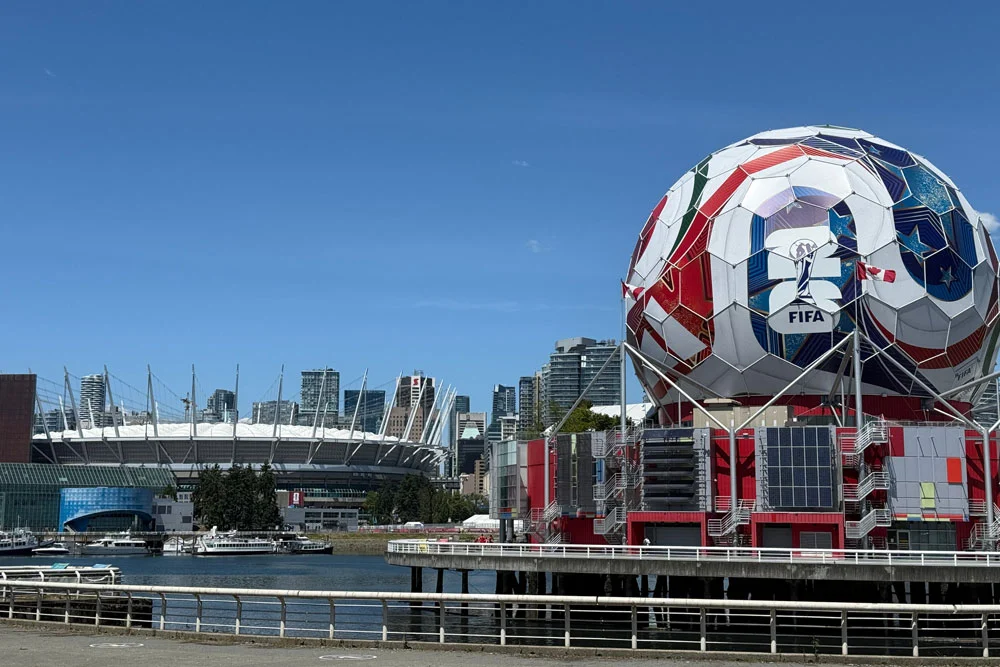
The FIFA World Cup 2026, a historic tournament hosted across Canada, Mexico, and the United States, represents more than just the pinnacle of international soccer; it serves as a profound case study in strategy, resilience, and the shifting paradigms of global competition. As the first edition to feature an expanded format of 48 teams, the tournament has provided a massive data set for analyzing how high-stakes performance in sports mirrors the complexities of the digital economy, specifically within the affiliate marketing sector. The intersection of these two seemingly disparate worlds—athletic excellence and performance-based marketing—reveals that the principles governing a winning goal are remarkably similar to those driving a successful conversion.
The Structural Evolution of Global Competitions
The 2026 tournament marks a significant departure from previous iterations, not only in scale but in the democratization of opportunity. By increasing the number of participating nations, FIFA has acknowledged a reality that affiliate marketers have understood for years: the landscape is no longer dominated solely by a few legacy "superpowers." In the same way that the World Cup has expanded its reach, the affiliate marketing industry has grown into a multi-billion-dollar global powerhouse, projected to exceed $15.7 billion in 2024.
This expansion brings with it a necessity for more sophisticated management and a deeper understanding of "team" dynamics. Whether on the pitch in a high-altitude stadium in Mexico City or within a digital dashboard monitoring click-through rates (CTR) and return on ad spend (ROAS), the core requirement for success remains the same: the seamless integration of diverse talents toward a singular objective.
The Fallacy of Individualism: Why Success Requires Teamwork
One of the most striking lessons from the FIFA World Cup 2026 has been the limitations of individual brilliance when unsupported by a cohesive collective. For decades, the narrative of soccer was often driven by the "talisman"—the single player capable of carrying a nation. However, the 2026 matches have demonstrated a shift. Even legendary figures like Cristiano Ronaldo and Luka Modrić found that their personal accolades and unparalleled skills were insufficient to overcome disciplined, well-integrated team structures. Portugal’s exit in the Round of 16 and Croatia’s struggles against more synchronized units underscored a fundamental truth: individual talent is a starting point, not a guarantee of victory.
In the realm of affiliate marketing, this principle translates directly to program management. An affiliate program is essentially a team of partners. Many brands make the mistake of over-relying on a single "super-affiliate"—often a large loyalty portal or a massive coupon site—that generates the lion’s share of revenue. While these entities are valuable, an over-reliance on them creates a single point of failure.
Professional affiliate management agencies, drawing from over 25 years of industry experience, emphasize that a program is only as robust as the diversity of its "players." To ensure long-term sustainability and high-quality lead generation, brands must diversify their affiliate bases across multiple marketing channels. This includes a mix of:
- Content Creators and Niche Bloggers: The "midfielders" who build trust and drive top-of-funnel awareness.
- Social Media Influencers: The "wingers" who provide speed and reach to specific demographics.
- Review and Comparison Sites: The "defenders" who protect the brand’s reputation and provide necessary technical validation for consumers.
- Loyalty and Cashback Portals: The "strikers" who close the deal at the point of purchase.
Analyzing the Underdog Phenomenon: From Curaçao to Nectar Sleep
The 2026 World Cup has been defined by the "rise of the underdog," a phenomenon that validates ancient strategic wisdom often attributed to Sun Tzu: "There is no greater danger than underestimating your opponent." The tournament saw stunning displays from debutants and lower-ranked teams. Curaçao’s 0-0 draw against a powerhouse like Ecuador and Egypt’s dominant performance against the defending champions, Argentina, served as a reminder that prestige does not equate to invincibility.
This "underdog" narrative is a frequent occurrence in the affiliate marketing space. A prime example is the trajectory of Nectar Sleep. When the brand entered the "mattress-in-a-box" market in 2017, it was entering a saturated field dominated by well-funded giants like Casper, Saatva, and Purple. These incumbents had established affiliate programs and significant market share.
However, by leveraging a highly aggressive and meticulously managed affiliate strategy, Nectar Sleep’s program achieved the number one ranking on the ShareASale network just one year and five days after its launch. It bypassed over 5,000 other brands, including household names like Wayfair and Reebok. This serves as a critical case study for modern businesses: being an underdog is not a permanent state of mediocrity. Rather, it is a position that allows for greater agility, more aggressive experimentation, and the ability to disrupt established hierarchies through superior partnership management.
The Imperative of Continuous Adaptation and Education
Perhaps the most sobering lesson of the FIFA World Cup 2026 is that past glory provides no protection against future failure. The absence of Italy, a four-time champion, from the tournament entirely is a testament to the dangers of stagnation. Similarly, the early exits of traditional heavyweights like the Netherlands and Brazil—knocked out by Morocco and Norway, respectively—illustrate that the "meta" of the game is constantly changing. Norway’s advancement to the quarterfinals after a 30-year hiatus highlights how a commitment to long-term rebuilding and modernizing tactics can eventually yield world-class results.
Affiliate marketing is arguably the most dynamic sector of digital advertising. It is an industry that must constantly adapt to:
- Regulatory Changes: Such as the GDPR in Europe or the CCPA in California.
- Technological Shifts: Including the phase-out of third-party cookies and the rise of AI-driven attribution models.
- Platform Volatility: Changes in Google’s search algorithms or social media ad policies.
In this environment, "resting on one’s laurels" is a precursor to obsolescence. What generated significant revenue five years ago—or even last year—may no longer be viable. This necessitates a culture of continuous education. Industry leaders emphasize that the journey of learning in affiliate marketing is never complete. Attendance at major industry summits, such as the Affiliate Summit in New York, is not merely a networking opportunity but a vital requirement for staying abreast of the technical and strategic shifts in the landscape.
Chronology of Strategic Shifts: A Timeline of Progress
To understand the broader implications of these parallels, one must look at the timeline of how both fields have matured:
- Pre-2010: Both the World Cup and Affiliate Marketing were dominated by "legacy" powers. In soccer, the same five or six nations were expected to win. In marketing, affiliate programs were often unmanaged "set-and-forget" systems.
- 2010–2018: The rise of data analytics. Soccer teams began using advanced metrics (Expected Goals, or xG) to scout talent. Affiliate managers began using sophisticated tracking software to identify the true value of "last-click" vs. "first-click" contributions.
- 2019–2023: The era of diversification. The "mattress wars" (Nectar vs. Casper) proved that affiliate strategy could determine market dominance. FIFA moved toward the 48-team expansion plan to capture global emerging markets.
- 2026 and Beyond: The integration of AI and hyper-localization. The 2026 World Cup utilizes AI-assisted officiating and fan engagement. Affiliate marketing is moving toward AI-automated partner discovery and personalized commission structures.
Broader Impact and Market Implications
The parallels between the 2026 World Cup and affiliate marketing suggest a broader shift in how global systems operate. Success is no longer about having the biggest budget or the longest history; it is about the efficiency of the network.
For Chief Marketing Officers (CMOs) and business owners, the takeaway is clear: the "team" you build—your affiliates, your internal managers, and your external agencies—must be treated with the same strategic rigor as a national soccer team. This involves scouting the right talent (affiliate recruitment), coaching them for performance (affiliate activation), and constantly reviewing the "game film" (data analysis) to adjust tactics.
Furthermore, the "Norway scenario"—an underdog returning to prominence after decades—proves that with the right investment in technology and education, any brand can reclaim its position or enter a new market with a competitive edge. The 2026 World Cup has shown that the world is more connected, the competition is fiercer, and the rewards for those who master the art of teamwork and adaptation are greater than ever before.
As the final whistle eventually blows on the 2026 tournament, the lessons will remain. The brands that thrive in the coming years will be those that viewed the drama on the pitch not just as entertainment, but as a blueprint for their own digital growth. In both soccer and affiliate marketing, the game is always evolving; the only way to stay ahead is to keep moving, keep learning, and never underestimate the power of a well-coordinated team.