Google Ads is set to implement a significant overhaul of its bidding system on August 17, a move the tech giant asserts will usher in a new era of predictable campaign performance. However, industry observers and advertisers are scrutinizing these changes, with some anticipating that the adjustments could paradoxically lead to unpredictable fluctuations in ad spend and return on investment, particularly for those utilizing target-based bidding strategies.
The core of the alteration lies in how Google Ads will manage campaigns employing target-based bidding, specifically Cost Per Acquisition (CPA) and Target Return on Ad Spend (tROAS). Previously, while these strategies aimed for specific performance benchmarks, actual results could deviate significantly. Under the new paradigm, Google has stated its intention to prioritize hitting the advertiser’s defined goal more aggressively. For instance, if an advertiser sets a tROAS of 300%, Google will now endeavor to achieve precisely that figure, even if recent campaign performance has significantly surpassed it, such as reaching 500%. This shift marks a departure from a system that allowed for higher-than-target performance, potentially leaving efficiency gains on the table.
While Google has indicated that the impact will primarily be felt by budget-limited campaigns, a prudent approach for advertisers involves a comprehensive review of all active campaigns. The inherent complexity of digital advertising, coupled with Google’s algorithm’s constant evolution, necessitates a proactive stance to mitigate any unintended consequences.
Understanding the Shifting Landscape of Target-Based Bidding
For years, advertisers have leveraged target-based bidding strategies to optimize their ad spend towards specific business objectives. tROAS, for example, aims to maximize revenue while maintaining a desired return for every dollar spent on advertising. Target CPA, conversely, focuses on acquiring new customers at a predetermined cost. These strategies are powered by machine learning algorithms that analyze vast datasets to predict conversion likelihood and adjust bids in real-time.
The fundamental promise of these systems was to automate bid management and drive efficiency. However, the reality often involved a delicate balancing act. Advertisers might have seen campaigns exceeding their tROAS targets, a scenario that, while seemingly positive, could indicate under-spent budgets or opportunities for further revenue generation that were not being fully capitalized upon. Conversely, underperforming campaigns often required manual intervention and strategic adjustments.
The impending changes suggest Google is moving towards a more rigid adherence to these targets. This implies that campaigns that have been outperforming their set goals may see their bids adjusted downwards to align with the stated target. This could result in a reduction in overall revenue or conversion volume, even if the efficiency metric (ROAS or CPA) remains within the desired range.
Impact on Advertisers: Navigating the New Performance Preferences
The most immediate implication for advertisers is the necessity to re-evaluate their performance preferences and align them with their overarching business goals. This requires a strategic decision-making process that considers both short-term campaign objectives and long-term business growth.
Advertisers must grapple with several critical questions:
- What is the ideal performance benchmark for each campaign? This involves looking beyond historical data and considering current market conditions, competitive landscape, and overall business profitability.
- How aggressively should the system pursue the target? Will a strict adherence to the target be beneficial, or is there room for the system to operate with a degree of flexibility to capture incremental gains?
- What is the acceptable range of deviation from the target? Defining an acceptable margin of error can help in managing expectations and understanding potential performance swings.
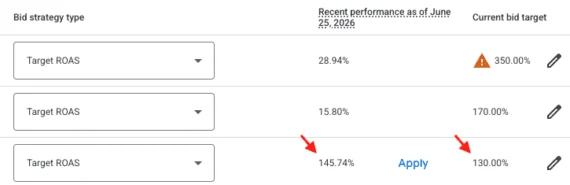
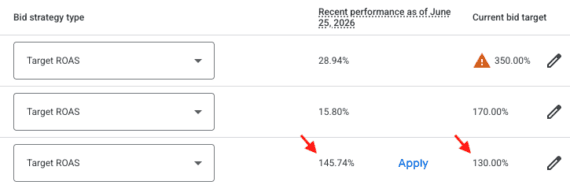
To facilitate this transition, Google has introduced a bid target adjustment tool. This tool provides advertisers with a clear view of their current targets alongside recent campaign performance data. This visibility is crucial for informed decision-making. For instance, if a campaign has consistently achieved a ROAS of 145.74% against a target of 130.00%, the new system, without intervention, would aim to bring the performance down to the 130.00% target. This could mean bidding less aggressively, potentially leading to fewer conversions or lower revenue.
Strategic Options for Advertisers in the Face of Change
Google Ads has outlined four primary options for advertisers to navigate these upcoming changes:
1. Maintain the Target as Is
For advertisers who are content with their current performance levels and are willing to accept that campaigns might be optimized downwards to meet their stated targets, no immediate action is required. This passive approach assumes that the existing targets are sufficient and that any perceived decrease in performance relative to past exceptional results is an acceptable trade-off for the promised predictability. However, this strategy carries the risk of leaving potential revenue on the table if the system’s new rigid adherence prevents opportunistic bidding.
2. Maintain Recent Performance
This option is designed for advertisers whose campaigns have been consistently exceeding their set targets. The recommendation is to gradually increase the bid target to align with actual performance. For example, if a campaign is achieving a ROAS of 200% against a 130% target, it is advised not to jump immediately to a 200% target. Instead, a more gradual increase, perhaps to no more than 156% (a 20% increase on the current target), should be considered. After a period of observation, typically two weeks, the target can be further adjusted. This iterative approach allows advertisers to experiment with the new system, understand its response, and adapt their targets accordingly.
A crucial consideration here is the impact on overall account performance. If individual campaign targets are not adjusted upwards to reflect their actual performance, a single high-performing campaign (e.g., achieving 500% ROAS against a 300% goal) could pull down the average account-level ROAS after the system changes. Therefore, maintaining recent performance necessitates a holistic view of campaign and account-level objectives.
3. Adjust the Custom Target
This approach involves setting a new, custom target that more accurately reflects realistic and desired performance levels. If a 300% target is deemed too low given that 400% is achievable and profitable, then a direct adjustment to a 400% target is warranted. This differs from the gradual adjustment in option two, offering a more immediate recalibration of the system’s expectations. This strategy is best suited for advertisers who have a clear understanding of their optimal performance metrics and can confidently set new, higher targets.
4. Switch to a Maximize Strategy
For advertisers whose primary objective is to maximize the volume of conversions or the total conversion value within a given budget, switching to a "Maximize Conversions" or "Maximize Conversion Value" strategy might be the most appropriate course of action. These strategies prioritize spending the entire budget to achieve the highest possible number of conversions or the greatest revenue, without adhering to a specific target CPA or ROAS. While this could lead to an increase in overall volume, it may also result in a decline in efficiency metrics like CPA or ROAS. This shift is ideal for businesses focused on scaling their operations and market share, where the cost per acquisition or return on ad spend is a secondary concern to overall growth.
Broader Implications and Industry Reactions
The timing of these changes is significant, occurring amidst a period of heightened scrutiny on digital advertising platforms and their algorithms. As advertisers increasingly rely on automated systems, the transparency and predictability of these tools become paramount. Google’s stated aim of providing a more predictable performance is understandable from a user experience perspective. However, the execution of this goal, particularly through a more rigid adherence to targets, could have far-reaching consequences.
Industry analysts have noted that such a shift could disproportionately affect smaller advertisers or those with less sophisticated data analysis capabilities. The ability to accurately forecast and set appropriate targets becomes critical, and the risk of miscalculation could lead to wasted ad spend or missed opportunities.
Reactions from advertising agencies and marketing professionals have been mixed. While some acknowledge the potential for greater control and clearer performance expectations, others express concern about the loss of flexibility and the potential for unintended negative impacts on revenue and growth.
"The move towards a more rigid target adherence could be a double-edged sword," commented Sarah Chen, a senior digital strategist at a prominent marketing agency. "On one hand, it simplifies budget management if you know exactly what you’re aiming for. On the other, it might stifle growth by preventing campaigns from capitalizing on opportune moments where exceeding a target could yield significant additional revenue. We’re advising our clients to thoroughly test and monitor their campaigns post-August 17."
The effectiveness of Google’s new bidding system will likely depend on the sophistication of its underlying algorithms and the ability of advertisers to adapt their strategies. The introduction of the bid target adjustment tool is a positive step towards empowering advertisers with the necessary insights. However, continuous monitoring, A/B testing of different strategies, and a willingness to adapt to the evolving platform will be essential for advertisers to succeed in this new environment.
A Look Back: The Evolution of Google Ads Bidding
Google Ads, formerly known as Google AdWords, has a long history of evolving its bidding strategies to meet the needs of advertisers and advertisers alike. The platform’s journey began with manual bidding, requiring advertisers to set bids for each keyword. This was followed by automated bidding strategies like Enhanced CPC (eCPC), which aimed to increase bids for clicks that were more likely to convert.
The introduction of smart bidding strategies, such as Target CPA and Target ROAS, marked a significant leap forward, leveraging machine learning to automate bid adjustments at scale. These strategies have become the cornerstone of many advertisers’ campaigns, allowing them to focus on strategic planning rather than granular bid management.
However, the inherent complexity of machine learning and the vastness of the advertising ecosystem have always presented challenges. Fluctuations in performance, the need for extensive data to train algorithms, and the potential for unexpected outcomes have been persistent themes. Google’s latest overhaul can be seen as an attempt to refine these smart bidding strategies, aiming for a more predictable and controlled outcome. Whether this rigidity ultimately serves advertisers better than the previous flexibility remains to be seen and will be a key area of observation for the digital advertising community in the coming months. The success of this transition will hinge on Google’s ability to deliver on its promise of predictability without sacrificing the potential for advertisers to achieve exceptional results.