The landscape of e-commerce is poised for a dramatic transformation in 2026, marked by the pervasive influence of artificial intelligence, evolving economic pressures, and a recalibration of brand strategies. This analysis, drawing from the predictions of e-commerce experts Bill D’Alessandro and the author, outlines eleven key trends anticipated to shape the digital marketplace in the coming year. These forecasts, presented with a unique twist of AI-driven judgment for accountability, offer a comprehensive look at the opportunities and challenges that await businesses operating online. The stakes are high, with the losing forecaster facing a public, steak-dinner-fueled humiliation, adding an element of competitive intrigue to these industry projections.
The Dawn of Telepathic Advertising and the Erosion of Trust
One of the most significant shifts anticipated for 2026 is the advent of AI-powered advertising that transcends mere precision to achieve what is described as "telepathic" targeting. The underlying principle is the fusion of data from diverse platforms. Social media giants like Meta possess an intricate understanding of user interests, while advanced AI models such as OpenAI’s ChatGPT can infer deeply personal insights, including psychological states, anxieties, and financial concerns, based on user interactions and search history.
The implication of this convergence is profound. When OpenAI, or similar entities, inevitably launch advertising platforms, the ability to target consumers will be unparalleled. Advertisers will not only know what users are interested in but also understand their underlying motivations and vulnerabilities. This level of personalization, while potentially offering unprecedented marketing efficiency, also raises significant ethical questions regarding data privacy and the potential for manipulative advertising practices. Early adopters who effectively leverage these AI capabilities are predicted to gain a substantial competitive advantage. This development follows a trajectory of increasing AI integration in digital marketing, which has seen AI tools move from content generation to sophisticated campaign management and audience segmentation. The ability to predict consumer needs before they are explicitly articulated will redefine customer acquisition strategies.
Tariffs on China: A Measured Approach Amidst Economic Uncertainty
Predictions regarding geopolitical and trade policy suggest a stabilization of tariffs on goods from China. While political rhetoric may fluctuate, the economic realities of inflation and a soft global growth outlook are expected to temper aggressive tariff increases. Specifically, forecasts indicate that tariffs will likely settle within the 30-50% range, rather than escalating to significantly higher levels.
This prediction is rooted in the observed responsiveness of markets to political actions. Historically, periods of economic fragility have prompted a recalibration of trade policies to avoid exacerbating existing market anxieties. The prospect of further destabilizing the global economy through punitive tariffs is seen as counterproductive, particularly if economic growth remains subdued. This suggests a pragmatic approach to trade relations, balancing national interests with the need for economic stability. The ongoing trade tensions between the United States and China, which have been a persistent feature of global commerce for several years, are thus expected to evolve into a more predictable, albeit still substantial, tariff regime.

The Unpopped AI Bubble: Fundamentals Underpin the Growth
Contrary to some prevailing opinions, the current AI market is not seen as a bubble poised for an imminent collapse in 2026. A key piece of supporting data lies in the valuation of technology stocks. The NASDAQ’s forward price-to-earnings (P/E) ratio, currently around 27x, stands in stark contrast to the over 100x P/E ratio observed during the dot-com bubble of the early 2000s. This suggests a more grounded valuation for technology companies, even those at the forefront of AI development.
Furthermore, government investment in AI research and development is significantly higher than the total tech spending seen in 2000, even after adjusting for inflation. This substantial public investment underscores the strategic importance placed on AI by national governments worldwide, indicating a long-term commitment to its advancement and integration across various sectors. This robust financial backing and more tempered market valuations suggest that the current AI boom is underpinned by more sustainable fundamental drivers than speculative exuberance. The continuous innovation and tangible applications emerging from AI research further solidify its position as a transformative technology rather than a fleeting trend.
Verifying Humanity in a Sea of Synthetic Content
The increasing prevalence of AI-generated content, particularly in visual and audio mediums, is raising serious concerns about trust and authenticity. Anecdotal evidence suggests that a significant portion of content encountered on social media platforms is now synthetically created. This erosion of trust poses a challenge for platforms and content creators alike.
In response, it is predicted that major social media platforms will begin testing "verified human" content badges in 2026. This initiative aims to provide users with a clear indication of whether content has been created by a human, thereby restoring a degree of credibility to online information. The introduction of such verification systems would mark a significant step in combating misinformation and deepfakes, fostering a more reliable digital environment. The development of AI detection tools has been ongoing, but a proactive platform-led verification system represents a more direct approach to addressing the issue.
Automated Content Creation: The 7/10 Quality Standard
The automation of video and audio editing is progressing rapidly, with tools already capable of producing high-quality output. By the end of 2026, it is anticipated that users will be able to input raw footage and simple instructions into AI systems, which will then generate polished edits. This level of automation is expected to achieve a quality benchmark of approximately 7 out of 10, making professional-grade content creation accessible to a much wider audience.

This advancement will democratize content production, empowering scrappy entrepreneurs and small businesses to create engaging video and audio material that previously required dedicated production teams and significant budgets. This has far-reaching implications for marketing, education, and personal branding, enabling a surge in diverse and accessible content. Tools like Descript are already paving the way for this future, demonstrating the feasibility of AI-driven editing workflows.
Bill D’Alessandro’s Predictions: Navigating a K-Shaped Economy
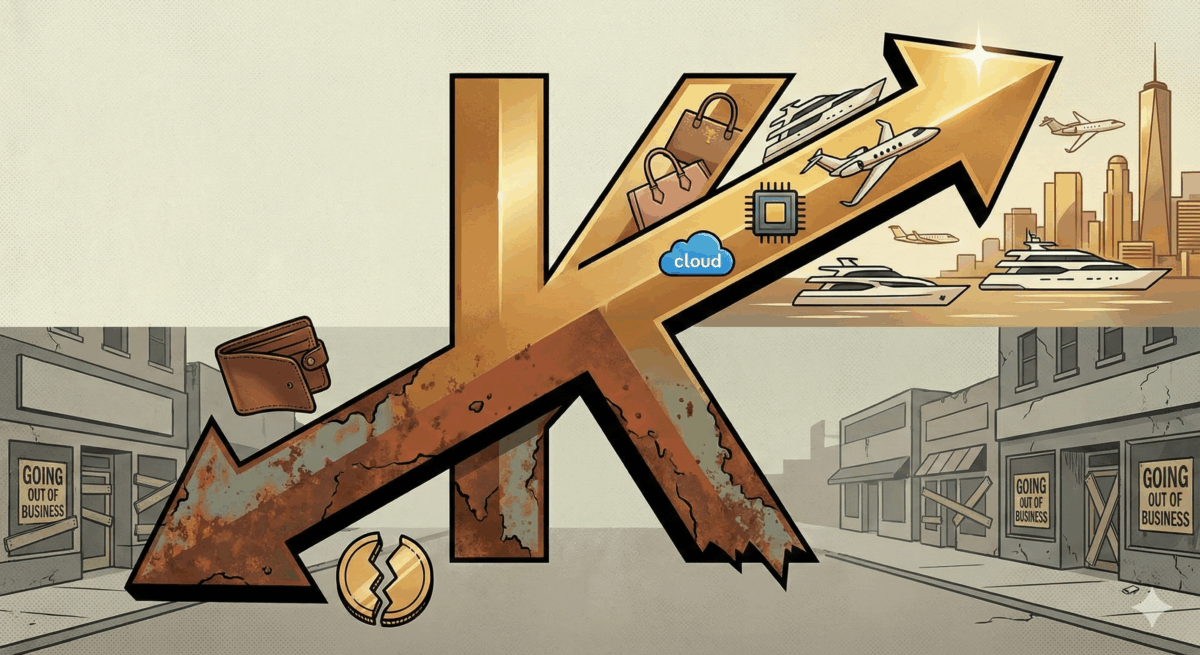
Bill D’Alessandro’s forecasts highlight a growing economic divergence, characterizing 2026 as the year of the "K-shaped economy." This phenomenon describes a scenario where certain sectors of the economy, particularly large technology companies and the "Mag 7" stocks, continue to experience robust growth, potentially increasing by another 20% or more. In contrast, the broader economy and the average consumer are expected to face ongoing struggles.
For e-commerce businesses, this bifurcation presents a strategic imperative. D’Alessandro advises businesses to either focus on the "up-market" by catering to affluent consumers who remain less affected by economic downturns, or to adopt a "down-market" strategy, offering essential goods at highly competitive prices. The "middle ground" is identified as a particularly dangerous and vulnerable segment of the market. This economic polarization suggests a need for businesses to clearly define their target audience and value proposition in a landscape where consumer purchasing power is increasingly unevenly distributed.
Persistent Inflation and its Economic Ramifications
D’Alessandro’s economic outlook also includes a prediction of inflation remaining above 3% in 2026. This forecast is attributed to a perceived lack of political will to curtail government spending, leading to continued deficit spending. This sustained fiscal policy, he argues, will inevitably contribute to persistent inflationary pressures.
The implication is that this inflationary environment is not a short-term phenomenon but a trend that could persist for the next decade. Businesses and investors are therefore advised to position their portfolios and operational strategies to accommodate a sustained period of higher inflation. This includes reassessing pricing strategies, managing supply chain costs, and investing in assets that historically perform well in inflationary periods. The long-term nature of this predicted inflation suggests a fundamental shift in the economic landscape, requiring strategic adjustments beyond immediate market fluctuations.
AI’s Complete Takeover of Meta Ad Content

Further reinforcing the AI theme, D’Alessandro predicts that AI will completely take over the creation of content for Meta’s advertising platforms. He cites evidence of proof-of-concept pipelines developed by major brands that can generate hundreds of novel advertisements daily. These AI systems are capable of analyzing customer reviews, extracting brand assets, and generating both static images and, increasingly, video content, which can then be directly launched through APIs.
The year 2026 is seen as the inflection point where this capability moves from a niche application to a mainstream practice. This AI-driven approach to ad creation promises unparalleled efficiency and scalability, allowing for hyper-personalized campaigns and rapid testing of creative variations. The ability of AI to synthesize vast amounts of data and generate tailored marketing materials will fundamentally alter the advertising industry, placing a premium on strategic oversight and creative direction rather than manual content production.
The Demise of the Undifferentiated Lifestyle Brand
In a stark assessment of the competitive e-commerce environment, D’Alessandro declares the "lifestyle brand is dead," particularly for businesses lacking strong intellectual property protection or a top-tier brand reputation. He posits that e-commerce businesses with revenues in the single-digit millions will struggle to survive against larger competitors who are deploying sophisticated AI-powered advertising machines.
These advanced systems will enable larger players to outspend their smaller counterparts, conduct more extensive and rapid A/B testing, and tolerate higher customer acquisition costs (CACs). This creates an increasingly challenging environment for smaller, less differentiated brands to compete effectively. The future of brand building in e-commerce, therefore, will likely require a strong unique selling proposition, robust IP, or a clear focus on a niche market that AI-driven mass marketing cannot easily replicate.
M&A Trends: A Tale of Two Markets
Mergers and acquisitions (M&A) activity in the e-commerce sector is predicted to bifurcate significantly in 2026. D’Alessandro’s analysis indicates a booming M&A market at the "high end," with deals exceeding $1 billion showing a substantial year-over-year increase of 19%. Conversely, the small and mid-size M&A segment is expected to remain anemic, with deal volume dropping by 18%.
This trend suggests that while top-tier e-commerce businesses with strong performance and market positions will continue to attract significant investor interest and command premium valuations, smaller and more typical e-commerce brands will face considerable challenges in finding buyers or achieving favorable transaction terms. This disparity in M&A activity reflects the broader economic trends, where established, high-performing entities are favored over those with less robust fundamentals.
Bitcoin’s Volatile Path: Below $70K, Then Above $100K
In the realm of digital assets, Bitcoin is predicted to experience a volatile year in 2026. The forecast suggests an initial dip below the $70,000 mark, followed by a recovery that pushes its value above $100,000 by year-end. This prediction is based on competing market forces.
A struggling consumer economy is expected to exert downward pressure on Bitcoin as a risk asset. However, persistent inflation is anticipated to bolster Bitcoin’s appeal as a digital store of value, akin to "digital gold." The interplay between these factors is expected to create a period of heightened volatility in the first half of the year, leading to the predicted dip. As the narrative around inflation strengthens, the recovery and subsequent rise above $100,000 are anticipated. This forecast highlights Bitcoin’s increasing role as an inflation hedge, even amidst broader economic uncertainties.
Beyond Predictions: The Value of Community and Real-Time Insights
While these predictions offer a valuable glimpse into the future of e-commerce, the authors emphasize that staying ahead of the curve requires more than just foresight. The true advantage lies in accessing a dynamic "braintrust" of successful entrepreneurs who are actively navigating these evolving market conditions. Engaging with a community of thousands of seven and eight-figure store owners provides real-time insights into what strategies are proving effective, which are faltering, and what emerging trends are gaining traction. This collaborative approach, fostered within communities like eComFuel, offers a more grounded and actionable path to success than relying solely on speculative forecasts. The shared experiences and collective intelligence within such a network provide an invaluable resource for adapting to the unpredictable nature of the digital marketplace.