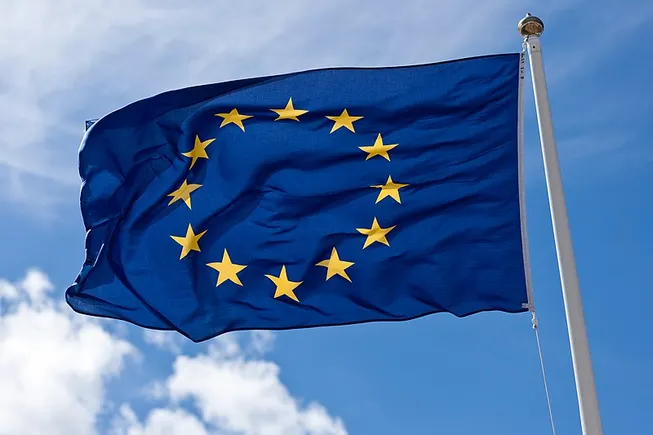
The European Commission has announced significant next steps in its ambitious initiative to implement more stringent restrictions on how young people access social media applications, with Commission President Ursula von der Leyen releasing an initial response to a new investigation on Sunday. This move signals a resolute commitment from the EU to tackle the burgeoning concerns surrounding the digital well-being of its youngest citizens, drawing on a growing body of evidence indicating adverse mental and psychosocial impacts from excessive social media use.
The Urgency of Digital Safeguards: A Data-Driven Rationale
President von der Leyen underscored the gravity of the situation, presenting compelling data that forms the bedrock of the Commission’s policy drive. "The data reveal the facts. Across Europe, young people now spend four to six hours per day on screens. Six hours every day – this adds up to twenty years of their life," von der Leyen stated, emphasizing the profound temporal commitment young individuals are making to digital platforms. This extensive screen time, often dominated by social media engagement, is increasingly linked to detrimental outcomes. She further elaborated, "At the same time, across Europe, almost 60% of young children have experienced emotional or psychosocial problems online." These problems encompass a wide spectrum, from anxiety, depression, and body image issues to cyberbullying, exposure to inappropriate content, and sleep disturbances, issues that child psychologists and mental health experts have increasingly highlighted over the past decade.
Von der Leyen articulated a clear conviction that the harms associated with social media are undeniable and that current platforms are fundamentally not designed with the holistic well-being of children in mind. She pointed out that the algorithms driving these platforms are often optimized for engagement and retention, not for fostering healthy development or protecting vulnerable users. While acknowledging the fundamental role of parental guidance in determining when children receive their first smartphones, the President firmly asserted that there is a broad consensus necessitating a clear, enforced age limit for children accessing social media. This distinction highlights the Commission’s view that while parental involvement is crucial, systemic regulatory measures are equally indispensable to create a safer digital environment.
Addressing the "Access" Paradox: Protecting Children from Platforms
Challenging the conventional framing of the debate, von der Leyen refocused the discourse: "The status quo, a world where we continue to allow big tech unrestricted access to our children, will only consign another generation to more mental harm, addiction and misery." She further clarified, "It’s not about whether children can access social media. It is about whether and when social media can access our children. The question is no longer if children face risks online, but what can we do to give children a safer start online." This rhetorical shift underscores the proactive regulatory philosophy underpinning the EU’s approach, positioning the onus of protection on the platforms and the regulatory bodies rather than solely on individual users or parents.
To concretely address this challenge, the EU is developing a new age verification application. This innovative solution aims to provide a more uniform and robust mechanism for confirming the identity and age of each social media user across the bloc. The goal is to create a secure, privacy-preserving method that can effectively serve as a gatekeeper, ensuring that age-restricted content and platforms are genuinely inaccessible to underage individuals. When combined with the proposed new age restrictions, this technological intervention is anticipated to significantly limit the harms identified by the Commission, making the EU’s approach to teen social media restrictions more effective and enforceable than previous, often patchy, efforts.
A Chronology of EU Engagement on Digital Youth Safety
The European Commission’s current push is not an isolated event but rather the culmination of a sustained and escalating focus on digital safety, particularly for minors. The seeds of this initiative were publicly sown in September, during President von der Leyen’s pivotal State of the Union address. In that significant speech, she announced a comprehensive plan to commission a panel of experts tasked with exploring the most effective pathways for Europe to implement social media restrictions for teens. At the time, von der Leyen explicitly cited Australia’s pioneering model as a potential example, indicating the Commission’s willingness to learn from international precedents.
During that address, von der Leyen had passionately articulated her profound concerns regarding the pervasive impacts of social media on young minds, famously stating that "parents, not algorithms, should be raising our children." This statement encapsulated the growing sentiment among policymakers that technology companies had, perhaps inadvertently, usurped a critical aspect of childhood development and parental authority. The expert group’s initial report, commissioned following this speech, has now been delivered, providing the Commission with crucial data, insights, and policy recommendations. This report will serve as a foundational document, informing the future trajectory of social media policy across the European Union.
While the exact age threshold is still subject to ongoing deliberation, it appears increasingly probable that the EU will ultimately enact a social media age restriction, most likely prohibiting access for individuals under the age of 16. However, internal discussions within the EU reveal a dynamic debate, with some member states advocating for a slightly lower threshold, such as under-15, seeking to balance protection with the realities of early adolescent digital engagement. This internal negotiation reflects the complexity of forging a unified policy across diverse national contexts and cultural norms within the EU.
Global Precedents: Learning from International Efforts
The European Union’s move is part of a broader global trend of jurisdictions grappling with the challenges of youth social media use. Australia, a nation frequently referenced in these discussions, implemented a ban on all teens under the age of 16 from using social media platforms. While bold, early data from Australia suggested significant challenges in enforcement, with a substantial majority of young teens reportedly still accessing social media apps despite the bans, largely due to flaws and loopholes in the detection and age verification processes. This experience serves as a crucial cautionary tale for the EU, highlighting the critical importance of robust and foolproof age verification mechanisms.
The United Kingdom is also charting a similar course, with plans to ban children under 16 from social media, with implementation slated to begin next year. This parallel development in a major European economy, albeit outside the EU, underscores the growing international consensus on the need for such measures. Meanwhile, Turkey has already enacted its own ban, prohibiting social media access for users under 15. These international examples, both in their ambition and their encountered difficulties, provide a rich tapestry of lessons for the European Commission as it refines its own policy framework.
Many other regions worldwide are actively considering similar restrictions, indicating a global awakening to the potential societal costs of unchecked digital exposure for youth. A comprehensive set of rules covering the entire EU, with its vast single market and population, holds the potential for a far more significant impact on usage patterns compared to fragmented national bans. This potential impact is especially pronounced if the EU’s proposed new age verification process proves genuinely effective as a barrier to entry, circumventing the issues faced by countries like Australia.
The Digital Services Act and the Broader EU Regulatory Framework
The European Commission’s initiative to impose stricter age restrictions on social media platforms for minors must be understood within the broader context of the EU’s pioneering digital regulatory framework. Landmark legislation such as the Digital Services Act (DSA) and the Digital Markets Act (DMA) has already positioned the EU at the forefront of global efforts to regulate the digital space. The DSA, in particular, imposes wide-ranging obligations on online platforms to protect users, including specific provisions for the protection of minors. It mandates that very large online platforms and search engines assess and mitigate systemic risks, including those related to the negative effects on mental and physical health, gender-based violence, and the protection of minors.
These new age restrictions would logically integrate into and strengthen the existing provisions of the DSA. While the DSA already requires platforms to take reasonable measures to protect children and prohibits targeted advertising based on profiling of minors, explicit age bans coupled with robust verification mechanisms would provide a clearer, more enforceable boundary. This layered approach reflects the EU’s commitment to a comprehensive regulatory strategy that combines broad platform accountability with specific protective measures for vulnerable groups. The General Data Protection Regulation (GDPR) also plays a crucial role, particularly concerning the processing of children’s personal data, which requires explicit parental consent for children under a certain age (typically 13 or 16, depending on member state interpretation). The new age verification app would need to operate in full compliance with GDPR principles, ensuring data minimization, transparency, and robust security.
Implementation Hurdles and Industry Reactions
While the EU’s intentions are clear, the path to effective implementation is fraught with technical, logistical, and potentially legal challenges. One of the primary hurdles lies in the development and widespread adoption of the new age verification app. For such a system to be effective, it must be highly accurate, user-friendly, privacy-preserving, and resistant to circumvention. Technical experts have long debated the feasibility of truly foolproof age verification online, citing challenges such as data privacy concerns, the potential for digital identity fraud, and the inherent difficulty in verifying age without collecting excessive personal data. The EU’s solution will need to strike a delicate balance between robust verification and the protection of user privacy, a core tenet of its digital policy.
Social media companies, often referred to as "big tech," are likely to face significant operational and financial implications. Implementing robust age verification across their platforms would require substantial investment in technology, personnel, and compliance mechanisms. They would also need to adapt their business models, particularly those reliant on advertising to younger demographics. While many platforms already have age restrictions in their terms of service (typically 13+), enforcement has historically been weak, relying largely on self-declaration. A mandatory, verifiable system enforced by the EU would represent a paradigm shift. Initial reactions from the tech industry could range from expressions of cooperation and commitment to child safety to concerns about the technical feasibility, privacy implications, and potential impact on innovation and freedom of expression. Legal challenges from platforms contesting the scope or specifics of the regulations are also a distinct possibility, drawing out the implementation timeline.
The Broader Societal Debate: Protection Versus Access and Digital Literacy
The move towards stricter social media bans for young people inevitably ignites a broader societal debate, pitting the imperative of protection against questions of access, digital literacy, and the evolving nature of adolescent communication. Some experts and advocacy groups have voiced skepticism about the effectiveness of outright bans, arguing that they may inadvertently drive young people towards less regulated, potentially less safe, alternative apps and online communities where parental oversight or platform safeguards are even weaker. The "digital underground" phenomenon observed in countries with strict internet censorship serves as a cautionary tale: where access is denied through official channels, users often find illicit or less secure alternatives.
Moreover, critics argue that completely isolating young people from mainstream social media platforms might hinder their development of essential digital literacy skills, which are increasingly crucial for navigating the modern world. Online interaction has become an undeniable and central component of how young people connect, learn, and socialize. Banning access might prevent them from participating in peer groups, accessing educational content, or developing the critical thinking skills necessary to discern reliable information from misinformation online. Instead of outright bans, some advocate for a greater emphasis on digital education, parental tools, and platform design changes that empower users and parents, rather than simply restricting access.
However, proponents of the bans, including the European Commission, counter that the current risks outweigh the perceived benefits of early, unrestricted access. They argue that platforms, in their current iteration, are not designed to foster healthy digital citizenship but rather to maximize engagement, often at the expense of mental well-being. The "digital native" argument, which suggests young people are inherently equipped to navigate the online world, is increasingly being challenged by evidence of psychological harm.
Looking Ahead: The Future of Youth Online Safety in Europe
The European Commission, armed with its expert panel’s findings and President von der Leyen’s strong statements, appears poised to advance broader restrictions on social media access for young people. The success of these measures will hinge not only on the legislative details but critically on the robustness of the age verification technology and the cooperation (or compliance) of the major social media platforms. The EU’s ambition is clear: to establish a new global benchmark for youth online safety, ensuring that the digital lives of children are protected from the potential harms of an unregulated online environment.
The coming months will be crucial as the Commission finalizes its proposals, engages in legislative debates with the European Parliament and Council, and confronts the practicalities of implementation. The outcome will have profound implications not only for millions of young Europeans and their families but also for the global digital landscape, potentially inspiring similar regulatory shifts in other parts of the world. The fundamental question remains whether Europe can successfully create a digital space where innovation thrives without compromising the mental health and developmental well-being of its next generation.