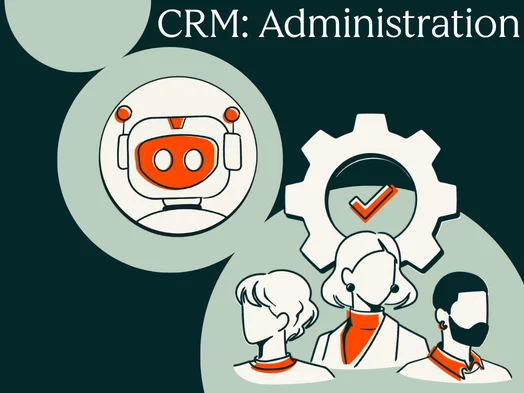
Effective Customer Relationship Management (CRM) platforms are widely recognized as indispensable tools for modern businesses, yet the distinction between a system that genuinely propels revenue and one that merely accumulates digital dust often lies not in its software capabilities or allocated budget, but in the caliber of its administration. This critical operational discipline ensures that a CRM system accurately reflects and supports current business processes, fostering clean data, efficient workflows, and trustworthy insights that are paramount for strategic decision-making.
The Evolution of CRM and the Rise of Administrative Imperative
Originally conceived as simple sales force automation tools, CRMs have evolved into complex, integrated platforms that orchestrate interactions across marketing, sales, and customer service. This expansion in scope and functionality, while offering immense potential, has simultaneously magnified the need for sophisticated administration. The sheer volume of data, the interconnectedness of various business functions, and the increasing reliance on automation mean that a "set it and forget it" approach is no longer viable. Industry analysts, including Gartner, have consistently highlighted the significant financial drain caused by poor data quality, estimating an average cost of $12.9 million per year for organizations. This staggering figure underscores that CRM administration is not merely a technical task but a strategic revenue function.
Understanding CRM Administration: Beyond Technical Configuration
CRM administration is an ongoing, dynamic operational function focused on the governance of data, users, workflows, and reports. It differs fundamentally from a one-time setup project; instead, it demands continuous auditing, improvement, and alignment with evolving business processes and go-to-market strategies. While technical configuration is a component, the role extends far beyond, acting as the linchpin that connects a CRM’s technological capabilities to tangible business outcomes. Without robust administration, even the most advanced CRM can quickly become a source of frustration, leading to collapsed user adoption and unreliable data.
The direct impact of effective CRM administration on critical business metrics is profound:
- Forecast Accuracy: Clean pipeline data, consistent deal stage definitions, and well-governed lifecycle stages produce forecasts that leadership can trust, enabling better resource allocation and strategic planning.
- Marketing Attribution: Standardized lead source taxonomies and proper lifecycle stage governance ensure that attribution reports accurately reflect reality, allowing marketing teams to optimize campaigns effectively.
- User Adoption: A CRM that is fast, logical, and reliable encourages active use by sales representatives and other teams, minimizing reliance on "shadow systems" and preventing critical data gaps.
- Sales Velocity: Automated handoffs, clean routing mechanisms, and complete contact records reduce the time between lead creation and the initial customer touchpoint, accelerating the sales cycle.
- Customer Experience: A unified and clean contact record ensures that service teams have immediate access to comprehensive customer history, eliminating the need for customers to repeat information and fostering a seamless experience.
The Cost of Neglect: A Real-World Scenario
A common failure pattern observed in poorly administered CRMs is the breakdown of lifecycle stage governance. For instance, marketing teams might automatically assign contacts as Marketing Qualified Leads (MQLs) upon form submission, while sales representatives manually revert them to "Lead" status if they deem them unprepared for engagement. This often leads to conflicting definitions of subsequent stages like "Sales Qualified Lead" (SQL), ultimately fracturing the handoff process. The consequence is a disconnect where marketing reports high MQL volumes, but sales perceives a low number of qualified leads. This blame game between departments erodes trust, with leadership questioning marketing’s quality and marketing accusing sales of cherry-picking. The root cause, however, is an absence of clear ownership, definition, and enforcement logic for the lifecycle stage property within the CRM.
The administrative solution is straightforward yet requires cross-functional alignment: document precise definitions for each lifecycle stage, implement workflows that automate stage transitions based on agreed-upon criteria, restrict manual overrides without a defined process, and publish these definitions in a shared CRM data dictionary. Such a fix, while technically implementable quickly on platforms like HubSpot, hinges entirely on initial business alignment.
Core Capabilities and Distributed Responsibilities
A comprehensive CRM administrator’s purview spans permissions, properties, workflows, pipelines, reports, and documentation. This broad scope necessitates a blend of technical depth and business acumen. In most organizations, these responsibilities are distributed across specialized operational teams, with a central CRM admin or team coordinating efforts.
- CRM Admin/RevOps: Platform configuration, workflow governance, permissions, data quality, integrations, reporting infrastructure.
- Marketing Ops: Lead capture forms, lead scoring, lifecycle stage logic, email automation, attribution setup.
- Sales Ops: Pipeline architecture, deal stage definitions, forecasting tools, sales sequence governance, territory logic.
- Service Ops: Ticket pipeline, SLA configuration, escalation workflows, customer satisfaction surveys.
- IT/Security: SSO configuration, data residency, API credentials, security review, user provisioning at scale.
Pillars of Effective CRM Administration
1. Data Governance: The Foundation of Trust
Data governance establishes naming conventions, validation rules, merge policies, and lifecycle standards. Without these, a CRM will inevitably drift into inconsistency. It prevents scenarios where hundreds of contact properties are created ad hoc, duplicating existing fields and creating data chaos. A CRM data dictionary is the foundational governance document, detailing every active property, its definition, data type, owner, and usage guidelines. Essential property governance rules include enforcing uniqueness (e.g., email address), limiting manual property creation, making key fields read-only for most users, and archiving unused properties. Organizing properties into logical groups within the CRM interface also significantly boosts data completeness and user experience.
Deduplication and validation rules are critical for maintaining data hygiene. Duplicate records inflate metrics, split engagement history, and hinder personalization efforts. Proactive measures include enforcing email uniqueness across all forms and imports, and using automated duplicate management tools. Any bulk merge or deduplication operation must be preceded by a test export and validation on a subset of records to prevent irreversible data loss or corruption.
2. Securing the Platform: Permissions and Roles
Permission models must adhere to the principle of "least privilege," granting users access only to what is necessary for their job functions. Over-permissioned CRMs pose significant data security and quality risks. Permissions are typically configured at multiple levels: user/team, object (e.g., contacts, deals), and property. A scalable permission model starts with defining roles rather than configuring individual users, then assigning users to these predefined permission sets. This approach, exemplified by HubSpot’s team-based record visibility, simplifies access management and adapts to organizational changes.
-1.png)
3. Automating for Efficiency: Workflows and Lifecycle Management
Workflow administration involves designing reliable, documented, and observable automation. Most automation failures stem not from flawed logic but from missing safeguards: no suppression lists, no enrollment caps, no error monitoring, and inadequate documentation. Every well-administered workflow should have a clear purpose, defined suppression lists (e.g., customers, competitors), a dedicated test contact for validation, regular error monitoring, and a consistent naming convention.
Crucially, lifecycle stage rules must align marketing, sales, and service handoffs. This requires defining clear triggers for each transition, identifying who can initiate changes, and outlining downstream actions. A robust model prevents manual backward movement of lifecycle stages, which can destroy funnel conversion data. Instead, auxiliary properties (e.g., "Re-engagement Status") can track contact states without compromising historical data integrity.
4. Driving Insight: Reporting and Analytics
Reliable dashboards are contingent on standardized definitions, clean fields, and documented filters. Reporting administration is highly visible and crucial for maintaining stakeholder confidence. The trustworthiness of any CRM report rests on four conditions: the underlying data is clean, field definitions are clear, report filters are accurate, and the report logic is documented. If any of these are compromised, the upstream problem, not just the report, must be addressed. Core dashboards typically include revenue performance, marketing funnel, sales activity, customer success, and CRM health. Features like HubSpot’s reporting add-on and custom report builders empower admins to deliver tailored, trustworthy insights.
5. Managing Change and Ensuring Continuity
Change control is a disciplined process encompassing intake, testing, approvals, rollout, and post-launch monitoring. Without it, CRM changes accumulate haphazardly, leading to unforeseen breakages and difficulty in diagnosing issues. A robust change control process involves:
- Intake: Formal submission of change requests.
- Review: Assessment of conflicts and dependencies by the CRM admin.
- Approval: Secondary approval for high-risk changes.
- Scheduling: Batching changes into defined windows.
- Testing: Validation in a sandbox environment.
- Rollout: Deployment with a documented rollback plan.
- Post-launch Monitoring: Tracking workflow errors and report metrics.
User Acceptance Testing (UAT) is a vital, yet often skipped, step that prevents most production incidents. For any user-facing change, structured UAT in a sandbox environment (like HubSpot’s Professional and Enterprise Sandbox) is non-negotiable. Sandbox environments allow for testing against a copy of production data without risk, ensuring that complex changes behave as expected before live deployment.
Effective documentation is equally critical. It must be concise, searchable, and current. Key documentation includes a CRM data dictionary, a change log (detailing who, what, and why for each modification), runbooks for common admin tasks, and training materials. This institutional knowledge is vital for adoption and long-term manageability.
Cross-Team Alignment: The RACI Framework
A CRM’s success hinges on clear decision rights and cross-team alignment. A RACI (Responsible, Accountable, Consulted, Informed) matrix clarifies who owns specific CRM processes across various departments (CRM Admin, RevOps, Marketing Ops, Sales Ops, Service Ops, IT). This prevents bottlenecks and conflicts, ensuring that the right individuals are involved in decisions. Beyond decision rights, defining Service Level Agreements (SLAs) for data entry, lifecycle qualification, and handoffs ensures consistent expectations and accountability across the revenue team. Examples include MQL follow-up SLAs for SDRs, data entry SLAs for sales reps, and ticket response SLAs for service teams.
The Future: AI in CRM Administration
The integration of Artificial Intelligence (AI) is ushering in a significant shift in CRM administration, promising to dramatically reduce time spent on low-value, repetitive tasks. Tools like HubSpot’s Breeze Data Enrichment can automatically populate company properties, eliminating manual data entry. Breeze Copilot offers natural language interfaces for building workflows, creating reports, and drafting documentation, lowering the barrier to automation. Breeze Intelligence assists with ICP scoring and contact prioritization, while Breeze Agents can autonomously create records and activities.
However, AI also introduces new administrative challenges, particularly in governing AI-generated data. Admins must establish protocols to verify the accuracy of AI-populated fields, prevent AI from overwriting manually verified data, and implement audit workflows for AI-written information. The key is to treat AI-generated data with the same rigor and governance as human-entered data.
Professionalizing the Role: Skills and Career Path
CRM administration has emerged as a strategic career path, particularly with the growth of Revenue Operations (RevOps). Successful CRM administrators possess a blend of technical and business-oriented skills: data modeling, governance and documentation, admin UX design, automation logic, change management, QA and testing, stakeholder alignment, and reporting/analytics.
HubSpot Academy offers practical, platform-specific certifications that are highly valued in the industry. A recommended path includes the CRM Certification, Data Hub Certification, Marketing Software Certification, and eventually the Revenue Operations Certification, which provides the strategic framework for evolving from a skilled admin to a true RevOps partner.
Conclusion: A Competitive Advantage
CRM administration is far more than a technical support role; it is a fundamental revenue function. Every missed forecast due to dirty data, every lost lead from a broken workflow, and every frustrated rep who abandons the system represents a direct administrative failure with tangible revenue consequences. Organizations that excel with CRM treat administration as a core practice, investing in formal ownership, clear governance, continuous improvement, and granting it a strategic seat at the go-to-market table. A well-administered CRM is not merely a technological achievement; it is a significant competitive advantage in the modern business landscape. The path to unlocking this advantage begins with documenting existing processes, building governance incrementally, and maintaining a relentless focus on auditing and continuous improvement.