Yoast, a leading developer of search engine optimization (SEO) tools for WordPress, has released a critical security update, version 27.6.1 for Yoast SEO Premium. This latest release specifically addresses a significant security vulnerability identified within the Redirect Manager feature of its premium plugin. While the flaw has the potential for serious consequences, including remote code execution (RCE) in the most severe cases, Yoast has reassured its vast user base that the vast majority of users are not impacted. The company is strongly urging all customers utilizing Yoast SEO Premium, Yoast WooCommerce SEO, or Yoast SEO AI+ to review their configurations and update their plugins without delay.
Understanding the Vulnerability: A Deep Dive
The vulnerability, designated as a high-severity issue, centers on the Redirect Manager component of Yoast SEO Premium. This feature is crucial for managing URL redirects on a WordPress site, which are essential for maintaining SEO rankings, preventing broken links, and improving user experience when page URLs change. However, a flaw was discovered that could allow an authenticated user to inject malicious or unexpected configuration directives directly into a site’s .htaccess file.
The .htaccess file is a powerful, distributed configuration file used by the Apache web server (the most common web server for WordPress sites). It allows for directory-level configuration changes, overriding global server settings. Its capabilities include URL rewriting, access control, password protection, and custom error pages. Due to its direct control over server behavior, unauthorized or malicious modifications to the .htaccess file can have catastrophic consequences for a website.
The mechanism of attack involved an authenticated user – meaning someone with legitimate access to the WordPress backend, such as an editor, administrator, or even a custom role with redirect management permissions – crafting a redirect containing special characters. These special characters, when not properly sanitized or validated by the plugin, could be misinterpreted by the server, allowing the attacker to "break out" of the intended redirect definition and inject arbitrary code into the .htaccess file.
The potential impact of such an injection ranged significantly in severity. At the lower end, it could lead to a site crash, rendering the website inaccessible to visitors and potentially requiring manual server intervention to restore. At the more critical end, the vulnerability could facilitate Remote Code Execution (RCE). RCE is one of the most dangerous types of vulnerabilities, as it allows an attacker to execute arbitrary code on the server hosting the website. This could grant them full control over the site, enabling them to deface it, steal sensitive data, inject malware, pivot to other parts of the server, or use the server as part of a botnet.
Scope of Impact: Who is Affected and Why Most Are Safe
Despite the severe nature of the vulnerability, Yoast has provided a crucial reassurance: the vast majority of its premium customers are not at risk. The exposure to this vulnerability is contingent upon three very specific conditions being met simultaneously on a WordPress installation:

- Authenticated Users with Redirect Management Permissions: The vulnerability requires an authenticated user to initiate the attack. This means an attacker would need to possess valid login credentials for the WordPress site with permissions to create or edit redirects. This significantly reduces the attack surface compared to unauthenticated vulnerabilities, which can be exploited by anyone without needing to log in.
- Redirect Manager Enabled in Yoast SEO Premium: The Redirect Manager feature itself must be active within the Yoast SEO Premium plugin. Many users might have the plugin installed but not actively utilize or configure this specific component.
- Redirect Method Set to
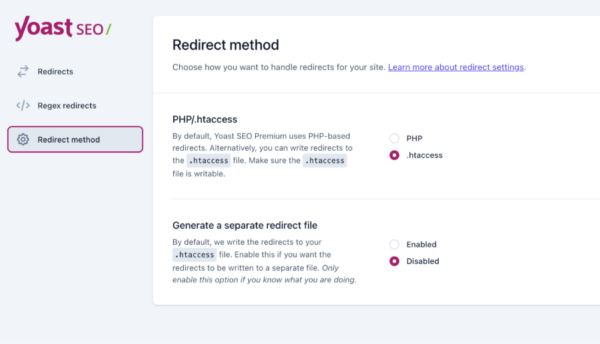
.htaccessMode: This is the most critical condition. Yoast SEO Premium offers different methods for handling redirects. The vulnerability specifically affects sites where the redirect method is configured to use.htaccessmode. Alternative methods, such as those relying on PHP or other server configurations, are not affected by this particular flaw. Many hosting environments or specific WordPress setups might default to or prefer non-.htaccessredirect methods for performance or compatibility reasons, thereby unknowingly mitigating this risk.
Yoast has clarified that users can easily determine if they are using .htaccess mode by navigating to [www.yoursite.com]/wp-admin/admin.php?page=wpseo_redirects#/redirect-method within their WordPress admin panel. If the interface does not display .htaccess mode as enabled, the site is not at risk from this specific vulnerability. This targeted nature of the vulnerability is why Yoast confidently states that the majority of its user base remains secure.
Yoast’s Swift Response and Remediation
Upon discovery, whether through internal audits or external responsible disclosure, Yoast acted swiftly to develop and deploy a comprehensive fix. The result is Yoast SEO Premium 27.6.1, which includes a robust patch designed to eliminate the vulnerability. The patch incorporates three distinct layers of protection, demonstrating a thorough approach to security:
- Enhanced Input Sanitization: This layer ensures that any data entered into the redirect fields, especially special characters, is rigorously cleaned and filtered before being processed. Malicious characters are either removed or neutralized, preventing them from being interpreted as executable code or configuration directives.
- Strict Validation and Escaping: The plugin now employs more stringent validation rules for redirect inputs, ensuring that only expected and safe characters are allowed. Additionally, any output that might be written to the
.htaccessfile is properly escaped, meaning special characters are converted into their literal representations, preventing the web server from interpreting them as commands. - Hardened
.htaccessWriting Logic: The core logic responsible for writing redirects to the.htaccessfile has been re-engineered to be more resilient against injection attempts. This likely involves using safer functions or methods for file manipulation and ensuring that only the intended redirect rules are ever written, without allowing for extraneous or malicious additions.
Crucially, Yoast has conducted a review of a sample of sites using the affected configuration and has found no evidence of exploitation. Furthermore, there are no known cases of abuse associated with this vulnerability. This indicates that while the potential for harm was significant, the vulnerability was either not widely known or not actively exploited in the wild before the patch was released. This provides a significant reassurance to the affected user base.
Chronology of Events (Inferred)
While Yoast’s initial advisory does not provide a precise timeline, a typical sequence of events for such a security incident can be inferred:
- Discovery Phase: The vulnerability was likely discovered either through internal code audits by Yoast’s security team, proactive penetration testing, or through responsible disclosure by a security researcher. Given the complexity of such flaws, this phase involves identifying the specific code flaw and understanding its potential implications.
- Assessment and Patch Development: Following discovery, Yoast’s engineering and security teams would have thoroughly assessed the vulnerability’s severity and scope. This would lead to the development of a patch, focusing on the three layers of protection mentioned, to effectively neutralize the threat. This phase includes rigorous testing to ensure the fix does not introduce new issues or negatively impact plugin functionality.
- Internal Review and Release Preparation: Before public release, the patch would undergo internal quality assurance and security review to confirm its efficacy and safety. Simultaneously, an advisory would be prepared to inform users clearly and concisely about the issue, its impact, and the necessary steps for remediation.
- Public Release and Initial Advisory: Yoast SEO Premium 27.6.1 was released, accompanied by the initial security advisory informing users about the update and the vulnerability. This immediate communication is vital for proactive defense.
- Anticipated Full Security Disclosure: Yoast has indicated that a full security advisory will be published soon. This detailed advisory typically includes more technical specifics about the vulnerability, including CVE (Common Vulnerabilities and Exposures) identifiers, if assigned, and potentially more in-depth information about the exploit mechanism and the specific code changes. This level of detail is often crucial for security researchers and advanced administrators.
Broader Context: The WordPress Security Landscape
This incident serves as a salient reminder of the persistent and evolving security challenges inherent in managing WordPress websites, particularly those relying on a robust ecosystem of third-party plugins. WordPress powers over 43% of all websites on the internet, making it an attractive target for malicious actors. Its open-source nature, while fostering innovation and community, also means that vulnerabilities in core, themes, or plugins can have widespread implications.
Industry reports consistently highlight that plugins are the most frequent source of vulnerabilities in WordPress sites. For instance, reports from security firms like Wordfence and WPScan routinely show that a significant percentage of all reported WordPress vulnerabilities originate from plugins. In 2023 alone, thousands of vulnerabilities were disclosed across the WordPress plugin ecosystem, ranging from cross-site scripting (XSS) to SQL injection and, critically, remote code execution.
Yoast SEO Premium is not just any plugin; it is one of the most widely used and influential SEO plugins, with millions of active installations across its free and premium versions. Its pervasive use means that any security flaw, even one with specific activation conditions, warrants immediate attention from the entire WordPress community. Yoast’s commitment to transparency and swift action in addressing this vulnerability reinforces its position as a responsible and trusted developer in the ecosystem. The rapid response and lack of observed exploitation underscore the importance of robust internal security practices and potentially, a healthy relationship with the security research community.
Recommendations for Site Administrators
For all WordPress site administrators, particularly those utilizing Yoast SEO Premium, Yoast WooCommerce SEO, or Yoast SEO AI+, immediate action is recommended:
- Update to Yoast SEO Premium 27.6.1 Immediately: The most crucial step is to update the plugin. This can be done quickly and easily from the WordPress plugins screen. Yoast estimates this process takes less than two minutes. Timely updates are the first line of defense against known vulnerabilities.
- Verify Your Redirect Settings: Even if you do not meet all three conditions for direct impact, it is good practice to check your redirect method. Navigate to
[www.yoursite.com]/wp-admin/admin.php?page=wpseo_redirects#/redirect-methodin your WordPress admin. If you do not see.htaccessmode enabled, you are not at risk from this specific vulnerability. However, updating remains a best practice for all users to ensure overall security and access to the latest features. - Implement Principle of Least Privilege: Review user roles and permissions on your WordPress site. Ensure that only trusted personnel have access to administrative functions, especially those that involve plugin settings or server-level configurations like redirect management. Limit capabilities to what is strictly necessary for each user.
- Regular Backups: Maintain a regular schedule of full site backups. In the unlikely event of a security incident, a recent backup can significantly reduce downtime and data loss.
- Use a Web Application Firewall (WAF): Consider implementing a WAF (e.g., Cloudflare, Sucuri, Wordfence Premium) to provide an additional layer of protection. WAFs can often block malicious requests before they even reach your WordPress installation, mitigating many common attack vectors.
- Stay Informed: Subscribe to security advisories from Yoast and other trusted WordPress security resources. Proactive information gathering is key to staying ahead of potential threats.
- Monitor Logs: Regularly review your server and WordPress activity logs for any suspicious behavior. Unusual login attempts, file modifications, or error messages can be early indicators of a security breach.
Implications for Digital Marketers and SEO Professionals
For digital marketers and SEO professionals, this incident highlights the delicate balance between leveraging powerful tools for performance and ensuring the underlying security of their digital assets. SEO plugins like Yoast are indispensable for optimizing website visibility, managing critical elements like redirects, sitemaps, and meta descriptions. The reliance on such tools underscores the need for continuous vigilance.
The incident also reinforces the importance of partnering with developers who prioritize security and demonstrate transparency in addressing vulnerabilities. Trust in essential SEO tools is paramount, as their compromise could not only damage a site’s security but also its search rankings and brand reputation. Moving forward, professionals should advocate for and utilize plugins from developers with a strong track record of security, responsible disclosure, and prompt updates.
In conclusion, the release of Yoast SEO Premium 27.6.1 is a critical development for the WordPress community. While the vulnerability in its Redirect Manager was serious, Yoast’s swift action, transparent communication, and the specific conditions required for exploitation have mitigated the broader risk. The incident serves as a powerful reminder of the continuous need for vigilance, timely updates, and adherence to robust security practices in the dynamic world of web development. Yoast continues to earn the trust of its users by prioritizing security and maintaining open lines of communication in the face of evolving cyber threats.