In the hyper-competitive landscape of the global mobile application market, professionals have long relied on sophisticated data suites to monitor performance, yet a fundamental disconnect remains in the standard analytical workflow. While the majority of mobile app developers and product managers utilize quantitative analytics to track user behavior, many fail to recognize the inherent limitations of a numbers-only approach. The current industry standard focuses heavily on "what" is happening within an application—clicks, bounce rates, and session lengths—but frequently neglects the "why" behind these actions. This diagnostic vacuum represents a significant flaw in modern app optimization strategies, necessitating a shift toward a more holistic, hybrid approach that incorporates qualitative analytics.
The reliance on quantitative data provides a vital, albeit incomplete, skeleton of user interaction. Quantitative metrics act as an early warning system, alerting stakeholders when a user abandons a shopping cart or when a specific demographic fails to complete a registration funnel. However, these figures are incapable of illustrating the frustration of a user attempting to tap an unresponsive button or the confusion caused by a non-intuitive navigation menu. To address these blind spots, industry leaders are increasingly advocating for the integration of qualitative tools, specifically touch heatmaps and user session recordings, to transform raw data into actionable intelligence.
The Evolution of Mobile Analytics: A Chronological Perspective
The trajectory of mobile app analytics has undergone several distinct phases since the launch of the Apple App Store in 2008. In the early era (2008–2012), developers focused primarily on "vanity metrics" such as total downloads and basic active user counts. This period was characterized by a lack of deep insight, as the infrastructure for mobile-specific tracking was still in its infancy.
Between 2013 and 2017, the industry shifted toward event-based quantitative tracking. Tools emerged that allowed developers to see exactly where users dropped off in a conversion funnel. It was during this period that the limitations of quantitative data became apparent. As app complexity increased, developers realized that knowing 40% of users quit at the "Profile Setup" screen was insufficient if they could not see the UI friction causing the exodus.
From 2018 to the present, the "Qualitative Revolution" has taken hold. The rise of sophisticated SDKs (Software Development Kits) that can record sessions without compromising device performance has allowed for a "User-Centric" era. Today, the focus is on the "Total Experience" (TX), where quantitative alerts trigger qualitative investigations. This chronological shift reflects a maturing market where user retention is prioritized over mere acquisition.
Technical Pillars of Qualitative Analysis
To understand the impact of qualitative analytics, one must examine the two primary technologies driving the field: touch heatmaps and user session recordings. These tools provide the visual context necessary to interpret quantitative anomalies.
Touch Heatmaps: Visualizing User Intent
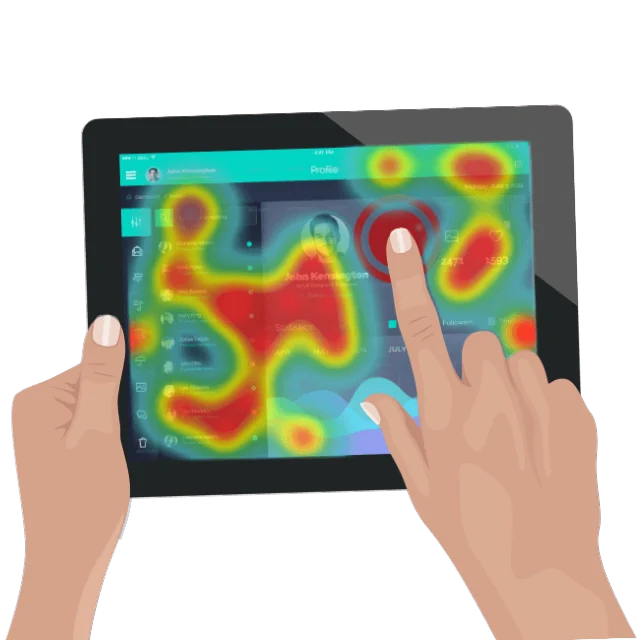
Touch heatmaps aggregate every gesture performed by a user base—including taps, swipes, and pinches—onto a visual overlay of the app’s interface. This technology allows professionals to identify "hot zones" of high activity and "cold zones" where features are being ignored. Beyond simple interaction tracking, heatmaps are essential for identifying "unresponsive gestures." These occur when a user taps an element they perceive to be interactive, such as an icon or a non-linked image, but the app provides no feedback.
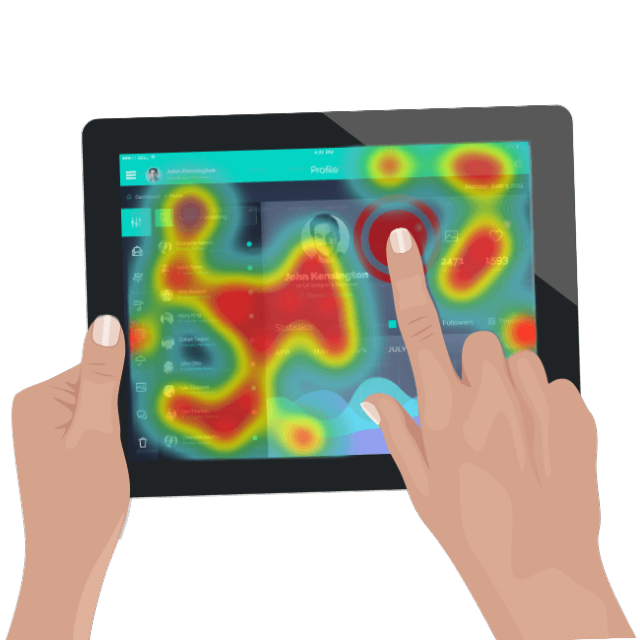
Unresponsive gestures are a primary driver of user frustration. In a professional journalistic context, these gestures can be viewed as "user silent protests" against poor UI design. By identifying these areas, design teams can either make the elements interactive or change the visual cues to better manage user expectations, thereby streamlining the path to conversion.
User Session Recordings: The Unbiased Witness
User session recordings offer a literal view of the user’s journey through the application. Unlike traditional user testing, which often takes place in a controlled, artificial environment, session recordings capture behavior in the "wild." This provides an unaltered look at how users navigate the app on various devices, operating systems, and network conditions.
These recordings are instrumental in deconstructing the "churn" process. When a quantitative report indicates a spike in app uninstalls, session recordings allow developers to watch the final moments of a user’s interaction. This might reveal a subtle bug, a confusing pop-up, or a localized lag that a quantitative report would simply categorize as a "session end."
Supporting Data: The Economic Necessity of Retention
The shift toward qualitative analytics is fueled by the stark economic realities of the mobile industry. According to industry data from platforms like Statista and Braze, the average 90-day retention rate for mobile apps across all industries hovers around 25-30%. Furthermore, research suggests that acquiring a new user is five to twenty-five times more expensive than retaining an existing one.
A 2023 study on mobile user behavior indicated that 71% of users app-churn within the first 90 days due to "usability issues" or "bugs." Quantitative data can identify that these users are leaving, but without qualitative context, companies are forced to guess at the solution. Industry analysts estimate that apps utilizing a hybrid (quantitative + qualitative) approach see a 15-20% higher retention rate compared to those relying solely on numerical data. This is attributed to the speed at which usability friction can be identified and resolved.
Strategic Workflows: Optimization and Troubleshooting
The integration of qualitative data facilitates two transformative workflows: Data-Fueled Optimization and Proactive Troubleshooting.
Data-Fueled Optimization
In a standard optimization workflow, quantitative data serves as the "What" and qualitative data serves as the "Why." For instance, an e-commerce app might notice a high abandonment rate at the payment screen. A quantitative analysis might suggest a price sensitivity issue or a technical error. However, by reviewing session recordings, the product team might discover that the "Discount Code" field is placed in a way that obscures the "Complete Purchase" button on smaller screen sizes.
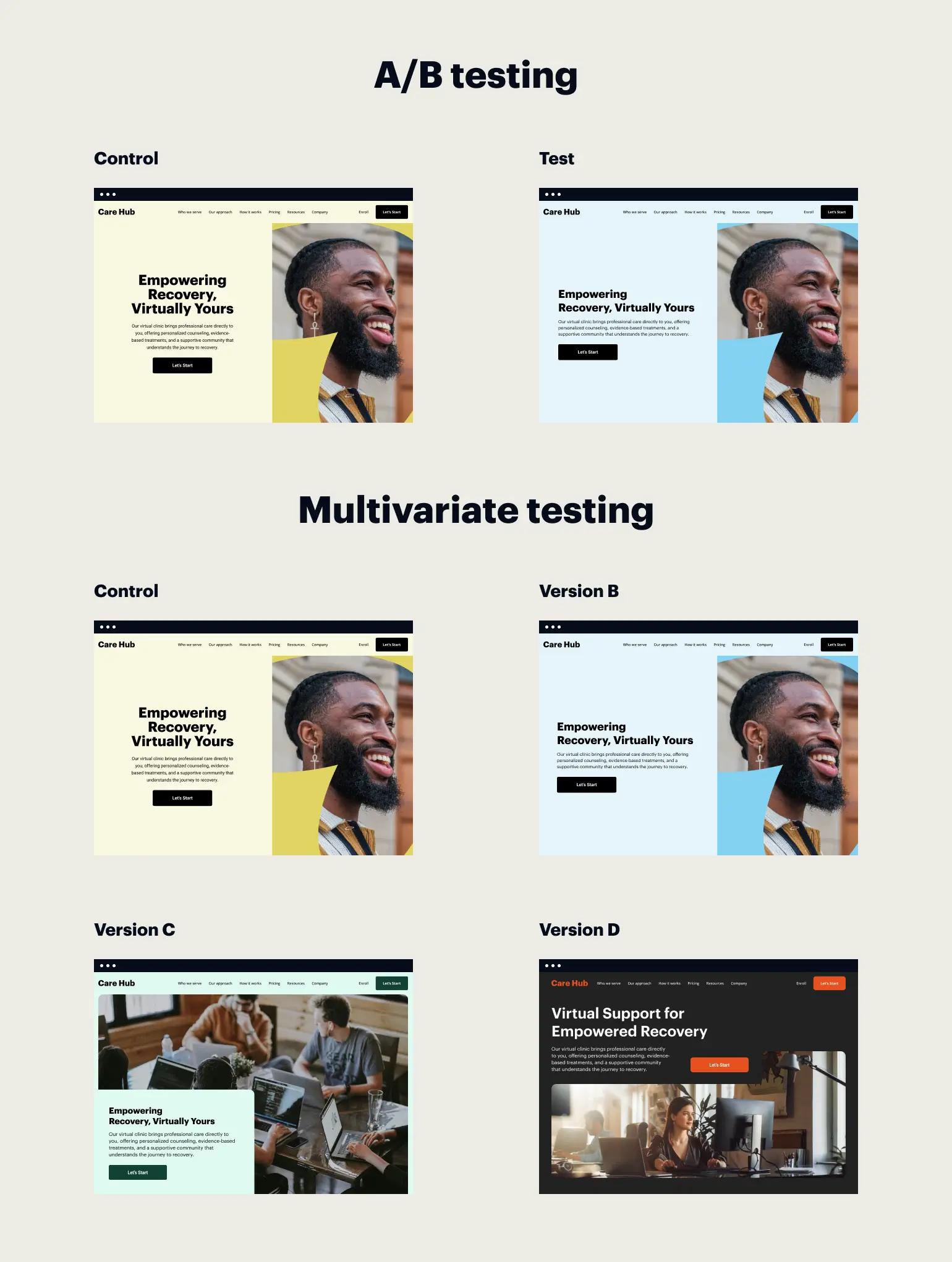
This workflow—Alert, Investigate, Resolve—replaces the traditional "trial and error" method of A/B testing. Instead of testing five different button colors based on a hunch, the team can implement a single, informed fix based on observed user behavior.
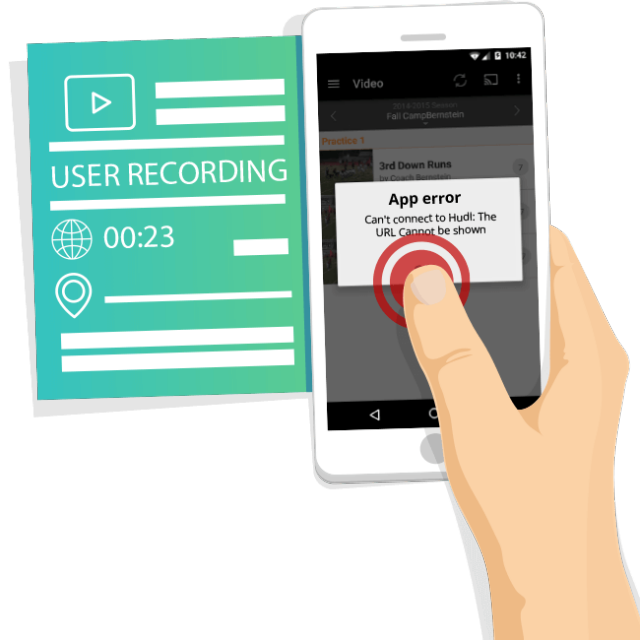
Proactive Troubleshooting
Traditionally, troubleshooting is reactive; developers wait for a crash report or a negative App Store review before investigating a problem. Qualitative analytics allows for a proactive stance. By regularly auditing heatmaps and recordings, QA teams can spot "near-misses"—instances where a user struggled with a feature but ultimately did not crash or quit.
For example, a developer might observe a user repeatedly attempting to log in via a third-party social media API. The user might eventually succeed, meaning no "error" is logged in the quantitative system. However, the qualitative recording shows the user had to tap the button four times before it responded. Recognizing this allows the developer to optimize the API call or the button’s hit box before the lag becomes a critical failure that drives users to a competitor.
Industry Perspectives and Implications
While specific corporate statements regarding internal analytics are often proprietary, the general consensus among UX (User Experience) and DX (Developer Experience) experts is that qualitative data is no longer optional. Leading product managers at major tech firms have noted in industry forums that "Big Data" is only useful if it leads to "Big Understanding."
The broader implication for the mobile economy is a shift toward "Empathy-Driven Development." As markets become saturated, the differentiator between a successful app and a failure is often the "smoothness" of the experience. Qualitative analytics provides the bridge between technical performance and human psychology.
Ethical Considerations and Privacy
As with any technology involving user tracking, qualitative analytics must be viewed through the lens of privacy and data protection regulations such as GDPR (General Data Protection Regulation) and CCPA (California Consumer Privacy Act). Modern qualitative tools are designed to be "privacy-first," automatically masking sensitive information like passwords, credit card numbers, and personal identifiers during the recording process.
The industry is moving toward a model where qualitative insights are gathered anonymously and used strictly for aggregate behavioral analysis. For developers, the challenge lies in balancing the need for deep behavioral insights with the ethical imperative to protect user data. Failure to do so not only risks legal repercussions but also destroys the very user trust that these optimization efforts aim to build.
Conclusion: The Future of Mobile App Intelligence
The integration of qualitative analytics into the mobile app workflow represents a significant maturation of the digital industry. By moving beyond the "what" of quantitative metrics to the "why" of human behavior, app professionals can make more confident, data-driven decisions. The combination of touch heatmaps and user session recordings provides a level of clarity that was previously unattainable, turning the "dark matter" of user frustration into a roadmap for product excellence.
As artificial intelligence continues to integrate with analytics, the next frontier will likely involve AI-driven qualitative analysis—where machine learning algorithms automatically flag session recordings that show signs of user frustration or "rage clicking." For now, the most successful mobile enterprises will be those that recognize that behind every data point is a human user whose experience cannot be fully captured by numbers alone. The "fresh twist" of qualitative analytics is not just a trend; it is the new baseline for any mobile powerhouse seeking to thrive in a user-centric economy.