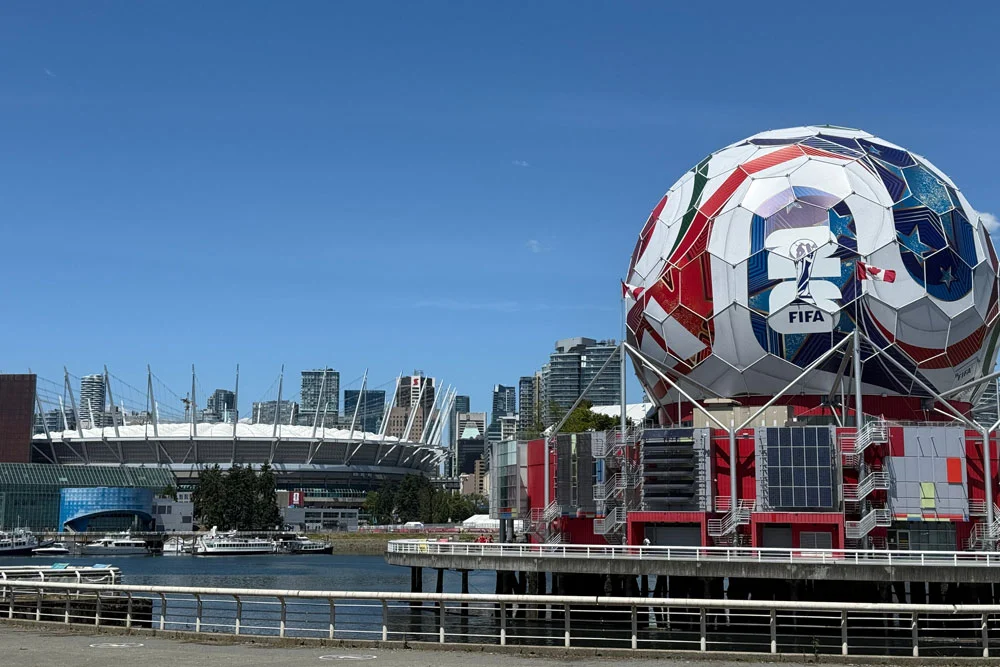
The FIFA World Cup 2026, hosted across 16 cities in Canada, Mexico, and the United States, represents a milestone in the history of international sports. As the first tournament to feature an expanded field of 48 teams, it has provided a unique spectacle of high-stakes competition and logistical complexity. Beyond the pitch, the tournament offers a wealth of strategic insights for the global business community. For professionals in the affiliate marketing sector, the parallels between the world’s most-watched sporting event and the intricacies of digital performance marketing are both striking and instructive. From the necessity of diversified team structures to the volatility of market dominance, the 2026 tournament serves as a masterclass in resilience and strategic evolution.
The Strategic Convergence of Sports and Performance Marketing
The 2026 World Cup has been defined by its sheer scale, encompassing a record 104 matches over a 39-day period. This expansion mirrors the growth of the affiliate marketing industry, which is projected to exceed $15 billion in global spending by the end of the 2020s. Just as FIFA had to adapt its qualification processes and group-stage formats to accommodate a larger field, affiliate managers must continuously refine their strategies to navigate a landscape increasingly shaped by data privacy regulations, artificial intelligence, and shifting consumer behaviors.
The drama of the tournament—ranging from the Tartan Army’s enthusiastic presence in North American host cities to the unexpected early exits of perennial favorites—highlights a fundamental truth in both sports and business: past success is no guarantee of future results. In affiliate marketing, as in world-class soccer, the margin between a successful conversion and a missed opportunity is often determined by the strength of one’s foundational strategy and the ability to execute under pressure.
The Power of Diversification: Why Teamwork Outshines Individual Brilliance
One of the most prominent themes of the 2026 World Cup has been the limitation of individual "superstar" talent when faced with a cohesive, well-structured opponent. Despite the presence of legendary figures like Luka Modrić for Croatia and Cristiano Ronaldo for Portugal, both teams struggled to overcome collective tactical discipline in key matches. Croatia’s inability to bypass Portugal’s defensive unit and Portugal’s subsequent exit at the hands of a disciplined Spanish side in the Round of 16 underscored a critical lesson: individual brilliance cannot substitute for a balanced team.
In the realm of affiliate marketing, this translates directly to the composition of an affiliate program. Many brands fall into the trap of over-relying on a handful of "super-affiliates"—large-scale coupon or cashback sites that drive significant volume but may not offer the brand depth or quality required for long-term sustainability.
The Risk of a Top-Heavy Affiliate Base
Industry data suggests that programs relying on fewer than five affiliates for more than 50% of their revenue are at high risk. If one of those partners changes their algorithm, shifts their focus to a competitor, or experiences a technical failure, the brand’s revenue stream can vanish overnight.
To mitigate this, successful affiliate managers must build a "team" that includes a variety of marketing channels and affiliate types:
- Content Creators and Influencers: These partners provide top-of-funnel awareness and build brand trust through authentic storytelling.
- Niche Review Sites: These provide deep-funnel conversion by helping consumers make informed decisions during the final stages of the buyer journey.
- Loyalty and Reward Portals: These ensure customer retention and provide a steady baseline of repeat business.
- Technology Partners: Innovative affiliates using AI-driven personalization or cart-recovery tools add a layer of sophistication to the program.
By diversifying the affiliate base, a brand ensures that its success is not dependent on any single "star player," but rather on the collective strength of a multi-faceted marketing ecosystem.
The Underdog Phenomenon: Market Disruption and the Nectar Sleep Case Study
The 2026 World Cup has been a graveyard for complacency, characterized by the rise of "underdog" nations that have challenged the established hierarchy. The Group Stage saw Curaçao, making a historic appearance, hold Ecuador to a scoreless draw, defying all statistical projections. Similarly, Egypt’s performance against the defending champions, Argentina, where they held a 2-0 lead for the majority of the match, sent shockwaves through the global football community.
These upsets serve as a reminder that being a "small" player is not a permanent state, nor is it a barrier to entry if the strategy is sound. This is a concept well-understood in the affiliate marketing industry, particularly when examining the trajectory of brands like Nectar Sleep.
Challenging the Incumbents
When Nectar Sleep entered the "mattress-in-a-box" market in early 2017, they were an underdog facing established giants like Casper, Purple, and Saatva. These competitors had already secured significant market share and established deep-rooted affiliate relationships. However, by leveraging a highly aggressive and data-driven affiliate management strategy, Nectar Sleep achieved what many thought impossible.
Within just one year and five days of its launch, Nectar Sleep’s affiliate program ascended to the number one position on the ShareASale network. In doing so, it surpassed legacy brands and retail behemoths like Wayfair, Reebok, and the NFL.
Lessons for Market Entrants
The success of Nectar Sleep and the 2026 World Cup underdogs provides a blueprint for disruption:
- Identify the Gap: Underdogs succeed by finding weaknesses in the incumbent’s strategy—whether it’s a lack of mobile optimization or a stagnant commission structure.
- Agile Execution: Smaller players can move faster, testing new creative assets and incentive structures while larger brands are bogged down by corporate bureaucracy.
- Persistence: As seen with Egypt’s near-defeat of Argentina, the goal is to maintain pressure and capitalize on the competitor’s overconfidence.
The Perils of Stagnation: Why Established Brands Fail to Qualify
Perhaps the most jarring aspect of the 2026 World Cup cycle was the absence of Italy. A four-time champion, the Italian national team failed to qualify for the tournament, illustrating that a prestigious history does not entitle a team to a place at the table. This theme of decline continued during the tournament itself: the Netherlands was eliminated by Morocco in the Round of 32, and Brazil, the five-time champions, fell to Norway in the Round of 16.
Norway’s resurgence is particularly notable. Having not reached a World Cup in nearly three decades, their advancement to the Quarterfinals in 2026 demonstrates the power of long-term rebuilding and modernization. Conversely, the exit of Brazil and the Netherlands highlights the danger of "resting on one’s laurels."
The Dynamic Nature of Digital Ecosystems
In affiliate marketing, stagnation is often the precursor to obsolescence. The digital landscape is in a state of constant flux, influenced by several key factors:
- Privacy Shifts: The deprecation of third-party cookies and the rise of privacy-first browsing (such as Apple’s ITP) have fundamentally changed how affiliate conversions are tracked and attributed.
- Search Engine Evolution: Google’s frequent core updates can decimate the traffic of content-heavy affiliates overnight, requiring managers to pivot their recruitment strategies.
- Consumer Expectations: Modern consumers demand transparency. Affiliates who fail to disclose their commercial relationships or who provide low-quality content are being phased out by both platforms and users.
Affiliate programs that were successful five years ago using basic banner ads and standard commission rates are likely failing today. Success in 2026 and beyond requires a commitment to continuous education and technological adoption.
Chronology of Industry Evolution: A Decade of Change
To understand the current state of affiliate marketing through the lens of the 2026 World Cup, one must look at the timeline of industry shifts that led to this point:
- 2016-2018: The rise of "Direct-to-Consumer" (DTC) brands using affiliate marketing as their primary growth lever (e.g., Nectar Sleep).
- 2019-2021: The COVID-19 pandemic accelerates e-commerce adoption, leading to a massive influx of traditional retailers into the affiliate space.
- 2022-2024: The "Influencer-Affiliate" merger. The line between traditional PR, influencer marketing, and affiliate marketing blurs as platforms like TikTok and Instagram integrate commerce features.
- 2025-2026: The AI Revolution. Affiliate managers begin using AI for predictive modeling to determine which partners will provide the highest Lifetime Value (LTV) rather than just the lowest Cost Per Acquisition (CPA).
Implications for Stakeholders: A Call to Action
The 2026 World Cup has demonstrated that the "new normal" in sports is a world where the gap between the elite and the emerging is narrower than ever. For Chief Marketing Officers (CMOs) and affiliate program directors, the implications are clear.
First, there must be a shift from "program management" to "partnership orchestration." This involves moving beyond simply approving affiliates and instead working collaboratively with them to create exclusive content and unique value propositions.
Second, investment in attribution technology is no longer optional. As the World Cup uses semi-automated offside technology to ensure fairness and accuracy, affiliate programs must use advanced attribution models to ensure that every partner in the conversion path is rewarded fairly, rather than just the "last click."
Finally, the importance of industry networking and community cannot be overstated. Just as the World Cup brings the global community together, conferences such as the Affiliate Summit serve as the training grounds for the next generation of marketing leaders. These forums provide the opportunity to share data, discuss emerging threats like affiliate fraud, and forge the alliances that drive the industry forward.
Conclusion: The Final Whistle is Just the Beginning
The FIFA World Cup 2026 will eventually conclude, and a champion will be crowned in the final at MetLife Stadium. However, the lessons of the tournament will remain relevant long after the fans have returned home. The success of the underdog, the necessity of a diversified team, and the fatal risk of complacency are universal truths.
In the competitive arena of affiliate marketing, the "game" never truly ends. The market will continue to evolve, new competitors will emerge from unexpected regions, and established giants will fall if they fail to adapt. By applying the strategic rigors of world-class soccer to their marketing efforts, brands can ensure they are not just participants in the industry, but contenders for the top spot. The 2026 World Cup has shown us that with the right teamwork, a respect for the underdog, and a refusal to stagnate, any goal is within reach.