The strategic imperative of employee advocacy has moved from a nascent concept to a cornerstone of modern corporate communication and marketing. Organizations increasingly recognize their employees as powerful, authentic voices capable of extending brand reach and fostering trust far beyond traditional corporate channels. The challenge, however, lies in effectively mobilizing and managing these internal influencers. This article provides an in-depth review of leading employee advocacy tools, categorized by the types of teams they serve best, alongside expert insights on optimizing these programs for maximum impact.

The Rise of Employee Advocacy: A Strategic Imperative
Employee advocacy platforms are sophisticated digital tools designed to empower employees to share company news, thought leadership, and approved brand content across their personal social networks. These platforms centralize a library of ready-to-share posts, streamline the sharing process, and track the resulting engagement and reach. The fundamental premise behind their growing adoption is simple yet profound: content shared by real people, rather than official brand accounts, consistently garners significantly higher engagement. Industry data, such as that highlighted by LinkedIn Business, affirms that messages amplified by employees often achieve superior reach and engagement rates compared to those disseminated solely through corporate channels. This authenticity resonates more deeply with audiences, enhancing brand visibility, credibility, and ultimately, market influence.

The benefits of a well-executed employee advocacy program extend across multiple organizational functions. For marketing, it translates into expanded brand awareness and more effective content distribution. For human resources and recruitment, it transforms employees into compelling brand ambassadors, showcasing company culture and attracting top talent. For sales, it facilitates social selling, equipping sales teams with relevant content to nurture leads and build rapport. The healthcare company DaVita, for instance, leveraged Hootsuite’s Parliament to cultivate 200 employee ambassadors, resulting in over 24,000 shares and a remarkable 136% increase in LinkedIn traffic to its careers site, demonstrating a quantifiable return on investment equivalent to over $1.5 million in advertising value. Such tangible outcomes underscore the strategic value these tools deliver.
Selecting the Right Platform: A Deep Dive into Leading Tools
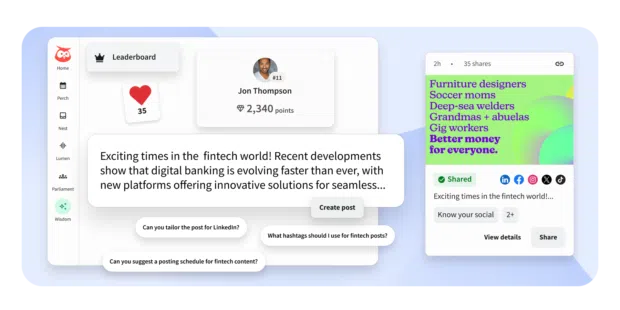
The market offers a diverse array of employee advocacy platforms, each with unique strengths tailored to different organizational needs and scales. Here, we explore eight prominent options, organized to assist teams in identifying the most suitable solution.
For Enterprise & Large Teams: Scaling Advocacy Efforts
Large organizations and enterprises require robust platforms capable of managing vast numbers of advocates, complex approval workflows, and granular analytics. The following tools excel in these areas:
-
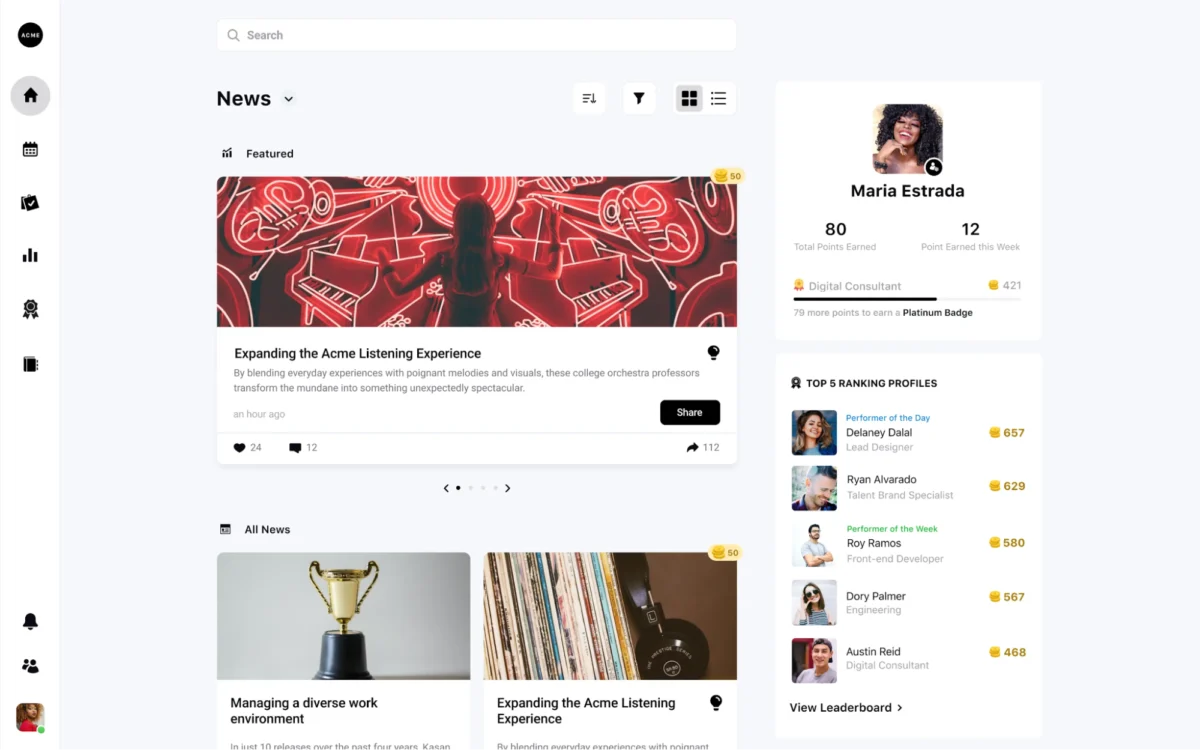
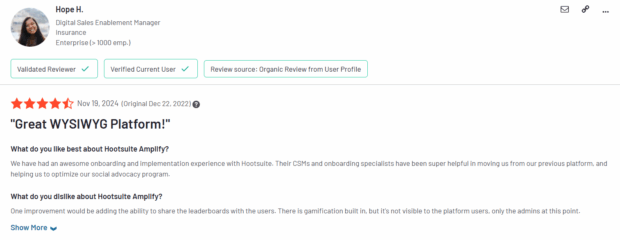
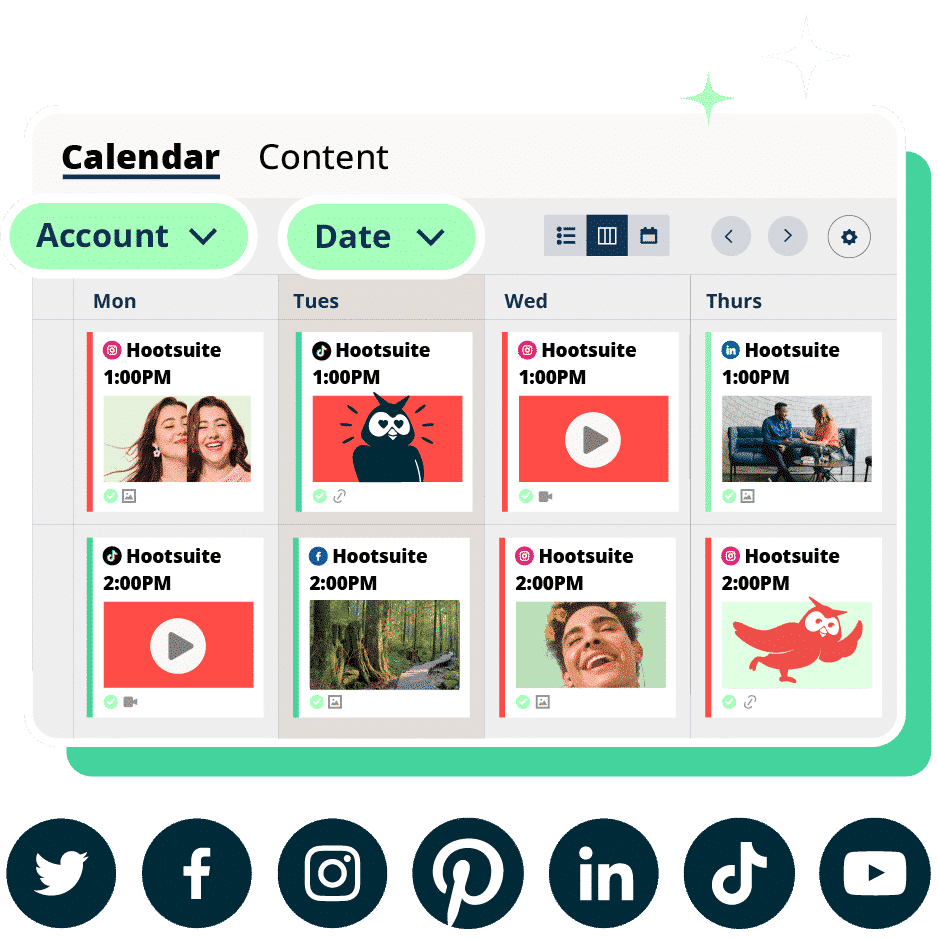
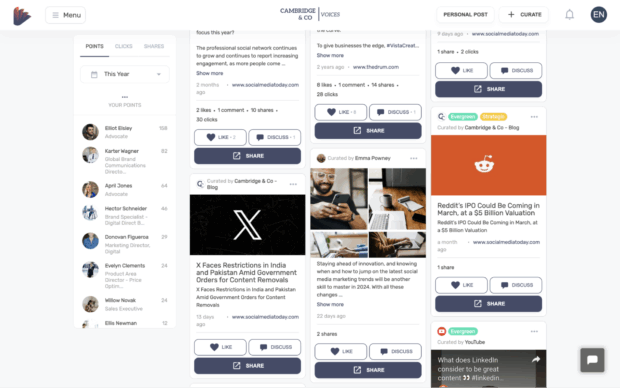
Parliament by Hootsuite: Integrated within the comprehensive Hootsuite Enterprise suite, Parliament stands out for its seamless collaboration features. It offers built-in approval processes and stringent controls, ensuring adherence to social media guidelines across a large workforce. Its integration with popular internal communication tools like Slack and Microsoft Teams further streamlines content distribution. Key features include gamification leaderboards, detailed analytics, and robust content curation capabilities. While specifically for Hootsuite Enterprise clients, its strength lies in consolidating social media management with advocacy. Customers frequently commend its user-friendliness and comprehensive reporting, earning it a 5/5 SMM star rating.
-
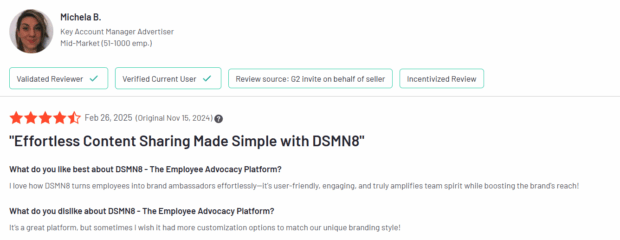
DSMN8: Positioned as a full-featured, standalone employee advocacy platform, DSMN8 is designed for extensive advocate groups, particularly those spanning diverse geographies and job functions. Its strength lies in advocate segmentation, allowing for targeted content delivery and performance analysis. DSMN8 offers a wide range of features, including automated content suggestions, gamification, and advanced analytics. Its pricing, starting from $850 per month, reflects its enterprise focus. Users appreciate its effortless content sharing and robust reporting, contributing to a 4.5/5 SMM star rating, though some note a desire for more customization options.
-
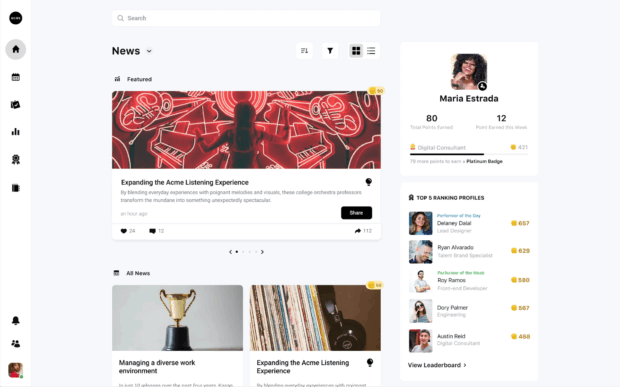
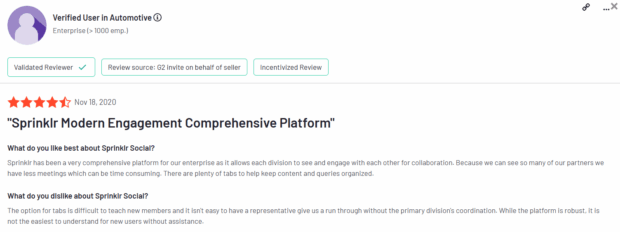
Sprinklr: As a broader marketing and customer success management platform, Sprinklr incorporates employee advocacy features as part of its unified suite. While its advocacy module might not possess the standalone depth of specialized tools, it offers the advantage of integrating advocacy efforts within a larger customer experience framework. This can be particularly beneficial for brands seeking to consolidate their tech stack. Key features include content scheduling, performance tracking, and integration with CRM platforms like Salesforce. Sprinklr’s pricing is custom, but comparable plans are estimated to start around $249 per month. It holds a 3.5/5 SMM star rating, with users valuing its comprehensive platform for modern engagement.
-
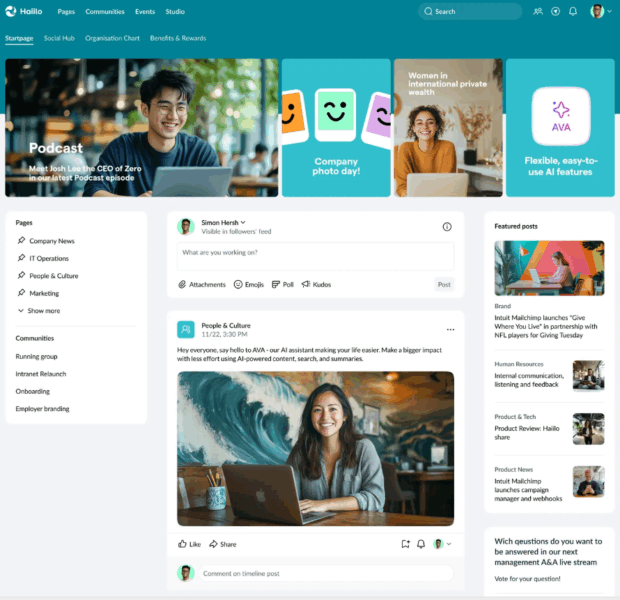
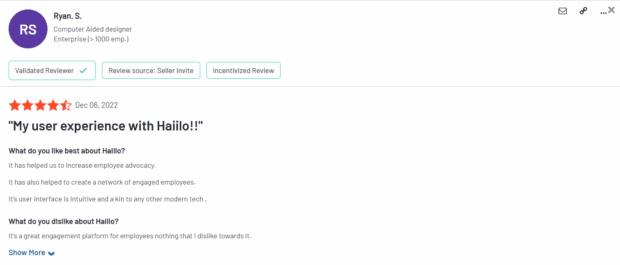
Haiilo: Haiilo operates as an employee engagement platform, fostering an internal social hub where employees can interact and share. This internal dynamic then extends to external social media sharing, transforming internal discussions into external thought leadership. Its focus on community building and user-generated content distinguishes it. Haiilo offers custom pricing and boasts features like internal content creation, analytics, and mobile accessibility. Reviewers often highlight its positive user experience and ability to connect employees, giving it a 4/5 SMM star rating, although some express a wish for more direct social media integrations.
-
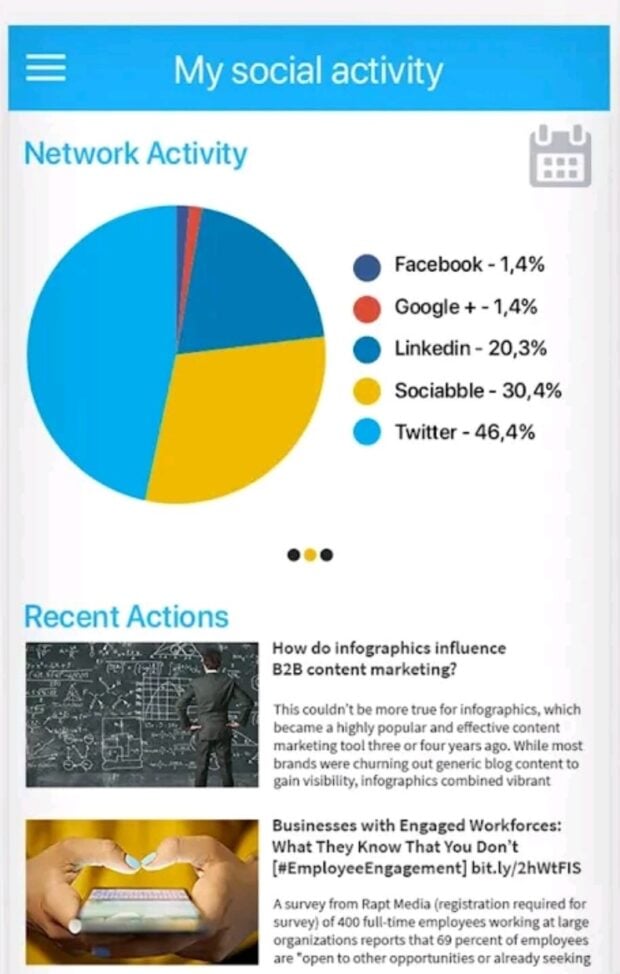
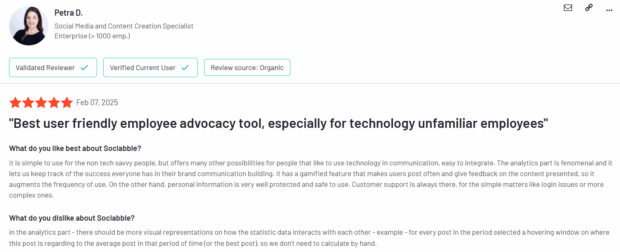
Sociabble: Emphasizing internal communications alongside employee advocacy, Sociabble promotes employee-generated content and social selling initiatives. Its strong integration with LinkedIn is a notable advantage, crucial for professional networking and B2B outreach. The platform provides a comprehensive suite for content sharing, analytics, and gamification, all tailored to boost employee engagement and influence. Sociabble offers custom pricing, and users praise its user-friendly interface and effectiveness in fostering employee advocacy, leading to a 3.5/5 SMM star rating.
For Small & Mid-Sized Teams: Maximizing Impact on a Focused Budget
Smaller teams require efficient and impactful tools that don’t overstretch limited marketing budgets, yet still provide professional-grade advocacy capabilities.
-
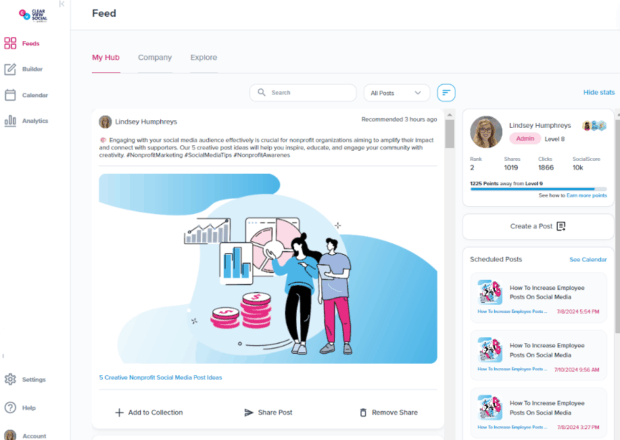
Clearview Social: This platform offers an easy-to-use advocacy program that is designed to scale. With an entry plan at approximately $425 per month for one admin and up to 50 advocates, it presents a more accessible option than many enterprise-level solutions. Clearview Social focuses on content discovery, automated scheduling, and performance analytics. Its streamlined approach makes it appealing for smaller teams looking to quickly establish an advocacy program. Users frequently laud its ease of use and ability to drive engagement, resulting in a 4/5 SMM star rating.
-
SocialToaster: SocialToaster distinguishes itself with a strong emphasis on gamification and rewards, making it an engaging choice for teams eager to accelerate advocacy adoption. Its pricing tier, starting at $450 per month for three admins and 200 users, is tailored for smaller to mid-sized organizations. Key features include content curation, tracking, and robust gamification mechanics. While effective for engagement, some users suggest its feature set might be less comprehensive than higher-priced alternatives, giving it a 3/5 SMM star rating.
For Agencies: Empowering Client Advocacy Programs
Agencies require tools that can be easily managed for multiple clients, offering white-label capabilities and comprehensive reporting to demonstrate value.
- GaggleAMP: While suitable for individual brands, GaggleAMP’s features make it particularly well-suited for agencies. It offers one-click sharing, detailed analytics, and tools that help employees craft unique, on-brand content. Its intuitive interface and managed-services training support agencies in offering advocacy as a product to their clients. GaggleAMP’s AI Paraphrase tool assists in customizing content. Pricing starts at $8,800 per year for up to 100 members. Its ease of learning and use, combined with white-label reporting, earns it a 4/5 SMM star rating among users.
Optimizing Your Advocacy Program: Expert Strategies for Maximum Impact
Implementing an employee advocacy tool is only the first step. To ensure high participation and tangible results, strategic optimization is crucial. Industry experts Kim Snow, Head of Demand Generation at TeamOhana, and content marketer Laura Moss offer valuable guidance:
-
Cultivating the “Why”: Beyond a Simple Ask: Employees must understand the intrinsic value of their participation. Kim Snow emphasizes that many, especially outside sales or marketing, may not immediately grasp the impact of their social media engagement. Clearly articulating how a simple like, comment, or share expands brand reach and contributes to company goals — and how it benefits their personal brand and professional development — is essential. Platforms with gamification and ROI reporting can effectively illustrate this impact, fostering motivation and investment.
-
Streamlining Participation: Reducing Friction Points: Complexity is the enemy of adoption. Snow advises making participation as effortless as possible by providing direct links, clear calls to action (like, comment, or share), and suggested timelines. Employee advocacy tools with one-click publishing and automated scheduling features are invaluable here, minimizing guesswork and maximizing consistent engagement.
-
Leadership by Example: Securing Executive Buy-in: Advocacy thrives when modeled from the top. Laura Moss highlights that C-suite executives, with their inherent following and role as company faces, set a powerful example. Snow concurs, advocating for early executive support to reinforce engagement efforts across teams. Presenting a clear pitch on expected results and demonstrating the program’s mechanics can secure this crucial leadership endorsement.
-
Identifying Organic Advocates: Tapping into Existing Enthusiasm: Organizations often have existing advocates without realizing it. Moss points out that a significant portion of social media-using employees already post about their companies. Proactively identifying these individuals—through social listening tools, LinkedIn mentions, or internal surveys—and empowering them to lead the program can significantly accelerate adoption. Celebrating their contributions also inspires others to join.
Broader Implications and Future Outlook
The trajectory of employee advocacy points towards its increasing integration into holistic corporate communication and marketing strategies. As trust in traditional advertising wanes, the authentic voices of employees become ever more critical for building brand reputation, enhancing recruitment pipelines, and driving sales. The evolution of these tools, incorporating advanced analytics, AI-driven content suggestions, and deeper integrations with CRM and HR systems, reflects this growing importance. Future trends are likely to include more sophisticated personalization for advocates, expanded metrics to quantify nuanced impacts, and even greater automation to ease the burden on both administrators and participants.
In an increasingly digitized and interconnected world, the employees of an organization are its most credible and expansive communication channel. Investing in the right employee advocacy tools and implementing them with a strategic, employee-centric approach is no longer merely advantageous; it is a fundamental component of sustainable brand growth and competitive advantage.