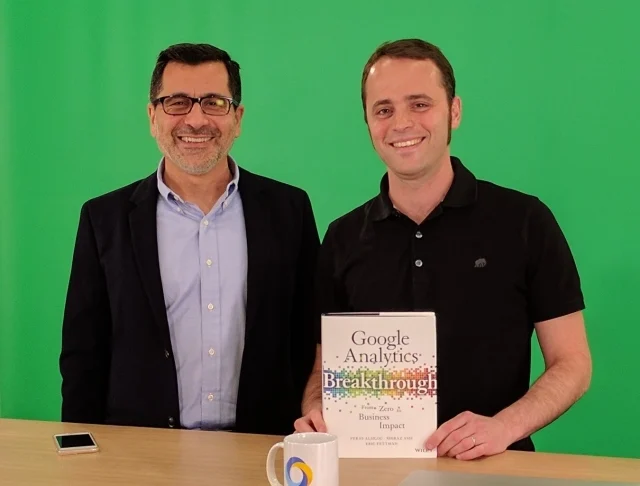
The digital analytics landscape has undergone a profound transformation over the last decade, shifting from a niche technical requirement to a central pillar of corporate strategy. This evolution was recently highlighted in a high-level technical exchange between Daniel Waisberg, a prominent figure in the search and analytics community, and Feras Alhlou, the Co-Founder and Principal Consultant at E-Nor and co-author of the seminal text Google Analytics Breakthrough. Their discussion, held at the Google Analytics studios, underscored a fundamental shift in how enterprises must approach data: viewing analytics not merely as a set of tools, but as a comprehensive business process designed to drive measurable growth.
The Foundation of the Optimization Framework
Central to the discussion was the introduction of a structured optimization framework, a methodology developed by Alhlou and his team at E-Nor. This framework is designed to move organizations away from fragmented data collection and toward a cohesive strategy that impacts the bottom line. The process is defined by four distinct stages: auditing, reporting, analysis, and testing.
The first stage, the audit, is bifurcated into technical and business components. The technical audit ensures that data collection is accurate, comprehensive, and compliant with modern privacy standards. This involves verifying tag implementations, data layer configurations, and the integrity of the tracking code across various platforms. Simultaneously, the business audit engages stakeholders to identify the Key Performance Indicators (KPIs) that align with organizational objectives. By understanding what matters most to the business, analysts can filter out “noise” and focus on metrics that influence decision-making.
Once the data foundation is secured, the framework moves to the reporting layer. This stage is dedicated to the visualization of data, ensuring that the information collected is accessible to decision-makers. Following reporting is the analysis phase, where the focus shifts from “what happened” to “why it happened.” It is in this phase that actionable insights are derived, providing the necessary context to justify strategic pivots. Finally, the framework culminates in testing and personalization. This advanced stage allows businesses to utilize their data to create tailored user experiences, directly influencing conversion rates and customer retention.
Navigating the Multi-Channel Data Ecosystem
The complexity of the modern marketing environment was a primary focus of the dialogue. Alhlou noted that the era of “simple” marketing—where a single device and a handful of channels sufficed—has been replaced by a fragmented reality. Today, consumers interact with brands through a multitude of touchpoints, including mobile applications, social media platforms, web interfaces, and offline backend systems.
Industry data supports this observation. According to recent market research, the average consumer now uses more than three connected devices, and the path to purchase often involves over a dozen distinct interactions across different channels. This fragmentation presents a significant challenge for attribution and measurement. To address this, Alhlou emphasized the necessity of understanding the context surrounding the data. Rather than viewing data points in isolation, organizations must integrate mobile, social, and web analytics with backend CRM (Customer Relationship Management) data to gain a holistic view of the customer journey.
Developing a Scalable Data Roadmap
To manage this complexity, Alhlou advised organizations to adopt a structured data roadmap. This strategic document serves as a guide for maturing an organization’s analytical capabilities over time. The roadmap typically begins with “owned” properties—specifically web and mobile analytics. By mastering the data generated on their own platforms, companies establish a baseline of user behavior.
The second phase of the roadmap involves augmenting these reports with social data. This addition provides a qualitative layer to the quantitative metrics of web traffic, offering insights into brand sentiment and community engagement. However, the most critical addition to a modern roadmap is the integration of the “voice of the customer.”
Alhlou highlighted the utility of the Google Surveys product as a transformative tool for market research. Traditionally, market research was an expensive and time-consuming endeavor, often reserved for large corporations with significant budgets. The democratization of survey tools allows businesses of all sizes to perform targeted research on their own properties or across broader demographics. This qualitative data is essential for understanding the motivations behind user actions, providing the “why” that quantitative analytics often lack.
The Role of E-Nor and the Impact of Google Analytics Breakthrough
The partnership between Waisberg and Alhlou reflects a long-standing collaboration within the Google Analytics ecosystem. E-Nor, under Alhlou’s leadership, has established itself as a premier consultancy for Fortune 500 companies seeking to refine their measurement strategies. The publication of Google Analytics Breakthrough provided a comprehensive manual for professionals, bridging the gap between basic reporting and advanced data science.
The collaboration at the Google Analytics studio signifies the ongoing commitment of industry leaders to provide educational resources for the broader marketing community. As digital platforms continue to evolve, the demand for specialized knowledge in data architecture and measurement strategy has reached an all-time high. The framework discussed by Alhlou provides a template for organizations to transition from reactive data monitoring to proactive business optimization.
Supporting Data and Market Trends
The transition toward the “analytics as a business process” model is reflected in global spending trends. The global data analytics market size was valued at approximately USD 51.55 billion in 2023 and is projected to grow at a compound annual growth rate (CAGR) of 27.3% from 2024 to 2030. This growth is driven by the increasing adoption of cloud-based analytics and the necessity for real-time data processing in the e-commerce and financial sectors.
Furthermore, a study by McKinsey & Company found that “data-driven” organizations are 23 times more likely to acquire customers, six times as likely to retain customers, and 19 times as likely to be profitable as a result. These statistics underscore the stakes of the frameworks discussed by Alhlou. Organizations that fail to move beyond basic reporting risk losing a significant competitive advantage in an increasingly digitized marketplace.
Chronology of the Analytics Evolution
To understand the context of the Alhlou-Waisberg discussion, it is helpful to look at the timeline of digital analytics milestones:
- Early 2000s: The era of “Hit Counters” and basic log file analysis.
- 2005: Google acquires Urchin Software Corp, leading to the launch of Google Analytics.
- 2012: The introduction of Universal Analytics (UA), allowing for multi-platform tracking and custom dimensions.
- 2016-2017: The rise of “Big Data” and the integration of machine learning into analytics platforms. This is the period when Google Analytics Breakthrough became a central resource for the industry.
- 2020: Google announces Google Analytics 4 (GA4), a privacy-centric, event-based tracking model designed to replace Universal Analytics.
- Present: The industry focuses on first-party data strategies and cookieless tracking in response to global privacy regulations like GDPR and CCPA.
Broader Implications and Future Outlook
The insights shared by Alhlou have significant implications for the future of digital marketing. As privacy regulations tighten and third-party cookies are phased out, the “audit” and “technical” phases of the measurement framework become even more critical. Organizations must now prioritize the collection of first-party data and ensure that their technical infrastructure is robust enough to handle server-side tracking and sophisticated data modeling.
Moreover, the shift toward “Testing and Personalization” suggests that the role of the analyst is merging with that of the product manager and user experience (UX) designer. Data is no longer a post-mortem report of what happened last month; it is a real-time tool used to shape the interface and the offer as the user interacts with the brand.
The interview between Daniel Waisberg and Feras Alhlou serves as a reminder that while tools and technologies change, the fundamental principles of business measurement remain constant. Success in the digital age requires a disciplined approach to data, a commitment to understanding the customer’s voice, and a strategic roadmap that aligns technical capabilities with business goals. As the industry moves further into the era of AI-driven insights, the structured framework provided by E-Nor remains a vital touchstone for any organization looking to achieve a true “breakthrough” in their digital performance.