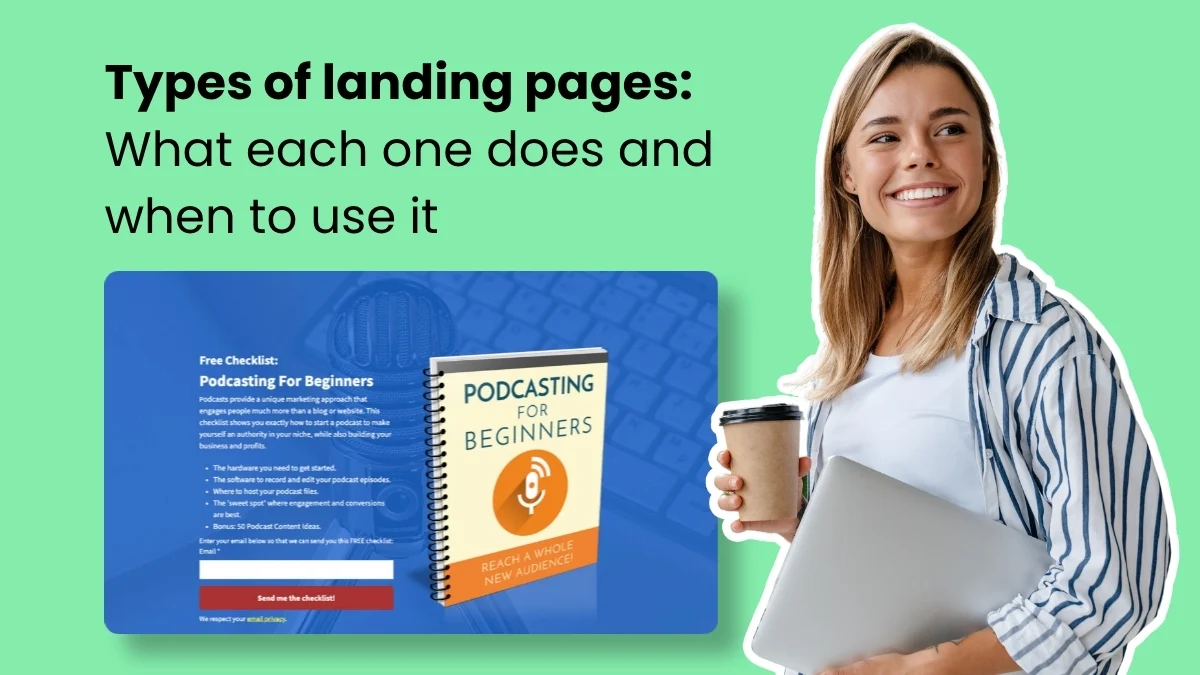
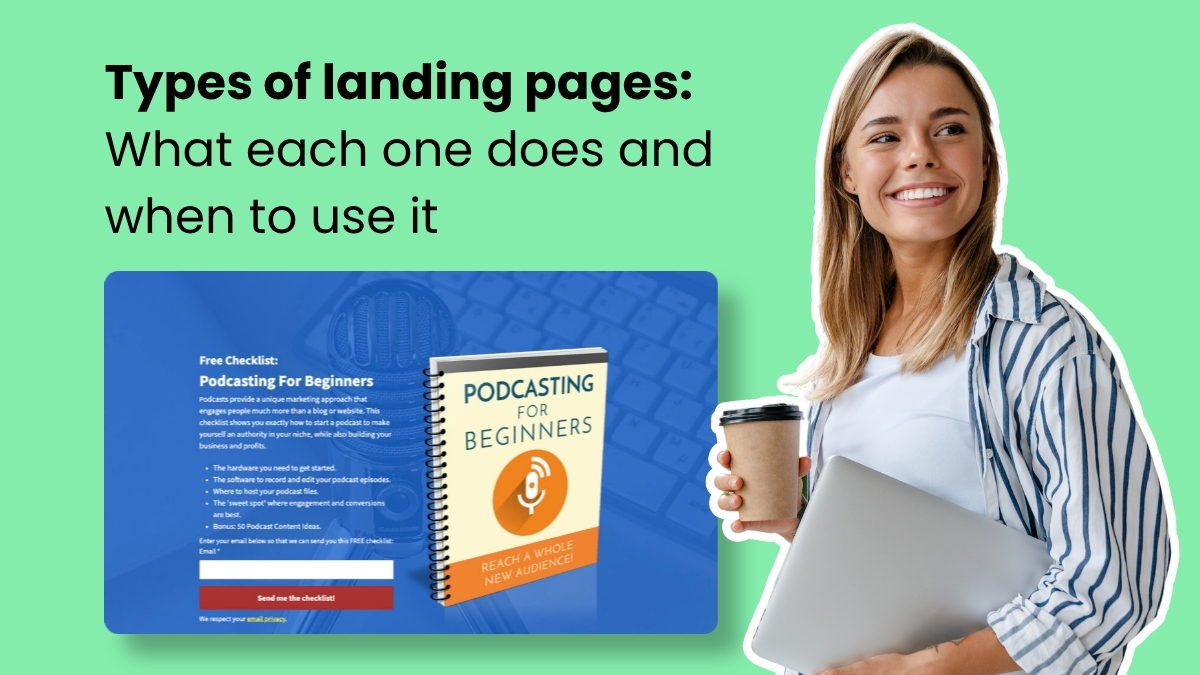
A landing page stands as a singular web destination meticulously crafted for one overarching purpose: to prompt a visitor to undertake a specific, predefined action. Stripped of extraneous navigation and potential distractions, its design ethos is singularly focused on guiding users towards a solitary objective, be it a purchase, a sign-up, or a download. The strategic imperative of selecting the correct landing page type is paramount, as its structure and elements must align precisely with the desired action. For instance, a page designed to gather email addresses will differ markedly from one intended to sell a product or promote a webinar. This fundamental alignment is a critical determinant of a landing page’s performance, with misalignment frequently cited as a primary cause of underperformance in digital marketing campaigns.
According to research conducted by AWeber, a prominent email marketing service provider, an overwhelming majority—over 90%—of small business owners who leverage landing pages affirm their importance or critical importance to their overall marketing strategy. This data underscores a widespread consensus within the business community regarding the necessity of landing pages. The prevailing challenge, therefore, is not whether to integrate them into marketing efforts, but rather discerning which specific type to deploy and precisely when to do so for maximum impact. For those new to the concept, understanding the foundational principles of a landing page is the initial step; for seasoned marketers, delving into the diverse array of types, their functions, and optimal application scenarios is essential for refining conversion strategies.
The Strategic Imperative: Why Landing Pages Matter in Digital Marketing
In the increasingly competitive digital landscape, every click, impression, and visitor holds significant value. Landing pages are the linchpin of conversion rate optimization (CRO), serving as highly focused touchpoints within the customer journey. Unlike a website homepage, which typically offers a broad overview of a company’s offerings, a landing page eliminates choice paralysis by presenting a single, clear call to action (CTA). This singular focus significantly enhances the likelihood of conversion.
The effectiveness of landing pages is rooted in several key principles:
- Elimination of Distraction: By removing navigation menus, internal links, and other typical website elements, landing pages keep visitors concentrated on the offer.
- Message Match: A well-designed landing page precisely mirrors the message and offer presented in the preceding advertisement, email, or social media post. This continuity builds trust and reinforces the visitor’s initial intent.
- Measurable Performance: Each landing page can be tracked independently, allowing marketers to meticulously analyze conversion rates, identify bottlenecks, and conduct A/B testing to continuously improve performance. This data-driven approach is crucial for optimizing return on investment (ROI) for marketing spend.
- Targeted Audience Engagement: Different landing page types allow for highly specific targeting of various audience segments, catering to their unique needs and stages in the buying cycle.
The strategic deployment of specialized landing pages can dramatically reduce customer acquisition costs and increase lifetime customer value, making them indispensable tools for businesses of all sizes striving for sustainable growth in the digital age.

Decoding the Diverse Landscape of Landing Pages
The spectrum of landing page types is broad, each engineered to fulfill distinct marketing objectives. Understanding these variations is key to orchestrating successful digital campaigns. We can broadly categorize them by their primary function: Lead Generation, Sales & Transactional, Audience Engagement, and Optimization & Utility.
Lead Generation Focused Landing Pages
These pages are designed primarily to capture contact information, typically email addresses, in exchange for value. Building an email list is a foundational element of long-term digital marketing, providing a direct communication channel with potential and existing customers.
-
Webinar Landing Page:

- Purpose: To promote an upcoming live or recorded online seminar and collect registrations.
- Strategic Advantage: These pages are highly effective because they promise educational or insightful content, appealing to visitors seeking knowledge or skill enhancement. Leading with the transformation an attendee will experience (e.g., “You’ll master email automation”) rather than presenter credentials significantly boosts conversion rates, as it directly answers the visitor’s core question: “What’s in it for me?” Including details like date, time, and a brief agenda further clarifies the value proposition.
- Optimal Use Cases: Indispensable when hosting any form of online event, from product demonstrations to expert panels, where a dedicated sign-up mechanism is required to build an attendee list. Industry data suggests that webinars can achieve conversion rates between 20-40%, making dedicated landing pages critical for maximizing these numbers.
-
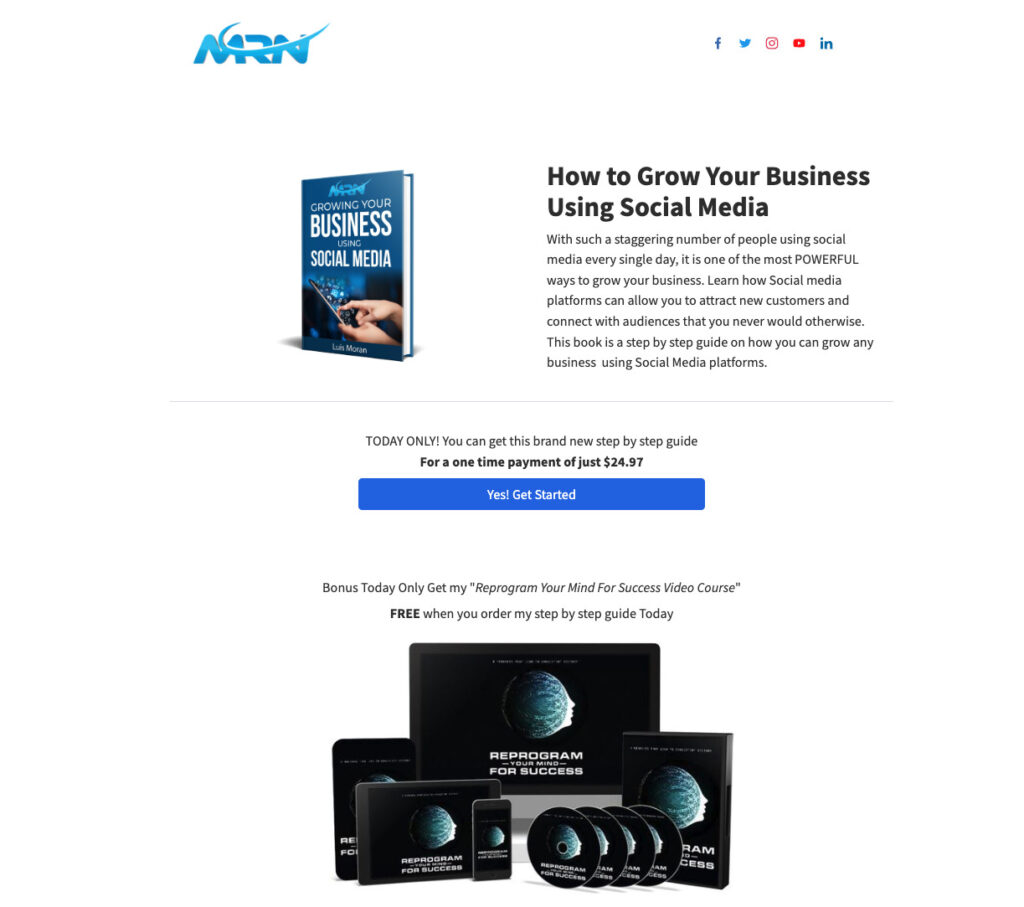
Ebook Landing Page:
- Purpose: To promote and facilitate the download or purchase of an electronic book.
- Strategic Advantage: Ebooks serve as powerful lead magnets, offering in-depth knowledge in a consumable format. By providing a valuable resource, businesses can attract potential customers and demonstrate expertise. For entrepreneurs, selling ebooks directly through a dedicated page bypasses traditional publishing hurdles, offering a direct revenue stream. When used as a lead magnet, the perceived value of the ebook makes exchanging an email address a low-friction proposition.
- Optimal Use Cases: Ideal for authors, consultants, or businesses looking to monetize intellectual property or grow their email list by offering free, valuable content that positions them as industry authorities.
-
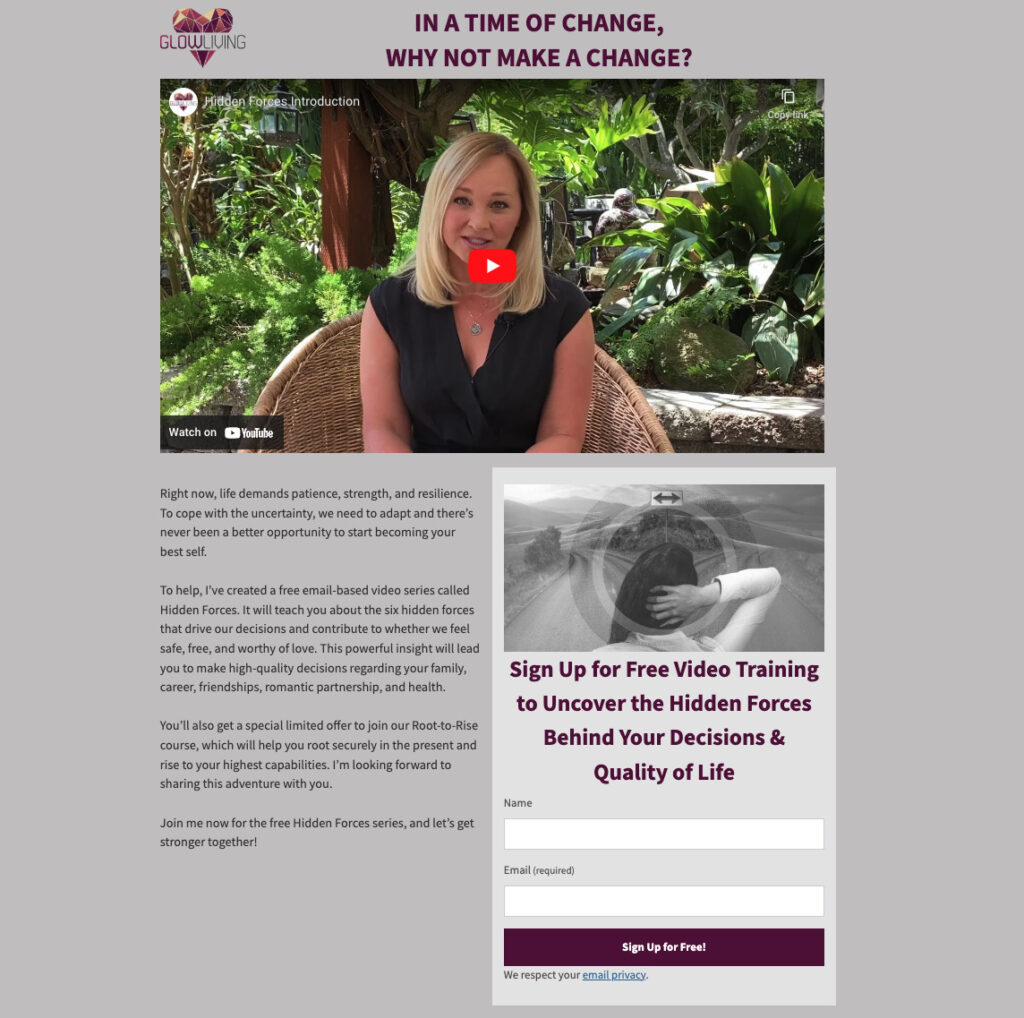
Lead Magnet Landing Page:
- Purpose: To offer a specific, high-value resource (e.g., template, checklist, free course, toolkit) in exchange for an email address.
- Strategic Advantage: These pages excel because the perceived immediate value of the resource outweighs the minor effort of providing an email. The focus is entirely on the outcome the visitor gains from the resource, not on selling the brand itself. This direct value exchange fosters trust and generates highly qualified leads, as individuals opting in are clearly interested in the specific topic.
- Optimal Use Cases: Best utilized when a business has created a tangible, problem-solving resource that directly addresses a pain point of its target audience. This is a cornerstone strategy for rapidly building a targeted email list.
-
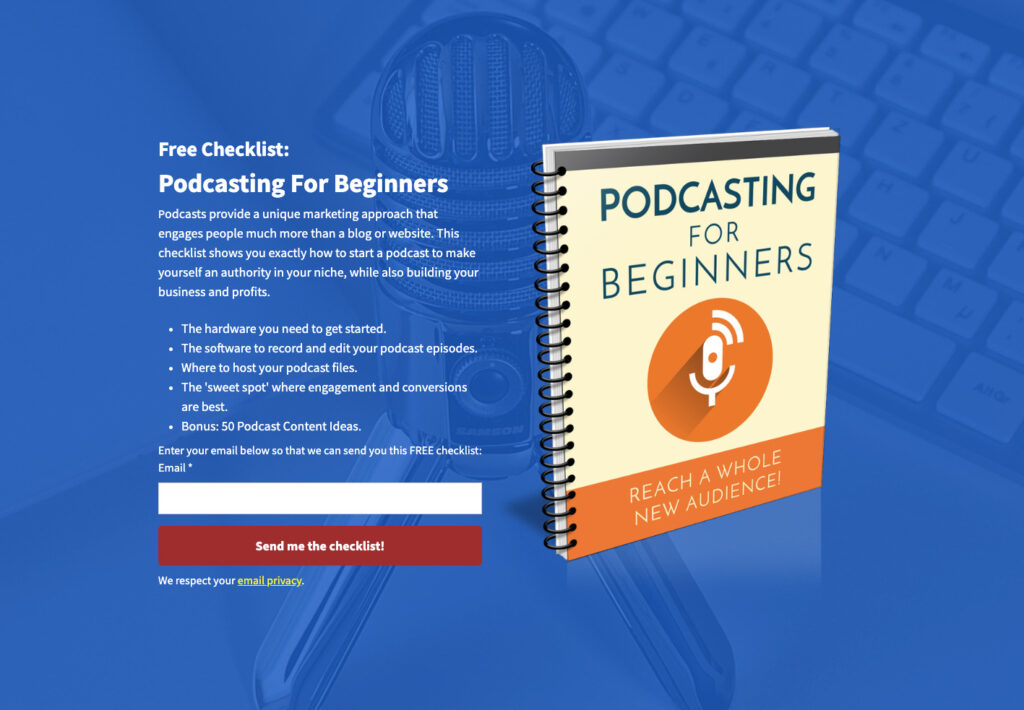
Squeeze Page:
- Purpose: A minimalist lead capture page designed solely to collect an email address with minimal information.
- Strategic Advantage: Its extreme simplicity reduces decision fatigue and friction. With only a compelling headline, a sentence or two, an email field, and a button, visitors face a clear binary choice: opt-in or leave. This streamlined approach is particularly effective for maximizing conversions from paid traffic, where keeping the cost per lead low is critical.
- Optimal Use Cases: Primarily used in paid advertising campaigns where ad spend efficiency is paramount, or for capturing emails from a warm audience already familiar with the brand and its offerings. The low barrier to entry makes it ideal for rapid list growth.
-
Facebook Landing Page:
- Purpose: Tailored for traffic originating from Facebook ads or profile links, aiming to convert social media followers into email subscribers or customers.
- Strategic Advantage: Given that social media platforms control content visibility through algorithms, converting followers into email subscribers creates an owned audience asset, free from platform restrictions. This allows for direct communication, independent of algorithmic changes. The page acts as a vital bridge, transforming rented social media reach into a durable, directly accessible audience.
- Optimal Use Cases: Essential for any business running Facebook ad campaigns or actively building a presence on the platform, seeking to fortify their audience relationship beyond the confines of social media.
-
Pre-launch Landing Page:
- Purpose: To generate interest and collect email addresses for updates before a new product, service, or feature officially launches.
- Strategic Advantage: This page serves a dual function: it builds an eager audience for launch day and acts as a crucial market validation tool. If significant sign-ups are garnered before development is complete, it provides early evidence of demand, mitigating development risks. Conversely, low sign-up rates can signal a need for concept refinement, saving resources. Early subscribers are often the most valuable, as they demonstrate genuine interest before the offering even exists.
- Optimal Use Cases: Indispensable before any major product or service rollout. It transforms nascent interest into an actionable list of potential early adopters.
-
Lead Capture Landing Page (General):
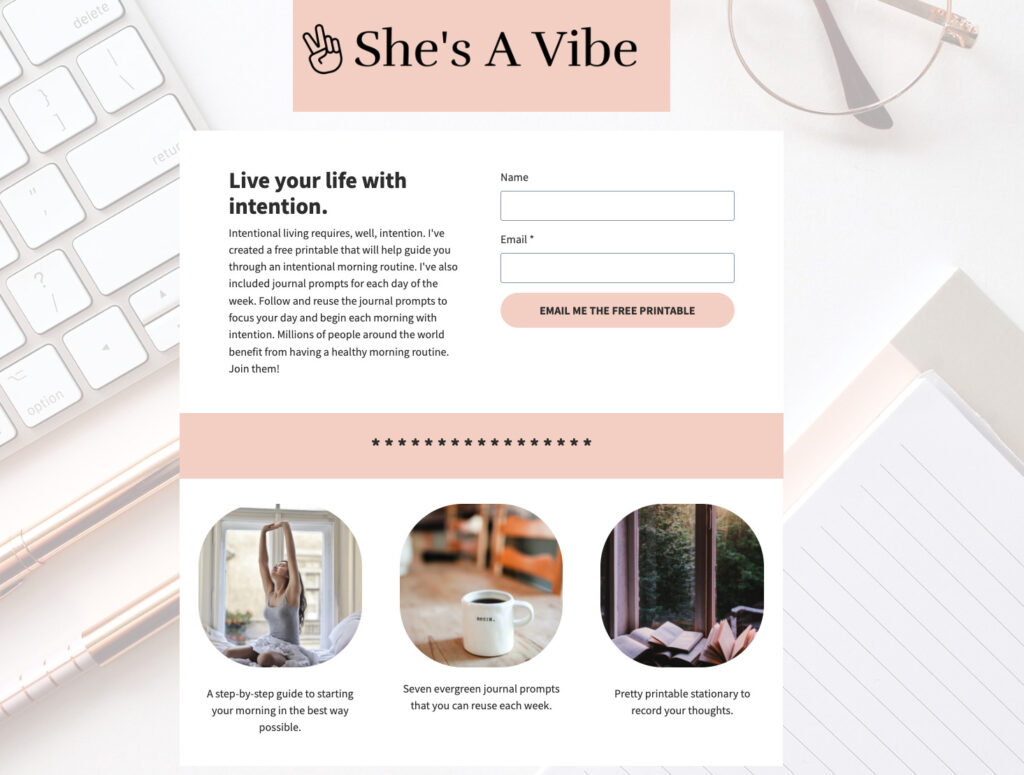
- Purpose: To collect general contact information (often name and email) in exchange for a valuable resource or offer.
- Strategic Advantage: This page type makes a clear value exchange without immediately asking for a purchase. By offering a “right now” solution (e.g., a free guide or discount), it lowers the commitment threshold. Asking for fewer fields typically results in higher conversion rates, making name and email sufficient for initial list building.
- Optimal Use Cases: The most widely used and reliable tool for growing an email list across nearly all industries and business types, applicable for both paid and organic traffic sources.
Sales & Transactional Landing Pages
These pages are designed to facilitate direct sales or guide users towards a purchase decision.
-
Ecommerce Landing Page:
- Purpose: To focus on selling a specific product or a narrow category of products.
- Strategic Advantage: Unlike a general product catalog or homepage, an e-commerce landing page removes excessive choices, directing visitors to a single product or offer. This focused approach, often coupled with persuasive copy, high-quality images, clear pricing, social proof (reviews), and a prominent Call to Action (CTA), typically results in higher conversion rates from targeted traffic (e.g., paid ads) compared to sending visitors to a broader shop page. The singular focus minimizes decision fatigue, accelerating the path to purchase.
- Optimal Use Cases: Ideal for running paid advertising campaigns for specific products, or for creating campaign-specific pages that align precisely with the messaging of a particular marketing initiative.
-
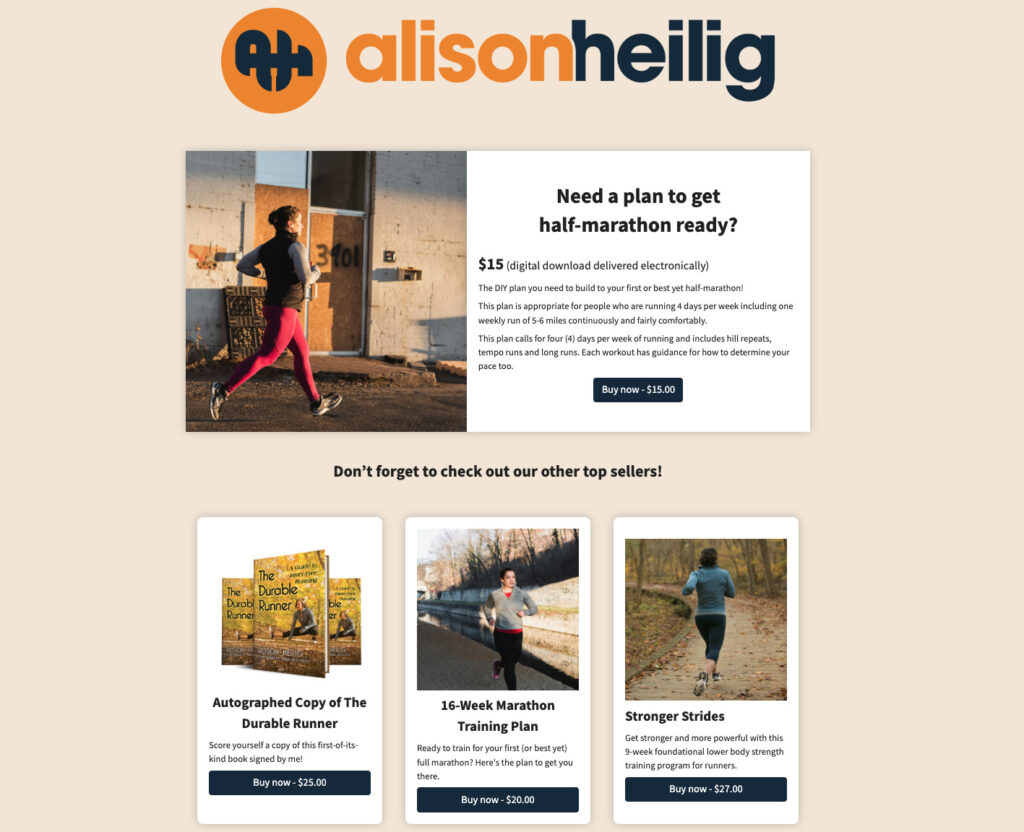
Click-through Landing Page:
- Purpose: To warm up a visitor and build confidence before they proceed to a purchase or sign-up page, without asking for any upfront commitment or transaction.
- Strategic Advantage: Cold traffic rarely converts directly on a transactional page. A click-through page acts as an intermediate step, allowing visitors to absorb information, understand the offer’s value, and overcome initial hesitations without the pressure of an immediate financial decision. By the time they click through to the final page, they are already pre-qualified and more engaged, leading to higher conversion rates on the subsequent transactional page. These pages often feature product walkthroughs, feature comparisons, or free trial explanations.
- Optimal Use Cases: Best deployed when the product or service requires a certain level of explanation or consideration before a purchase decision can be made, particularly for high-ticket items or complex software. It’s a crucial component for optimizing sales funnels with cold paid traffic.
Audience Engagement & Nurturing Landing Pages
These pages focus on building relationships with an audience, distributing content, and fostering community.
-
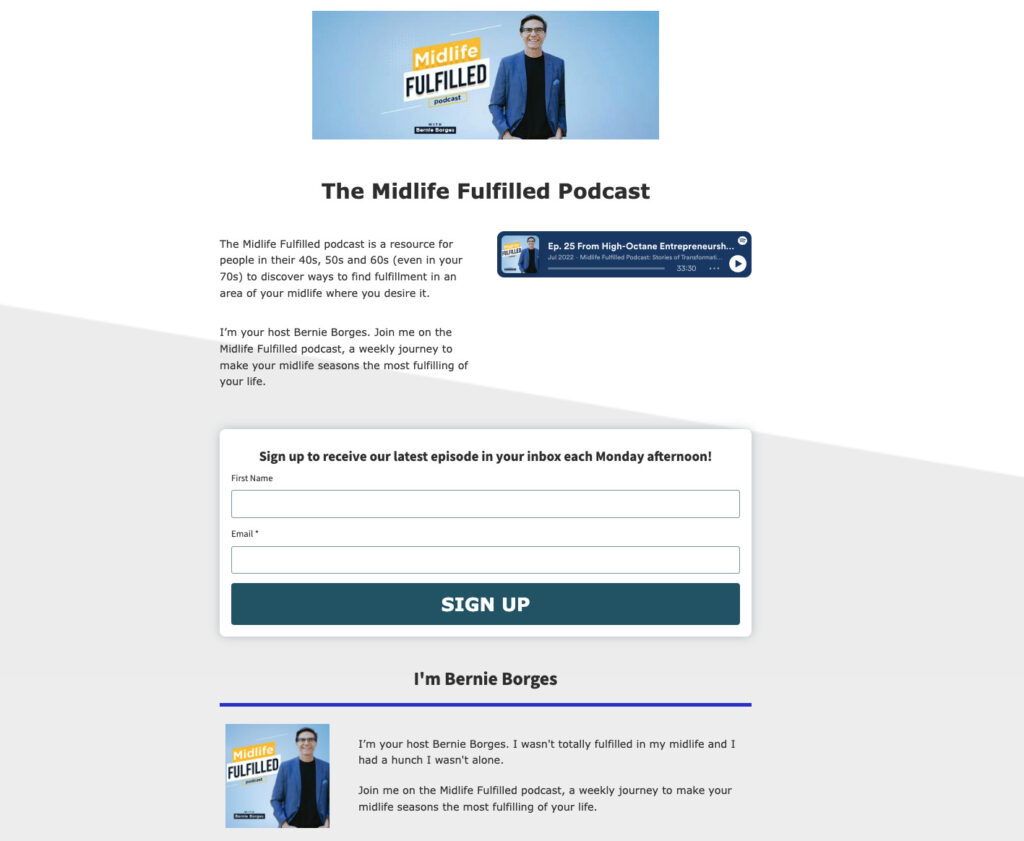
Podcast Landing Page:
- Purpose: To promote a podcast show or a specific episode and encourage listeners to subscribe or join an email list for updates.
- Strategic Advantage: While streaming platforms provide reach, they do not give creators direct ownership of their audience. A podcast landing page bridges this gap by converting listeners into email subscribers, creating a direct communication channel impervious to algorithmic changes. This allows hosts to announce new episodes, share bonus content, promote merchandise, and build a resilient community independent of third-party platforms.
- Optimal Use Cases: Essential for podcasters aiming to cultivate a loyal, direct audience and reduce reliance on external platforms for distribution and engagement. Embedding a sample episode can significantly increase sign-up rates.
-
Video Landing Page:
- Purpose: To use video as the primary medium for delivering the page’s core message, supported by concise text.
- Strategic Advantage: Video is a powerful trust-building tool, capable of conveying complex information, demonstrating product functionality, and showcasing personality more effectively than static text. For offers that are visually driven, high-ticket, or rely on personal connection and credibility, video can significantly reduce hesitation and build rapport. Viewers who engage with a two-minute demo often gain a deeper understanding and higher level of interest than those who read extensive copy.
- Optimal Use Cases: Highly effective when the product or service is visual, when the target audience is known to respond well to video content, or when the goal is to establish a strong personal connection before requesting a conversion.
-
Link-in-bio Landing Page:
- Purpose: A single, aggregated page hosting multiple links, designed to bypass the single-link limitation of social media profiles.
- Strategic Advantage: Social media platforms often restrict profiles to a single clickable link. A link-in-bio page circumvents this by acting as a central hub, directing followers to various destinations—a newsletter sign-up, latest product, recent blog post, or booking calendar—all from one convenient URL. This maximizes the utility of limited social media real estate, allowing followers to easily access all relevant content and offers.
- Optimal Use Cases: Indispensable for individuals and businesses active on platforms like Instagram, TikTok, or X (formerly Twitter), providing a comprehensive gateway for followers to engage with their diverse offerings.
Optimization & Utility Landing Pages
These pages serve specific functional roles in optimizing campaigns and enhancing user experience.
-
PPC (Pay-Per-Click) Landing Page:
- Purpose: Specifically designed for paid search traffic, meticulously matching the exact keyword or ad that brought the visitor to the page.
- Strategic Advantage: Message match is paramount here. A visitor clicking an ad for “email marketing for cafes” must land on a page addressing that specific need, not a generic email marketing solution. This relevance is crucial for conversion and positively impacts Google’s Quality Score, potentially leading to lower cost-per-click and higher ad rankings. Every mismatched click represents wasted ad spend, making dedicated PPC landing pages vital for protecting marketing investments.
- Optimal Use Cases: Mandatory for every paid search campaign. Each ad group or highly specific keyword theme should ideally have its own dedicated landing page to ensure maximum relevance and efficiency.
-
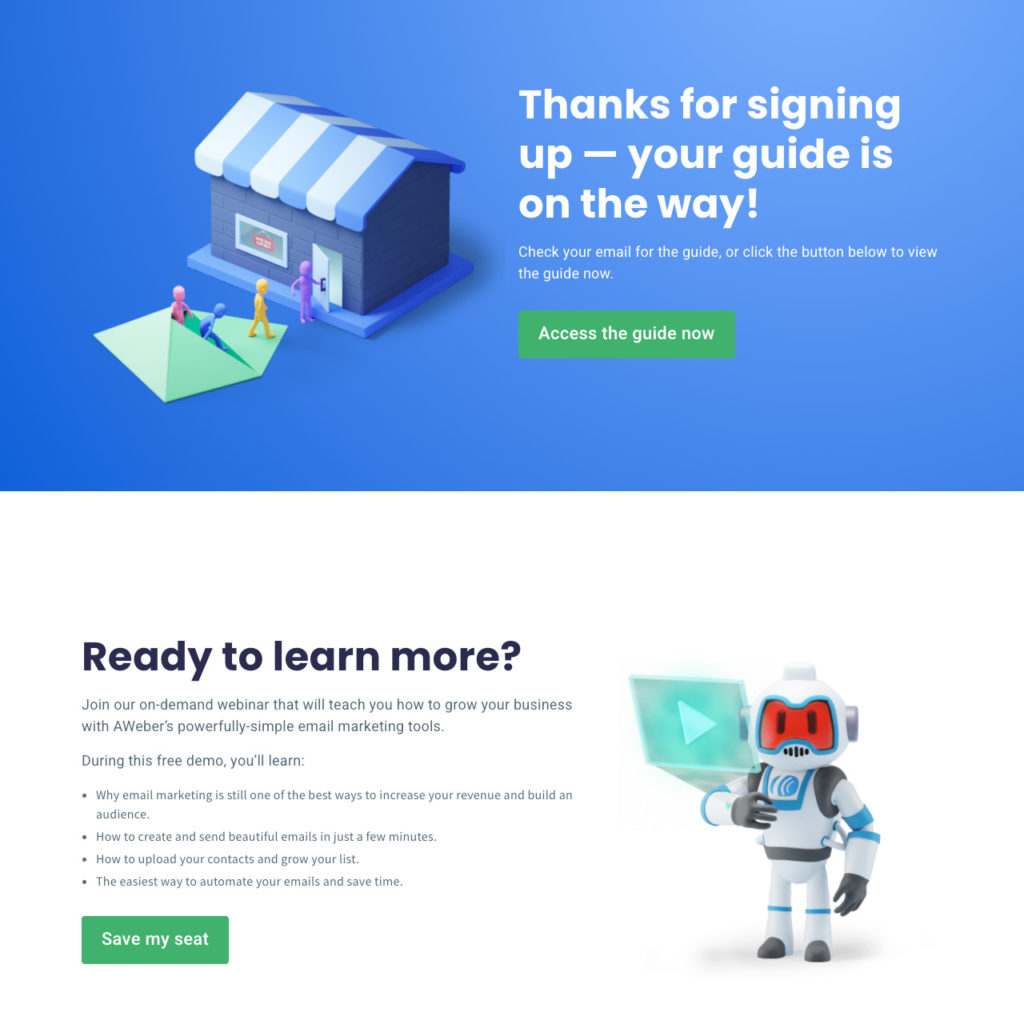
Thank You Page:
- Purpose: Appears after a visitor completes a desired action (conversion), confirming the action and outlining next steps.
- Strategic Advantage: Often an underutilized asset, the thank you page captures visitors at their peak engagement and trust. Immediately after a conversion (sign-up, download, purchase), users are highly receptive to further interaction. A well-optimized thank you page can leverage this momentum to offer related resources, upsells, cross-sells, invitations to connect on social media, or opportunities to book a follow-up call, effectively turning one conversion into a second.
- Optimal Use Cases: Should be implemented after every single form submission, purchase, or sign-up, transforming a transactional endpoint into a strategic engagement opportunity.
Strategic Considerations for Optimal Performance
Choosing the appropriate type of landing page is a direct consequence of defining your primary marketing objective. If the goal is to acquire email subscribers, a lead capture, squeeze, or lead magnet page is the most effective. For nurturing cold traffic before a purchase, a click-through page serves as a critical intermediary. Direct sales of high-ticket items might use a detailed sales page, while e-commerce products benefit from specific product-focused pages. Event promotion calls for webinar registration or pre-launch pages, and paid search campaigns demand highly relevant PPC landing pages.
The golden rule for landing page efficacy remains: start with one clear goal and build one page specifically for that goal. The most frequent reason for underperforming landing pages is attempting to achieve too many objectives on a single page, diluting its focus and confusing the visitor.
The Evolving Landscape: AI in Landing Page Creation
The future of landing page creation is rapidly being reshaped by artificial intelligence. Tools like AWeber’s upcoming AI Landing Page Builder are set to revolutionize the speed and efficiency with which businesses can deploy optimized landing pages. Instead of the traditional method of selecting and modifying templates, users will describe their desired page—including layout, copy, images, and signup forms—and the AI will generate the complete page. This capability promises to drastically shorten the time from concept to live deployment.
Such AI-powered builders will support all the landing page types discussed, from lead magnet pages for free checklists to webinar registration pages and pre-launch campaigns. Furthermore, advanced AI functions will allow users to upload screenshots of existing pages they admire, enabling the AI to recreate them with personalized branding, copy, and offers. Image modifications can also be handled through simple descriptive commands, eliminating the need for extensive manual graphic design or stock photo searches. This marks a significant leap towards democratizing high-quality, high-converting landing page design for businesses of all sizes.
Expert Perspectives and Industry Trends
Digital marketing experts consistently emphasize the critical role of specialization and personalization in landing page design. “Generic landing pages are a relic of the past,” notes a recent industry report from HubSpot. “Today’s consumer expects tailored experiences that directly address their needs, and specialized landing pages are the most effective tool for delivering that.” The trend towards micro-segmentation and hyper-personalization means that businesses will increasingly need to create numerous, highly specific landing pages to cater to diverse audience segments and campaign objectives.
Furthermore, the integration of analytics and A/B testing remains paramount. Even with AI-generated pages, continuous monitoring and iterative improvements are essential to optimize conversion rates. The ability to quickly test different headlines, CTAs, images, and form lengths on various landing page types provides invaluable insights into audience behavior, ensuring sustained campaign success.
Conclusion
Landing pages are far more than mere web pages; they are strategic assets in the digital marketing arsenal. Their singular focus, coupled with the ability to tailor content to specific audience segments and campaign goals, makes them indispensable for driving conversions, capturing leads, and ultimately, fostering business growth. By understanding the distinct functions of various landing page types—from lead generation and e-commerce to audience engagement and optimization—businesses can strategically deploy these tools to maximize their digital footprint and achieve superior marketing ROI. The advent of AI in landing page creation further streamlines this process, empowering even small businesses to build sophisticated, high-converting digital assets with unprecedented ease and speed, solidifying their role as the cornerstone of effective digital conversion strategies.