Cart abandonment silently erodes potential revenue for e-commerce businesses daily, making the implementation of a well-timed abandoned cart SMS strategy one of the most direct and effective methods to reclaim lost sales. This approach leverages the immediacy and ubiquity of mobile devices, reaching shoppers while their purchase intent remains high.
The Pervasive Challenge of Cart Abandonment in E-commerce
Online retailers consistently grapple with the phenomenon of cart abandonment, a significant impediment to maximizing sales. Industry data, such as that from the Baymard Institute, frequently places the average e-commerce cart abandonment rate between 70% and 80%, indicating that a vast majority of potential transactions initiated online never reach completion. This staggering figure translates into billions of dollars in lost revenue annually across the global e-commerce landscape.
Several factors contribute to this pervasive issue. Shoppers may abandon their carts due to unexpected shipping costs, a lengthy or complicated checkout process, a desire to compare prices, technical glitches, or simply because they are distracted or not ready to commit. Historically, businesses have primarily relied on email-based recovery campaigns, which, while effective to a degree, often suffer from lower open and engagement rates compared to more immediate communication channels. Understanding these underlying causes is crucial for developing targeted recovery strategies that address specific customer pain points and decision-making processes.
The Strategic Evolution: SMS as a Recovery Powerhouse
In response to the persistent challenge of cart abandonment and the evolving digital consumer behavior, e-commerce marketing has witnessed a significant shift towards multi-channel strategies, with SMS emerging as a particularly potent tool. The proliferation of smartphones and the inherent immediacy of text messaging have positioned SMS marketing as an indispensable component of modern customer engagement. Unlike emails, which can often sit unread in crowded inboxes, text messages typically boast open rates exceeding 90%, often within minutes of receipt, ensuring a higher likelihood of message delivery and engagement at the critical moment.
The evolution of abandoned cart strategies reflects a growing recognition that speed and directness are paramount. While email remains valuable for delivering richer content and longer-form messages, SMS excels in delivering concise, urgent, and highly personal reminders directly to a customer’s most personal device. This direct access allows businesses to re-engage shoppers precisely when their purchase intent is still warm, often within a short window after they have left a site. The strategic integration of SMS with email, rather than treating them as competing channels, creates a synergistic recovery flow that maximizes reach and conversion potential.
Anatomy of an Effective Abandoned Cart SMS Strategy
An abandoned cart SMS is an automated text message designed to prompt a shopper to complete a purchase they initiated but did not finalize. This automated message is typically triggered when a customer adds items to their cart and then exits the store without checking out. The process is streamlined into an automated flow comprising three core elements: a trigger, a delay, and a personalized message.
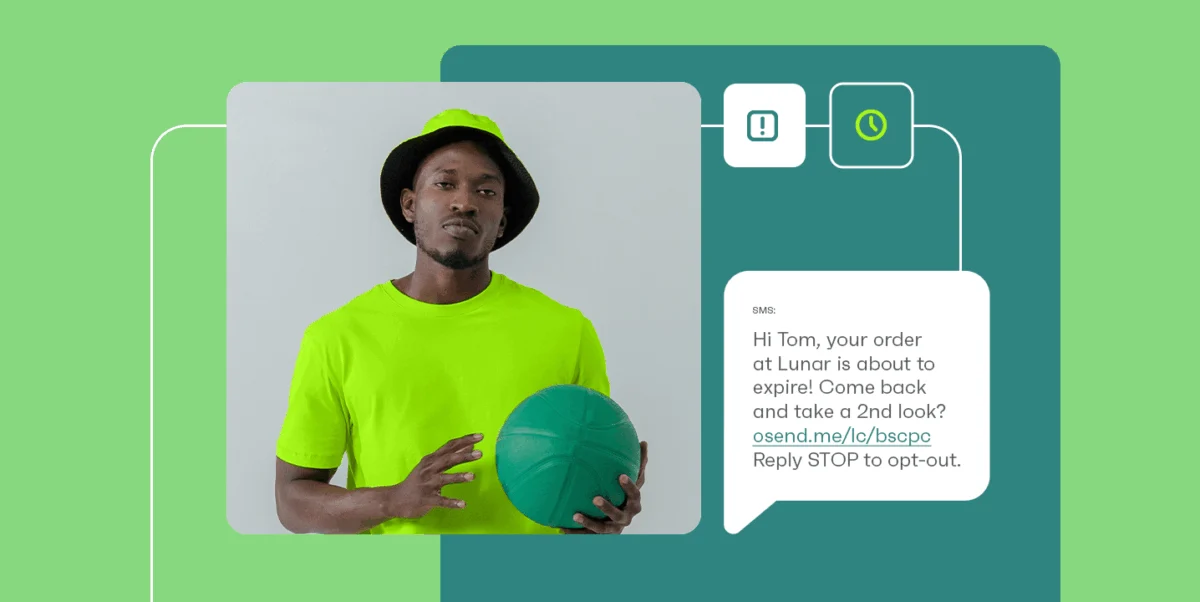
The customer’s behavior serves as the initial trigger; for instance, adding an item to the cart or reaching the checkout page before abandoning. Crucially, the system relies on a phone number that the customer has voluntarily provided, signifying their consent to receive communications. A strategic delay, usually ranging from 30 minutes to a few hours, is built into the flow. This delay allows customers to potentially return to their cart independently without feeling immediate pressure, while also ensuring the message arrives within the window of peak purchase intent. Following this delay, a concise, personalized message is dispatched, containing the brand name, the shopper’s name, a clear reason to return, a direct link back to their saved cart, and an explicit opt-out instruction. The automation is designed to cease sending messages once a purchase is completed or the customer opts out, preventing unnecessary communication.
Data-Driven Impact: Quantifying SMS Recovery Success
The efficacy of abandoned cart SMS campaigns is not merely anecdotal; it is substantiated by compelling data. The Omnisend 2025 E-commerce Marketing Report highlights the exceptional performance of automated SMS, revealing that it drove 18% of all orders from just 9% of total sends. This indicates a highly efficient channel, where a smaller volume of messages yields a disproportionately high return. Furthermore, the report documented that automated SMS campaigns achieved click rates 147% higher and conversion rates 118% higher than bulk marketing campaigns, underscoring the channel’s capacity for deep engagement. Within abandoned cart automations specifically, a remarkable 42.02% click-to-conversion rate was observed, meaning that more than one in three individuals who clicked on an abandoned cart SMS proceeded to make a purchase.
These statistics underscore the power of SMS to cut through digital clutter and drive immediate action. The ‘warm moment’ – the brief period after a shopper shows intent but hasn’t completed a purchase – is uniquely captured by SMS. While email campaigns might take hours or even days to be opened, an SMS often receives attention within minutes, capitalizing on the transient nature of online shopping decisions. The directness of the channel, combined with its personal nature, fosters a sense of urgency and direct connection that is hard to replicate with other marketing channels.
Legal Landscape and Best Practices for Compliance
Operating abandoned cart SMS campaigns legally and ethically is paramount. Since these are marketing messages, explicit customer consent is a non-negotiable prerequisite. In the United States, adherence to the Telephone Consumer Protection Act (TCPA) is mandatory, requiring clear, affirmative consent from the shopper before any marketing texts can be sent. This means that a phone number provided solely for shipping purposes does not automatically constitute consent for marketing communications. Businesses must explicitly state that by providing their number, customers are opting in to receive marketing texts, not just transactional updates. Similar regulations, such as GDPR in Europe and CCPA in California, impose strict rules regarding data privacy and consent for digital communications, making global compliance a complex but essential consideration.
Beyond initial consent, ongoing best practices are crucial for maintaining compliance and fostering a positive customer experience. Every message must include an easy and clear opt-out mechanism (e.g., “Reply STOP to opt out”). Brands must also clearly identify themselves at the beginning of each message. Timing is another critical factor; messages should be sent within a reasonable window, typically between 30 minutes and 24 hours after abandonment, and sequences should generally be limited to one to three texts to avoid overwhelming recipients. Furthermore, businesses must respect local time zones and avoid sending messages during inconvenient hours. Building consent mechanisms directly into signup forms and pop-ups, and meticulously maintaining records of consent, are vital safeguards against potential legal challenges. Platforms like Omnisend offer built-in features to manage STOP/HELP replies, track consent records, and shorten links, simplifying the compliance burden for businesses.
Strategic Deployment: Optimizing Your SMS Recovery Flow
Once the foundational abandoned cart SMS flow is established, ongoing optimization is key to maximizing recovery rates without increasing risk or annoying customers.
-
Master Your Timing: The initial abandoned cart SMS should be dispatched within 30 to 60 minutes of the shopper leaving the site. This window capitalizes on peak purchase intent. If the first message goes unanswered, a second message can be sent 4 to 24 hours later. For most cart scenarios, a sequence of one to three messages is optimal; an excessive number can lead to recipient fatigue and higher opt-out rates. The goal is to react swiftly to the cart abandonment event rather than overwhelming the customer with a barrage of texts.
-
Segment Your Audience for Precision: A one-size-fits-all approach to abandoned cart recovery can be inefficient. Segmenting your audience allows for more targeted and impactful messaging. For instance, offering a 10% discount to a loyal customer who likely would have completed their purchase without an incentive can unnecessarily erode profit margins. Instead, consider segmentation based on:
- Cart Value: Higher-value carts might warrant a stronger incentive (e.g., free shipping, a percentage discount) or a direct offer of customer support.
- Purchase History: First-time buyers might respond well to a welcome discount, while repeat customers might prefer loyalty points or exclusive access to new products.
- Product Type: Messages can be tailored to specific products left in the cart, highlighting unique benefits or urgency.
- Engagement Level: Customers who opened a previous abandoned cart email but didn’t convert might be more receptive to an SMS follow-up.
Platforms like Omnisend facilitate these segmentation strategies using trigger filters based on cart value or existing customer segments, enabling highly personalized campaigns.
-
A/B Test Your Messages Continuously: Continuous A/B testing is crucial for refining SMS campaigns. By altering a single element in the message and allowing it to run until a statistically significant number of orders are recovered, businesses can identify the most effective messaging strategies. Useful tests include:
- Call to Action (CTA): “Finish your order” vs. “Claim your items.”
- Incentives: Free shipping vs. a percentage discount vs. no discount.
- Urgency vs. Social Proof: Messages emphasizing limited stock versus those highlighting product popularity.
- Personalization Level: Using only the first name vs. a more elaborate greeting.
The primary metric for judging success should be recovered orders, not just clicks, as a high click-through rate doesn’t necessarily translate to conversions. Many platforms offer automated A/B testing functionalities that automatically deploy the winning version.
-
Integrate SMS with Email for a Synergistic Approach: Rather than viewing SMS and email as competing channels, they should be integrated into a cohesive multi-channel abandoned cart journey. Each channel has distinct strengths: email allows for richer content, detailed product imagery, and longer-form messaging, while SMS offers unparalleled immediacy and high engagement rates. A common synergistic approach involves:
- Lead with Email: Send the first reminder email shortly after abandonment, providing product details and perhaps addressing common objections.
- SMS Follow-up for Non-Openers: For shoppers who do not open or click the initial email, an SMS follow-up can serve as a potent reminder.
- Tiered Incentives: Use email for initial soft reminders, and reserve SMS for more urgent messages or targeted discounts for those who haven’t converted after multiple touches.
Omnisend’s internal analysis suggests that merchants using a combined email, SMS, and push notification strategy average $79 in sales for every $1 spent, demonstrating the power of this integrated approach. A key rule for integration is to ensure customers who have already engaged with one channel (e.g., opened the email) are not subsequently sent a repetitive message on another channel (e.g., SMS), thereby optimizing the customer experience and preventing annoyance. Automated SMS, on average, earns about $0.74 per send compared to $0.15 for email campaigns, highlighting its high return on investment when strategically deployed.
-
Measure Recovered Revenue Beyond Sends: While metrics like open rates and click-through rates are important, the ultimate measure of an abandoned cart SMS strategy’s success is the recovered revenue. Since SMS incurs a cost per send, it’s crucial to track the direct financial impact. For example, recovering 50 orders a month with an average order value of $80 translates to $4,000 in additional revenue, which can be directly weighed against the cost of the SMS messages sent. Monitoring the opt-out rate is also critical; a climbing opt-out rate signals that the frequency or content of messages may be too aggressive, necessitating an adjustment in strategy. This comprehensive approach to measurement not only validates the investment in SMS but also provides actionable insights for continuous refinement.
Diverse Approaches: Crafting Compelling SMS Templates
Effective abandoned cart SMS messages are concise, direct, and compelling, adhering to character limits while delivering maximum impact. The approach taken in the message can vary significantly depending on the strategic goal:
- Plain Reminders: Sent 30-60 minutes after abandonment, these simply remind the customer of their left-behind items. Example:
[Company]: Hi [Name], you left items in your cart. Pick up where you left off: [Link] Reply STOP to opt out. - Urgency and Scarcity: Best used when genuinely applicable, these messages create a sense of immediacy. Example:
[Name], only a few [Product] are left in stock. Grab yours before they’re gone: [Link] Reply STOP to opt out. - Social Proof: Leveraging popularity or positive feedback to encourage completion. Example:
[Name], [Product] is rated [Rating] by shoppers. It’s waiting in your cart: [Link] Reply STOP to opt out. - Offers: Used strategically to overcome price objections or incentivize completion. Example:
[Name], here’s [X]% off your cart at [Company]. Use [CODE] at checkout: [Link] Reply STOP to opt out. - Convenience and Objection Handling: Addressing common reasons for abandonment, such as checkout complexity or return policies. Example:
[Name], free returns on your [Company] order, so it’s risk-free to try. Finish up: [Link] Reply STOP to opt out. - Follow-up (No-Pressure Close): A final, gentle reminder, typically sent a day or so later. Example:
Still thinking it over, [Name]? Your cart is here whenever you’re ready: [Link] Reply STOP to opt out.
Each template should maintain one clear call to action and always include an opt-out option, ensuring compliance and a positive user experience.
Expert Perspectives and Future Outlook
The trajectory of SMS marketing in e-commerce indicates its sustained growth and increasing importance. Rob Lin, Owner and Founder of Divatress, succinctly captures this sentiment: “At this point, I can’t imagine a world without SMS marketing. It’s really taken off. Our SMS subscribers are growing much faster than email subscribers. SMS is just becoming more and more important for us, and it’s definitely not going anywhere.” This perspective underscores the channel’s evolving role from a supplementary tool to a core component of digital marketing strategies.
Looking ahead, the integration of artificial intelligence and machine learning is poised to further enhance the efficacy of abandoned cart SMS campaigns. AI can analyze vast datasets of customer behavior to predict abandonment likelihood, personalize message content with unprecedented precision, and optimize send times for individual users, moving beyond general segmentation to hyper-personalization. This evolution promises even higher conversion rates and a more seamless, less intrusive customer experience.
In conclusion, abandoned cart SMS represents a powerful, data-backed strategy for e-commerce businesses to recover lost revenue and enhance customer engagement. By adhering to compliance regulations, leveraging strategic timing and segmentation, and continuously optimizing messages through A/B testing, businesses can transform a significant challenge into a consistent source of recovered sales and improved profitability. The channel’s immediacy and high engagement rates make it an indispensable tool in the modern e-commerce marketing arsenal, proving that sometimes, the most direct path to a customer’s wallet is through their pocket.