For small businesses and entrepreneurs charting their course in the vast digital ocean, a recurring dilemma surfaces: the fundamental choice between establishing a comprehensive website or deploying a targeted landing page. This foundational decision, often perplexing for newcomers, underpins the entire digital marketing strategy and directly influences audience engagement, lead generation, and conversion rates. Understanding the distinct roles, advantages, and limitations of each digital asset is paramount for setting a business on a trajectory for immediate and long-term success. The core questions—”Do I need a website?”, “What should I use a landing page for?”, and “Do I need both?”—are not merely tactical queries but strategic considerations that define a brand’s online footprint and its interaction model with potential customers.
The internet, since its commercialization in the mid-1990s, has evolved from a repository of static information to a dynamic, interactive marketplace. Early online presences were often rudimentary, consisting of simple HTML pages primarily for information dissemination. As technology advanced and user expectations grew, the concept of a “website” blossomed into a multifaceted digital hub, offering extensive navigation, rich content, and diverse functionalities. Concurrently, the rise of sophisticated digital marketing techniques, particularly in the late 2000s and early 2010s, gave birth to the specialized landing page. This evolution reflects a growing understanding that different online objectives require different digital tools, moving beyond a one-size-fits-all approach to online presence.
The Comprehensive Digital Hub: Defining the Modern Website
A website, in its contemporary form, serves as the digital headquarters for a business, brand, or individual. It is typically a collection of interconnected web pages hosted under a single domain, offering a holistic view of an entity’s offerings, values, and identity. Unlike a single-purpose page, a website is designed for exploration and education, allowing visitors to browse, learn, and build familiarity over time.
Key components commonly found within a robust website include:
- Homepage: The primary entry point, providing an overview and guiding visitors to other sections.
- About Us/Company Page: Details the business’s history, mission, values, and team members, fostering trust and connection.
- Services/Products Pages: Dedicated sections showcasing specific offerings with detailed descriptions, pricing, and benefits.
- Blog/Resource Center: A hub for valuable content, articles, guides, and news, crucial for thought leadership and SEO.
- Contact Us Page: Provides various methods for visitors to get in touch, including forms, phone numbers, and physical addresses.
- Portfolio/Gallery: Displays examples of work, case studies, or visual content relevant to the business.
- FAQ Page: Addresses common customer queries, improving user experience and reducing customer service load.
The overarching goal of a website is comprehensive engagement. It acts as a one-stop shop for everything related to a business, aiming to answer a broad spectrum of visitor questions and solidify brand presence. This completeness, however, comes with inherent costs. Developing a functional, aesthetically pleasing, and secure website requires significant investments in time, financial resources for design, development, hosting, and ongoing maintenance. According to industry estimates, the average cost for a professional small business website can range from $2,500 to $10,000, with ongoing maintenance fees. Furthermore, the development timeline can stretch from several weeks to months, depending on complexity.
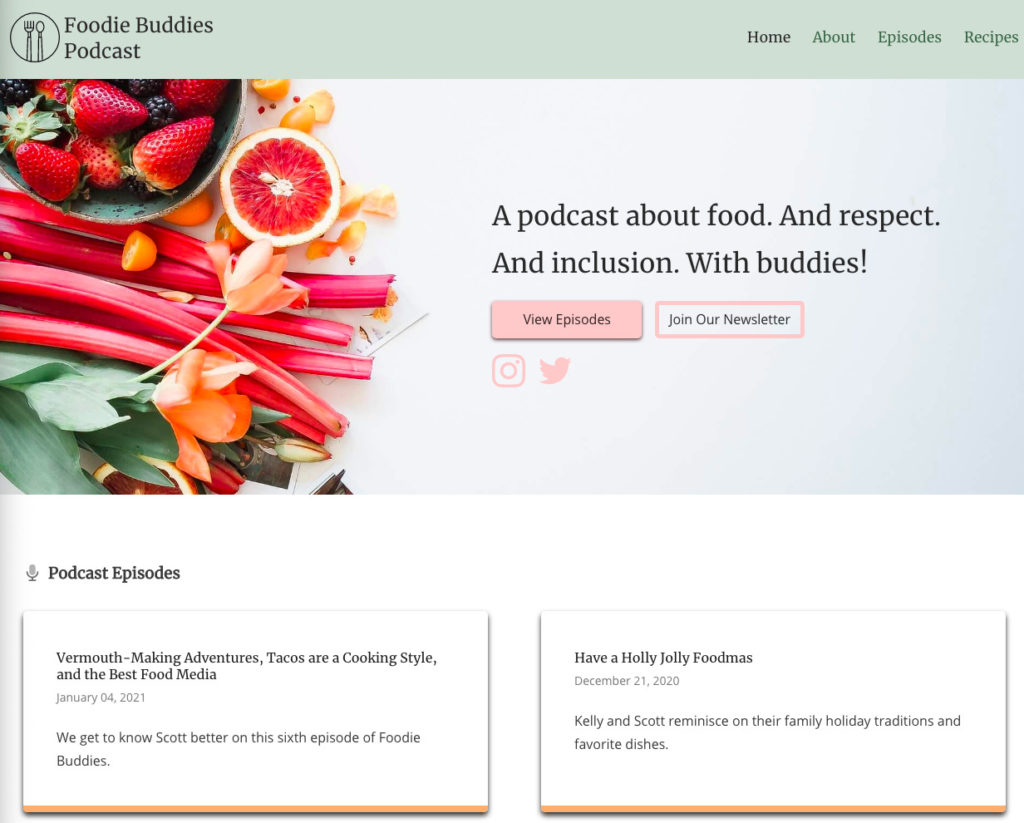
For instance, a podcast like “Foodie Buddies” would utilize its website to house an archive of episodes, provide show notes, share recipes mentioned, introduce hosts, and offer various ways for listeners to engage with the brand long-term. Visitors can effortlessly navigate between these sections, deepening their understanding and connection with the podcast’s universe. This multi-page structure supports diverse user journeys, from a first-time listener discovering the show to a loyal fan seeking a specific recipe from an older episode.
The Focused Powerhouse: Understanding the Landing Page
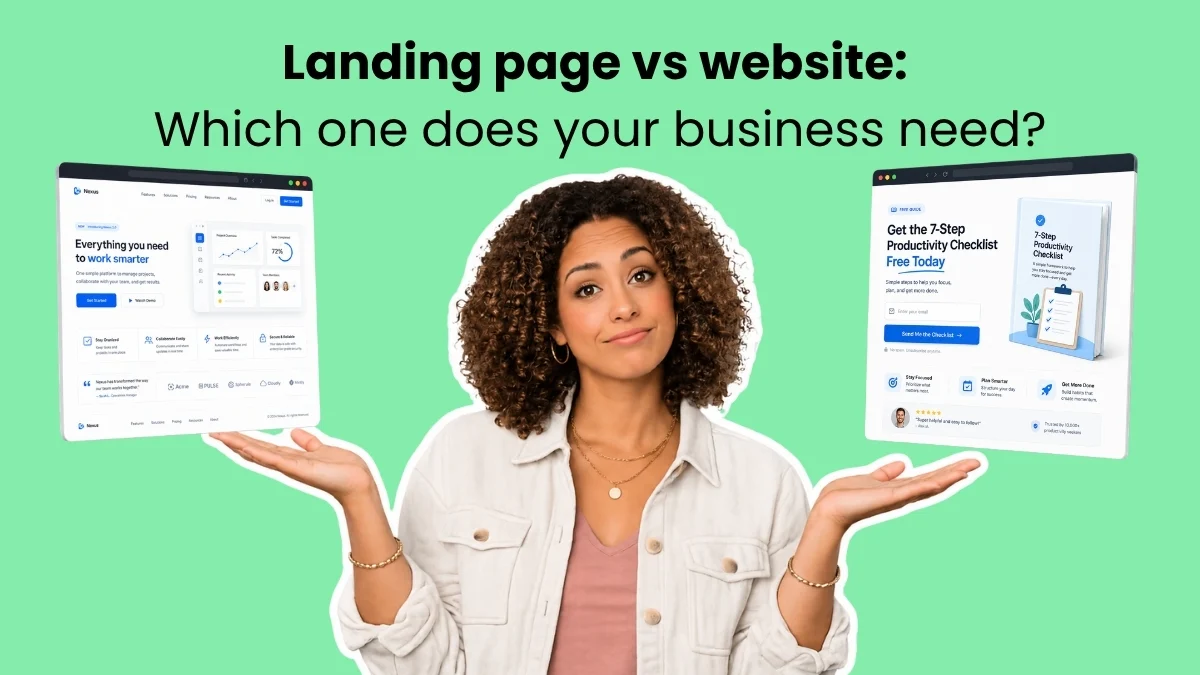
In stark contrast, a landing page is a standalone web page meticulously designed with one singular goal and one distinct call to action (CTA). It is characterized by its limited navigation, often devoid of traditional menus or links that would divert a visitor to other parts of a website. The philosophy behind a landing page is singular focus: a visitor “lands” on the page, absorbs the concise message, and is presented with an unmistakable choice—to take the desired action or to leave. There are no distractions, no alternative paths to wander down.
Common objectives for a landing page include:
- Lead Generation: Capturing visitor information (e.g., email address, name) in exchange for a valuable offer, such as an e-book, webinar registration, or free trial.
- Product Sales: Promoting and selling a specific product or service, often with a direct “Buy Now” or “Add to Cart” CTA.
- Event Registration: Encouraging sign-ups for webinars, workshops, conferences, or other events.
- Subscription Sign-ups: Driving subscriptions to newsletters, membership programs, or online services.
- Content Downloads: Offering exclusive downloadable content like whitepapers, templates, or reports.
- Link Directory (Link-in-Bio): A specialized landing page, often used on social media platforms, that acts as a hub for multiple important links.
Because every element on a landing page is strategically aligned towards a single conversion goal, these pages typically achieve significantly higher conversion rates than general website pages, such as a homepage. Industry benchmarks suggest that average landing page conversion rates hover between 2-5%, with highly optimized pages reaching 10% or more, whereas typical website homepages might see conversion rates well below 1%. This efficiency stems from eliminating choice paralysis and guiding the visitor directly to the intended action. The “Foodie Buddies” example illustrates this, where a landing page functions as a link directory, streamlining how social media followers access their key content with a single, clear link. This targeted approach is invaluable for specific marketing campaigns.
Side-by-Side: Unpacking the Fundamental Differences
While both websites and landing pages are digital presences, their architectural, functional, and strategic distinctions are profound. Thinking of a website as a continent—a vast, interconnected landmass with multiple cities and routes—and a landing page as an isolated island off its coast—focused on a singular point of interest—helps to clarify their roles.
| Feature | Landing Page | Website |
|---|---|---|
| Number of Pages | One | Five or more, often dozens or hundreds |
| Navigation | None or minimal (e.g., privacy policy link) | Full menu, extensive internal linking, complex user journeys |
| Primary Goal | One specific action (e.g., sign up, purchase) | Exploration, education, brand building, diverse engagement |
| Calls to Action | One dominant, clear CTA | Many, varied CTAs spread across different pages |
| Time to Launch | Minutes to hours (with templates) | Days to weeks, often months for complex builds |
| Cost | Low, often included with marketing tools | Higher: hosting, design, development, maintenance, security |
| Best For | Specific campaigns, lead generation, quick sales, A/B testing, list growth, single product launches | Established businesses, comprehensive brand presence, content marketing, long-term SEO, customer support |
| SEO Impact | Limited organic search visibility (often paid traffic) | Strong potential for long-term organic search rankings through content and structure |
| Analytics | Focused on conversion metrics for a single goal | Comprehensive tracking of user behavior across multiple pages |
The most critical distinction lies in the behavioral expectation. A landing page explicitly asks the visitor to perform one action, minimizing cognitive load and maximizing conversion potential. A website, conversely, invites visitors to explore, learn, and form a broader relationship with the brand over time, catering to a wider range of informational needs.
Strategic Deployment: When to Utilize Each Tool
The decision of whether to use a website, a landing page, or both is not arbitrary; it’s a strategic choice dictated by business objectives, available resources, and the stage of a business’s lifecycle.
When a Landing Page Takes Center Stage:
Landing pages are invaluable when the objective is laser-focused conversion. They are the go-to tool for:
- Marketing Campaigns: Driving traffic from paid ads (Google Ads, social media ads) to a highly relevant, conversion-optimized page. Data indicates that using dedicated landing pages for ad campaigns can increase conversions by over 50%.
- Lead Magnet Promotions: Offering free resources (e-books, checklists, templates) in exchange for contact information to build an email list.
- Product Launches: Generating excitement and sales for a new product or service with a dedicated page that highlights benefits and features.
- Event Registrations: Streamlining the sign-up process for webinars, workshops, or conferences.
- A/B Testing: Rapidly testing different offers, headlines, or designs to optimize conversion rates without altering a main website.
- Early-Stage Businesses: For startups or solo entrepreneurs with limited resources, a landing page offers a quick, cost-effective way to establish an online presence, validate an idea, and begin collecting leads or making sales. Many successful ventures have initiated their digital journey with just a few well-designed landing pages.
When a Website Becomes Indispensable:
A website becomes the preferred and often necessary solution when a business has substantial depth, diverse offerings, and a need for comprehensive brand building and long-term engagement.
- Established Businesses: Companies with multiple product lines, extensive service offerings, or a large content library require a website to organize and present this information effectively.
- Content Marketing Strategy: Businesses relying on blogging, educational articles, or detailed guides for organic traffic generation and thought leadership need a website’s structure to house and categorize this content.
- Complex Customer Journeys: If customers need to navigate through various stages of discovery, consideration, and decision-making, a multi-page website provides the necessary framework.
- Brand Authority and Trust: A well-developed website signals professionalism, credibility, and stability, which are crucial for building long-term customer trust.
- Long-Term SEO: While landing pages can be optimized for specific keywords, a website with a blog and diverse content offers a much stronger foundation for sustainable organic search visibility, bringing in passive traffic month after month.
The Power of Synergy: Leveraging Both
Crucially, the choice is not always an “either/or” proposition. Many successful businesses strategically integrate both websites and landing pages into their digital marketing ecosystem. The website provides the overarching brand presence, comprehensive information, and SEO foundation. Meanwhile, targeted landing pages serve as highly efficient conversion machines for specific campaigns, promotions, or lead generation efforts. Industry experts consistently advise against directing paid ad traffic to a general homepage, as its multiple navigation options often dilute focus and lower conversion rates. Instead, ad campaigns should direct users to a bespoke landing page tailored to the ad’s message, ensuring a seamless and conversion-optimized user experience.
Decision Framework for Business Owners
For any business owner grappling with this choice, four guiding questions can provide clarity:
- What is the primary action I want visitors to take? If it’s one specific, immediate action (e.g., “sign up for newsletter,” “download e-book,” “buy this product”), a landing page is likely the most effective. If the goal is broader exploration, learning about various offerings, or building long-term brand familiarity, a website is superior.
- Do I currently have the time, budget, and resources for a full website? Building and maintaining a comprehensive website demands significant investment. If resources are limited, starting with a high-converting landing page allows a business to establish an online presence and generate revenue or leads more quickly, with the option to expand to a website later.
- Am I testing a new idea, product, or offer? Landing pages are ideal for validating market interest without committing to a large-scale website build. A lean approach using a landing page can quickly ascertain demand before substantial investment.
- Does my business possess enough diverse content to justify multiple pages? If a business would struggle to fill five distinct, valuable pages without padding, it may not be ready for a full website. A single, powerful landing page might be more impactful than a sparse, underdeveloped website.
The Viability of a Landing-Page-Centric Business Model
A compelling aspect of modern digital marketing is the ability for many creators, coaches, and solo entrepreneurs to operate entirely on landing pages. This model thrives by leveraging the power of focused conversion points combined with robust email marketing. A series of landing pages can fulfill various business functions: one for email list sign-ups, another for selling a digital product, and perhaps a third as a “link-in-bio” directory for social media.
In this paradigm, the landing page serves as the initial gateway, capturing the visitor’s interest and, crucially, their contact information. The subsequent nurturing, education, trust-building, and promotional activities are then handled primarily through email marketing. The email list effectively becomes the core asset, providing a direct communication channel that a multi-page website would otherwise facilitate. This approach allows businesses to bypass the complexities and costs associated with website development and maintenance, offering remarkable agility and cost-effectiveness. Platforms like AWeber exemplify this integration, providing tools that allow users to build and publish landing pages with included hosting and secure connections, seamlessly funneling sign-ups directly into email lists for automated follow-up sequences.
Broader Implications and the Future of Digital Presence
The nuanced distinction between websites and landing pages reflects the increasing sophistication of digital marketing and the imperative for businesses to adopt highly targeted strategies. The rise of data analytics and A/B testing has reinforced the value of single-purpose pages for optimizing conversion funnels. For small businesses, this means greater flexibility in establishing an online presence, allowing them to start lean, validate ideas quickly, and scale their digital footprint as they grow.
The trend also highlights the enduring importance of a clear call to action and a focused user experience. In an increasingly noisy digital environment, minimizing distractions and guiding users towards a desired outcome is paramount. As digital marketing continues to evolve, the strategic deployment of both comprehensive websites and agile landing pages will remain a cornerstone for businesses aiming to effectively engage audiences, generate leads, and drive sales in a competitive online landscape. The decision is less about choosing one over the other in perpetuity, and more about understanding when and how to deploy each tool for maximum strategic advantage at different stages of a business’s growth.