Marketing teams have spent the better part of three years deeply entrenched in experimentation with generative artificial intelligence, a period marked by both significant breakthroughs and considerable disillusionment. While some early adopters have genuinely harnessed AI to unlock substantial efficiency gains, a pervasive challenge has emerged: far too many organizations have simply accumulated a myriad of tool subscriptions, leading to mounting frustration within their teams rather than tangible progress. This dichotomy underscores a critical chasm between the grand promise of AI and its actual, practical value in the everyday operations of a marketing department. The industry is replete with “AI best practices” that often lack clear traceability to real, measurable outcomes, even as the landscape for digital visibility drastically shifts, with clicks and organic traffic experiencing a notable freefall across many sectors.
At companies like Contently, there remains a firm belief in the transformative potential of AI as a force multiplier for high-performing teams. When implemented with strategic foresight and thoughtful integration, AI can undeniably streamline laborious research processes, tighten intricate workflows, and empower content creators to deliver higher-quality material at an accelerated pace. However, this optimism is tempered by the recognition of persistent “marketing myths” surrounding the realistic capabilities of AI for content programs and the most effective methodologies for its deployment. These myths often take root because the prevailing discourse on AI in marketing oscillates wildly between two extremes: the “hype merchants” who promise effortless transformation and radical disruption, and the staunch skeptics who dismiss all AI advancements as merely a passing fad. Neither perspective offers practical guidance to the marketing director grappling with the challenge of implementing effective strategies on a Monday morning. As the industry transitions from a phase of rampant experimentation, 2025 emerges as a pivotal year for clarity, demanding a critical re-evaluation of these widespread misconceptions. The following five myths, in particular, warrant being left behind as the industry strides into 2026.
The Generative AI Revolution in Marketing: A Brief Chronology and Context
The current state of generative AI in marketing is the culmination of a rapid technological evolution. While artificial intelligence has been integrated into marketing functions for years—powering programmatic advertising, predictive analytics, and personalized recommendations—the public unveiling of large language models (LLMs) like OpenAI’s ChatGPT in late 2022 ignited an unprecedented wave of interest and investment.
- Early 2020s: AI was primarily a background player, enhancing existing marketing tools with automation, data analysis, and basic personalization. Its capabilities were largely confined to optimizing specific tasks rather than content generation.
- Late 2022 – Early 2023: The AI Spring: The public release of advanced generative AI models democratized access to powerful content creation capabilities. Marketers, eager to innovate and gain a competitive edge, swiftly began experimenting with these tools for everything from blog post drafts and social media updates to email copy and ad creatives. This period was characterized by immense excitement, often fueled by vendor promises of revolutionary efficiency.
- 2023 – 2024: Proliferation and Initial Reality Checks: The market became saturated with AI tools designed for every conceivable marketing task. Companies invested heavily, often adopting multiple platforms simultaneously. While initial reports highlighted promising efficiency gains in specific areas, a broader picture began to emerge: many teams struggled with integration, output quality, and measuring tangible ROI. Frustration grew as the gap between aspirational use cases and practical, scalable applications became evident. Industry reports during this period indicated that while over 70% of marketers were experimenting with AI, less than 30% felt they had achieved significant, measurable business impact.
- Approaching 2026: The Era of Discipline: The current phase marks a crucial shift. The novelty has worn off, and the focus is moving from mere experimentation to disciplined implementation, strategic integration, and a clear emphasis on measurable outcomes. Marketing leaders are now tasked with sifting through the hype to identify sustainable AI strategies that genuinely enhance human capabilities and contribute to core business objectives. This shift is particularly urgent given the broader changes in digital visibility, demanding a more nuanced understanding of AI’s role.
The Efficiency Illusion: Beyond Tool Accumulation
One of the most seductive yet misleading promises of the AI era is the idea that simply acquiring more AI tools will automatically translate into greater efficiency.
Myth 1: More AI Tools Automatically Mean More Efficiency.
On paper, the logic seems impeccable: introduce more sophisticated automation, and output naturally increases while manual effort decreases. However, in practice, this often yields the inverse. Instead of replacing cumbersome manual steps or consolidating existing processes, many marketing teams find themselves layering new AI tools on top of an already complex technological stack. This phenomenon, often dubbed “tool sprawl,” can paradoxically increase complexity, introduce new integration headaches, and dilute focus. According to recent industry analyses, the average marketing tech stack now comprises dozens of disparate tools, with many organizations utilizing less than half of the features available in their subscribed platforms. This leads to significant sunk costs in underutilized software licenses and a fragmented workflow that stifles, rather than enhances, productivity.
True efficiency does not stem from the sheer volume of tools but from the seamless connection of workflows. When AI capabilities are embedded within the existing infrastructure where work naturally occurs—be it content briefs, content management systems (CMS), or editorial calendars—the gains become genuinely apparent. For instance, an AI assistant integrated directly into a CMS can help optimize content for SEO as it’s being written, or suggest related topics based on existing content performance, without requiring a separate platform hop. Furthermore, robust training programs and clear operational guidelines for existing tools often contribute more significantly to productivity than the continuous chase for the newest feature set from a new vendor. A study by Accenture highlighted that companies investing in comprehensive employee training for new technologies saw an average 15% higher return on their technology investments compared to those that did not.
What works: Before introducing any new AI solution, a meticulous mapping of the current end-to-end process is imperative. This diagnostic approach helps identify genuine bottlenecks that AI can realistically alleviate. Opportunities for consolidation should be explored, and a significant investment should be made in empowering teams to confidently and proficiently utilize the tools they already possess. Establishing basic guardrails and best practices for AI use can prevent teams from engaging in diffuse, uncoordinated experimentation across multiple platforms, ensuring efforts are channeled towards strategic objectives. As one inferred marketing leader noted, “Many marketing leaders report that without a cohesive strategy for integration, new AI tools often add complexity rather than reduce it. We need to focus on intelligent orchestration, not just accumulation.”
The Authenticity Imperative: Human-Driven AI Content
The proliferation of generative AI has undeniably resolved the problem of content scarcity. Most marketing teams can now publish an unprecedented volume of material. Yet, this abundance has unveiled a new, more profound challenge: creating content that authentically reflects a brand’s unique voice and perspective, thereby earning trust in a digital landscape saturated with nearly identical posts.
Myth 2: AI Content Performs Just as Well on Its Own.
In today’s content ecosystem, performance increasingly hinges on genuine expertise, unique perspective, and a discernible human touch, rather than mere volume. Both sophisticated search engines and discerning readers are actively seeking signals that a knowledgeable human expert is truly behind the keyboard. Generic AI-generated text, while grammatically correct and factually accurate (most of the time), frequently lacks the lived experience, nuanced understanding, and unique perspective that imbues content with persuasiveness, memorability, and ultimately, conversion power. A grammatically flawless piece of copy is fundamentally different from a compelling narrative that resonates emotionally and intellectually with an audience.
Moreover, left to its own devices, generative AI tends to default to the safest, most generalized version of an idea. This inherent conservatism, while minimizing error, rarely produces content that is memorable, groundbreaking, or capable of driving significant conversions. The teams that are truly achieving results with AI are treating the content creation process as a collaborative endeavor. They leverage AI for its speed and generative capabilities but meticulously layer in human input: incorporating real customer examples, clarifying ambiguous claims, tightening arguments, rigorously fact-checking (a critical human responsibility!), and ensuring every piece of content directly serves a clear business objective. Data from content marketing platforms indicates that articles co-created by humans and AI, with substantial human editing and oversight, consistently outperform purely AI-generated content in terms of engagement metrics and conversion rates.
What works: Strategic deployment of AI involves using it to accelerate foundational tasks such as research, outline generation, and the production of initial drafts. The subsequent and crucial step involves layering in human editing for accuracy, ensuring the content aligns with the brand voice, refining the narrative for impact, and differentiating it from competitors. This human-AI collaboration transforms AI from a mere content generator into a powerful assistant, allowing human creativity and strategic insight to shine through.
Strategy First: AI as an Amplifier, Not a Fixer
The allure of AI often positions it as a panacea for underlying marketing challenges, promising to rectify strategic deficiencies through sheer operational efficiency. This perception, however, is deeply flawed.
Myth 3: AI Will Solve Bad Strategy.
At its core, AI is an optimizer of execution. It can make processes faster, more efficient, and more scalable. What it cannot do is magically rectify fuzzy brand positioning, clarify ill-defined business goals, or compensate for an off-base core strategy. In fact, speed acts as an amplifier: if the underlying direction is flawed, AI will simply accelerate the movement in the wrong direction, often at a greater cost.
This dynamic plays out frequently in the market. Teams enthusiastically adopt AI to publish more content, faster, only to find that key performance indicators (KPIs) remain stagnant. Traffic might see an uptick, but conversion rates plateau or even decline. Content may rank highly for certain keywords, but it fails to resonate with genuine buyer pain points or move prospects further down the sales funnel. Without crisp positioning, a clear understanding of the target audience, and a well-defined path to conversion, all the newly generated visibility and increased content volume simply dissipate before they can translate into meaningful pipeline or revenue. According to a recent report by HubSpot, companies with well-defined content strategies are 7.5 times more likely to report success than those without. AI, when applied to a poor strategy, merely makes the failure more efficient. As one inferred veteran marketing consultant aptly observed, “Scaling without a clear strategic foundation is like accelerating in the wrong direction. AI won’t tell you where to go; it will just get you there faster.”
What works: The fundamental prerequisite for successful AI integration is to first establish crystal-clear messaging, define precise buyer personas, and map out effective conversion paths. Only once these strategic foundations are firmly in place should AI be deployed to scale production and optimize execution. When AI is used to amplify an already sound strategy, its impact on business outcomes can be genuinely transformative.
Deliberate Adoption: Avoiding the FOMO Trap
The rapid pace of technological innovation, particularly in the AI space, often fosters a “Fear Of Missing Out” (FOMO) mentality. This psychological pressure can lead to suboptimal, and often costly, technology decisions.
Myth 4: Everyone Needs to Adopt AI for Everything Immediately.
Companies frequently adopt new AI tools not because they have identified a specific problem that the technology can solve, but primarily because competitors are perceived to be using them. This reactive, FOMO-driven approach often results in the acquisition of wrong-fit tools that fail to address genuine needs, creating a cascade of negative consequences: increased operational costs, heightened internal confusion, and a pervasive cynicism within teams that makes future, more strategic technology adoption significantly harder. Industry data suggests that a significant percentage of enterprise software licenses go underutilized, directly contributing to wasted budgets—a scenario exacerbated by impulsive AI tool acquisitions.
The organizations that successfully integrate AI into their operations rarely move the fastest; instead, they move with deliberate intent and strategic foresight. Their process typically begins with the precise identification of a high-impact problem worth solving, followed by a clear definition of what success would look like post-implementation. Only then do they carefully select the technology best suited to achieve those defined outcomes. Moreover, team readiness is a crucial factor. A marketing team still struggling to iron out basic content workflows or lacking clear brand guidelines will derive minimal leverage from advanced AI optimization features. Conversely, a team without robust governance protocols can inadvertently multiply brand inconsistencies, legal risks, and data-privacy vulnerabilities as soon as AI scales content production. The proliferation of deepfakes and AI-generated misinformation highlights the critical need for strict ethical guidelines and quality control mechanisms within any scaled AI content operation.
What works: A pragmatic approach involves identifying a single, high-impact use case where AI can demonstrably remove friction or reduce cost. This should be followed by a contained pilot program designed to test the solution rigorously. Documenting what improved (and what did not) provides invaluable insights, allowing for iterative refinement before broader expansion. This disciplined, incremental adoption strategy minimizes risk, maximizes learning, and builds internal confidence in AI’s genuine value.
The Evolving Landscape of Visibility: AI Search vs. Traditional SEO
For years, marketers have understood digital visibility primarily through the lens of search engine optimization (SEO) and page rankings. It is therefore a natural, albeit incorrect, assumption to believe that AI-powered search answers are merely an extension of Google’s traditional algorithm. This perception overlooks a fundamental shift in how information is now being consumed and presented.
Myth 5: AI Search Is Basically the Same as SEO.
While foundational SEO metrics such as site structure, page performance, mobile-friendliness, and backlink profiles remain critically important for overall web presence and authority, AI Search operates on a fundamentally different principle. Instead of simply ranking and displaying a list of web pages, advanced language models are designed to compress, synthesize, and rewrite information drawn from multiple sources into direct, conversational answers. This shift has profound implications for how content gains visibility. According to Ahrefs’ 2025 research, the advent of AI Overviews (or similar AI-generated summaries) in search results has been observed to reduce clicks to traditional top-ranking pages by a significant 34.5%. This statistic underscores a new reality: ranking well in traditional search results no longer guarantees direct user traffic or visibility in the most prominent answer formats.
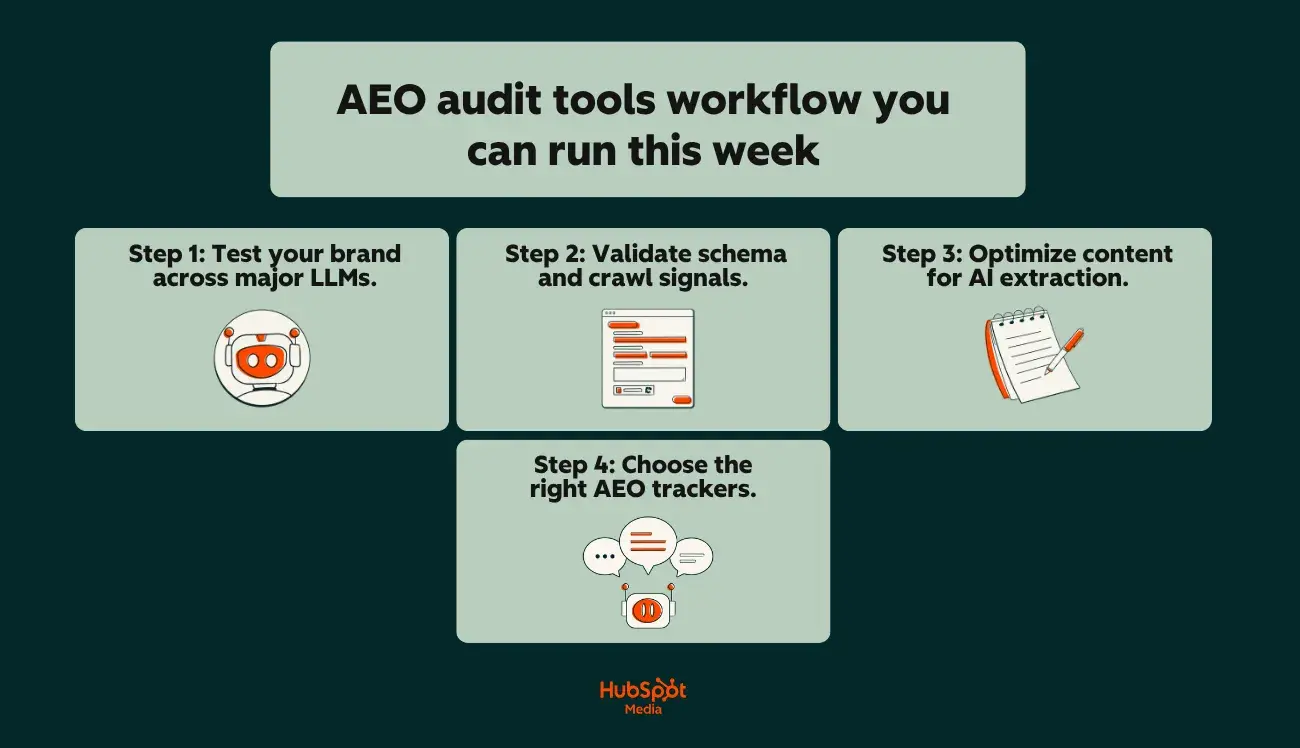
Visibility in the era of AI Search now hinges on whether content is structured with extreme clarity, rich with credible context, and easily digestible by AI models. Two articles might rank identically on the first page of traditional search results. However, the one that features clear entity definitions, robust schema markup (structured data that helps search engines understand content), and direct, question-driven answers is far more likely to be cited repeatedly by AI assistants and integrated into AI-generated summaries. The other, despite its high ranking, may rarely appear in these AI-driven responses, effectively losing its prime visibility real estate. This necessitates a strategic evolution beyond keyword density and link building. Marketers must now optimize not just for search engine spiders, but for the interpretive capabilities of sophisticated AI models.
What works: A dual strategy is now essential. Marketers must continue to maintain and strengthen traditional SEO foundations—building topical authority, ensuring technical site health, and earning quality backlinks. Concurrently, they must layer on practices specifically designed for AI visibility. This includes implementing clear entity definitions (explicitly defining key terms, people, places, and concepts), utilizing structured data (e.g., FAQ schema, how-to schema) to provide direct answers, and crafting content formats that are inherently question-driven and easily extractable by AI models. This ensures content is not just found but actively understood and utilized by the next generation of search.
Toward a Disciplined Future: Outcomes Over Promises
If the preceding few years were characterized by unbridled experimentation and a broad, often unfocused, exploration of AI’s capabilities, the next phase, leading into 2026, must be defined by discipline, strategic intent, and a relentless focus on measurable outcomes. The era of adopting AI simply because “everyone else is” or because it promises vague “transformation” must give way to a pragmatic approach: use AI where it demonstrably helps, judiciously skip it where it doesn’t add value, and anchor all efforts to tangible business results rather than aspirational promises.
The broader implications for the marketing industry are significant. Marketing teams will need to evolve, prioritizing skills in prompt engineering, critical evaluation of AI output, data analysis for impact measurement, and strategic integration. Budget allocation will shift towards platforms that offer cohesive workflows and measurable ROI, rather than fragmented point solutions. The imperative for continuous learning will only intensify, as both AI technology and search algorithms continue their rapid evolution. The future of marketing is not about replacing humans with AI, but about augmenting human intelligence and creativity with powerful AI tools, used strategically to achieve superior results.
Here’s to a 2026 marked by fewer breathless predictions and more irrefutable proof that the work is not only getting done, but is actually working—delivering measurable value and driving genuine business growth.
Ready to build AI workflows that actually help your team accomplish real work? Contently’s AI-assisted content platform combines generative AI efficiency with editorial oversight—so your team accelerates without sacrificing quality or brand safety.
Frequently Asked Questions (FAQs):
How do I know if my team is ready for AI adoption?
Assessing your current content operations is the crucial first step. If your team has clearly documented workflows, established brand guidelines, and consistent content publishing processes, you are well-positioned to pilot AI tools effectively. These foundational elements ensure that AI can integrate smoothly and amplify existing strengths. Conversely, if your basic operations still feel chaotic or lack standardization, it is advisable to strengthen those foundations before introducing the added complexity of AI tools. AI thrives on structured data and clear directives; without them, its utility is significantly diminished.
What’s the minimum investment needed to see results from AI?
For many teams, the initial investment can be surprisingly low, often leveraging existing tools. Numerous content platforms and marketing suites now include integrated AI features at no additional cost or as part of existing subscriptions. The most significant investment, however, is not monetary but temporal: expect to dedicate a minimum of two to four weeks to comprehensively training your team on effective prompting techniques, AI output evaluation, and refined editing workflows. This learning curve is critical for achieving consistent productivity gains and ensuring quality control. Budgeting for this dedicated training time is essential for realizing meaningful results.
How should I balance traditional SEO with AI Search optimization?
The most effective strategy treats traditional SEO and AI Search optimization as complementary, rather than mutually exclusive, approaches. Continue to prioritize fundamental SEO practices such: building topical authority through high-quality content, improving technical site performance, ensuring mobile responsiveness, and earning quality backlinks—these remain cornerstones of digital visibility. On top of this foundation, layer AI-specific practices: implement structured data markup (e.g., Schema.org) to provide clear context to AI models, define entities clearly within your content, and develop content formats that directly answer common user questions, making them easily extractable for AI-generated summaries. This dual approach ensures your content is optimized for both traditional ranking algorithms and the evolving mechanisms of AI-powered search.