The landscape of online search has undergone a seismic shift following Google’s I/O 2026 developer conference, where the tech giant unveiled a dramatically overhauled search experience now dominated by AI. This evolution, confirmed by Google’s own behavioral data and strategic announcements, indicates a fundamental departure from the traditional “10 blue links” model, ushering in an era where AI-driven conversational search, synthesized answers, and autonomous agents are paramount. For Business-to-Business (B2B) marketers, particularly those still focused on traditional SEO tactics aimed at driving clicks, the urgency to adapt has never been greater.
At the heart of this transformation is Google’s AI Mode, which has rapidly scaled to exceed one billion monthly users. Queries within this mode are growing at an exponential rate, more than doubling each quarter, and AI Overviews now reach an astonishing 2.5 billion monthly users. This signifies a profound change in how potential customers discover, consume, and interact with information, moving beyond simple keyword matching to complex, conversational inquiries.
The Evolution of Search: From Keywords to Conversations
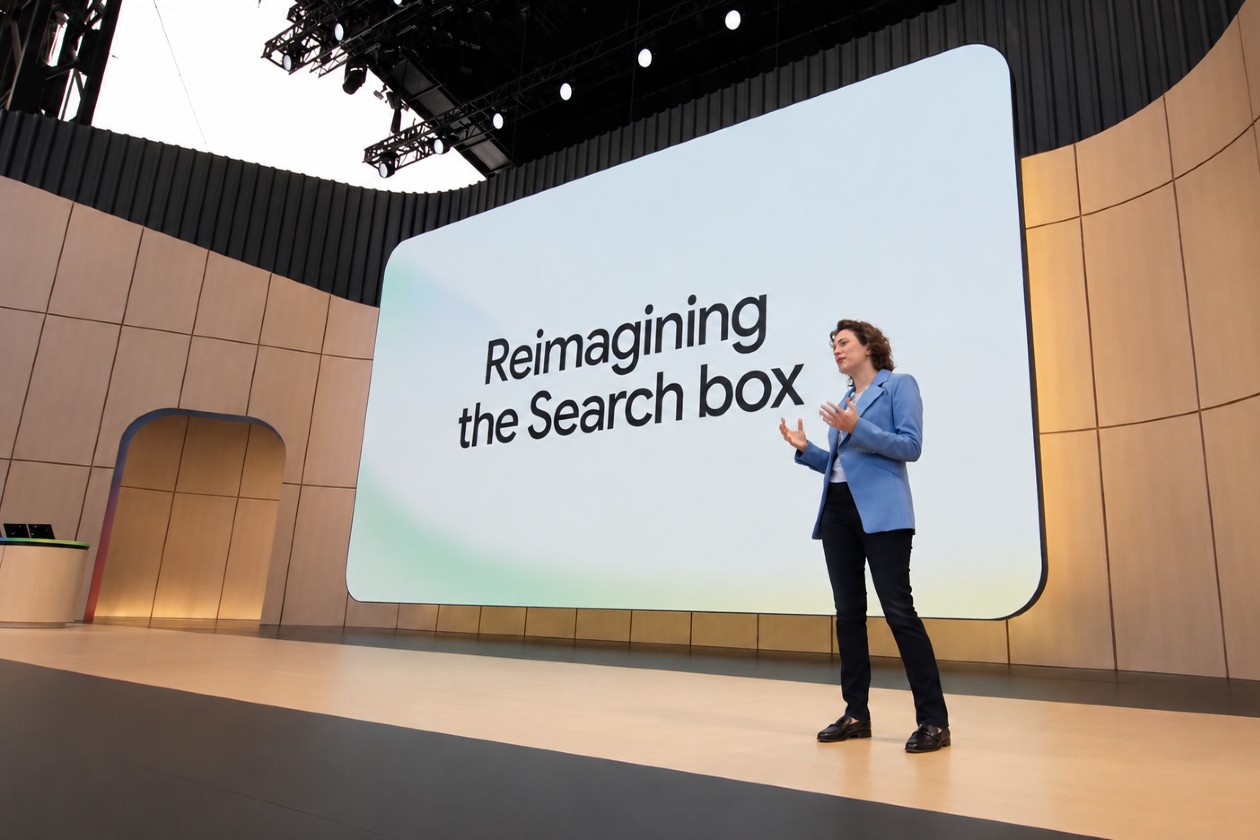
Google I/O 2026 marked a pivotal moment in the evolution of search engine technology. While AI integration into search had been a growing trend, the 2026 announcements solidified its position as the primary user interface. The traditional search bar has been reimagined to dynamically accommodate longer, more nuanced queries, accepting multimodal inputs including text, images, files, and video. This expanded functionality is designed to foster deeper research, resource identification, and ultimately, more informed decision-making for users.
The shift is further underscored by Google’s own behavioral data, which reveals that the average AI Mode search query is now triple the length of a traditional search query. This indicates a move away from users meticulously crafting keyword-based questions towards simply asking what is on their mind in natural language. This fundamental change challenges the efficacy of keyword-centric content strategies that have long been the cornerstone of SEO.
Furthermore, follow-up conversations within AI Mode are up by a significant 40% month-over-month. This behavioral trend highlights that users are no longer satisfied with a single answer; they are engaging in deeper exploration, investigating related aspects, and continuing the dialogue. B2B brands that possess only a narrow understanding of a topic risk falling out of consideration as buyers delve into subsequent inquiries.
The increasing prevalence of multimodal searches is another critical development. One in six searches are now non-textual, with image input alone showing a 40% month-over-month increase since the launch of AI Mode. This burgeoning trend necessitates a strategic integration of visual and multimedia content into B2B marketing efforts, a move that aligns with the evolving demands of AI-powered search environments.
The Emergence of AI Agents and Generative UI
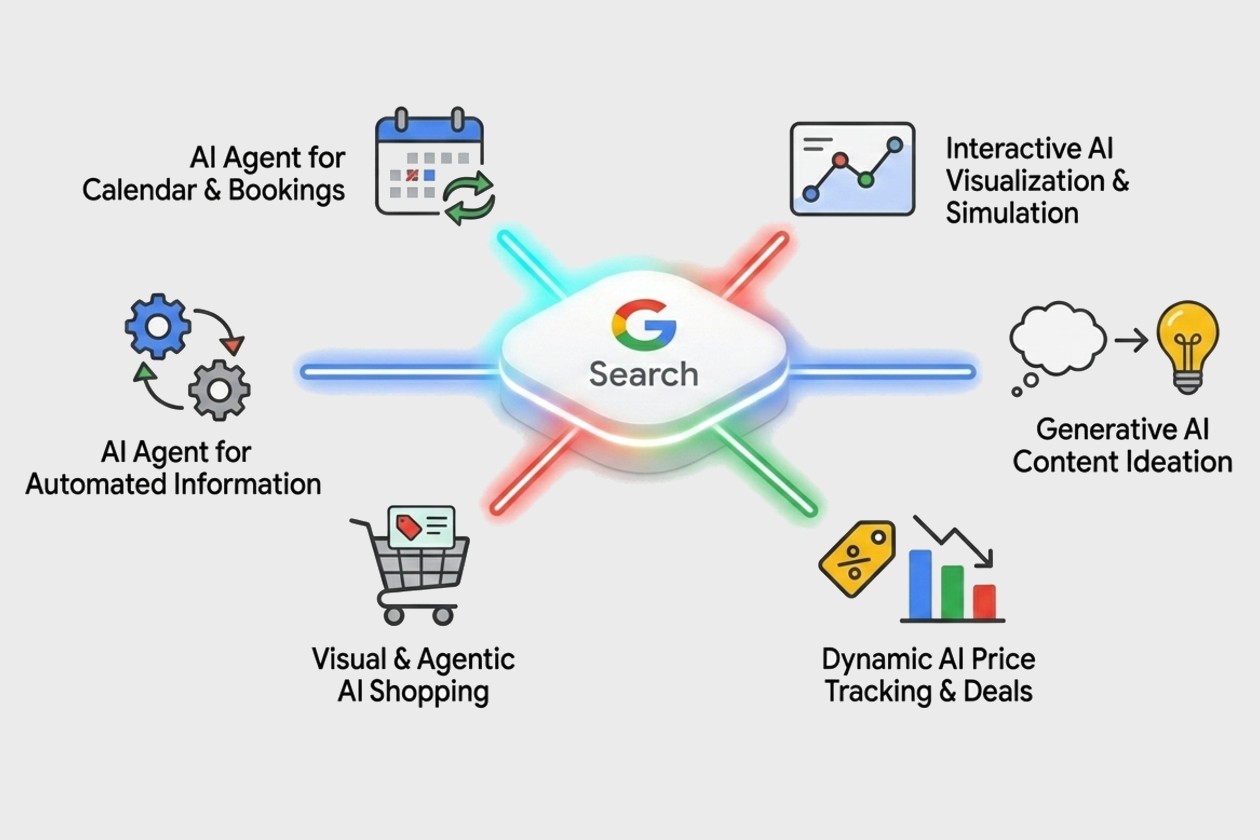
Beyond the immediate user interface enhancements, Google I/O 2026 also introduced the concept of “search agents.” These autonomous AI entities can be created and customized by users to continuously monitor the web for specific topics, synthesize changes, and deliver updates. Instead of a list of links, these agents will provide synthesized answers accompanied by recommended actions. This development introduces a new dimension to audience consideration, where content creators must now consider not only human users but also these sophisticated AI agents as potential recipients of information.
Complementing this is the introduction of “generative UI,” which empowers users to create custom interactive experiences on the fly. This could manifest as visual explainers or stateful mini-applications that users can revisit. For B2B buyers, this means the ability to generate comparison tables of vendor features directly within the search experience, streamlining the evaluation process. The “query fan-out” capability, previously introduced, has now evolved into a fully agentic system, capable of autonomous operation on behalf of buyers. Google’s AI search optimization guide explicitly confirms the continued importance of query fan-out and retrieval-augmented generation (RAG) within its core search ranking systems, emphasizing that foundational content authority remains a key influencer of what gets cited.
What Does Not Work: Debunking Market Tactics
Google’s official guidance for AI search optimization has also served to debunk several tactics that have been circulating in the market. Strategies such as creating LLM.txt files, chunking content, manufacturing mentions, and excessive focus on structured data without underlying quality have been explicitly identified as ineffective. This validation aligns with the principles of “Best Answer Marketing” (BAM), a framework championed by industry leaders, which emphasizes the creation of unique, non-commodity content backed by original research, genuine thought leadership, and robust credibility signals that AI systems can recognize and reward.
The Behavioral Data: A Window into Buyer Intent
Google’s release of behavioral data from AI Mode in the U.S. provides invaluable insights into how users are engaging with this new search paradigm. The data categorizes user behavior into five distinct modes: Explore, Decide, Learn, Do, and Create.
- Explore: Brainstorming-related queries are growing 30% faster than overall AI Mode queries. Users are leveraging AI Mode for open-ended discovery and idea generation, mirroring the early stages of problem identification for B2B buyers. Content strategies must now account for this exploratory, less defined intent, moving beyond basic informational keyword targeting.
- Decide: Searches beginning with “which” have increased 40% faster than other AI Mode queries. In B2B contexts, this translates to critical evaluation-stage queries like “which platform,” “which provider,” or “which approach.” Visibility in this mode is heavily influenced by trust signals, comparative content, and credible third-party validation.
- Learn: AI Mode is extensively used for professional development and deep-dive learning. B2B buyers often engage in similar learning processes to build competency before vendor evaluation. Brands that produce educational content, including original research and expert-led explainers, can position themselves as the authoritative sources AI Mode draws from.
- Do: Planning-related queries have seen an 80% faster growth rate compared to overall AI Mode queries. Google highlights the use of its Canvas tool for complex, multi-step planning tasks. B2B brands that offer structured, actionable content like step-by-step guides, decision frameworks, and templates can become essential resources for these planning sessions.
- Create: Image creation queries in AI Mode have more than tripled since the beginning of the year. B2B buyers are increasingly utilizing AI Mode as a productivity tool. Modular, repurposable content that AI can integrate into creation workflows presents an emerging visibility opportunity for B2B brands.
The “Best Answer Marketing” Framework: A Proactive Approach
The seismic shifts in search have prompted a re-evaluation of established marketing methodologies. The “Best Answer Marketing” (BAM) framework, developed over years of observing evolving buyer behavior and technological advancements, is positioned to address these challenges. This framework is built on the premise that content must not only be discoverable but also demonstrably authoritative and trustworthy to be selected by AI systems.
Recent research, such as TopRank Marketing’s “Answer Engine: The State of B2B Thought Leadership in 2026,” indicates that a significant portion of marketing leaders (35%) recognize AI and Generative AI (GenAI) platforms as fundamentally altering content discovery and trust. Moreover, 32% of B2B professionals report discovering thought leadership through GenAI tools, a figure that is likely to be even higher now.

Google’s own AI search optimization guide, released in May 2026, directly corroborates the effectiveness of strategies that focus on genuine expertise and unique insights. It explicitly distinguishes between “commodity content” and “non-commodity content,” with the latter—expert and experienced takes—being favored. This reinforces the BAM approach of prioritizing original research, genuine thought leadership, and robust credibility signals.
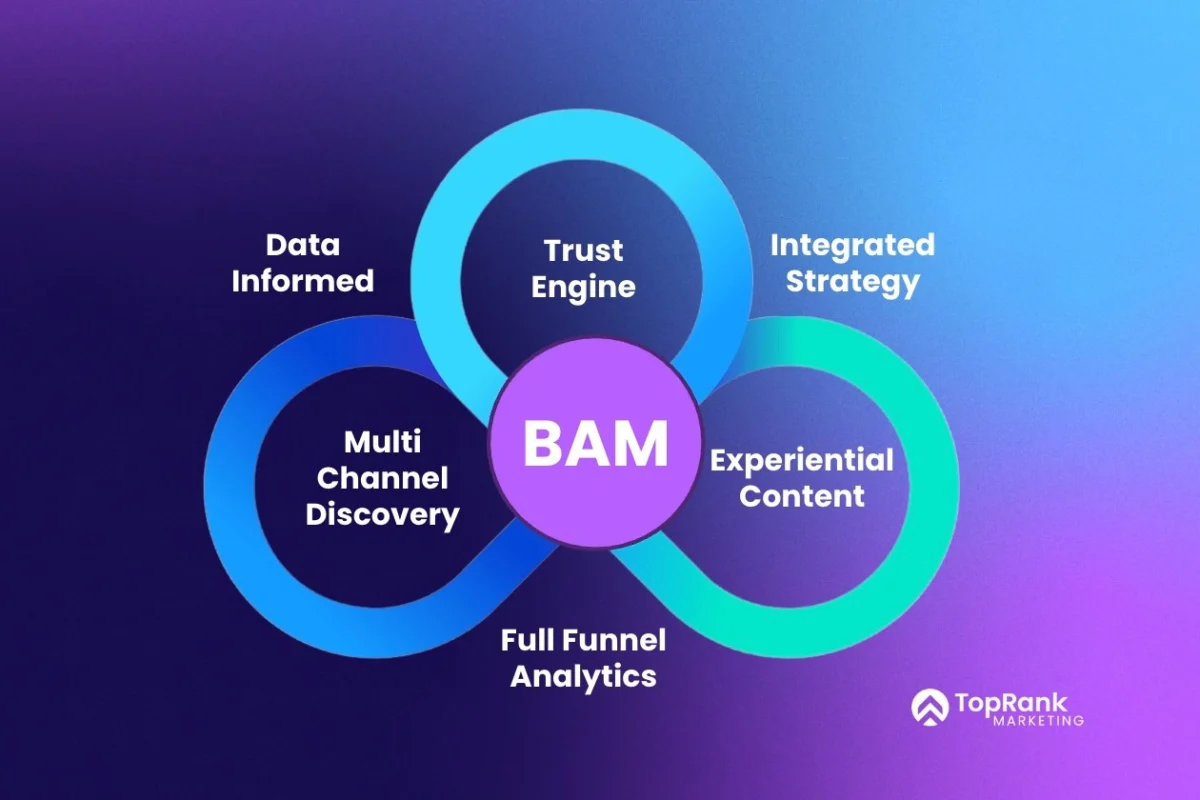
The BAM framework comprises five key pillars designed to navigate the AI-driven search landscape:
- Data Informed: Answer the Questions Buyers Are Actually Asking: The shift to longer queries necessitates a move beyond keyword research to understanding the actual questions buyers pose. The top AI Mode query intents—What, How, Explain, Identify, Summarize—provide clear direction for content briefs. Brands that have invested in researching genuine buyer questions possess a content architecture that AI Mode can effectively leverage.
- Integrated Strategy: Depth and Coherence Win Follow-Up Conversations: The 40% monthly growth in follow-up queries underscores the importance of topic cluster depth and coherent narrative orchestration. B2B buyers are no longer relying solely on Google; they are sourcing information across multiple channels, including social media platforms and GenAI tools. BAM’s integrated strategy ensures consistent narratives across various formats and channels, vital for maintaining relevance across the buyer journey.
- Trust System: Credibility Determines Who Gets Cited in the Decide Stage: With the 40% faster growth in “which” queries, the “Decide” mode becomes central to B2B AI Mode strategy. Brands with the strongest credibility signals are more likely to be selected in AI-powered answers. Google’s AI optimization guide emphasizes that inauthentic mentions offer little benefit, and its systems are designed to reward genuine, high-quality content. BAM’s Trust System focuses on building credibility through original research, expert authorship, endorsements, and third-party validation. The E-E-A-T principles (Experience, Expertise, Authoritativeness, Trustworthiness) championed by Google for years are now even more critical.
- Experiential Content: Multi-Format, Structured, and Built for AI Recommendations: The surge in multimodal search—with one in six queries being non-textual and image input increasing significantly—makes a compelling case for investing in visual and multimedia content. Furthermore, the rapid growth in planning queries highlights the demand for structured, actionable content. Google’s generative UI capabilities create opportunities for interactive experiences derived from web content, making content structured for AI parsing and repurposing essential.
- MultiChannel Visibility: Owning Discovery Across All Five Behavioral Modes: The five AI Mode behavioral modes—Explore, Decide, Learn, Do, and Create—require a multifaceted approach to content distribution. As TechCrunch has reported, AI advancements are likely to significantly reduce direct Google referrals to publishers, a trend that exacerbates the challenges of “zero-click” search experiences. Buyers now utilize an average of 10.2 channels during a purchase journey, necessitating a strategy that drives discovery across a wide range of formats and channels aligned with each buyer mode.
The Imperative for Adaptation: The Narrowing Window
Google has begun rolling out its new search interface, with generative UI slated for summer release, followed by information agents and mini-app building for subscribers. The urgency for B2B brands to adapt their content strategies is palpable. The behavioral data—triple-length queries, increasing follow-up conversations, and rapid multimodal growth—confirms that the AI-driven search experience is not a future prospect but a present reality.
Brands that proactively build content strategies around these evolving buyer behaviors are positioning themselves to establish authority and preference with both AI systems and human users. This strategic alignment is crucial for long-term success in an increasingly intelligent search ecosystem. As the industry transitions, the focus must shift from merely being found to becoming the indispensable “Best Answer” that customers actively seek, regardless of how or where they conduct their search. The time to embrace this new paradigm is now, as the window for adaptation continues to narrow.