The landscape of online search has undergone a profound transformation, moving far beyond its rudimentary origins of simple keyword matching. What began as an algorithm designed to align search queries with specific words on a web page has evolved into a sophisticated system capable of understanding nuanced search intent, contextual relevance, and, critically, the intrinsic quality of content. This evolution necessitates a fundamental reevaluation of traditional content strategies, pushing publishers and marketers away from outdated keyword-centric approaches towards a more holistic, user-focused paradigm encapsulated by Google’s E-E-A-T guidelines.
The Evolution of Search: From Keywords to Context
In its nascent stages, Google’s search engine, much like its contemporaries in the late 1990s, operated primarily on a keyword-density model. The prevailing wisdom for achieving search visibility was to meticulously research keywords and strategically “stuff” them into web documents. This led to a boom in search engine optimization (SEO) techniques that often prioritized algorithmic manipulation over genuine user value. However, Google’s ambition to provide increasingly relevant and high-quality results prompted a continuous cycle of algorithmic updates. Landmark shifts like the Hummingbird update in 2013, which enhanced semantic search capabilities, and the subsequent integration of machine learning systems like RankBrain (2015) and BERT (2019), profoundly altered how Google processed and understood queries. These advancements enabled the search engine to interpret the underlying meaning and intent behind a user’s words, rather than just matching literal strings.
The challenge for Google was immense: how to teach a machine to discern “quality” – a concept inherently subjective and dependent on the individual needs of a searcher. This quest led to the development and refinement of Google’s Quality Raters’ Guidelines, a comprehensive document that instructs human evaluators on how to assess the usefulness and reliability of web pages. These quality raters play a crucial role, providing invaluable feedback that iteratively trains Google’s algorithms, helping them to better identify and rank content that truly meets user expectations.
Understanding E-E-A-T: The Core Pillars of Quality Content
At the heart of Google’s modern content evaluation framework lies E-E-A-T, an acronym that stands for Experience, Expertise, Authoritativeness, and Trustworthiness. This concept, initially introduced as E-A-T many years ago, received a significant update in December 2022 with the addition of the first “E” for “Experience.” This expansion underscored Google’s commitment to prioritizing real-world insights and practical knowledge. The guidelines emphasize that E-E-A-T is not merely about the content itself but extends to the website as a whole and, crucially, to the content creator.
Let’s dissect each component:
-
Experience (E): This element refers to the first-hand experience of the content creator with the topic at hand. It asks whether the creator has actually used a product, visited a location, or performed the task they are writing about. For instance, a review of a hiking trail holds more weight if written by someone who has personally hiked it, sharing genuine insights and practical tips. This focus on lived experience provides a layer of authenticity that generic, research-based content often lacks.
-
Expertise (E): Expertise denotes demonstrable knowledge, skill, or understanding in a particular field. This can manifest through formal education, professional qualifications, or extensive practical experience. A medical article, for example, is expected to be written by a qualified doctor or healthcare professional. For less formal topics, a hobbyist with years of dedicated engagement can also be considered an expert. The key is that the creator possesses a deep, verifiable understanding of the subject matter.
-
Authoritativeness (A): Authoritativeness speaks to the reputation and recognition of the website and content creator within their niche or industry. It’s about being known as a go-to source for reliable information. This is often reflected in external signals such as mentions from reputable sources, industry awards, peer recognition, and a strong, positive online presence. A website or individual considered authoritative is frequently cited, referenced, and trusted by others in their field.
-
Trustworthiness (T): Trustworthiness is perhaps the foundational pillar, encompassing accuracy, honesty, and safety. A trustworthy website provides accurate information, presents it transparently, and operates securely. This includes having clear contact information, a transparent privacy policy, accurate factual reporting, and an absence of misleading or harmful content. For e-commerce sites, secure transactions and reliable customer service contribute significantly to trustworthiness. Ultimately, users must feel confident that the information they are consuming is dependable and safe.
The Criticality of E-E-A-T for Your-Money-Your-Life (YMYL) Topics
While E-E-A-T is a universal guiding principle for content quality, its importance is amplified exponentially for what Google terms “Your-Money-Your-Life” (YMYL) topics. These are subjects where inaccurate, misleading, or low-quality information could directly impact a user’s health, financial stability, safety, or well-being. For YMYL content, Google applies significantly stricter E-E-A-T standards, prioritizing information from highly credible and verifiable sources.
Examples of YMYL topics include:
- Medical and Health Information: Content related to diseases, treatments, medications, or health advice must be authored by recognized medical professionals or reputable health organizations.
- Financial Advice: Articles offering guidance on investments, taxes, loans, or financial planning should come from certified financial advisors, accountants, or established financial institutions.
- Legal Information: Legal counsel or explanations of laws and regulations require the expertise of qualified lawyers or official governmental bodies.
- News Reporting: News articles, particularly those on significant current events, politics, or societal issues, demand factual accuracy and authoritative reporting from experienced, unbiased journalists and news outlets.
- Public Policy and Civic Information: Content concerning voting, legislation, government services, or public safety must derive from official government sources or highly reputable, non-partisan organizations.
- Topics Related to Children: Any advice or information pertaining to children, especially regarding their safety, health, or development, requires the highest degree of reliability and expert backing.
- Product Reviews and Purchasing Decisions: While perhaps less critical than medical advice, reviews that influence significant purchasing decisions still require demonstrated experience with the product, transparent methodology, and unbiased assessment.
It is crucial to note that E-E-A-T signals are not uniform across all content. A personal blog detailing travel experiences might demonstrate high Experience, even without extensive Authoritativeness in the travel industry. Conversely, a scientific paper demands paramount Expertise and Authoritativeness. Google’s raters are trained to assess E-E-A-T relative to the topic and purpose of the page. Interestingly, a lack of widespread reputation does not automatically equate to low E-E-A-T; niche websites or individuals can still produce high-quality content, particularly if they showcase strong first-hand experience.
Strategies for Cultivating a Robust E-E-A-T Profile
The shift towards E-E-A-T demands a strategic overhaul of content creation and promotion. Publishers must transition from “gaming” algorithms to genuinely serving their audience with valuable, credible information. Here are six key strategies:
1. Mastering Content Quality Through Deep Analysis
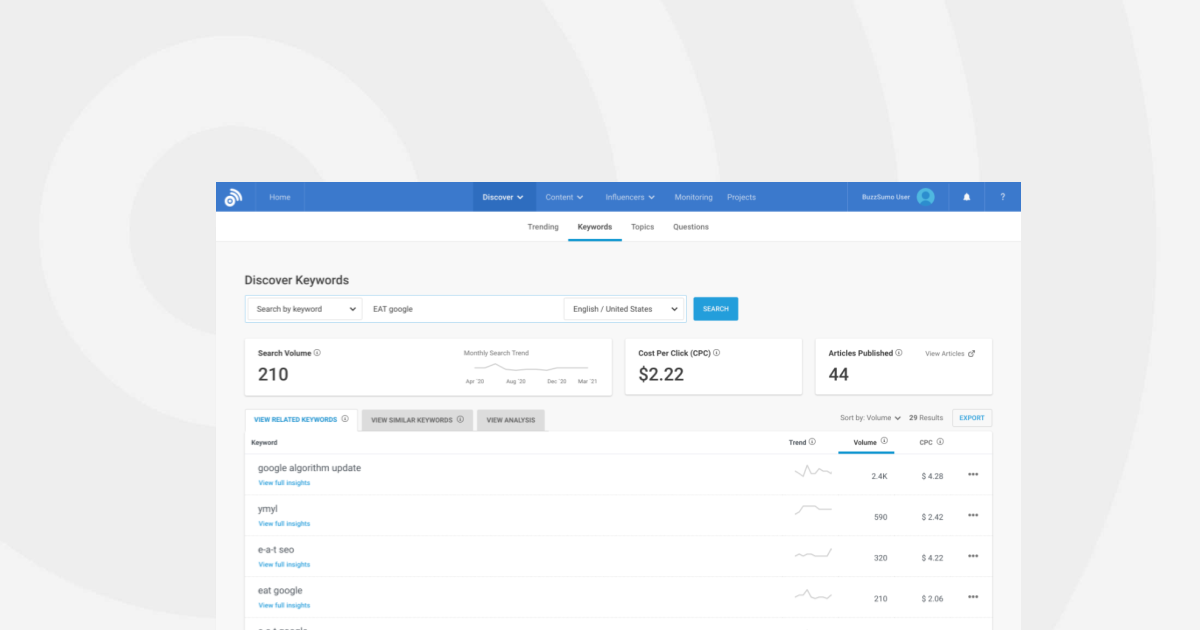
The first step in improving E-E-A-T is to understand what constitutes “quality” in your specific niche. This goes beyond simple keyword research. Content creators must delve into user intent, asking what questions their audience truly seeks to answer and what problems they need solved. Tools like content analyzers can be invaluable here. By analyzing top-performing content in a given topic, creators can identify patterns in engagement (shares, comments), backlink profiles (which articles are referenced most often), and “evergreen” visibility (content that sustains engagement over time). For instance, examining successful headlines in “Social Media Marketing” or identifying articles with consistent long-term engagement can provide actionable insights into content structures, tones, and topics that resonate with audiences and earn authoritative links. This data-driven approach allows for the creation of content that is not only optimized for search engines but, more importantly, genuinely useful and compelling to human readers.
2. Building and Projecting Authoritative Presence
Google actively encourages its quality raters to investigate the authors behind content to gauge their topical authority. Therefore, showcasing credentials, affiliations, and experience is paramount. This involves:
- Comprehensive Author Bios: Ensure every content creator has a detailed author bio that highlights their relevant experience, qualifications, awards, and any professional affiliations. Link these bios to personal websites, professional social media profiles (e.g., LinkedIn), and other reputable contributions.
- Schema Markup: Implement Author and Organization Schema Markup on your website. This structured data helps Google understand who is behind the content and what their credentials are, making it easier for the algorithm to connect your brand and individual authors to their respective expertise across the web.
- Strategic Personal Branding: Actively build your personal brand or the brand of your key contributors. This can involve guest posting on reputable industry sites, participating in podcasts and webinars, speaking at conferences, and engaging in online communities. Tools can help identify publications and platforms that feature interviews or podcasts relevant to your expertise, offering opportunities for exposure and recognition. Monitoring other established authorities in your niche can also provide valuable learning and networking opportunities.
- Consolidated Online Presence: Utilize platforms that allow you to consolidate all your online channels and columns into a single branded page, providing Google and users with a clear, comprehensive view of your professional activities.
3. Adopting a Topic-Centric Content Architecture
As Google’s understanding has shifted from singular keywords to broader topics and entities, content strategies must follow suit. A topic-centric approach, often implemented through “topic clusters” and “pillar content,” is highly effective. This involves identifying overarching “pillar” topics that are central to your niche and then creating numerous supporting “cluster” articles that delve into specific sub-topics. These cluster articles link back to the main pillar page, creating a robust internal linking structure that signals comprehensive topical authority to Google. This not only improves search engine visibility but also enhances user experience by providing a clear, navigable path through related content. Tools designed for topic exploration can reveal thousands of popular associated topics around a given keyword, helping content strategists prioritize what their audience truly wants to read and structure their content accordingly. For example, a “Pillar content” piece on “Content Marketing” could be supported by “Cluster content” articles on “Blogging,” “SEO Copywriting,” or “Video Marketing Strategy.”
4. Delivering Comprehensive and Satisfying Content
Google emphasizes providing a “satisfying amount” of content, but this is highly contextual. The optimal length and depth depend entirely on the search intent and the nature of the topic. A quick definition might require a concise paragraph, while a complex technical guide demands thousands of words. Relying on data can help determine this balance. Analyzing the average engagement of content by word count for specific topics can reveal the sweet spot for your niche. For instance, an analysis of popular “Social Media Marketing” articles might show that content between 3,000 and 10,000 words typically garners the most engagement, suggesting that thorough guides are highly valued in that space. The goal is not arbitrary word count, but to ensure the content fully addresses the user’s query and provides complete, authoritative information without unnecessary padding.
5. Forging Strategic Relationships and Brand Associations
In the age of E-E-A-T, relationships are paramount, extending beyond mere link building. Google’s network of over 10,000 quality raters constantly assesses content, feeding crucial data back into the self-learning algorithm. The associations your brand and content creators have with other credible entities significantly influence your E-E-A-T score. Building genuine relationships with influential journalists, industry experts, and authoritative publications is critical. Utilizing media databases to identify journalists writing engaging content in your niche allows for targeted outreach. The aim is to foster authentic connections, offering exclusive insights, compelling data, and collaboration opportunities. Even without direct links, Google’s semantic understanding can discern when your brand or content creators are regularly referenced or associated with other influential “entities,” signaling a higher level of authority and trust within the ecosystem. This strategic networking elevates your perceived E-E-A-T and can lead to valuable mentions and wider content dissemination.
6. Upholding Rigorous Sourcing and Factual Accuracy
Trustworthiness is fundamentally built on accuracy and transparency. Citing credible sources is non-negotiable, particularly for YMYL topics. This demonstrates thorough research, validates claims, and assures users (and Google) of the content’s reliability. Content should include a variety of sources, prioritizing official data, academic research, industry reports, and reputable news organizations. For instance, when covering vaccine-related news, utilizing Google’s advanced search operators (e.g., SITE:GOV) to find official government sources is an excellent practice. Beyond external links, an internal commitment to fact-checking and maintaining a robust editorial process further bolsters trustworthiness. While linking out might seem counterintuitive to keeping users on your site, it signals a dedication to providing comprehensive, unbiased information, which ultimately enhances E-E-A-T.
The Enduring Impact of E-E-A-T on Search Visibility
E-E-A-T is not a passing trend but a cornerstone of Google’s long-term strategy to deliver the most helpful and reliable search results. It represents a continuous feedback loop between human judgment and machine learning, constantly refining how “quality” is perceived and prioritized. For content creators and SEOs, this means abandoning short-sighted tactics in favor of a sustainable, user-centric approach. Ignoring E-E-A-T principles risks diminished search visibility, reduced organic traffic, and a struggle to compete in an increasingly sophisticated search landscape.
As artificial intelligence and machine learning continue to advance, Google’s ability to understand content with human-like discernment will only grow. The imperative is clear: create content for your customers, not for the search engines of a bygone era. By embedding Experience, Expertise, Authoritativeness, and Trustworthiness into every facet of content strategy, publishers can not only achieve higher rankings but, more importantly, build lasting trust and credibility with their audience, securing their place in the future of online information.


 Nana
Nana
 Laily UPN