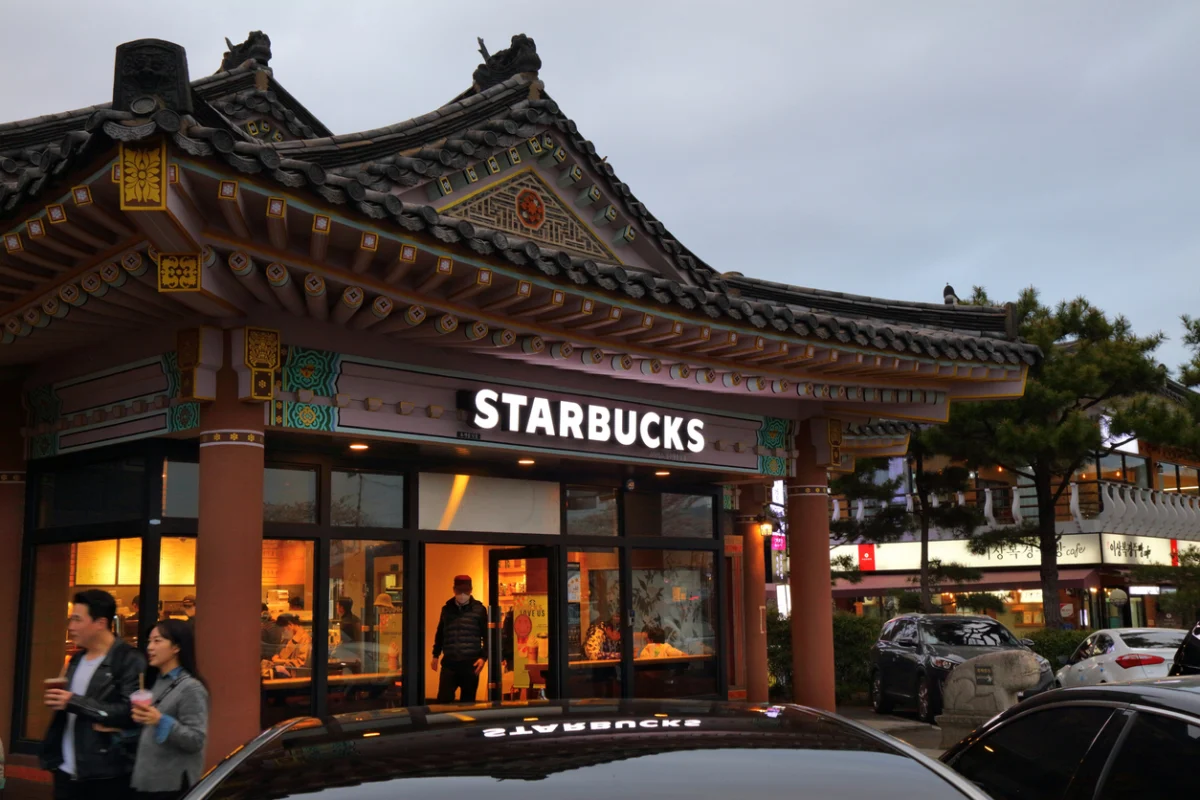
The retail and corporate landscape in South Korea is currently grappling with the fallout of a significant marketing oversight by Starbucks South Korea, an event that has triggered a nationwide conversation regarding historical sensitivity, the risks of unvetted artificial intelligence, and the efficacy of corporate atonement. Earlier this year, the coffee giant’s regional division faced intense public condemnation after launching a promotional line of tumblers branded as “Tank Day.” The launch, which occurred on May 18, coincided with the anniversary of the Gwangju Uprising, a pivotal and tragic event in South Korean history. The Gwangju Uprising of 1980 was a pro-democracy movement that was met with a brutal military crackdown, resulting in the deaths of hundreds of civilians, many of whom were killed by military tanks deployed against the populace.
The “Tank Day” branding, intended as a marketing play on high-capacity beverage containers, was immediately perceived as a callous reference to the military hardware used during the 1980 massacre. The backlash was swift and severe, leading to the dismissal of the CEO of Starbucks South Korea and a formal apology to the victims’ families and the public. In a subsequent move to repair its damaged reputation, Starbucks South Korea took the unprecedented step of closing all of its domestic locations early for a day of mandatory employee training focused on “historical awareness and cultural sensitivity.” However, this move has sparked a secondary debate among public relations experts and industry analysts regarding whether the remedy actually addresses the root cause of the failure.
The Gwangju Uprising: A Deeply Sensitive Historical Context
To understand the magnitude of the Starbucks South Korea error, one must look at the historical weight of May 18. In 1980, citizens of Gwangju rose up against the coup d’état of General Chun Doo-hwan. The military response involved paratroopers and, most infamously, tanks, which were used to suppress the demonstrations. Official records suggest at least 600 people were killed, though activists and historians believe the actual toll could be significantly higher. For South Koreans, May 18 is a day of national mourning and a symbol of the struggle for democracy.
The decision to use the word “Tank” in a marketing campaign on this specific date was viewed not merely as a mistake, but as a profound insult to the democratic foundations of the country. Starbucks South Korea is owned by the Shinsegae Group, a domestic retail titan that purchased the remaining stake in the joint venture from the Seattle-based Starbucks Corporation in 2021. While the global Starbucks brand remains associated with the stores, the local marketing and operational decisions rest with Shinsegae.
The Role of AI in the Marketing Failure
A critical revelation in the aftermath of the crisis was the role of technology in the decision-making process. The company admitted that the “Tank Day” concept was partially generated through the use of artificial intelligence during a brainstorming session. The marketing team, reportedly composed of younger professionals who may have lacked deep contextual knowledge of the May 18 anniversary, failed to properly vet the AI-generated suggestion against the national calendar.
This incident highlights a growing concern in the corporate world: the “black box” nature of AI. While AI can generate creative slogans and product names with high efficiency, it lacks the human capacity for nuance, historical empathy, and cultural context. The failure to have a senior human reviewer cross-reference the campaign with local sensitivities proved disastrous.
The subsequent PR strategy—closing stores for barista training—has been met with skepticism. Analysts point out that the error originated within the corporate marketing department, not at the storefront level. Unlike the 2018 incident in the United States, where Starbucks closed 8,000 stores for racial bias training following the arrest of two Black men at a Philadelphia location, the South Korean issue was not a result of frontline employee behavior. By forcing baristas to undergo training for a mistake made by executive-level marketing teams, the company risks appearing performative rather than genuinely reformative.
Protecting the Human Element: Recipe Makers Fight “AI Slop”
The Starbucks incident is part of a broader trend where companies are struggling to balance the efficiency of AI with the necessity of human oversight. In the United States, major media brands are currently engaged in a battle against what is being termed “AI slop”—low-quality, AI-generated content that is flooding the internet.
One of the most affected sectors is the culinary industry. Dotdash Meredith, the parent company of “Southern Living” and “People Inc.,” has observed a surge in AI-generated recipes across search engines. These recipes, while often sounding plausible, frequently lack the fundamental chemistry required for successful cooking and, more importantly, lack the human connection to food.
Sid Evans, Editor-in-Chief of Southern Living, recently emphasized the importance of the human sensory experience in content creation. Evans argued that AI cannot replicate the smell of a kitchen, the specific taste of a regional ingredient, or the nostalgia associated with a family recipe. In response to the decline of traditional search traffic caused by AI-generated summaries, these media giants are pivoting toward social media and video platforms where human personality and authentic testing can be verified. This strategy is built on the belief that consumers will eventually grow weary of automated content and return to trusted human experts.
Microsoft’s Strategy: Seeking “Social Permission” for AI
As brands struggle with the implementation of AI, Microsoft CEO Satya Nadella is attempting to steer the conversation toward a more “pro-human” future. In recent statements, Nadella acknowledged that the AI industry faces a significant public relations hurdle. He argued that technology companies must “earn the social permission” to deploy AI by demonstrating that it is a tool for empowerment rather than a replacement for human labor.
Nadella’s rhetoric marks a departure from some of Microsoft’s competitors, who have focused on the potential for AI to automate vast swaths of the economy. By positioning Microsoft as a partner in “reorganizing jobs” rather than eliminating them, Nadella is attempting to mitigate the fear and resentment that often accompany technological shifts. This messaging is crucial for a company that has invested billions into OpenAI and integrated AI across its entire product suite. The goal is to present AI as a sophisticated “co-pilot” for human creativity, echoing the sentiments of those fighting “AI slop” in the media world.
Brand Resurrection: Bed Bath & Beyond and the Power of Nostalgia
While some companies are navigating the pitfalls of new technology, others are looking to the past to secure their future. Bed Bath & Beyond, a brand that became synonymous with the retail “apocalypse” following its bankruptcy, is attempting a comeback under the leadership of Beyond Inc. (the entity formed after Overstock.com acquired the brand’s assets).
A cornerstone of this resurrection is the return of the iconic “Big Blue” 20% off coupon. For decades, these coupons were a staple of American households, known for their lack of an actual expiration date in the eyes of many store managers. In a move designed to generate buzz and reward brand loyalty, the company is now holding a contest to find the oldest physical coupon in existence, offering a $100,000 home renovation as a prize.
This strategy serves a dual purpose. First, it acknowledges the brand’s heritage and the unique relationship it had with its customers. Second, it signals that the “new” Bed Bath & Beyond will honor the practices that made the original brand a household name. However, business analysts caution that the heavy reliance on deep discounting—the very practice that contributed to the original company’s thin margins and eventual downfall—must be managed carefully. The challenge for the brand is to leverage nostalgia to drive traffic without undermining the long-term financial sustainability of the business.
Implications for Global Corporate Strategy
The disparate stories of Starbucks South Korea, Dotdash Meredith, Microsoft, and Bed Bath & Beyond converge on a single theme: the critical importance of brand authenticity and cultural intelligence. Whether it is a failure to respect historical trauma in Gwangju or the fight to maintain human integrity in recipe writing, the lesson for modern corporations is clear.
- Context is King: Technology, particularly AI, cannot replace the need for local cultural expertise. Marketing campaigns must be vetted by individuals who understand the historical and social landscape of the target audience.
- Accountability Must Be Accurate: PR gestures, such as store closures or training programs, must align with the source of the error. Misplaced accountability can lead to internal resentment and public cynicism.
- The Value of the Human Touch: As the digital world becomes increasingly automated, “human-made” and “human-vetted” are becoming premium brand attributes.
- Nostalgia as a Tool, Not a Crutch: Reclaiming past successes can be an effective way to rebuild a brand, but it must be paired with a forward-looking business model that accounts for modern economic realities.
As Starbucks South Korea reopens its doors with a newly trained staff, the corporate world will be watching to see if these “acts of penance” are enough to regain the trust of a nation. Meanwhile, the broader struggle to define the role of humans in an AI-driven economy continues to reshape industries from software to soul food.


 Laily UPN