In an increasingly digitized world, where the internet serves as the primary gateway for information and commerce, the ability to be discovered online is paramount for businesses and individuals alike. Search Engine Optimization (SEO) stands as a critical discipline, transforming mere website existence into a powerful engine for brand building, audience engagement, and sustained growth. This article delves into the foundational principles, intricate mechanics, historical evolution, and future trajectory of SEO, providing a comprehensive understanding of its indispensable role in contemporary digital marketing.
The Foundation of Digital Visibility: What is SEO?
At its core, SEO, or Search Engine Optimization, is a multifaceted practice dedicated to enhancing a website’s visibility within search engine results pages (SERPs). This encompasses a strategic blend of art and science, aimed at making web pages as discoverable, understandable, and trustworthy as possible for search platforms. While historically focused on traditional search engines like Google and Bing, the scope of SEO has expanded significantly to include optimization for AI-powered search experiences, chatbots, and diverse discovery platforms. Alex Moss, a Principal SEO expert at Yoast, aptly defines it as “both the art and science of improving a website, and pages within, to be as visible as possible for when people search for a relevant topic within any search platform. SEO covers many areas from technical aspects including optimizing a site’s performance and structure, to enhancing brand authority by providing great content and matching it with that person’s search intent.” This definition underscores the holistic nature of SEO, combining technical prowess, content strategy, and brand reputation to achieve superior online presence and fulfill specific business objectives.
How Search Engines Operate: Crawling, Indexing, and Ranking

To understand SEO, one must first grasp the fundamental processes by which search engines function. This typically involves three distinct stages: crawling, indexing, and ranking.
- Crawling: The journey begins with automated programs known as “crawlers” or “spiders.” These bots tirelessly scour the internet, following links from one page to another, discovering new web pages, and identifying updates to existing ones. They collect vast amounts of data from billions of documents, images, and videos across the web.
- Indexing: The information gathered by crawlers is then processed and stored in a colossal database known as the “index.” This index is essentially a massive digital library, categorizing and organizing the collected web pages based on their content, keywords, and other attributes. For a page to appear in search results, it must first be successfully indexed. The index is continuously updated to reflect the dynamic nature of the internet, ensuring fresh and relevant content is always available.
- Ranking: When a user initiates a search query, the search engine rapidly consults its index. Utilizing complex algorithms, it determines which pages are most relevant and authoritative for that specific query. These algorithms assess hundreds of ranking factors, ranging from keyword relevance and content quality to website speed and mobile-friendliness, to present a ranked list of results to the user. For instance, a search for “sustainable phone case” would trigger Google’s algorithms to identify and rank pages from its index that best match the searcher’s intent, showcasing products, reviews, or informational articles deemed most appropriate. This intricate process ensures that users receive the most pertinent and high-quality information available.
Organic vs. Paid Search: A Strategic Distinction
Within the search engine landscape, a crucial distinction exists between organic and paid search results. SEO exclusively targets organic traffic, which refers to visitors who arrive at a website through unpaid search results. These are the natural listings that appear based on their relevance and authority as determined by search engine algorithms. In contrast, paid search results are advertisements that appear prominently, often at the top or bottom of the SERP, clearly labeled as “Ad” or “Sponsored.” These are typically acquired through pay-per-click (PPC) advertising models, where advertisers bid on keywords and pay a fee each time a user clicks on their ad. While both SEO and PPC aim to increase visibility and drive traffic, they operate on different principles and offer distinct advantages. PPC provides immediate visibility and control over ad placement, while SEO builds sustainable, long-term visibility and credibility without direct per-click costs. Many businesses find that a synergistic approach, integrating both SEO and PPC, yields the most comprehensive and effective digital marketing strategy.
The Evolving Landscape: SEO in the Age of AI
The advent of advanced artificial intelligence has significantly reshaped the digital landscape, prompting discussions around new terminologies like Generative Engine Optimization (GEO). While GEO focuses on optimizing for AI-generated responses and tools, industry experts, including those at Yoast, emphasize that this is not a replacement for SEO. Instead, it represents an expansion of SEO’s existing framework. The fundamental principles of creating high-quality, authoritative, and relevant content remain unchanged; the channels through which this content is discovered are merely diversifying. SEO now encompasses optimizing for traditional SERPs, AI overviews, conversational AI, and various social and video platforms, all while adhering to the core tenets of discoverability and trustworthiness. The acronym SEO, therefore, continues to suffice, reflecting a dynamic field that continually adapts to new technological paradigms.

Why SEO is Indispensable for Modern Businesses
For any entity seeking to thrive in the digital sphere, SEO is not merely an option but a strategic imperative. Its importance is underscored by several critical factors:
- Immense Search Volume: The sheer scale of daily online searches is staggering. Google, the dominant search engine, processes an estimated 8.5 billion searches per day in 2024, a figure that has consistently grown since its inception in 1998. This colossal volume represents an unparalleled opportunity for businesses to connect with potential customers actively seeking their products, services, or information. Failing to optimize means relinquishing access to this vast, intent-driven audience.
- Intent-Driven Traffic: Unlike outbound marketing channels such as social media advertising or email blasts, where content often interrupts a user’s experience, search is inherently intent-driven. Users actively type queries because they have a specific need, question, or desire. This means that traffic generated through organic search is inherently of higher quality, as visitors are already predisposed to engage with relevant solutions. This inbound marketing approach results in significantly higher conversion rates, making SEO an invaluable tool for attracting high-quality leads.
- Competitive Advantage: In a rapidly expanding digital marketplace, simply having a website is no longer sufficient. With millions of new websites launching annually, standing out requires a proactive strategy. Effective SEO provides a crucial competitive edge by securing higher online visibility, establishing brand authority, increasing brand recognition, and fostering more frequent, meaningful interactions with the target audience. These cumulative benefits lead to enhanced brand loyalty, improved customer retention, and ultimately, greater revenue generation.
- Beyond Clicks: Brand Awareness and Credibility: Modern SEO transcends the singular goal of generating clicks. In the age of AI, content can be cited in generative AI answers, referenced in AI overviews, or discovered across diverse platforms without an immediate click-through to the website. Even in these “zero-click” scenarios, appearing as a trusted source significantly boosts brand awareness, establishes credibility, and cultivates future demand for the business. This shift underscores SEO’s role in building a robust digital reputation that extends far beyond direct website traffic.
Diverse Approaches to Optimization: Types of SEO
While the fundamental principles of SEO remain constant, various specialized branches address distinct optimization needs:
- Technical SEO: Focuses on optimizing the technical aspects of a website to improve user experience and help search engines crawl and index pages more efficiently.
- On-Page SEO: Involves optimizing individual web pages for specific keywords to improve their search engine rankings and attract more relevant traffic.
- Off-Page SEO: Encompasses activities performed outside of a website to improve its search engine ranking, primarily through building authority and trustworthiness.
- Local SEO: Targets local search results, crucial for businesses with physical locations, focusing on appearing in “near me” searches and local map packs.
- E-commerce SEO: Specialized optimization for online stores, focusing on product pages, category pages, and overall store visibility for transactional queries.
- Mobile SEO: Ensures a website is fully optimized for mobile devices, given the prevalence of smartphone usage for internet access.
- Video SEO: Optimizing video content to rank higher in video search results (e.g., YouTube) and general SERPs.
- Voice Search SEO: Adapting content to conversational, natural language queries common with voice assistants.
The Three Pillars of SEO: A Framework for Success

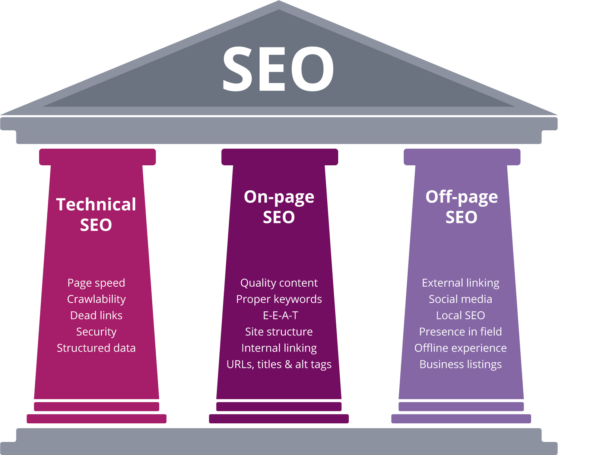
Effective SEO strategy is typically built upon three interconnected pillars: Technical SEO, On-Page SEO, and Off-Page SEO.
-
Technical SEO: This foundational pillar ensures that a website is structurally sound and easily accessible to search engine crawlers and users. Key aspects include:
- Crawlability and Indexability: Ensuring search engines can access and add pages to their index.
- Site Speed: Optimizing load times for a better user experience, a critical ranking factor. Studies show that a 1-second delay in page response can result in a 7% reduction in conversions.
- Mobile-Friendliness: Guaranteeing the website is responsive and functional across all devices.
- Website Architecture: Designing a logical site structure for easy navigation and content discovery.
- Security (HTTPS): Implementing SSL certificates to protect user data and enhance trust. Google prioritizes secure sites.
- Structured Data (Schema Markup): Adding specific code to help search engines understand content context, potentially leading to rich snippets in SERPs.
- XML Sitemaps: Providing search engines with a map of all important pages on the site.
- Canonicalization: Preventing duplicate content issues by specifying preferred URLs.
Search engines prioritize websites that offer a seamless and secure user experience. A fast, secure, and easily navigable site not only keeps users happy but also signals to search engines that the site is high-quality, thereby improving its ranking potential.
-
On-Page SEO: This pillar focuses on optimizing the content and HTML source code of individual web pages to improve their relevance for specific search queries. Key components include:
- Keyword Research: Identifying the terms and phrases users are searching for.
- Content Quality and Relevance: Creating valuable, comprehensive, and unique content that directly addresses user intent.
- Title Tags and Meta Descriptions: Crafting compelling and keyword-rich snippets that appear in SERPs to encourage clicks.
- Header Tags (H1, H2, H3, etc.): Structuring content logically to improve readability and signal topic hierarchy.
- URL Structure: Creating clean, descriptive, and keyword-rich URLs.
- Image Optimization: Using descriptive alt text and compressing images for faster load times.
- Internal Linking: Connecting related pages within the website to improve navigation and distribute link equity.
- User Experience (UX) on Page: Ensuring content is easy to consume, visually appealing, and provides a positive interaction.
On-page SEO is fundamentally about aligning content with user intent and making it accessible and understandable for both human visitors and search engine algorithms.
-
Off-Page SEO: This pillar encompasses all optimization efforts conducted outside of the website itself, primarily aimed at building authority, trust, and brand reputation. Critical elements include:
- Link Building: Acquiring high-quality backlinks from other reputable websites. These links act as “votes of confidence,” signaling to search engines that the linked-to content is valuable and trustworthy. A strong backlink profile is a significant ranking factor.
- Social Media Marketing: Engaging with audiences on social platforms, while not a direct ranking factor, can increase content visibility, drive traffic, and foster brand mentions, indirectly benefiting SEO.
- Local SEO (Off-Site): Managing and optimizing business listings on platforms like Google Business Profile, Yelp, and other directories to ensure accuracy and consistency of Name, Address, Phone (NAP) information.
- Brand Mentions and PR: Securing mentions of the brand across various online channels, contributing to overall brand authority and recognition.
- Online Reviews: Encouraging positive customer reviews on relevant platforms, which builds trust and can influence local search rankings.
Off-page SEO is crucial for demonstrating external validation and authority, proving to search engines that a website is a credible and respected source within its niche.
Decoding Search Engine Algorithms: Key Ranking Factors
While the exact algorithms used by search engines remain proprietary and are constantly updated, extensive research and observation have identified several key ranking factors that consistently influence search performance:
- Content Quality and Relevance: High-quality, original, comprehensive, and relevant content that directly addresses user intent is paramount.
- Backlinks (Link Authority): The quantity and quality of external websites linking to a page serve as a powerful indicator of its authority and trustworthiness.
- User Experience (UX): Factors like page speed, mobile-friendliness, site architecture, and overall ease of navigation significantly impact how users interact with a site, which in turn influences rankings.
- Keywords and Search Intent: Properly researched and strategically placed keywords, aligned with the underlying intent of a search query, are fundamental.
- Technical SEO Health: A technically sound website that is easily crawlable, indexable, and secure forms the bedrock of good SEO.
- Domain Authority and Trust: The overall reputation and credibility of a website, built over time through consistent high-quality content and a strong backlink profile.
- Mobile-First Indexing: Google primarily uses the mobile version of content for indexing and ranking, making mobile optimization non-negotiable.
- Engagement Metrics: While not direct ranking factors, low bounce rates, higher time on page, and repeat visits can indirectly signal positive user experience to search engines.
Tools like Yoast’s SEO Checker can help identify and provide recommendations for improving these crucial aspects, offering a quick diagnostic for website performance.
A Journey Through Time: The Evolution of Search Engine Optimization
The landscape of SEO has undergone a dramatic transformation since its nascent stages in the mid-1990s.
- The Early Days (1990s – Early 2000s): SEO was rudimentary. Search engine algorithms were simplistic, heavily relying on factors like keyword density and meta tags. Webmasters would “stuff” keywords into content and hidden tags, and employ tactics like link farms to manipulate rankings. This era was characterized by “black hat” techniques that prioritized machines over human users.
- The Rise of Google and Algorithm Refinements (Early 2000s – 2010s): With the advent of Google’s PageRank algorithm, the emphasis began to shift towards link quality and website authority. Google continuously refined its algorithms, moving away from easily manipulated factors. Key updates during this period include:
- Florida (2003): Penalized aggressive keyword stuffing.
- Panda (2011): Targeted low-quality content, duplicate content, and thin content.
- Penguin (2012): Dealt with manipulative link schemes and unnatural backlinks.
- Hummingbird (2013): Focused on understanding the semantics of search queries, not just individual keywords, allowing for more conversational searches.
- RankBrain (2015): A machine-learning component of Google’s core algorithm, helping to interpret complex and novel queries.
- User Experience and Mobile-First (2010s – Present): Google increasingly prioritized user experience. Mobile-friendliness became a significant ranking factor, leading to “mobile-first indexing.” Site speed, HTTPS security, and overall content quality became paramount.
- BERT (Bidirectional Encoder Representations from Transformers) (2019): Further enhanced Google’s understanding of natural language, particularly the nuances of prepositions and context within search queries.
- Core Web Vitals (2021): Introduced specific metrics for page experience (Largest Contentful Paint, First Input Delay, Cumulative Layout Shift) as ranking signals, emphasizing real-world user experience.
- MUM (Multitask Unified Model) (2021): An AI model designed to understand information across different modalities (text, images, video) and languages, aiming to answer complex queries requiring information from multiple sources.
This continuous evolution demonstrates Google’s unwavering commitment to delivering the most relevant and highest-quality results to its users, forcing SEO practitioners to adapt from tactical tricks to strategic, user-centric optimization.
The Future of Search: SEO in 2026 and Beyond
Looking towards 2026 and beyond, SEO continues its trajectory of expansion and sophistication. While foundational elements like high-quality content, site speed, security, and mobile parity remain critical, the most significant development is the growing influence of AI. As noted in the Yoast Perspective report, “SEO is expanding. It is no longer limited to traditional search engine results pages. People now also get their information through AI assistants, AI-generated search results, social platforms, and video platforms.”
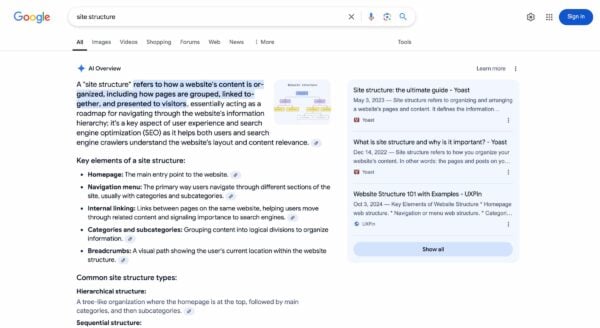
Google’s introduction of AI Overviews, which use generative AI to synthesize information from various sources into a concise answer directly on the SERP, exemplifies this shift. This can lead to “zero-click searches,” where users find their answer without visiting a website. However, being the source cited in an AI overview remains a powerful indicator of authority and can significantly enhance brand visibility and credibility, even without a direct click. Carolyn Shelby, another Principal SEO at Yoast, insightfully states, “Rankings still matter, but they are no longer the end goal. They are a proxy for visibility, not a guarantee of impact. As search shifts from ranking pages to selecting sources, rankings should be interpreted alongside presence, citation, and narrative accuracy.” This perspective underscores a fundamental re-evaluation of SEO goals, moving beyond mere position tracking to a broader focus on brand influence and pervasive digital presence.
Strategic Goal Setting in a Dynamic Environment
In this evolving landscape, SEO goals must adapt. While traditional metrics like rankings, clicks, and website traffic remain informative, the emphasis should shift towards more holistic indicators of success. Businesses need to focus on:
- Engagement Metrics: Time on page, bounce rate, pages per session, and conversion rates that reflect genuine user interaction and satisfaction.
- Brand Awareness and Mentions: Tracking how often the brand is cited, mentioned, or discussed across various platforms, including AI-generated content.
- User Experience (UX) and User Satisfaction: Continuously optimizing the website for intuitive navigation, accessibility, and overall positive user journey.
- Lead Generation and Sales Attribution: Directly linking SEO efforts to tangible business outcomes, understanding the full sales funnel from discovery to conversion.
- Authority and Trust Signals: Building a robust online reputation through expert content, quality backlinks, and positive reviews.
By broadening the scope of SEO goals, businesses can gain a more accurate understanding of their digital influence and adapt their strategies to thrive in a multi-platform, AI-driven search environment. The Yoast Perspective report 2026 provides an action plan to guide this shift from traffic-centric metrics to influence-driven ones.

Empowering Businesses: Getting Started with SEO
While SEO can appear complex, a systematic approach can empower businesses to undertake significant optimization efforts themselves.
- Prioritize Technical Foundations: Begin by ensuring the website’s technical health. This involves optimizing page speed, securing the site with HTTPS, ensuring mobile-friendliness, establishing a logical site structure, and implementing structured data. For those without technical expertise, collaborating with a web developer or utilizing website builders with strong SEO features is advisable.
- Master Content and Keyword Strategy: Once the technical foundation is solid, focus on content. Conduct thorough keyword research to identify what the target audience is searching for. Create high-quality, original, and comprehensive content that directly addresses these queries and reflects unique insights and expertise. This is particularly crucial in an era of AI-generated content, where originality and authority stand out. Develop a content calendar and an ongoing SEO strategy, recognizing that SEO is a continuous process, not a one-time task.
- Leverage Industry Tools and Education: Numerous resources are available to support SEO efforts. Companies like Yoast offer free and premium SEO plugins for platforms like WordPress and Shopify, providing automated analyses for readability and SEO, technical optimization, and advanced features. Additionally, comprehensive SEO academies and blogs offer a wealth of educational content, from beginner courses to advanced topics, enabling continuous learning and skill development.
By embracing these steps, businesses can proactively enhance their online visibility, build stronger brands, cultivate user loyalty, and drive sustained growth in the dynamic digital landscape. The journey of SEO is ongoing, but with a strategic and informed approach, its rewards are substantial.