

In the dynamic landscape of digital marketing, email remains a cornerstone of customer engagement and revenue generation. However, effective email marketing has evolved far beyond intuitive guesswork, demanding a rigorous, data-driven approach. At the forefront of this evolution is A/B testing, a critical methodology championed by industry leaders like Litmus, renowned for its commitment to comprehensive email testing. While pre-send testing, which involves previewing emails across hundreds of clients and devices, ensures flawless rendering, post-send A/B testing provides invaluable insights into subscriber behavior, transforming marketing hunches into actionable strategies.
This rigorous, scientific method, also known as split testing, involves creating two distinct versions of an email, changing only one variable at a time—be it a subject line, call-to-action (CTA), or the application of behavioral targeting. These variants are then dispatched to two statistically significant subsets of an audience, allowing marketers to objectively determine which version elicits a superior response. The objective is clear: to pit two emails against each other to identify the most effective elements, thereby gaining profound customer insights that can optimize various aspects of the email marketing funnel, from boosting open rates to enhancing conversion paths.
The Strategic Imperative: Moving Beyond Guesswork
For email marketers grappling with decisions based on intuition or struggling to secure buy-in for new initiatives, A/B testing offers a definitive pathway to clarity. It provides concrete data on how an audience reacts to diverse design, copy, and strategic choices. Camila Espinal, Email Marketing Manager at Validity, underscores its importance: “A/B testing is a great choice when engagement is your primary goal. You’ll want to choose campaigns with large audiences, like your newsletter or a promotional send, and it should be a repeatable campaign where those insights can be applied again.”
Integrating A/B testing into the email production process, while an additional step, is a worthwhile investment. It imbues email marketing with a scientific rigor, enabling marketers to prove return on investment (ROI) rather than merely hoping for positive outcomes. Recent industry data reinforces this, with 12% of email marketers attributing A/B testing as a key component in improving the already impressive 36:1 ROI typically associated with email campaigns.
Espinal further elaborates on the transformative power of this approach: “It gives you the data you need so you can step away from taking a shot in the dark and use real information to sharpen your campaigns, improve engagement, and connect with your audience. You can definitively shift away from what doesn’t work so you’re no longer wasting your time creating campaigns that your customers or prospects aren’t interested in, and instead double down on the things that resonate with them.” This paradigm shift enables marketers to challenge entrenched practices, fostering a culture of continuous improvement. As Espinal aptly puts it, “Sometimes, you can get really stuck on ‘Oh, it’s what we’ve always done.’ One of the best parts of email marketing is having the opportunity to try something new, and use data to measure that impact.”

A/B testing commences with the formulation of a clear hypothesis: “What do we anticipate will happen if we modify element X?” This foundational question guides the experiment, allowing marketers to translate gut feelings into quantifiable data, driving informed design and strategic decisions that directly impact the bottom line.
Methodology: The Scientific Approach to Email Optimization
To harness the full potential of A/B testing, marketers must adopt a methodical, scientific mindset. Careful consideration of what, when, and how to test is paramount to avoid skewed results and ensure reliable insights.
-
Define the Objective and Hypothesis: Every A/B test must begin with a clear end goal. Marketers must identify the specific metric they aim to improve (e.g., open rate, click-through rate, conversion rate, unsubscribe rate) and formulate a precise hypothesis. A well-constructed hypothesis often takes the form of an “if/then” statement, such as: “If we change this subject line to include an emoji, then we’ll see more opens because it stands out in a crowded inbox.” This clarity ensures that results can be directly linked to the variable being tested.
-
Isolate the Variable: A fundamental principle of effective A/B testing is to change only one element between the control and variant emails. Attempting to test multiple variables simultaneously (e.g., subject line, CTA, and design) will render it impossible to determine which specific change influenced the outcome. While multivariate testing exists for complex scenarios, it demands an exceptionally large audience and sophisticated analytical capabilities, making single-variable tests the preferred starting point for most marketers.
-
Set Up Test Parameters: Precise parameter definition is crucial for robust test execution. Key decisions include:
- Audience Size and Randomization: The test audience must be sufficiently large to achieve statistical significance, typically aiming for 10,000 or more contacts for reliable outcomes. Critically, the audience must be randomly split to eliminate bias. Testing pre-existing segments (e.g., West Coast vs. East Coast) can introduce confounding variables, making it difficult to attribute changes solely to the email variable.
- Duration: Resist the urge to declare a winner prematurely. Email engagement unfolds over time, and early results can be misleading. A minimum test duration of 48-72 hours is generally recommended to allow subscribers sufficient time to interact with the email. Defining this duration upfront with the team prevents false positives.
- Statistical Significance: Marketers should aim for a 95% confidence level (p < 0.05) before declaring a winner. This means there’s less than a 5% chance the observed difference occurred by random chance. A/B testing calculators can assist in determining the required sample size and evaluating significance.
- Success Metrics: Align the measured metrics directly with the initial objective (e.g., open rate for subject line tests, click-through rate for CTA tests, conversion rate for content/offer tests).
- Action Plan: Determine what action will be taken based on the test results (e.g., sending the winning variant to the remainder of the audience, applying learnings to future campaigns).
-
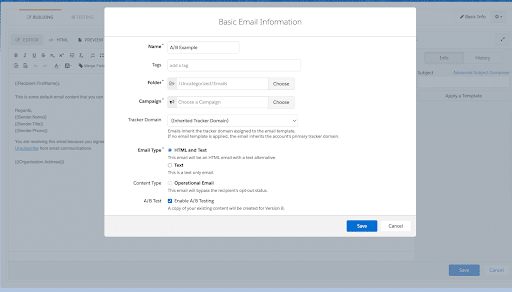
Execute the Test: Email service providers (ESPs) typically offer built-in A/B testing functionalities. The test can be run in two primary ways:
- Batch Test: Sending variants to a subset of the audience, identifying a winner, and then sending the winning version to the larger remaining audience.
- Continuous Optimization: Running variants concurrently for an extended period to gather long-term insights, often used for evergreen campaigns or automated sequences.
-
Analyze and Document Results: Once the test concludes, a thorough analysis is essential. Compare the performance of the variants against the chosen metrics and assess statistical significance. It’s important to consider potential “shiny new factor” boosts for new variants and, if results are unexpected or marginal, consider running a confirmation test with the same cohort. Crucially, all findings—hypotheses, outcomes, and insights—must be meticulously documented in a centralized log. This practice prevents the repetition of mistakes and facilitates the development of internal best practices, allowing teams to build playbooks tailored to their specific audience preferences.
Common Pitfalls and How to Navigate Them
Even seasoned marketers can fall prey to common A/B testing errors that undermine the validity and usefulness of their experiments.
-
Testing Too Much at Once: The “test-everything” mentality, while seemingly efficient, is a critical mistake. If a single test alters multiple email elements, it becomes impossible to attribute performance changes to a specific variable. For instance, simultaneously changing a subject line, a call-to-action, and an image will obscure which element drove the observed results. Marketers must resist this urge and focus on incremental, single-variable changes. As Espinal advises, “If you want to test multiple elements, you can use multivariate testing, but it requires a very large audience to make it work.” The root of this mistake often lies in a lack of a clear hypothesis. Without a defined goal and a specific element to test, the experiment lacks direction.
-
Running Tests with Too Small a Sample: Statistical significance is non-negotiable for reliable A/B test results. Running tests on a small audience (e.g., a few hundred contacts) yields unreliable outcomes, as minor fluctuations can appear as significant differences. A slight percentage point lead in a small sample might be mere random variation. Espinal emphasizes this: “With only a few hundred contacts, the results won’t reach statistical significance, so the outcome is unreliable. You should aim for 10,000 people or more on a test if you can. Similarly, you can’t assume one version won just because it’s slightly ahead, like 22% opens for version A vs. 21% opens in version B. That’s not a clear winner.” Marketers should utilize A/B testing calculators to determine the appropriate sample size and strive for at least 95% confidence. Furthermore, ensuring a random split of the audience is crucial to prevent inherent biases from skewing results.
-
Funky Test Timing: Patience is a virtue in A/B testing. Declaring a winner too early, especially within the first 24 hours, can lead to false positives. Email engagement patterns vary, and it takes time for a statistically significant portion of the audience to interact with the message. Espinal notes, “It takes a while for people to get through their inbox. Make sure you’re allowing enough time for people to see the email before calling a winner.” Most experts recommend a minimum of 48-72 hours. Moreover, tests should ideally be run during “normal” periods, avoiding major promotions, holidays, or significant news events that could induce atypical subscriber behavior. Unless the test specifically targets seasonal messaging, such external factors can distort results, making them inapplicable to regular campaigns.
-
Forgetting About Rolling Out the Results: The effort invested in A/B testing is wasted if the insights gained are not documented and applied. A common mistake is to run tests, identify winners, but then fail to integrate these learnings into future campaigns. Espinal advocates for a systematic approach: “Log the hypothesis, outcome, and insight for every test. Otherwise, you’ll just repeat your mistakes. I keep a central A/B test log with test details and outcomes so I know what to do for my next campaign.” By converting test insights into actionable guidelines and playbooks, organizations can move beyond generic “best practices” to develop strategies specifically optimized for their unique audience. This could mean consistently using shorter subject lines, sending emails on particular days, or adopting a specific CTA button color that consistently outperforms others.
Key Elements for A/B Testing
Virtually every component of an email can be subjected to A/B testing, offering endless opportunities for optimization. Espinal highlights the diverse possibilities: “You may like the look of a white, sleek email, but it may not resonate with your audience because it doesn’t stand out. It’s interesting to test color variations, image variations, whether it’s a rounded or square CTA button, your personalization choices…you never know what can make a difference until you test. These are the tiny changes you can make that contribute to a healthy email marketing ecosystem.”
-
The Inbox Envelope: From Name, Subject Line, and Preview Text: These elements are the first impression and significantly influence open rates.
- From Name: While less frequently tested, variations like “Company Name” vs. “Person at Company Name” can be explored. However, clarity and brand recognition should always take precedence to avoid appearing spammy. Mailchimp, for example, uses variations like “Mailchimp,” “Jenn at Mailchimp,” and “Mailchimp Research.”
- Subject Line: This is arguably the most common and impactful element to test for open rates. Experiment with length (short vs. long), tone (urgent, curious, benefit-driven), use of emojis, personalization, and questions vs. statements. A test by Emerson, for instance, found a 23% higher open rate for a subject line referencing a white paper (“White Paper: Managing Automation Projects”) compared to a more generic one (“Free Trial: Start Your Automation Project Today”).
- Preview Text (Preheader): This short snippet appearing after the subject line can provide additional context or create urgency, often impacting open rates.
-
HTML vs. Plain Text: While HTML emails offer rich visual experiences, plain text emails can sometimes outperform them due to their perceived authenticity and personal touch. Litmus’s own A/B tests revealed that optimal messaging varies between customer segments, and plain text emails hold a significant place in their strategy. Testing these two styles can reveal valuable insights into audience preferences for email aesthetics and formality.
-
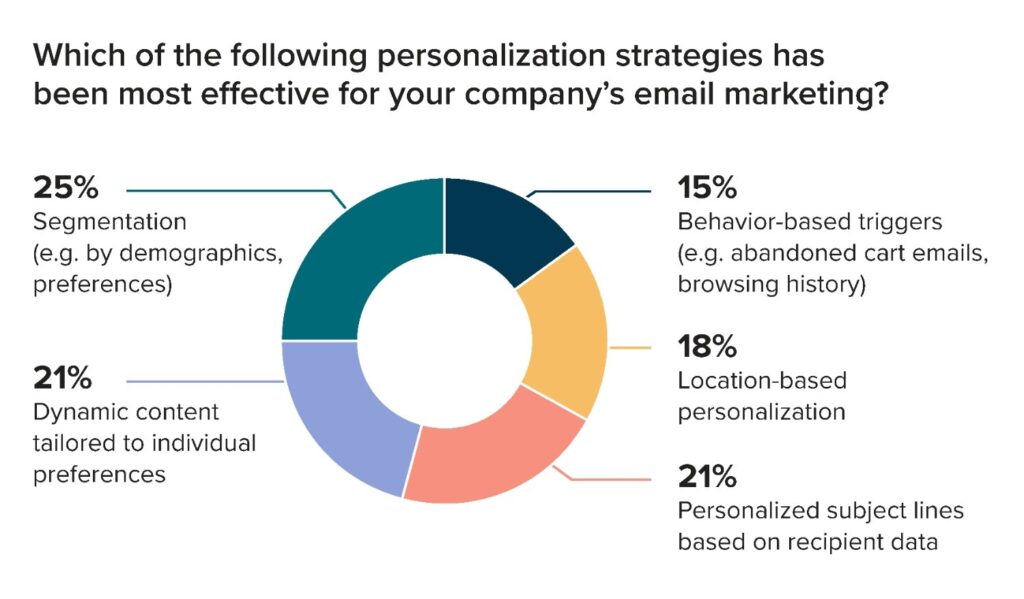
Personalization: Beyond merely inserting a recipient’s first name, personalization encompasses dynamic content, interactive elements, and tailoring copy based on location, purchase history, customer status, or other behavioral data. The 2025 State of Email Report indicates that dynamic content, second only to segmentation strategy, significantly moves the needle in personalization effectiveness. Espinal attests to the high upside potential: “One of the most exciting tests I ran at my previous company was a specific nurture for a product by different audience buckets. We changed the body copy of the email and ran A/B tests against a control for our three segments. It’s extra work but can make a product launch that much more successful.”
-
Automation and Timing: A/B testing isn’t limited to what’s inside an email; when it’s sent can also dramatically impact engagement. This includes optimizing the timing of automated emails (e.g., cart abandonment reminders, welcome series, re-engagement campaigns) and broadcast sends. Testing different delays in a triggered sequence or varying the day and time of a newsletter dispatch can yield significant improvements in open and click rates, particularly for crucial transactional and lifecycle marketing emails.
-
Copy, Imagery, and Design Choices: These broad categories offer extensive testing opportunities:

- Copy: Experiment with tone (formal vs. conversational), length (concise vs. detailed), headlines, body paragraph structure, and CTA button text (e.g., “Learn More” vs. “Get Started”).
- Imagery: Test different hero images, the presence or absence of images, types of visuals (product photos, lifestyle shots, illustrations), and the use of animated GIFs to increase read time or engagement.
- Design: Explore layout variations, color schemes, font choices, CTA button shapes (rounded vs. square), and the overall visual hierarchy to determine what resonates most effectively with the audience.
When NOT to Run an Email Marketing A/B Test
Despite its immense value, A/B testing is not always appropriate. Critical communications, such as transactional emails (order confirmations, shipping updates, password resets), or highly time-sensitive announcements, should not be subjected to A/B tests. The primary goal of these emails is clear, immediate information delivery, not optimization experimentation. Espinal advises, “Anytime you need to send a critical communication, or something very time-sensitive, that’s not the time to run a test. Put your energy elsewhere.”
Furthermore, if the insights gained from a test cannot be replicated or applied to future campaigns, the effort is largely wasted. A/B testing thrives on the ability to learn and iterate. If a campaign is a one-off event with no repeatable elements, it’s often more prudent to save testing resources for campaigns that offer long-term learning potential.
Mastering Enterprise A/B Testing: Navigating Complexity at Scale
While A/B testing a few hundred emails might seem straightforward, managing enterprise-level email A/B tests, often involving millions of subscribers, presents a distinct set of challenges. One misstep can have significant financial and reputational consequences, and discerning true winners amidst vast data volumes becomes exponentially more complex.
The realities of enterprise A/B testing demand specialized strategies and tools:
- Data Volume and Complexity: Handling and analyzing vast datasets requires robust analytics platforms and data science expertise to ensure statistical validity.
- Infrastructure and Integration: Enterprise systems often involve complex integrations between ESPs, CRM, and other marketing technology, necessitating seamless testing capabilities across platforms.
- Organizational Alignment: Gaining consensus across large marketing, sales, and product teams for testing hypotheses and rolling out changes can be a significant hurdle.
- Risk Management: The potential impact of a poorly performing variant on millions of customers means a higher emphasis on risk mitigation and careful phased rollouts.
- Regulatory Compliance: Adhering to global data privacy regulations (e.g., GDPR, CCPA) becomes more intricate when managing large-scale data for testing.
Shifting from basic A/B testing features to specialized software or advanced ESP functionalities designed for large-scale experimentation is crucial. This enables enterprises to cut through data noise, avoid costly false positives, and unlock the true potential of their extensive email lists.
Industry Leaders Share Their Strategies
Insights from top brands reveal practical applications of A/B testing that drive tangible results:
-
Square: Incremental Testing and Validity Checks: Tyler Michael from Square emphasizes incremental testing, isolating one variable in nurture sequences and newsletters to precisely identify what works. Beyond traditional content elements, Square frequently tests “timing dimensions” such as send frequency, day of the week, time of day, and the duration of an email drip campaign. Michael’s key advice: “If you’re ever surprised by the results, run the test again. There are several elements that can impact the validity of your results, like seasonality (holiday vs. summer), execution (load times or errors), or timing (day of week). The longer you run an experiment, the more likely your significance will stabilize.” This highlights the importance of revalidation and understanding contextual factors.
-
Intuit: Rapid Experimentation Framework: Rian Lemmer and Kate Tinkleburg from Intuit advocate for a “fail fast” approach, embracing surprises within a rapid email experimentation framework. Their goal is to move from idea to experiment as quickly as possible, sometimes dedicating focused “experimentation days” to build momentum. Tinkleburg stresses the importance of “real metrics behind it” over time-consuming surveys that introduce bias. “You need to be able to see their behavior and make changes based on that. With email we have plenty of metrics you can use, but you need real customer currency so they have skin in the game or willingness to pay for the experiment to be worthwhile,” she explains, highlighting the need for experiments to measure actual customer action.
-
Indeed: Deeper Funnel Optimization: Lindsay Brothers, a product manager at Indeed, champions experimentation as a learning tool, even admitting that “We’re often wrong.” A notable example involved testing the CTA copy for their highly popular job alerts signup form, a feature that had remained untested for years. Despite internal skepticism, the winning CTA, “activate,” surprisingly outperformed “subscribe” and “sign up,” leading to a significant 12% increase in email signups. This success spurred Indeed to extend A/B testing beyond email content to other aspects of their marketing funnel, demonstrating how small, seemingly insignificant changes can yield massive cumulative gains.
Leveraging Technology: ESPs and Advanced Analytics
Most Email Service Providers (ESPs) today offer built-in A/B testing features, though their sophistication varies. When evaluating an ESP’s testing capabilities, marketers should consider: the ease of setting up tests, the types of variables that can be tested, the granularity of audience segmentation, statistical analysis tools, and reporting features. While ESPs provide standard metrics like open and click rates, advanced tools like Litmus Email Analytics can significantly deepen insights.
Litmus Email Analytics enhances A/B testing by offering:
- Engagement Duration: Understanding how long subscribers spend reading an email.
- Client Popularity: Identifying which email clients and devices are most used by the audience.
- Forward and Print Rates: Measuring deeper engagement and sharing behavior.
- Geolocation Data: Pinpointing where subscribers are opening emails.
- Email QA Tests: Ensuring flawless rendering and functionality across diverse environments, crucial before any test launch.
These advanced metrics provide a more holistic view of subscriber interaction, allowing marketers to fine-tune their A/B tests and optimize strategies not just for clicks, but for genuine engagement and conversion. The ability to easily share these comprehensive reports within teams further facilitates data-driven decision-making across the entire marketing channel mix.
Conclusion: A Data-Driven Future for Email Marketing
A/B testing is no longer an optional add-on but a fundamental pillar of effective email marketing. By embracing a scientific approach—choosing clear objectives, isolating variables, using statistically significant samples, adhering to proper timing, and meticulously documenting results—marketers can move beyond intuition to build highly optimized, audience-centric campaigns. The experiences of industry leaders like Square, Intuit, and Indeed demonstrate that consistent, thoughtful experimentation, from subject lines to deeper funnel CTAs, drives continuous improvement and substantial ROI. With the support of robust ESP features and advanced analytics tools, the future of email marketing is firmly rooted in data, enabling brands to craft flawless, highly resonant experiences that convert.








