In today’s digital marketplace, businesses across all sectors are increasingly reliant on robust customer support software. For e-commerce teams, this reliance is even more pronounced, demanding a seamless integration of CRM, marketing, and support functionalities to effectively track customer interactions, order histories, and issue resolutions. Among the leading platforms vying to meet these complex needs, HubSpot Service Hub and Zendesk have emerged as frontrunners, each with distinct strengths catering to different operational priorities. While HubSpot Service Hub is positioned as the superior choice for e-commerce teams seeking a unified CRM, marketing, and support ecosystem, Zendesk shines for high-volume contact centers prioritizing pure ticket management and voice support.
The evolution of customer service software reflects a broader shift in business strategy, moving from reactive problem-solving to proactive customer engagement. As companies mature, the necessity of consolidating customer data and communication channels becomes paramount. This pursuit of efficiency and enhanced customer experience has led to the development of sophisticated platforms designed to streamline support workflows, a task where both HubSpot and Zendesk have demonstrated considerable prowess.
HubSpot, once primarily recognized for its pioneering role in inbound marketing, has significantly expanded its offerings to encompass a comprehensive suite of business tools. The integration of its robust CRM with the Service Hub, augmented by an array of artificial intelligence capabilities, is now driving substantial results for a wide spectrum of businesses. A notable case in point is Liquidity Services, which reportedly achieved a 50% reduction in support costs by consolidating its operations onto HubSpot’s interconnected platform, underscoring the efficacy of a unified approach.
Zendesk, conversely, has carved out its niche by focusing on the operational demands of high-volume service teams. Its platform is engineered as a powerful ticket management system, making it an ideal solution for organizations operating large contact centers or those facing a continuous influx of customer inquiries. For such entities, Zendesk can serve as an indispensable extension of their support capabilities, providing the necessary tools to manage scale and complexity.
The fundamental decision between HubSpot and Zendesk ultimately hinges on the specific challenges a business aims to address. Understanding these core differences is crucial for making an informed choice that aligns with an organization’s operational goals and customer service philosophy.
HubSpot Service Hub vs Zendesk: A Comparative Overview
HubSpot’s foundational strength lies in its deep roots in inbound marketing principles, emphasizing customer empowerment and delight over aggressive messaging. This customer-centric ethos naturally extended into the customer service arena. The HubSpot CRM serves as the central nervous system for its entire platform, with the Service Hub acting as the primary interface for support teams. This integration ensures that every aspect of the customer journey is interconnected, facilitating highly efficient task automation.
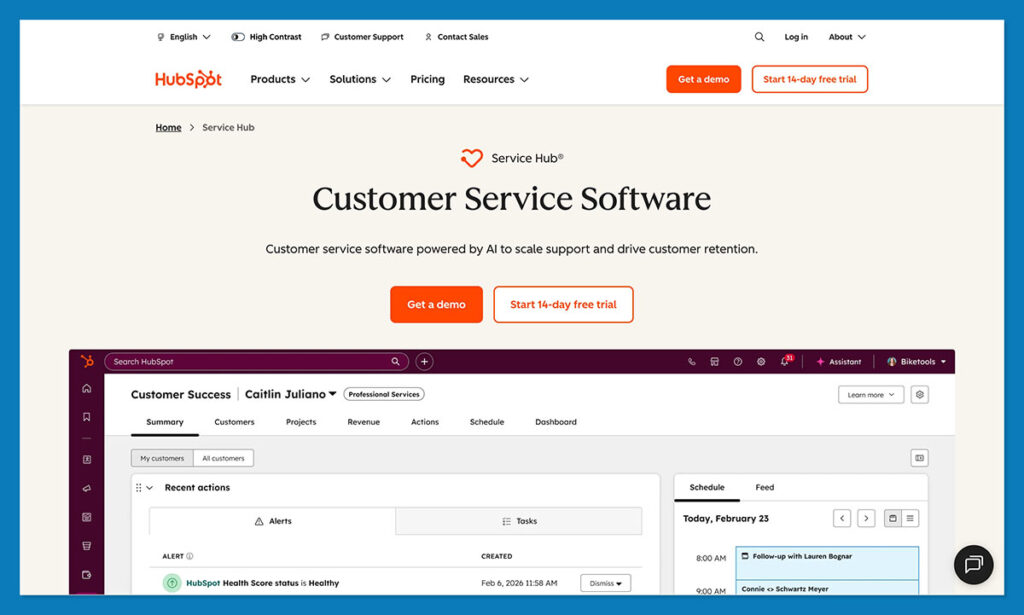
The recent integration of AI tools, such as Breeze AI, further enhances HubSpot’s capabilities. These AI-powered assistants are designed to learn from the CRM’s data, enabling them to generate brand-aligned responses and provide intelligent routing and workflow automation. This deep integration means that AI-driven tools feel like natural extensions of the existing system, rather than disparate add-ons.
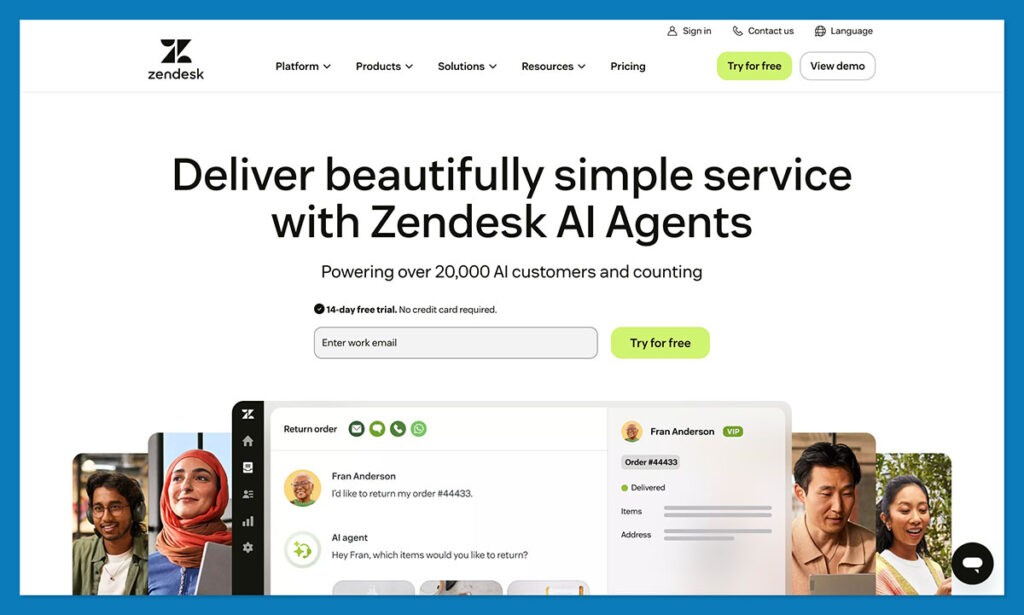
Zendesk’s design philosophy leans towards the direct management of service volume. Its platform is renowned for its clean, fast, and predictable interface, specifically built for teams that operate within a constant stream of incoming tickets. The Zendesk Suite consolidates various communication channels, including email, chat, SMS, social media, and phone calls, into a cohesive workspace. Its voice support capabilities are particularly robust, offering a comprehensive solution for businesses with a significant reliance on telephone-based customer interactions.
Testing Methodologies: A Practical Approach
To provide a nuanced comparison, an evaluative approach focusing on key functional areas was employed. The assessment prioritized aspects critical to e-commerce support, including ease of use, the sophistication of AI and automation features, omnichannel support capabilities, the depth of CRM integration, reporting functionalities, pricing structures, and scalability. The objective was to simulate real-world usage scenarios and identify how each platform performs under typical and demanding conditions.
HubSpot vs Zendesk: Feature-by-Feature Analysis
Ease of Use, Onboarding, and Support
Both HubSpot and Zendesk are generally lauded for their user-friendliness, a significant factor for businesses of all sizes looking to implement new software. Zendesk presents an intuitive “workshop” environment, where tools are logically placed and perform efficiently even under heavy load. Its mobile application is particularly noteworthy, offering full functionality for agents on the go, including responding to inquiries, reassigning tickets, accessing customer information, and even managing voice calls. Zendesk’s commitment to providing all core support channels across its paid plans ensures immediate access to essential communication tools.
HubSpot offers a different kind of user appeal, characterized by a more integrated and visually rich interface. While it might appear slightly busier, its design prioritizes a consistent logic across all its hubs, centered around a single CRM and customer timeline. This uniformity simplifies onboarding new users, even those less technologically inclined. HubSpot’s support model differs, with free users not receiving direct one-to-one assistance, and phone support becoming available at the Professional tier. However, the extensive HubSpot Academy resources often provide a rapid self-service resolution path for common issues.
AI and Automation: HubSpot’s Breeze AI vs. Zendesk’s Service AI
Artificial intelligence is a defining feature in modern customer service platforms. HubSpot’s Breeze AI is engineered as a holistic intelligence layer that permeates its entire ecosystem. The Breeze Assistant aids in information retrieval and response generation, while HubSpot Agents, like the customer agent, are capable of automating end-to-end customer service processes. HubSpot claims its customer agent can resolve up to 65% of conversations autonomously for many businesses.
A particularly impressive aspect of Breeze Intelligence is its ability to unify and cleanse data, simplify form submissions, and extract complex insights that would otherwise require considerable manual effort. This comprehensive approach to AI integration aims to enhance efficiency across sales, marketing, and support functions.
Zendesk’s AI offerings are more heavily geared towards traditional support operations. They include features such as suggested replies, automated ticket triaging, call summarization, quality assurance scoring, and workforce management tools designed to optimize the operations of large service teams. These capabilities are especially valuable for organizations managing high ticket volumes. Zendesk’s voice features are a standout, providing advanced tools for call management and agent performance analysis.
The core distinction lies in their strategic focus: Zendesk concentrates on optimizing the support queue, whereas HubSpot aims to manage the entire customer lifecycle, integrating AI across sales, marketing, and customer support.
Omnichannel Support and Ticket Management
A shared inbox is fundamental to efficient customer service. HubSpot consolidates various communication channels—email, chat, WhatsApp, Messenger, and form submissions—into a unified view within its CRM. This seamless integration allows agents to transition between different types of customer inquiries without losing context, moving from order status questions to product exchange requests with ease. The platform’s ticket pipelines are designed for straightforward management, enabling teams to effectively categorize and prioritize different types of customer interactions, such as returns, complaints, VIP inquiries, and general questions.
Zendesk offers a broader spectrum of communication channels, including SMS, in-app messaging, and a more extensive range of social media integrations. For businesses supporting customers across multiple fronts—chat, email, direct messages on social platforms, and phone calls—Zendesk’s workspace can feel more comprehensive. However, the depth of CRM context within Zendesk’s workspace is not as inherently integrated as HubSpot’s. Agents may need to cross-reference information between the support workspace and Zendesk Sell, the company’s CRM, potentially introducing friction into the workflow.
CRM Strength and Product Extras
The fundamental difference between these platforms becomes most apparent in their CRM capabilities. HubSpot’s CRM is intrinsically linked to its operations, serving as the central repository for all customer data. When a ticket is initiated, agents immediately access the customer’s complete history, including purchase records, abandoned cart data, email engagement, prior service interactions, and notes from sales representatives. This holistic view ensures that support agents are fully informed.
Zendesk Sell, while functional, is not as deeply embedded in the support experience. Historically acquired and integrated, it sometimes operates with a distinct logic from the core support platform. This can necessitate agents switching between the support workspace and the CRM to retrieve customer history, which can become time-consuming in a busy support environment.
In terms of additional features, HubSpot provides complementary tools that enhance the integration of service with other business functions. These include a customer success workspace for proactive client management, health scoring mechanisms, Net Promoter Score (NPS) tracking, and playbook functionalities that equip smaller teams with advanced customer service strategies.
Zendesk’s supplementary features are primarily oriented towards operational efficiency within the contact center. These include advanced reporting dashboards focused on contact center performance metrics, quality assurance tools for performance evaluation, and workforce management capabilities to optimize staffing levels and agent schedules. These tools are particularly beneficial for managers focused on key performance indicators like response times and service level agreements (SLAs).
Pricing and Scalability: A Comparative Analysis
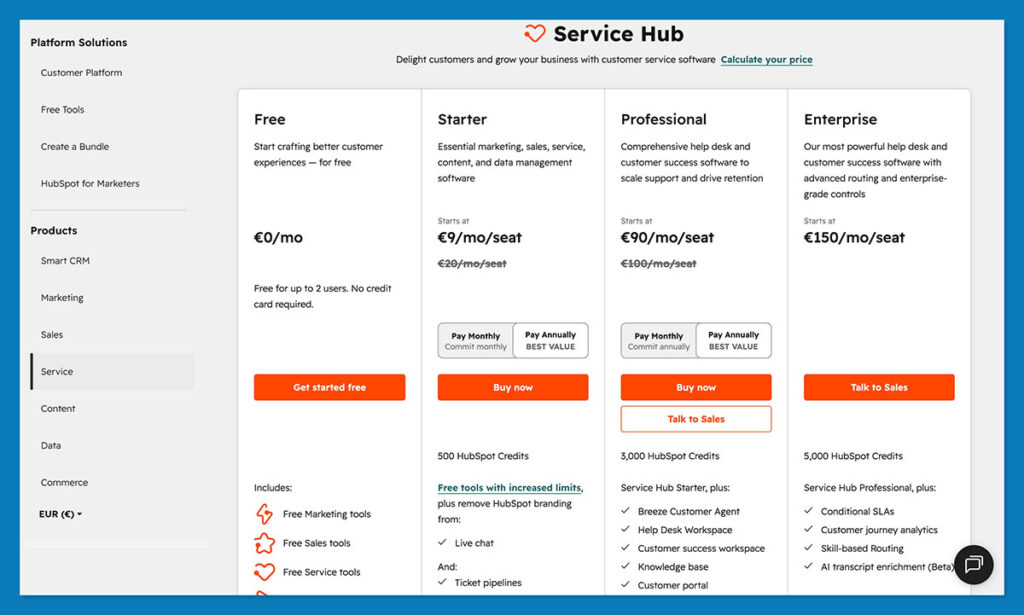
When evaluating pricing and scalability, it’s essential to consider not only the initial cost but also the long-term value and ability to grow with a business. HubSpot offers a compelling entry point with its genuinely useful free CRM, which includes basic ticketing capabilities for up to two users. Paid tiers for Service Hub begin with the Starter plan, priced competitively. Costs escalate with the Professional and Enterprise tiers, which unlock more advanced features and automation. While there is a noticeable price jump between tiers, HubSpot can often lead to cost savings by consolidating multiple disparate tools into a single platform.
Zendesk does not offer a free tier but provides a demo for potential users. Its paid plans start at a higher price point, beginning at $19 per user per month. However, the price increments between Zendesk’s tiers are generally smaller, offering a more gradual increase in features. It is important to note that Zendesk Sell, its CRM component, is often an additional cost, and integrating it seamlessly with the Suite can require further investment in custom configurations or third-party tools. This can lead to a total cost of ownership that rivals enterprise-level solutions for mid-sized e-commerce operations.

Scalability: Adapting to Growth
HubSpot’s scalability is well-suited for businesses building a unified system around a single customer record. Adding users, automating workflows, and managing increasing data volumes is straightforward due to the scalable architecture of its CRM. The primary consideration for growth with HubSpot often relates to the cost of higher-tier plans, especially when multiple HubSpot hubs are implemented across the organization.
Zendesk excels in handling extreme ticket volumes, demonstrating remarkable resilience under heavy load. However, as a business expands beyond core support functions, its “service-first” architecture can present limitations. While scaling a support team within Zendesk is efficient, other business areas might continue to rely on disparate, unconnected tools, potentially creating operational silos.
Integrations and App Ecosystems
For e-commerce businesses, seamless integration with other critical platforms is non-negotiable. HubSpot’s App Marketplace, Data Hub sync engine, and numerous connectors for popular e-commerce platforms like Shopify, WooCommerce, and BigCommerce facilitate robust data synchronization. The Data Hub enables true two-way syncing, ensuring that updates made in one system are reflected in others. Crucially, because Service Hub is part of the broader HubSpot CRM, integrations benefit support, sales, and marketing teams simultaneously, fostering a unified view of the customer.
Zendesk also boasts a substantial app marketplace, offering integrations with a wide array of third-party applications. While the breadth of available integrations is considerable, the depth and seamlessness can vary. Many integrations function effectively within the support workspace but may not integrate as smoothly with Zendesk Sell. Given that Zendesk Sell operates as a somewhat separate entity from the Zendesk Suite, these integrations can feel fragmented. Many businesses opt for a multi-platform approach, combining Zendesk with a separate CRM, marketing stack, and custom scripts, which can lead to system fragility, particularly during peak operational periods.
Conclusion: The Verdict
In the competitive landscape of customer service software, both HubSpot Service Hub and Zendesk present compelling offerings, yet their core strengths cater to distinct business needs. For e-commerce teams prioritizing a holistic view of the customer journey, integrating support with marketing and sales efforts, HubSpot Service Hub emerges as the more natural and effective choice. Its unified platform ensures that all facets of customer interaction are connected, driving efficiency and fostering deeper customer relationships.
Zendesk remains a formidable contender for organizations whose primary focus is managing high volumes of customer inquiries with exceptional efficiency, particularly those with significant reliance on voice support and intricate contact center operations. Its robust ticketing system and operational tools are unparalleled in this domain.
However, for businesses that depend on more than just pure ticket volume—for those seeking to enhance customer retention, increase lifetime value, and gain a comprehensive understanding of customer behavior across all touchpoints—HubSpot’s integrated approach offers a distinct advantage. Its ability to connect support data with marketing and sales activities provides unparalleled insights and operational streamlining.
Businesses considering HubSpot can leverage its free CRM to test its capabilities with real customer data and support tickets, offering a tangible experience of its unified ecosystem. This hands-on approach is often the most effective way to determine if the platform aligns with specific operational requirements and strategic goals. The ongoing evolution of AI within both platforms continues to reshape the customer service landscape, promising further innovation and efficiency gains for businesses that strategically adopt these advanced solutions.