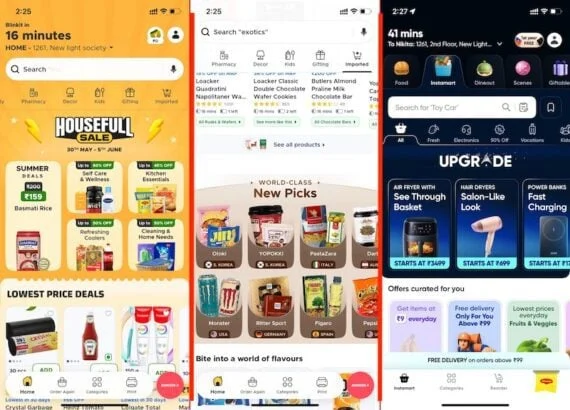
The landscape of Indian e-commerce is undergoing a dramatic transformation, with quick commerce emerging as a dominant force. This ultra-fast delivery model, promising consumers their online purchases within a mere 30 minutes, is not just a fleeting trend but a rapidly maturing industry poised to capture a significant share of the country’s retail spend. Projections indicate that by 2030, quick commerce in India could generate an astounding $50 billion in annual revenue, accounting for a substantial 10% of the nation’s total e-retail expenditure, according to a joint report released in April 2026 by Deloitte and Google. This burgeoning sector is fueled by India’s dense urban populations and a growing segment of consumers with increasing disposable incomes, creating fertile ground for rapid expansion.
The quick commerce market in India is currently characterized by the dominance of three key players: Blinkit, Swiggy Instamart, and Zepto. These platforms have strategically positioned themselves to cater to the evolving needs of Indian consumers who increasingly value speed and convenience. Their operational model, centered around a network of strategically located “dark stores” – essentially micro-fulfillment centers – allows for the efficient dispatch and delivery of a wide array of goods, from daily essentials to impulse purchases, within minutes of an order being placed.
Historically, the focus of quick commerce platforms has been concentrated in India’s Tier 1 and Tier 2 cities, which represent the most populous and economically vibrant urban centers. However, the narrative is rapidly shifting as these companies aggressively expand their reach into Tier 3 cities. This strategic pivot is particularly significant given that Tier 3 cities are home to approximately half of India’s vast population, equating to roughly 700 million out of the nation’s 1.45 billion inhabitants. This expansion into these burgeoning urban areas signifies a commitment to democratizing ultra-fast delivery and tapping into a massive, largely underserved consumer base.
A critical nuance for international brands seeking to penetrate the Indian market is the avoidance of broad generalizations that often lump India with China or Southeast Asia. The regulatory environment, the intricate economics of platform operations, and the unique consumer buying behaviors in India are distinct. A thorough understanding and adept navigation of these specific particularities are often the differentiating factors between a successful market entry and a costly misstep. The Indian consumer, while increasingly embracing digital commerce, remains discerning and responsive to value propositions that resonate with local needs and preferences.
The Imperative of Instant Gratification: Tapping into Consumer Convenience
The appeal of quick commerce is perhaps best illustrated by the daily realities of modern Indian households. For families with young children, the ability to procure essential items like fresh produce or last-minute school project supplies within minutes can be a game-changer. This sentiment is echoed by many consumers who have integrated quick commerce platforms into their daily routines, often using the brand names as verbs, akin to “Googling” a query. This seamless integration into the fabric of daily life underscores the profound impact of convenience on consumer purchasing decisions.
The strategic focus of quick commerce platforms on daily consumables is a deliberate approach to drive unit economics. By prioritizing the sale of frequently purchased items, these platforms aim to foster repeat purchases and build customer loyalty. The underlying principle is that purchase frequency and customer retention are more critical for long-term profitability than the average basket size. Consequently, top-selling categories consistently include everyday staples such as snacks, beverages, fresh produce, dairy products, baby care items, and personal care products. This product assortment strategy ensures a steady flow of orders and reinforces the platforms’ utility for immediate needs.
The scale of the Indian quick commerce market is immense, offering significant growth potential. Blinkit, now operated by Eternal (formerly Zomato), a prominent player in food delivery and restaurant bookings, exemplifies this scale. As of its fiscal year-end in April 2026, Blinkit operated an extensive network of 2,243 dark stores. In its shareholder letter for the same period, Eternal reported that 109 million Indians utilized Blinkit and its other platforms, contributing a remarkable $10 billion in revenue. This figure highlights not only the widespread adoption of these services but also the substantial economic engine they represent.

Global brands are actively participating in this ecosystem, recognizing the opportunity to reach a vast consumer base. Familiar international names such as Monster, Doritos, and Cheetos from the U.S. are available, alongside South Korean quick-serve brands like Nongshim, Ottogi, and Yopokki, and Japanese snack giant Pocky. In the beauty and personal care segment, brands like Nivea for skincare, Pampers for baby care, Whisper for feminine hygiene, and Vanish for laundry products have established a strong presence. Blinkit, in particular, has been noted for offering enhanced product visibility, including a dedicated category for imported brands, catering to a segment of consumers seeking international products.
Navigating the Digital Shelf Space: Strategies for Market Traction
For foreign brands aiming to establish a foothold in the Indian quick commerce market, leveraging digital advertising and targeted promotions is often the most effective initial strategy. Paid search campaigns and sponsored advertisements, strategically placed within search results, on home pages, and in recommended product sections, can significantly enhance visibility. Quick commerce platforms employ sophisticated algorithms, often powered by artificial intelligence, to rank products based on sales volume and inventory availability. These AI-driven systems personalize listings for individual shoppers, further optimizing product discovery and driving conversions. Advertising plays a crucial role in attracting customer attention, which in turn creates demand and justifies the allocation of “shelf space” within the dark store network.
Data from SW Cybernetics, an India-based research and data firm, provides valuable insights into the cost of advertising on these platforms. Advertising costs on Blinkit, for instance, averaged $0.11 per click for sponsored ads. For banner placements, the cost per mille (CPM) stood at $3.16 for home page banners and $2.11 for category banners. Beyond advertising, brands also incur costs for physical placement within dark stores, with monthly fees ranging from $1,000 to $5,000. Additionally, platforms typically charge a commission fee, which can range from 10% to 25%, varying by city and service level.
However, a robust advertising strategy alone does not guarantee sales success. Foreign brands must meticulously adapt their product packaging to comply with India’s specific labeling regulations. Furthermore, optimizing online listings with localized search terms and relevant keywords is paramount to capturing consumer interest. Indian consumers are inherently value-conscious, and brands that can offer well-designed products at competitive price points are more likely to overcome the initial trial barrier and build lasting trust. Offering free samples can be an effective tactic for generating initial customer reviews and building buzz. Similarly, engaging with micro-influencers who resonate with specific consumer segments can amplify brand reach and credibility. The strategic purchase of competitor keywords in advertising campaigns can also be a powerful tool for capturing market share. Indian consumers often perceive foreign brands, particularly those from Western markets, as embodying higher quality and credibility. This perception can be a significant advantage, provided that the pricing remains within acceptable parameters for the target demographic.
The India Playbook: Understanding Regulatory Nuances and Operational Frameworks
India’s regulatory framework for foreign investment and e-commerce operations presents a nuanced landscape that brands must carefully navigate. Generally, foreign brands are permitted to sell a broad spectrum of goods on Indian marketplaces such as Amazon and Flipkart. This is typically achieved through an India-registered “seller of record,” which can be an independent distributor or a subsidiary of the brand itself. Many international companies opt for the former, partnering with distributors like Opptra or Ace Turtle, who manage inventory, handle logistics, and list products on the marketplaces.
However, a critical distinction exists: foreign entities are generally prohibited from owning and operating an India-based retail business that directly procures goods from multiple brands and sells them to consumers. Conversely, a foreign company focused solely on selling its own proprietary products can wholly own and manage its entire India operation, including its direct-to-consumer website, subject to compliance with local sourcing and physical store regulations.
Quick commerce platforms like Blinkit, Swiggy Instamart, and Zepto largely operate within a marketplace framework, albeit with significant control over their product assortments through the dark store model. This operational structure can sometimes blur the lines of traditional marketplace definitions. The evolving nature of this sector is evident in strategic corporate restructuring. For instance, Blinkit’s parent company underwent a restructuring in 2025 to become Indian-owned, a move likely intended to facilitate compliance with regulations concerning inventory ownership and operational control within the Indian market. This proactive adaptation demonstrates the industry’s commitment to aligning with the country’s legal and economic requirements to ensure sustainable growth and market access. The continuous evolution of these regulatory frameworks and corporate strategies underscores the dynamic nature of India’s e-commerce sector and the importance of staying abreast of these changes for continued success.