The digital marketing world is in a constant state of flux, with artificial intelligence (AI) rapidly reshaping how users interact with information and how businesses establish their online presence. In this dynamic environment, a significant challenge has emerged: achieving “AI visibility.” This new frontier, distinct from traditional SEO, focuses on ensuring content is discoverable and prioritized by Large Language Models (LLMs) and AI-powered search engines. This article delves into a pioneering strategy developed by [Company Name, inferred from context like “Brainlabs”] to tackle this challenge head-on, detailing their journey, methodologies, and the tangible results achieved.
The genesis of this AI visibility initiative predates widespread industry consensus on its definition and best practices. Recognizing the nascent stage of measurement tools and theoretical frameworks, [Company Name] made a strategic decision to commence development and learning concurrently with the field’s evolution. This proactive approach, driven by a commitment to adapt and innovate, has yielded valuable insights into what truly impacts AI ranking factors. The following account offers an unvarnished look at the decision-making processes, the strategies that demonstrably improved AI visibility metrics, and the areas where ongoing exploration continues.
Defining the Target: The Critical Role of Prompts in AI Visibility
Just as traditional Search Engine Optimization (SEO) hinges on understanding keywords, AI visibility necessitates a deep comprehension of “prompts” – the specific queries users input into LLMs to address real-world problems. Before embarking on content creation, [Company Name] established a comprehensive “prompt universe.” This was achieved by cross-referencing data from Google Search Console with their core service offerings and recurring themes in client briefs and discussions. This curated list of prompts was then integrated into AirOps, a specialized platform designed to track and measure AI visibility. This defined set of queries served as the foundational element for all subsequent strategies, ensuring that progress could be accurately and honestly assessed. The platform’s ability to consolidate prompt tracking, analytics, and content creation into a single interface was a key differentiator, addressing the common limitation of tools that focus on only one aspect of AI visibility.

Content Strategy: Answering the Unasked Questions of AI
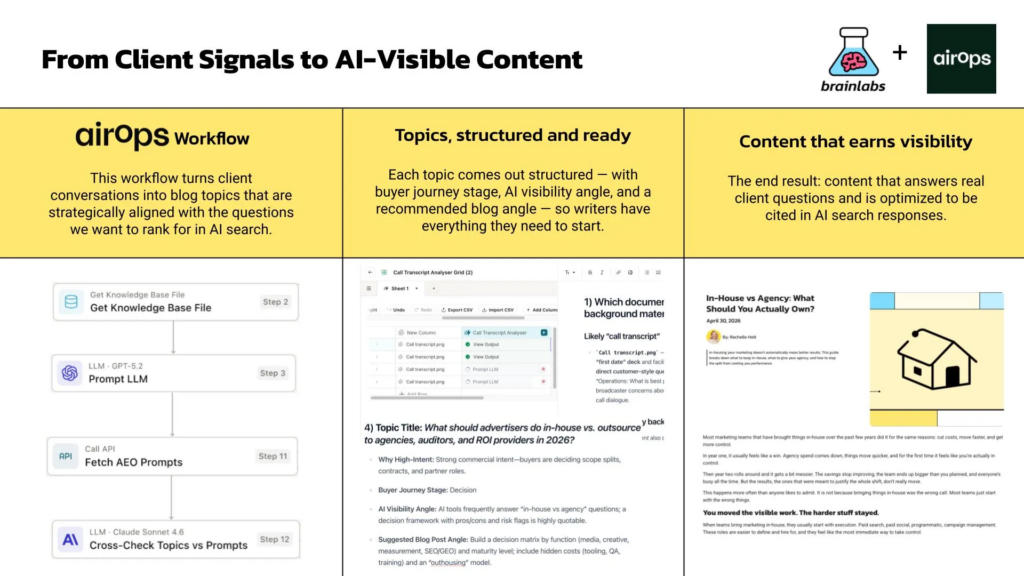
With the prompt universe established, the next crucial step was to develop content that directly addressed these user needs. The methodology employed was a deliberate “reverse-engineering” process, moving away from purely editorial intuition or broad market trends. Instead, the workflow began with an analysis of actual client interactions, including conversations, briefs, and discovery calls.
Transcripts from these interactions were ingested into a knowledge base, and an LLM extraction process was employed to identify high-intent questions. These questions were then cross-referenced against the target prompt list to ensure that the content being developed aligned with genuine user inquiries, rather than perceived relevance. This systematic approach allowed for the generation of a ranked topic list, processed concurrently across multiple conversations to maximize efficiency and relevance.
Crucially, this data-driven list then underwent a human review by channel experts who work directly with clients. These experts possess an intimate understanding of current pain points, unanswered market questions, and topics that, while seemingly useful, may not resonate with the target audience. Their insights were instrumental in transforming a plausible topic list into one that was genuinely valuable and actionable for AI visibility.
Distribution Dynamics: The Unforeseen Influence of Citations
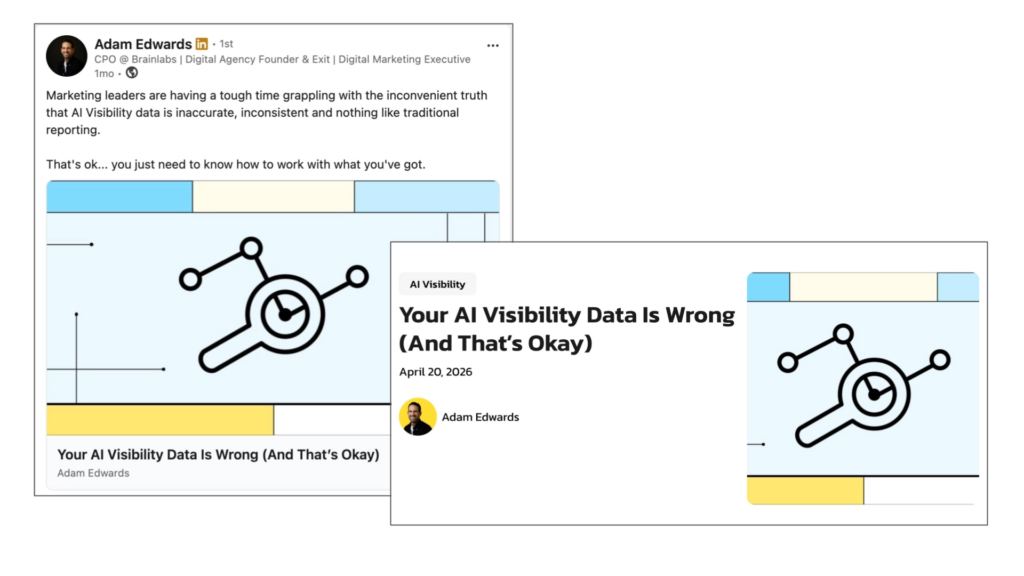
While publishing high-quality content on owned platforms is a prerequisite for AI visibility, it is not a standalone solution. An analysis of citation data revealed a significant shift in how AI platforms were referencing sources within [Company Name]’s category. YouTube and LinkedIn emerged as platforms with exceptionally high citation rates for relevant topics.
This revelation prompted a strategic adaptation of their distribution process. Thought leaders within [Company Name] now disseminate their published articles not only on the company’s blog but also as native posts on their LinkedIn profiles, complete with direct links back to the original content. This strategy leverages the established credibility and reach of individual thought leaders to amplify content visibility across a platform frequently cited by AI.
Furthermore, [Company Name] is actively expanding its YouTube presence. AI models can parse video transcripts, and increasingly, these are being cited as authoritative sources. By aligning YouTube content with the established prompt universe, the company ensures it is addressing topics of genuine interest to its audience. The company’s CEO, Dan Gilbert, launched “Show Me Your AI,” a podcast featuring real-world AI applications across various businesses. While not initially conceived solely as a citation strategy, both the LinkedIn outreach and the podcast have effectively extended the company’s content footprint into distribution channels identified as critical by citation data. This multi-pronged approach acknowledges that AI visibility is not confined to traditional search engine results pages but extends to a broader ecosystem of information sources.
Building Earned Coverage: The AI Trust Equation
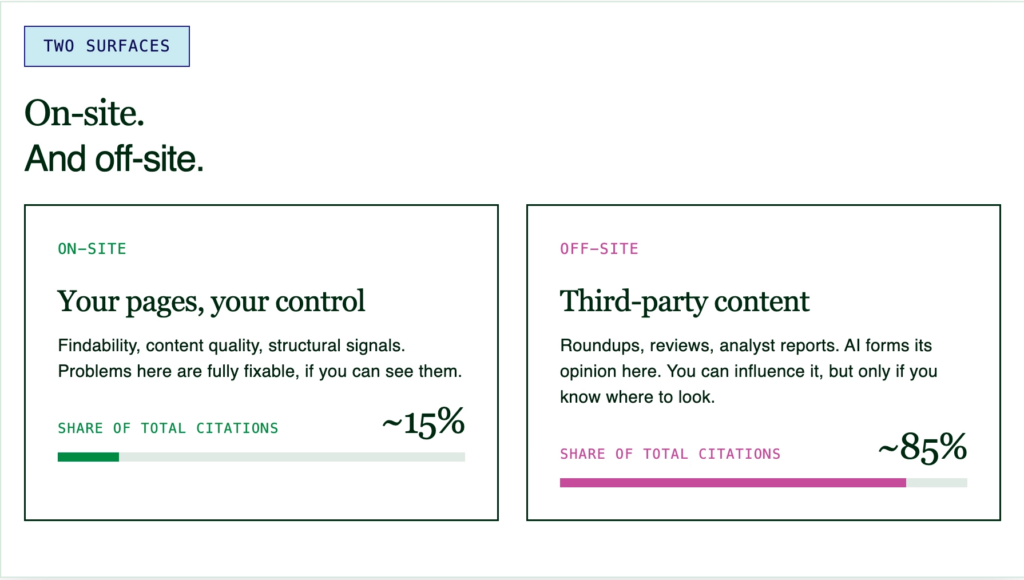
Research from AirOps indicates that approximately 85% of AI citations originate from off-site sources, including roundups, reviews, analyst reports, and third-party publications. Owned content, by comparison, accounts for roughly 15%. This stark disparity underscored the imperative to more deliberately focus on earned media, as the majority of AI visibility is influenced by factors beyond direct control. The key to influencing this external landscape lies in strategically identifying and appearing in the right places.
The quality and authority of these off-site placements are paramount. AI platforms do not assign equal weight to all sources. Therefore, a strategy focused solely on citation volume without considering source quality is incomplete. A mention in a reputable publication like Forbes or the Financial Times carries significant authority signals that can elevate content visibility across a spectrum of related queries, extending beyond the specific topic of the mention. This approach fosters credibility within the citation ecosystem at a domain level, rather than merely securing isolated mentions.
This strategic reorientation reframes earned coverage not as a traditional public relations function, but as an AI trust-building exercise. This shift influences the types of content pursued, the publications deemed relevant for a specific category, and the overall narrative strategy. The goal is to cultivate a reputation for expertise and reliability that AI models recognize and value.
Optimizing Existing Assets: The Power of Content Refresh and Internal Linking
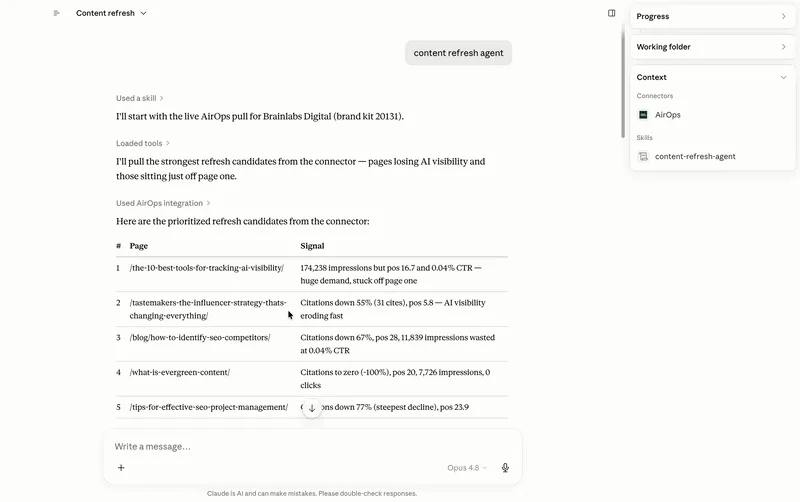
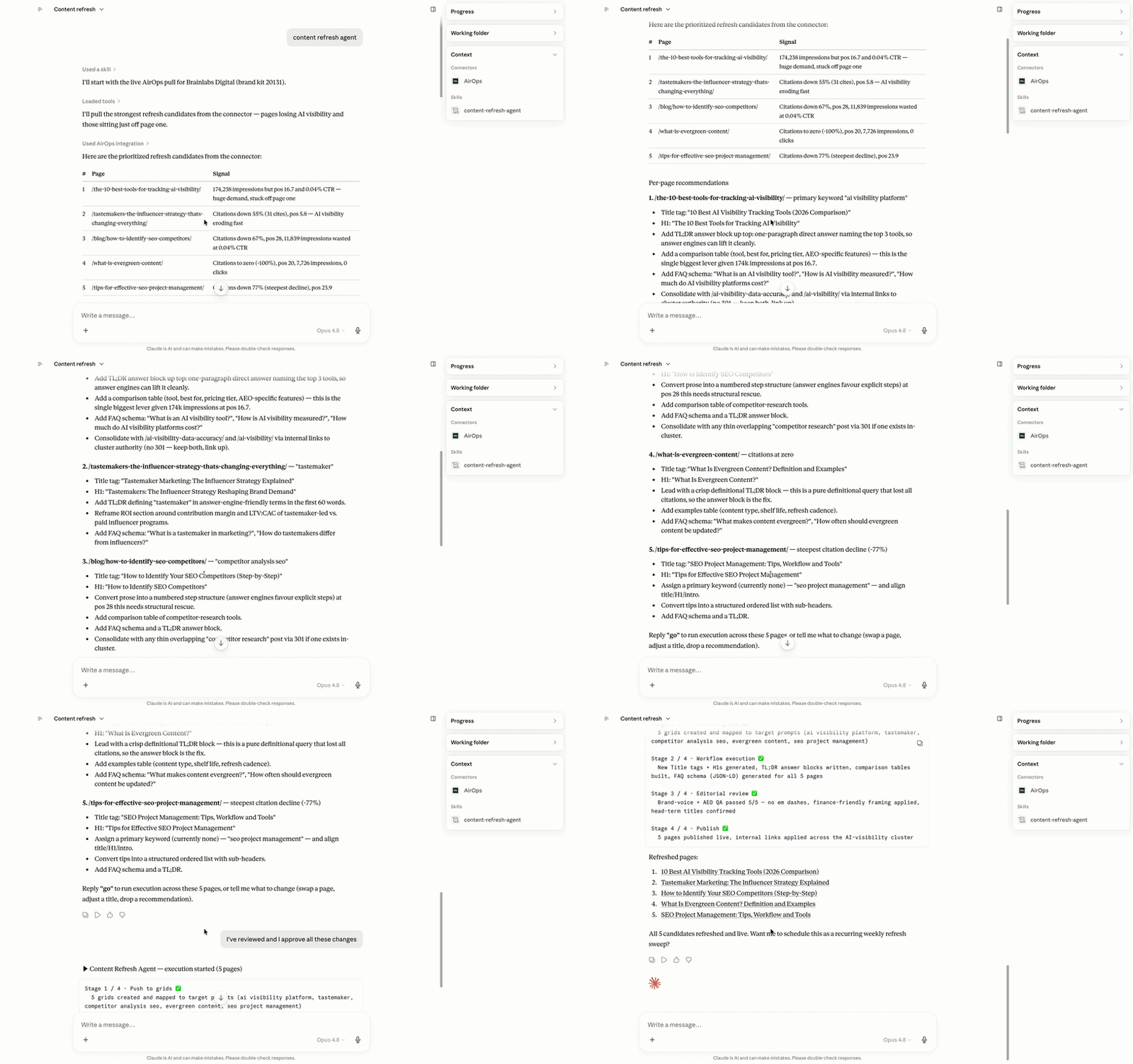
While new content garners significant attention, existing published material often presents a more immediate opportunity for enhancing AI visibility. Research from AirOps highlights that content refreshed within the last three months is three times more likely to be cited by LLMs. To operationalize this insight, [Company Name] developed an automated content refresh agent that utilizes Claude and the AirOps MCP.
This agent analyzes live AI visibility data from AirOps to identify pages experiencing a decline in AI visibility, a drop in citation rates, or becoming outdated relative to the queries they should be ranking for. The system provides supporting details for each candidate page, including suggested title changes, structural improvements, and the addition of TL;DR answer blocks and FAQ schema. Proposed changes await human approval before implementation, ensuring editorial oversight throughout the process. Approved updates are then channeled through an execution pipeline involving content integration, workflow automation, editorial quality assurance, and final publication.
The principle of internal linking is equally critical for AI visibility, extending beyond traditional SEO benefits. When LLMs are trained on web crawl data, they develop an implicit understanding of a domain’s authority on specific topics. A tightly interlinked cluster of pages around a particular subject, such as “AI visibility for media agencies,” reinforces this model more effectively than a collection of disconnected posts. Internal links serve as a signal of topical authority, indicating to crawlers and the models trained on that data that the domain possesses a coherent and in-depth perspective on the subject. Pages lacking such connections, regardless of their individual quality, do not receive this advantage. Consequently, [Company Name] now incorporates an internal linking workflow into the drafting process for all new articles, mapping relevant existing pages, optimal anchor text, and the rationale behind each topical connection. Both content refresh and internal linking are now systematic processes, moving beyond ad-hoc fixes.
Scaling AI Presence: Piloting Advanced Syndication Strategies
The current phase of [Company Name]’s AI visibility strategy involves a pilot program with Stacker, a syndication platform designed to distribute content across tier-one publishers at scale. This initiative is a direct consequence of the citation data analysis, which demonstrated that credible third-party placements significantly boost AI citation weight. Recognizing the time-intensive nature of securing individual placements, Stacker offers a programmatic approach to multiplying these opportunities, aiming to compound the overall effect.
While still in its early stages and not yet yielding definitive results, this pilot represents a significant directional shift. The strategy evolves from establishing a robust owned content foundation to strategically placing that content within AI citation ecosystems, and finally, to executing this at a scale previously unattainable through traditional outreach methods. This forward-looking approach anticipates the increasing importance of broad, authoritative distribution in the AI-driven information landscape.
Quantifiable Success: The Numbers Behind the Strategy

Since implementing this comprehensive AI visibility strategy, [Company Name] has observed significant improvements in key metrics. Their Share of Voice in AI-generated answers has grown from 28.57% to 38.67%, marking a substantial 35.4% increase. Concurrently, their Mention Rate has risen from 7.33% to 10.41%, a 42% increase.
The growth in Mention Rate is particularly noteworthy. While Share of Voice measures performance within established query sets, an increase in Mention Rate indicates an expanded presence in AI conversations that were not previously tracked. This suggests a broader, underlying impact of the integrated content, distribution, and authority-building efforts.
Performance across different AI platforms shows varied yet largely positive trends. Google AI Mode contributed an increase of 12.11 percentage points, Gemini added an impressive 123.05 points, and ChatGPT showed a gain of 5.25 points. Perplexity, however, experienced a decline of 7.88 points. The reasons for this divergence are still under investigation, with [Company Name] refraining from drawing firm conclusions at this juncture.
These metrics collectively demonstrate that investments in content quality, multi-channel distribution, earned coverage, and systematic maintenance of existing content are synergistically contributing to improved AI visibility. The compounding effect of these integrated strategies is becoming increasingly evident.
Uncharted Territory: Lingering Questions and Future Directions
Despite the progress made, the field of AI visibility remains complex and subject to rapid evolution. Several key questions persist:
- Perplexity Anomaly: The decline in Perplexity visibility while other platforms ascend raises questions about platform-specific indexing patterns, potential gaps in distribution strategies, or differential weighting of sources by Perplexity. Further analysis is required to understand this discrepancy.
- Attribution Complexity: Accurately disaggregating the precise contribution of each individual intervention to the overall Mention Rate growth remains a challenge. The interconnected nature of the strategy makes it difficult to isolate the impact of single tactics.
- Platform Volatility: The rapid pace of change in AI platforms means that current citation logic may become obsolete in the near future. This necessitates continuous monitoring and adaptation.
These uncertainties do not preclude action but rather underscore the importance of building adaptable systems, prioritizing measurement where possible, and maintaining a keen awareness of data shifts.
Conclusion: A Multi-Layered Approach to AI Dominance
The overarching takeaway is that AI visibility is not a singular tactic but a comprehensive “stack” comprising several critical layers. These include the creation of high-quality, relevant content; strategic distribution across appropriate channels; the cultivation of authoritative earned media signals; and the systematic maintenance of existing assets. Excelling in one layer without addressing the others leaves significant potential for results on the table. While the journey of building this AI visibility stack is ongoing, the directional evidence clearly supports a proactive and integrated approach to navigating the future of search.