

In the competitive landscape of global digital retail, the e-commerce category page serves as the critical connective tissue between a consumer’s initial interest and a finalized transaction. Often overlooked in favor of high-impact homepages or detailed product descriptions, the category page—the digital equivalent of a retail aisle—frequently determines whether a visitor continues their shopping journey or abandons the site in frustration. As digital storefronts evolve, industry data suggests that well-structured category pages are no longer just organizational tools but are high-performance assets that directly influence conversion rates, search engine rankings, and long-term brand loyalty.
The Strategic Importance of the Digital Aisle
The primary function of an e-commerce category page is to facilitate discovery. For a consumer, landing on an overwhelming page with poor filtering and slow load times is the digital equivalent of walking into a cluttered warehouse with no signage. Conversely, an optimized category page provides a curated experience, allowing users to narrow down hundreds of options into a manageable selection based on specific preferences such as size, price, and style.

Market analysts observe that category pages often serve as the primary landing point for organic search traffic. Because they target broader keywords—such as “women’s running shoes” rather than a specific model—they possess the potential to capture high-intent shoppers who are still in the consideration phase of the marketing funnel. Consequently, the optimization of these pages is a multi-disciplinary effort involving user interface (UI) design, search engine optimization (SEO), and data-driven behavioral analysis.
Chronology of E-Commerce Design Evolution
To understand the current state of category page design, one must look at the technological progression of the last two decades. In the early 2000s, e-commerce sites relied on static, table-based layouts with limited sorting capabilities. The “first generation” of category pages were little more than digital catalogs.
By 2010, the introduction of faceted search revolutionized the industry. Retailers began implementing dynamic filters, allowing users to sort by multiple attributes simultaneously. This period also saw the rise of “infinite scroll” versus traditional pagination, a debate that continues to shape user experience today.
The current era, beginning around 2020, is defined by mobile-first indexing and AI-driven personalization. Today’s category pages are expected to be lightning-fast and responsive, with layouts that adapt to the user’s device and previous browsing history. Industry experts note that the focus has shifted from mere “listing” to “storytelling,” where category descriptions and promotional banners provide context and brand identity.
Data-Driven Objective Setting
The foundation of a successful category page lies in the definition of measurable Key Performance Indicators (KPIs). Digital marketing professionals emphasize that without clear objectives, design changes are merely aesthetic.
- Conversion Rate (CR): The percentage of visitors who move from the category page to a specific product page and eventually complete a purchase.
- Bounce Rate: A high bounce rate on a category page often indicates a disconnect between the user’s search intent and the page content, or a failure in page load speed.
- Click-Through Rate (CTR): Monitoring which products attract the most clicks allows retailers to optimize product placement and “hero” images.
- Revenue per Visitor (RPV): This metric helps determine the effectiveness of upselling and cross-selling features integrated directly into the category view.
Supporting data from recent e-commerce benchmarks indicates that even a one-second delay in page load time can result in a 7% reduction in conversions. This statistic underscores the necessity of technical optimization alongside visual design.
Architectural Optimization of Page Layouts
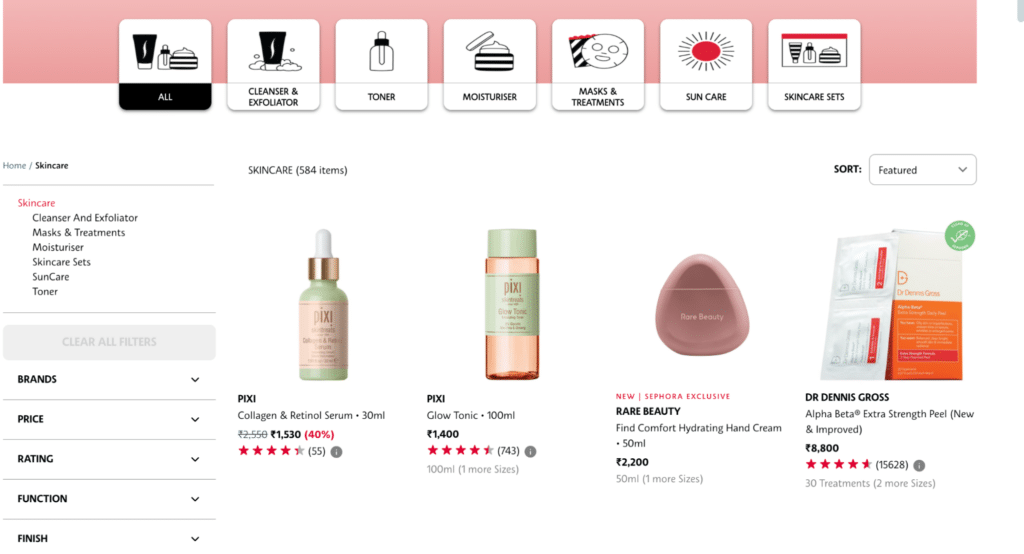
A professional journalistic analysis of leading retailers like Sephora, Glossier, and H&M reveals a standardized yet flexible framework for high-converting category pages.
Headers and Navigation
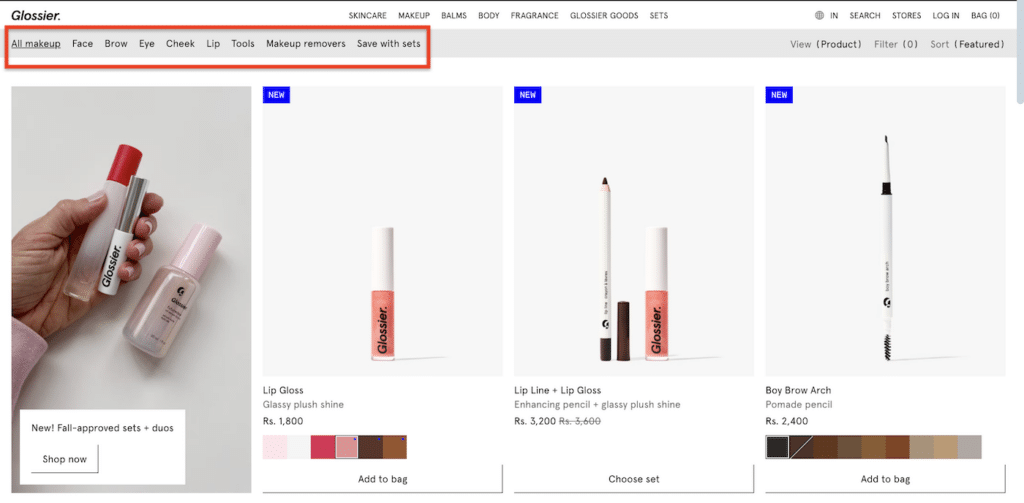
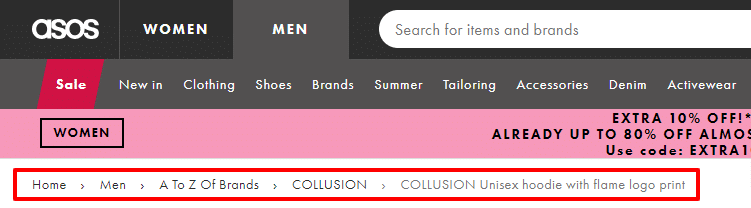
The category title must be both descriptive and SEO-friendly. For example, Glossier utilizes simple, high-volume search terms like “Face” or “Eyes” to ensure clarity for both the user and search engine crawlers. This is often supported by “breadcrumb navigation,” a secondary navigation scheme that reveals the user’s location in a website or web application. Breadcrumbs not only improve UX by allowing easy backtracking but also enhance the site’s internal linking structure for SEO purposes.
Advanced Filtering and Sorting
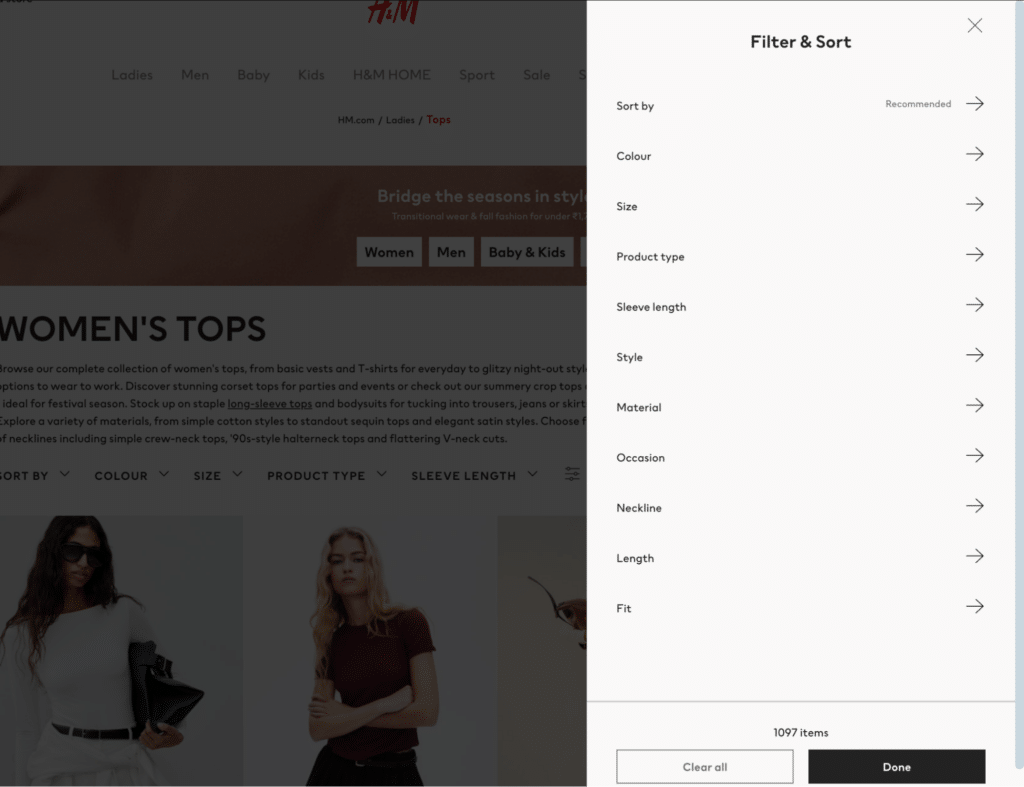
Sophisticated filtering systems are the hallmark of modern e-commerce. Retailers like H&M provide granular options including material type, neckline, and occasion. Analysts suggest that “redundant” filters—where a product appears in multiple relevant categories—can actually improve the user experience by matching various mental models of how customers shop.
High-Quality Product Listings
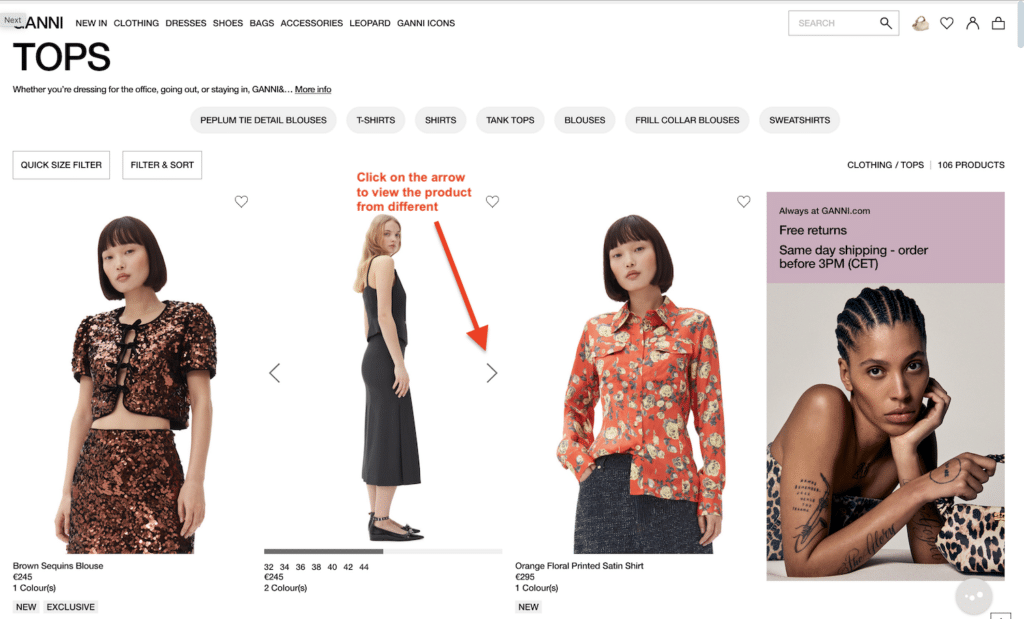
The visual presentation of products is paramount. Current trends favor high-resolution images that offer “hover-zoom” or “quick-view” functionality, allowing shoppers to see details without leaving the category page. Brands like Ganni have successfully implemented multi-angle views directly within the grid layout, reducing the number of clicks required to make an informed decision.
The Mobile Imperative
Perhaps the most significant shift in e-commerce strategy is the move toward mobile-centricity. Forecasts suggest that by 2025, approximately 79% of all e-commerce sales will be conducted via mobile devices. This shift necessitates a “thumb-friendly” design approach, where buttons are large enough to be tapped easily and text remains legible on smaller screens.
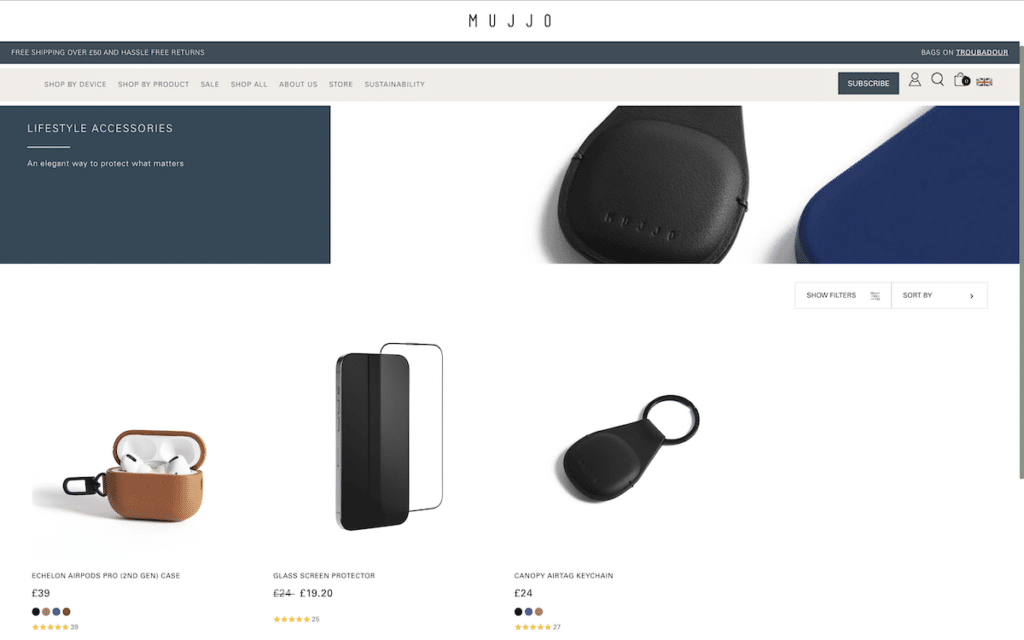
Case studies of brands like Mujjo demonstrate the power of minimalist design on mobile. By utilizing white space and removing non-essential clutter, these brands ensure that the product remains the focal point, regardless of the device. Technical experts recommend rigorous testing across various screen sizes to ensure that the “Add to Cart” and “Filter” buttons remain accessible and functional.
SEO Best Practices and Content Integration
Search Engine Optimization remains the most cost-effective way to drive high-intent traffic to category pages. A robust SEO strategy involves:
- Keyword Research: Utilizing tools like SEMrush or Google Keyword Planner to identify high-volume, low-competition terms.
- On-Page Elements: Incorporating primary keywords into H1 tags, subheadings, and alt-text for images.
- Meta Descriptions: Writing persuasive, under-160-character descriptions that encourage users to click through from the Search Engine Results Page (SERP).
- Category Descriptions: Rather than just a list of items, top-tier retailers include 100-200 words of engaging content that describes the benefits of the category, utilizing keywords naturally to signal relevance to search algorithms.
Psychological Triggers and Engagement
Beyond technical specifications, successful category pages leverage consumer psychology. Strategic placement of “Limited Time Offer” banners or “Best Seller” badges creates a sense of urgency and social proof. ASOS, for instance, frequently uses promotional overlays and “Free Delivery” notifications to lower the barrier to entry for hesitant shoppers.
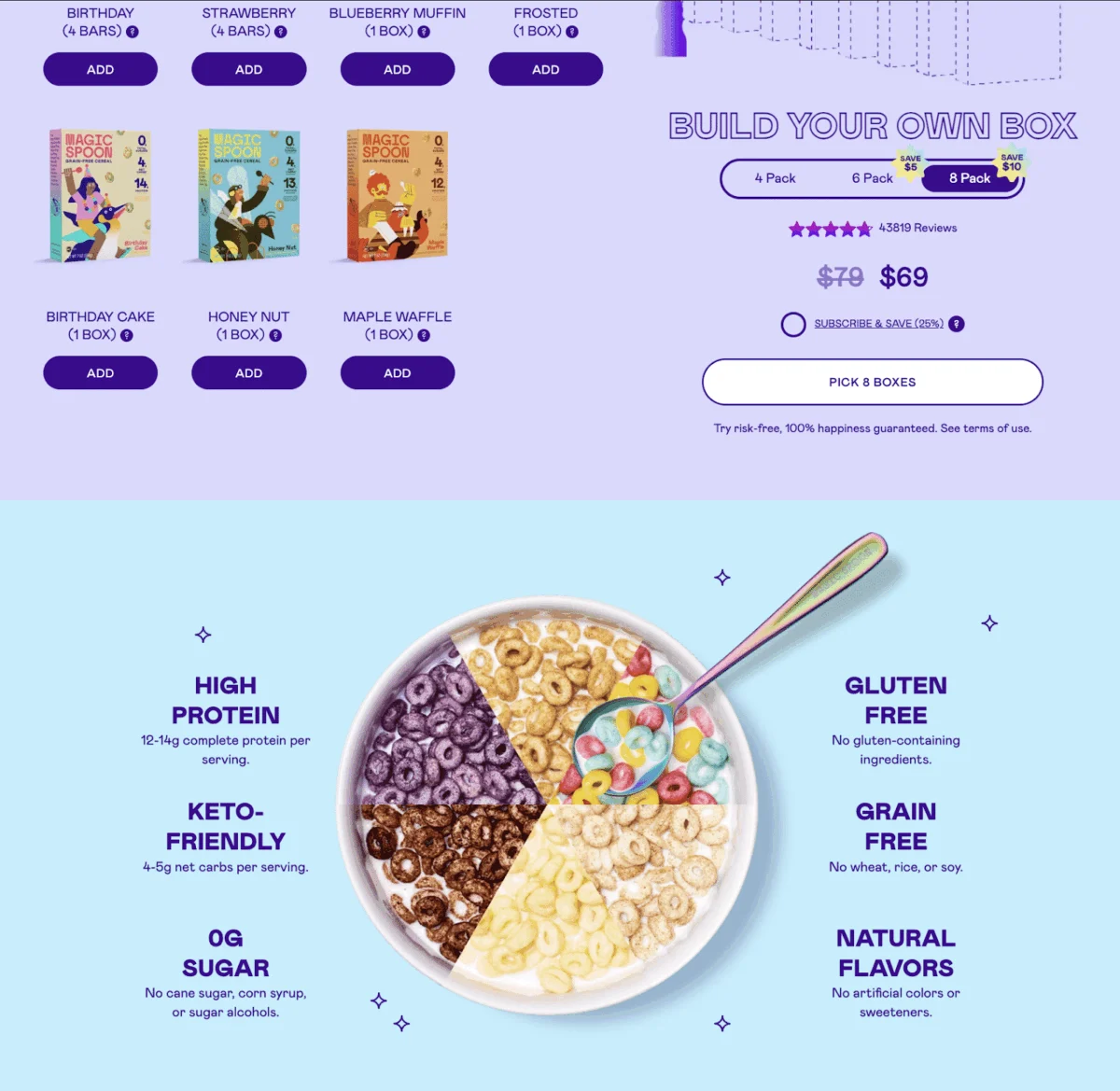
Similarly, niche brands like Magic Spoon use engaging, benefit-driven language such as “keto-friendly” or “high-protein” within their category headers. This reinforces the brand’s value proposition immediately upon the user’s arrival.
Continuous Analysis and Implementation
The final stage of category page management is the iterative process of analysis and adjustment. Industry-standard tools such as FigPii allow retailers to utilize heatmaps and session replays to see exactly where users are clicking or where they are getting stuck.
A/B testing is a critical component of this phase. Retailers may test two different versions of a category page—one with a sidebar filter and one with a top-horizontal filter—to see which yields a higher conversion rate. By monitoring metrics such as the “Back to Top” button usage or the effectiveness of “View Details” vs. “Add to Cart” CTAs, businesses can make incremental improvements that lead to significant revenue growth over time.
Broader Impact and Industry Implications
The optimization of e-commerce category pages reflects a broader trend toward the “commoditization of convenience.” As consumer attention spans shorten, the retailers that provide the most frictionless, intuitive, and informative browsing experiences will inevitably capture the largest market share.
Furthermore, the rise of AI and machine learning is expected to further personalize the category page experience. In the near future, two different users visiting the same category page may see an entirely different assortment of products based on their past behavior. This level of hyper-personalization represents the next frontier in digital retail, making the foundational principles of layout, SEO, and user experience more vital than ever.
In conclusion, the e-commerce category page is a sophisticated engine for growth. By defining clear objectives, optimizing for mobile, integrating high-quality content, and maintaining a rigorous schedule of data analysis, retailers can transform these pages from simple directories into powerful tools for conversion and brand building. As the digital marketplace continues to expand, the mastery of the “digital aisle” remains a prerequisite for any brand seeking long-term success in the global economy.







