

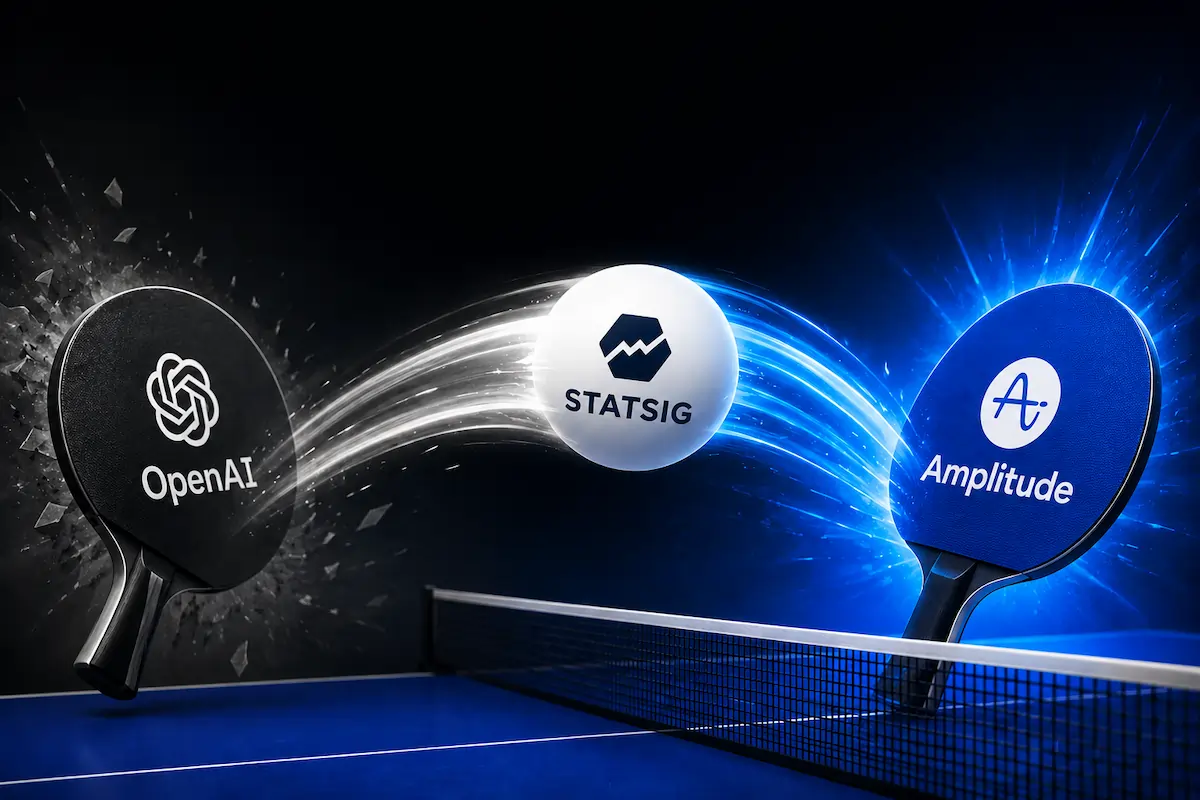
In a definitive shift for the software-as-a-service (SaaS) experimentation landscape, Amplitude has announced a comprehensive strategic partnership to absorb the brand, customer base, and operational roadmap of Statsig, the experimentation platform acquired by OpenAI in late 2025. This transition, finalized on May 5, 2026, marks the end of Statsig’s tenure as an independent SaaS entity under the OpenAI umbrella and signals a broader consolidation within the product analytics and digital optimization sectors. The move effectively bifurcates the original Statsig acquisition: while OpenAI retains the engineering talent and core intellectual property to bolster its internal AI development cycles, Amplitude will provide a permanent home for the thousands of external enterprises that rely on Statsig’s feature flagging and A/B testing tools.
The announcement was spearheaded by Amplitude CEO Spencer Skates, who characterized the deal as a strategic realignment that ensures continuity for the experimentation community. Under the terms of the agreement, Amplitude will take over the Statsig brand and maintain its existing platform across both cloud-based and data-warehouse-native deployments. This partnership resolves months of industry speculation regarding OpenAI’s long-term intentions for Statsig’s commercial business, which many analysts feared would be left to languish as the AI giant prioritized its generative models.
A Chronology of the OpenAI and Statsig Realignment
To understand the magnitude of this shift, one must look back to September 2, 2025, when OpenAI shocked the technology sector by acquiring Statsig in an all-stock deal valued at approximately $1.1 billion. At the time, it was one of OpenAI’s largest acquisitions, aimed at integrating sophisticated experimentation capabilities directly into the development of ChatGPT and Codex. Vijaye Raji, the founder and CEO of Statsig and a former Facebook executive, was appointed as the Chief Technology Officer of Applications at OpenAI, reporting to former Instacart CEO Fidji Simo.
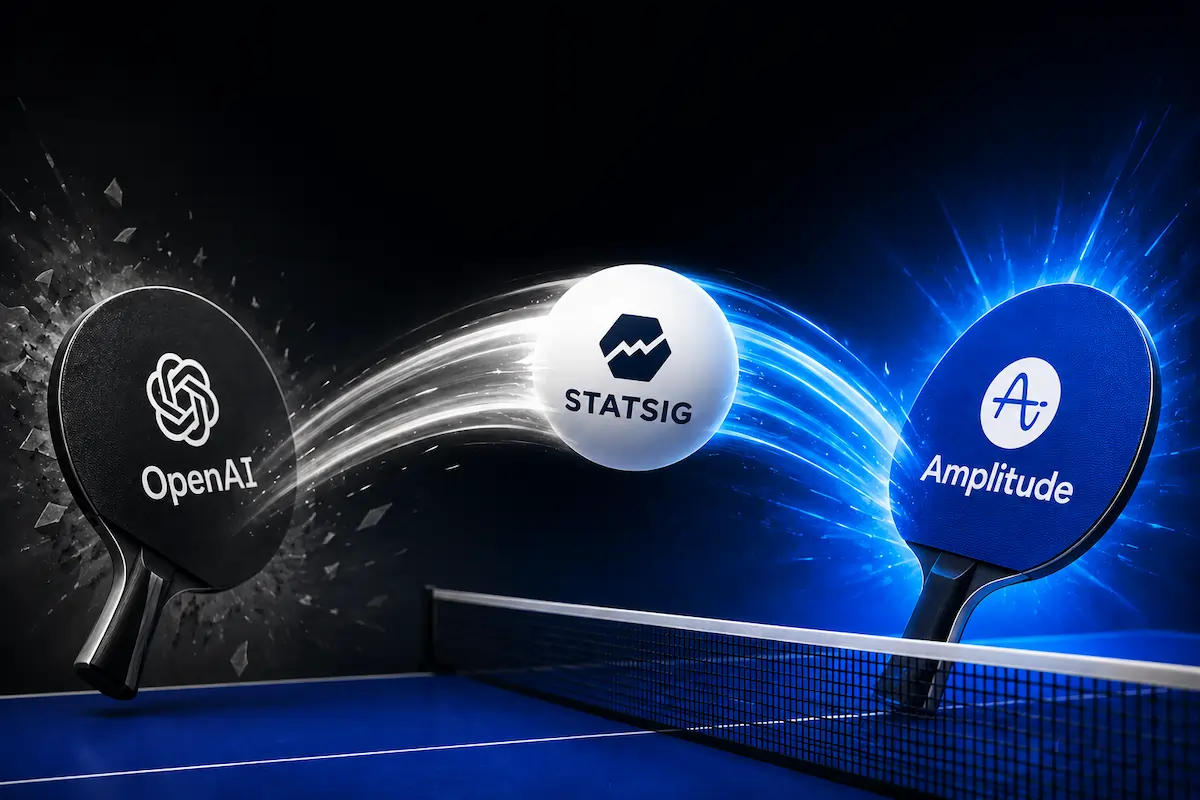
During the initial acquisition phase, OpenAI publicly committed to maintaining Statsig’s operational independence, promising its customer base that the platform would continue to serve external clients from its Seattle headquarters. However, the reality of managing a high-growth SaaS business proved to be a distraction from OpenAI’s core mission of achieving artificial general intelligence (AGI). The partnership with Amplitude represents a strategic “handover,” where the accountability for customer success and product evolution is transferred to a firm whose primary business model is built on serving the experimentation and analytics needs of global enterprises.
The Strategic Rationale: Why Experimentation Matters to AI
The initial acquisition of Statsig by OpenAI was driven by a fundamental realization in the AI era: while AI can generate an infinite number of code variations and product features, determining which variations actually drive value remains a significant hurdle. Sequoia Capital, in an analysis of the 2025 deal, described Statsig as the “runtime control plane” necessary to close the loop between AI-generated outputs and production-grade performance.
In the eight months following the OpenAI acquisition, the internal Statsig team focused on building the infrastructure required for OpenAI to test and deploy model updates with greater precision. However, the external SaaS component—the part of Statsig that served companies like Microsoft, Brex, and Notion—required a level of support and sales infrastructure that OpenAI was not designed to provide. By offloading this segment to Amplitude, OpenAI can focus its internal resources on the “experimentation muscle” needed for AI training, while Amplitude expands its footprint in the warehouse-native experimentation space.
Market Consolidation and the $1 Billion Ceiling
The Amplitude-Statsig deal is the latest in a series of high-profile consolidations that have redefined the experimentation category over the last 18 months. The industry has witnessed several major shifts, including:

- The merger of VWO and AB Tasty under the ownership of Everstone Capital.
- The acquisition of Eppo by the observability giant Datadog.
- The integration of Split Software into the DevOps platform Harness.
- The acquisition of Optimizely by Episerver (now operating as Optimizely).
Data suggests that the standalone web experimentation market has reached a point of saturation. According to industry reports and market analysis, the Total Addressable Market (TAM) for specialized A/B testing tools sits at approximately $1 billion globally, with growth rates slowing to roughly 10% annually. For venture-backed companies, this ceiling makes it difficult to justify the high valuation multiples required for an independent Initial Public Offering (IPO).
As a result, three distinct paths have emerged for experimentation vendors. The first is the “upmarket consolidation” path, where players merge to achieve economies of scale. The second is the “category absorption” path, where experimentation becomes a feature within larger stacks like analytics (Amplitude), observability (Datadog), or delivery (Harness). The third path—exemplified by the OpenAI-Statsig deal—is a talent and capability play where the core team is absorbed for internal use, and the customer base is transitioned to a third party.
Technical Implications: Warehouse-Native vs. Event-Stream
One of the primary challenges facing the Amplitude-Statsig integration is the reconciliation of two different architectural philosophies. Amplitude has its roots in event-stream product analytics, which typically involves ingesting data into a proprietary cloud environment for analysis. In contrast, Statsig gained significant market share by championing a “warehouse-native” approach, allowing companies to run experiments directly on top of their own data warehouses like Snowflake, BigQuery, or Databricks.
Amplitude has committed to maintaining the existing Statsig platform, but industry practitioners are closely watching how these two roadmaps will merge. The convergence of product analytics and experimentation is a logical evolution, as it allows product teams to move seamlessly from identifying a user friction point (in Amplitude) to testing a solution (in Statsig) without moving data between disparate systems. However, the pricing transitions and contract renewals for existing Statsig customers will be the ultimate litmus test of how well these two models can coexist.

Industry Reactions and Expert Analysis
The reaction from the experimentation community has been a mix of pragmatism and strategic foresight. Ben Labay, a prominent voice in the experimentation space, noted that “experimentation isn’t a category to acquire; it’s a muscle to absorb.” This sentiment reflects the idea that experimentation is becoming an essential utility rather than a standalone product.
Simon Jackson, another industry expert, viewed the deal as a competitive signal for the AI-native era. He argued that as AI makes code generation cheaper and faster, the bottleneck for companies shifts from “shipping features” to “learning what works.” In his view, the winners of the next decade will be the organizations that can learn the fastest, a capability that requires the robust experimentation infrastructure that Amplitude is now doubling down on.
Dennis van der Heijden, co-founder of the experimentation platform Convert, offered a more grounded perspective on the handover. He noted that OpenAI’s decision to partner with Amplitude was more thoughtful than a standard “acq-hire” where a product is simply shut down. “Instead, the brand, customers, and operational continuity went to a buyer for whom serving thousands of experimentation customers is the actual business,” van der Heijden observed. He suggested that while the deal is unusual in shape, it provides a level of care for the customer base that is often missing in major tech acquisitions.
The Future of Experimentation: Velocity Over Certainty
The restructuring of the experimentation market comes at a time when the methodology of testing itself is undergoing a transformation. For decades, the industry has been governed by the “95% confidence interval” as the gold standard for statistical significance. This rigor was necessary when each experiment required weeks of engineering effort and significant budget.

However, the rise of AI is radically lowering the cost of running experiments. When hypothesis generation, variant development, and QA can be handled by AI agents, the time to launch an experiment can be compressed from a two-week sprint to a single morning. This shift suggests a move toward “direction over certainty.” For many mid-market teams and startups, running ten experiments at 80% confidence may provide more cumulative learning and business growth than running one experiment at 95% confidence.
This “high-velocity” model opens the market to a new tier of customers who previously found experimentation too slow or too expensive. Small-to-medium enterprises (SMEs) and e-commerce shops that lack the massive traffic of a Netflix or an Amazon can now use AI-assisted tools to find strategic wins through rapid, low-cost testing.
Conclusion and Outlook
The Amplitude-Statsig partnership represents a significant milestone in the maturation of the digital product industry. By absorbing Statsig’s commercial operations, Amplitude solidifies its position as a dominant force in the combined analytics and experimentation space. Meanwhile, OpenAI’s retention of the core Statsig team underscores the critical importance of experimentation infrastructure in the development of advanced artificial intelligence.
As the industry moves forward, the focus will shift to how well Amplitude can integrate these new capabilities into its existing suite and whether it can successfully bridge the gap between traditional analytics and the warehouse-native future. For the broader market, the message is clear: experimentation is no longer a luxury for the tech elite, but a fundamental requirement for any company looking to compete in an AI-driven economy. The era of the standalone experimentation tool may be drawing to a close, but the era of the “learning organization” is only just beginning.







