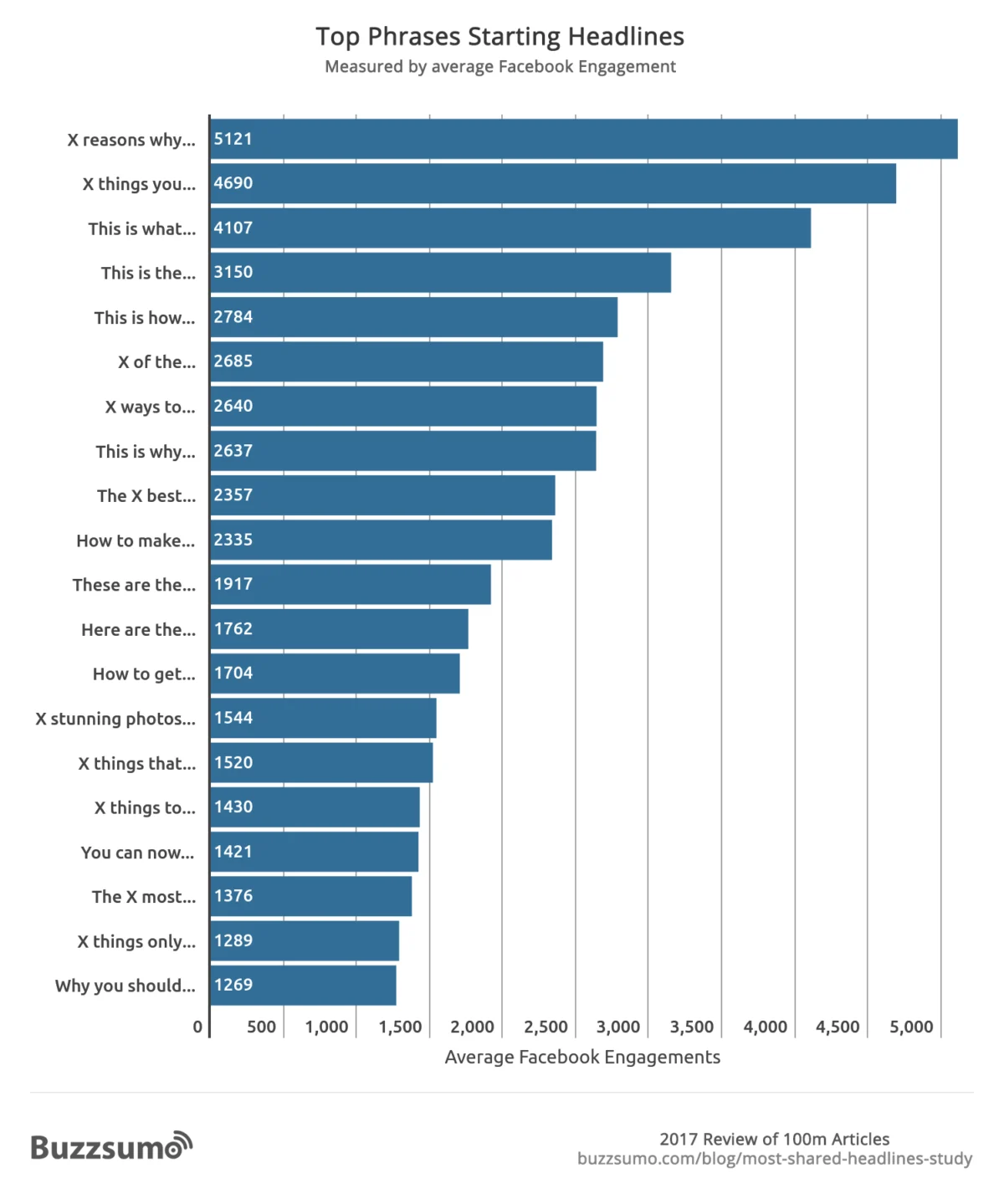
A groundbreaking analysis of 100 million article headlines by BuzzSumo reveals a dramatic transformation in what drives audience engagement on leading social media platforms, Facebook and Twitter. The study, an update to a similar 2017 research by BuzzSumo co-founder Steve Rayson, underscores a significant shift away from overtly emotional and sensationalist language towards more specific, instructional, and fact-based content. This evolution reflects not only changes in audience preferences but also the maturing influence of platform algorithms designed to combat clickbait and promote authoritative sources.
The Evolving Landscape of Digital Headlines
In the congested digital sphere, a headline transcends its traditional role as a mere article title. It functions as a crucial gateway across various formats – from email subject lines and tweets to video titles and H2 subheadings – serving as the initial point of contact with an audience. However, crafting an effective headline has become increasingly complex. The proliferation of content, the discerning standards of modern audiences, and the pervasive influence of algorithms that dictate content visibility present formidable challenges for publishers and content creators.
Recognizing this dynamic environment, BuzzSumo embarked on its updated research, delving into its vast index of 100 million headlines from 2019-2020. This extensive dataset allowed for a comprehensive re-evaluation of headline performance, building upon the foundational insights of the 2017 study. The new research also incorporated perspectives from industry-leading marketing experts, providing a holistic view of current best practices and future trends in content engagement. The overarching goal was to discern which headline types genuinely resonate on Facebook and Twitter, offering actionable techniques for maximizing click-through rates and shares.
Key Shifts in Headline Effectiveness: 2017 vs. 2020
The comparison between the 2017 and 2019-2020 studies reveals a stark divergence in effective headline strategies. In 2017, phrases imbued with strong emotional appeals, such as “will make you,” “melt your heart,” and “freaking out,” consistently generated high engagement on Facebook. These headlines often promised a direct emotional reaction or hinted at sensational revelations. For instance, the phrase “will make you” in 2017 averaged 8,691 shares and frequently served as a precursor to emotional content like “7 Photos That Will Make You Believe In Love Again.”
However, the updated analysis indicates a significant decline in the efficacy of such explicitly emotional or sensational headlines. Across the entire Facebook sample, overtly emotional phrases were rare, with “in love with” being the only one to appear in the top 60 trigrams, ranking 55th with an average of 1,723 shares. Even the once-dominant “will make you” saw its top headline example plummet from 1.7 million shares in 2017 to just 143,000 in the more recent period. The closest modern equivalent to emotional content now manifests as exaggerated phrases referencing exceptional content, such as “one of the most beautiful.” This shift suggests that while exceptionalism can still pique interest, raw emotional manipulation is largely passé.
Furthermore, content formats popular in 2017, such as quizzes and tribal headlines, have also fallen out of favor. Phrases like “can we guess” (e.g., “Can We Guess Your Real Age?”) and “only X in” (e.g., “Only 1 In 50 People Can Identify These 16 Grammar Mistakes. Can You?”) that characterized popular quizzes, along with tribal identifiers like “25 Things Only Teachers Will Understand,” are now rarely seen in top-performing headlines. This marks a generational shift in content consumption, as these styles now feel anachronistic to many internet users.
The data unequivocally shows a near-complete overhaul in effective headline phrases. On Facebook, there is a 100% difference between the top 20 headline phrases from 2017 and 2020. Twitter saw a similar, though slightly less drastic, change, with only two of its most popular phrases remaining consistent. This radical transformation can be attributed to several factors: the increasing maturity of social media algorithms, evolving audience preferences, and significant changes in the publisher landscape. Facebook’s decision, starting May 17, 2017, to demote clickbait content, followed by its January 19, 2018, announcement to prioritize news from trustworthy sources, and further refinements on June 30, 2020, to boost original and authoritative reporting, have profoundly reshaped what content succeeds. This algorithmic development has effectively weeded out the emotional, tribal, and quiz-based headlines that once dominated.
Optimal Headline Structure: Length and Numbers
Outdated advice often recommends short, snappy headlines. However, BuzzSumo’s latest research challenges this notion, revealing that the ideal headline length for top-performing content on Facebook and Twitter is 11 words and 65 characters. This contradicts earlier findings from 2017, which suggested an optimum of 15 words and 95 characters. The reduction of approximately four words and 30 characters signifies a modern audience’s preference for concise yet specific details that immediately convey value. In an era of content overload, where online content has increased by 64% since 2016, snappier headlines that get to the point are paramount for capturing fleeting attention.
When it comes to numerical inclusions, the study identifies the number 10 as the “magic number” for driving engagement. Beyond this prime figure, single-digit numbers from three to ten consistently perform best, occupying the top seven positions for most shared headlines on both platforms. Interestingly, there’s no strong preference for odd or even numbers, with both appearing frequently among the top five. While the number 10 remains a firm favorite since 2017, larger double-digit numbers like 15 and 20 have diminished in appeal, further emphasizing the audience’s demand for quick, digestible insights rather than extensive lists.
Facebook Engagement: The Rise of Instructional and Hyperbolic Content
An in-depth analysis of three-word phrases (trigrams) on Facebook reveals dominant themes that drive engagement. The phrase “of the year” emerged as the top performer, typically associated with rankings and awards (e.g., “TIME’s Person of the Year 2020″). This type of headline fuels discussion, attracting both supporters and detractors, thereby amplifying shares. Closely following are phrases centered on “newness,” such as “in X years,” often appearing as “for the first time in X years.” These phrases evoke intrigue by highlighting rare or unique circumstances, compelling readers to click for details.
Categorizing the top 60 Facebook trigrams further illuminates eight primary themes:
- Ranking: Awards, public votes (e.g., “Person of the Year“).
- Newness: Unique or rare events (e.g., “For the first time in history”).
- Hyperbole: Exaggerated statements using superlatives (e.g., “One of the Most Important People”).
- Instructional: Commanding statements, suggesting obligation or urgency (e.g., “Everything you need to know“).
- Surprise: Statements designed to shock or challenge perceptions (e.g., “At Least 36 Intelligent Alien Civilizations”).
- Curiosity: Content that promises to reveal, explain, or analyze (e.g., “Here Are The Results,” “X reasons why”).
- Guidance: “How-to” or tutorial-based headlines.
- Story: Headlines centered on a person or topic, akin to case studies.
Among these, instructional headlines proved particularly potent. Phrases like “you need to,” “you should,” and “you must” were highly effective. The use of the second-person pronoun “you” creates a direct appeal, invoking a sense of urgency and FOMO (Fear Of Missing Out). For example, “You need to know this” implies a critical piece of information that everyone else is privy to, or faces consequences for not knowing. Similarly, “need to know” headlines promise a concise overview of essential information, teasing readers with the most critical elements of a story.
Hyperbolic language also maintains a strong presence. Superlative phrases such as “one of the most,” “of the most,” “X of the,” and “of the best” consistently drive high engagement. While “of all time” is often hyperbolic, its frequent association with awards or public votes led it to be categorized under “ranking” in this study. This indicates that while explicit emotional appeals are out, a certain level of justifiable exaggeration for exceptional content still works.
Examining the starting and ending phrases of headlines reveals additional patterns. Listicles, or headlines beginning with a number (e.g., “X things to”), continue to perform well, with six out of the top 20 starting phrases featuring a number. These numbers promise structured information and actionable takeaways. Guidance trigrams (e.g., “how to”) were the most popular starting phrases when analyzing the top 60. At the other end, time-centric phrases dominate headline endings, particularly those related to 2020 or 2021, reflecting a strong audience interest in current affairs and pandemic-related impacts. Numbers at the end of headlines often induce surprise or highlight speed-to-insight. Social media trends also influence ending phrases, as content fueled by trending conversations (e.g., “on social media”) taps into the desire to be ahead of the curve.
Twitter Engagement: A Focus on Future, Research, and Immediacy
Twitter audiences exhibit distinct preferences compared to Facebook users. The most engaging three-word phrase on Twitter was “future of,” signaling a strong interest in forward-looking content and analysis (e.g., “The Future of Remote Work”). This phrase was also the most common starting phrase for Twitter headlines.
Furthermore, Twitter users show a clear appetite for research-based content. Words like “study” and “report” appearing at the beginning of headlines garnered significant shares, indicating that Twitter is an ideal platform for disseminating academic findings, market research, and data-driven insights.
Like Facebook, Twitter audiences also value immediacy and reactivity. Headlines ending with specific dates, particularly “2020,” were highly successful, reflecting a collective focus on current events and recent developments. At least 13 of the top 20 ending bigrams emphasized immediacy, confirming Twitter’s role as a platform for real-time information consumption and sharing.
While there are differences, some common ground exists. Eight of the top 20 headline phrases overall, and 10 of the top 20 starting phrases, crossed over on both Facebook and Twitter. These shared phrases, such as those related to instructional content, suggest universal appeal regardless of the platform. However, the sheer scale of engagement differs dramatically, with Facebook’s top phrase garnering 590 times more average shares than Twitter’s, underscoring the platforms’ distinct user behaviors and algorithmic priorities.
Expert Insights on the Modern Headline
Leading marketing experts have weighed in on BuzzSumo’s findings, offering valuable interpretations and advice.
Heidi Cohen, Chief Marketing Officer at Actionable Marketing Guide, observed that the study reflects crucial changes in customer behavior influenced by the pandemic, noting increased reliance on trustworthy sources, a demand for practical “how-to” information, and a desire for immediate, relevant data. She advises marketers to focus on fundamental marketing principles and to continuously engage with customers to adapt to evolving needs.
Rand Fishkin, Founder of SparkToro, lauded the study for its comprehensive data, stating it provides invaluable insights for content creators and strategists. He highlighted how the research “mythbusts” some long-held beliefs about clickbait and emotional triggers, revealing the nuanced reality of what genuinely works on social media today.
Ross Simmonds, Founder of Foundation, found it fascinating that “click-friendly” headlines, once associated with outlets like BuzzFeed, are now widely adopted. He emphasized the success of instructional copy (“you need to,” “you should”) as a critical insight, linking it to human psychology and the innate desire to avoid missing out on important information.
Brian Dean, Founder of Backlinko, pointed out the “huge shift” on Facebook from BuzzFeed-style clickbait to instructional content. He asserted that this data demonstrates the possibility of reaching audiences on Facebook by providing content that genuinely educates and offers new knowledge.
Amanda Milligan, Marketing Director at Fractl, underscored the “instructional” headline trend as a response to the growing desire for expert insights. She noted that language like “everything you need” or “why you should” inherently conveys authority, encouraging brands to leverage their expertise to benefit readers.
Implications for Content Creators and Publishers
The findings of this comprehensive study offer critical guidance for anyone crafting headlines in the digital age. The era of generic, emotionally manipulative, or purely tribal headlines is largely over, particularly on Facebook, which now prioritizes credible and useful content.
Key takeaways for writing better headlines include:
- Embrace specificity and detail: Headlines should provide enough information to entice readers without resorting to clickbait.
- Target an ideal length: Aim for approximately 11 words and 65 characters for broad social media appeal.
- Utilize numbers strategically: The number 10, and single-digit numbers (3-10), are highly effective, especially in listicle formats that promise quick insights.
- Prioritize instruction and utility (Facebook): Phrases like “you need to know,” “how to,” and those indicating guidance resonate strongly. Focus on content that teaches, informs, or provides actionable advice.
- Leverage hyperbole carefully (Facebook): Exaggerated statements can work if they refer to genuinely exceptional content or achievements, rather than empty sensationalism.
- Focus on future, research, and immediacy (Twitter): Headlines about “the future of,” those referencing “studies” or “reports,” and those tied to current events (e.g., “2020” or “today”) perform well.
- Understand platform-specific nuances: While some phrases cross over, tailoring headlines to the distinct preferences of Facebook (instructional, hyperbolic, ranking) and Twitter (curiosity, research, current affairs) can maximize engagement.
- Build authority and trust: Algorithms increasingly reward trustworthy sources. Headlines that subtly demonstrate expertise or promise valuable knowledge will likely perform better.
- Test and adapt: The digital landscape is constantly evolving. Continuous testing of different headline formats and phrases is essential to understand what resonates with a specific audience and industry.
Ultimately, a truly effective headline should be compelling enough to be shared even before the article is read. Content creators should ask themselves: Does this headline clearly communicate value? Does it spark genuine curiosity or offer a tangible benefit? Does it align with the platform’s current algorithmic preferences? By adhering to these principles, informed by extensive data, publishers and marketers can navigate the complexities of digital content distribution and achieve greater audience engagement.
Methodology and Future Research
This updated BuzzSumo research analyzed 100 million article headlines published between 2019 and 2020, focusing on average median shares on Facebook and Twitter to measure engagement. To prevent popular sites from skewing results, only one headline trigram/phrase example per domain was included in the analysis. This methodology, inspired by Steve Rayson’s original 2017 study, aims to provide robust, actionable insights. The data collection was meticulously handled by Henley Wing Chiu, Co-Founder and CTO of BuzzSumo, and the report authored by Louise Linehan, BuzzSumo’s Content Manager. For those interested in deeper dives, BuzzSumo’s Content Analyzer allows users to conduct similar phrase-based searches to uncover top-performing headlines and derive further insights into content performance across various platforms. The research also highlighted the distinct requirements for B2B content, as explored in a separate 2017 study on LinkedIn, which found different optimal lengths and phrases compared to B2C content, reinforcing the need for context-specific analysis.