The landscape of digital information discovery has undergone a seismic shift following Google I/O 2026, a pivotal event that unequivocally confirmed the ascendance of AI-driven search experiences. The traditional paradigm of “ten blue links” is rapidly receding, replaced by an immersive and conversational AI Mode that now engages over a billion monthly users. This transformation, meticulously anticipated and prepared for by industry leaders like TopRank Marketing, signals a fundamental redefinition of how businesses must engage with potential customers online. The implications for Business-to-Business (B2B) marketers, particularly those still clinging to outdated search engine optimization (SEO) tactics, are profound and demand immediate strategic recalibration.
The AI Overhaul: A Year of Accelerated Evolution
The trajectory towards an AI-centric search environment was clearly foreshadowed at Google I/O 2025. Last year’s announcements hinted at a departure from traditional SEO, positing AI-powered search as a fundamental alteration in customer interaction with information. At that juncture, AI Mode was nascent, its agentic capabilities in their infancy, and the precise impact on B2B marketing remained a subject of ongoing analysis. Fast forward to Google I/O 2026, and the evolution has not only materialized but has accelerated, solidifying AI search as the de facto standard.
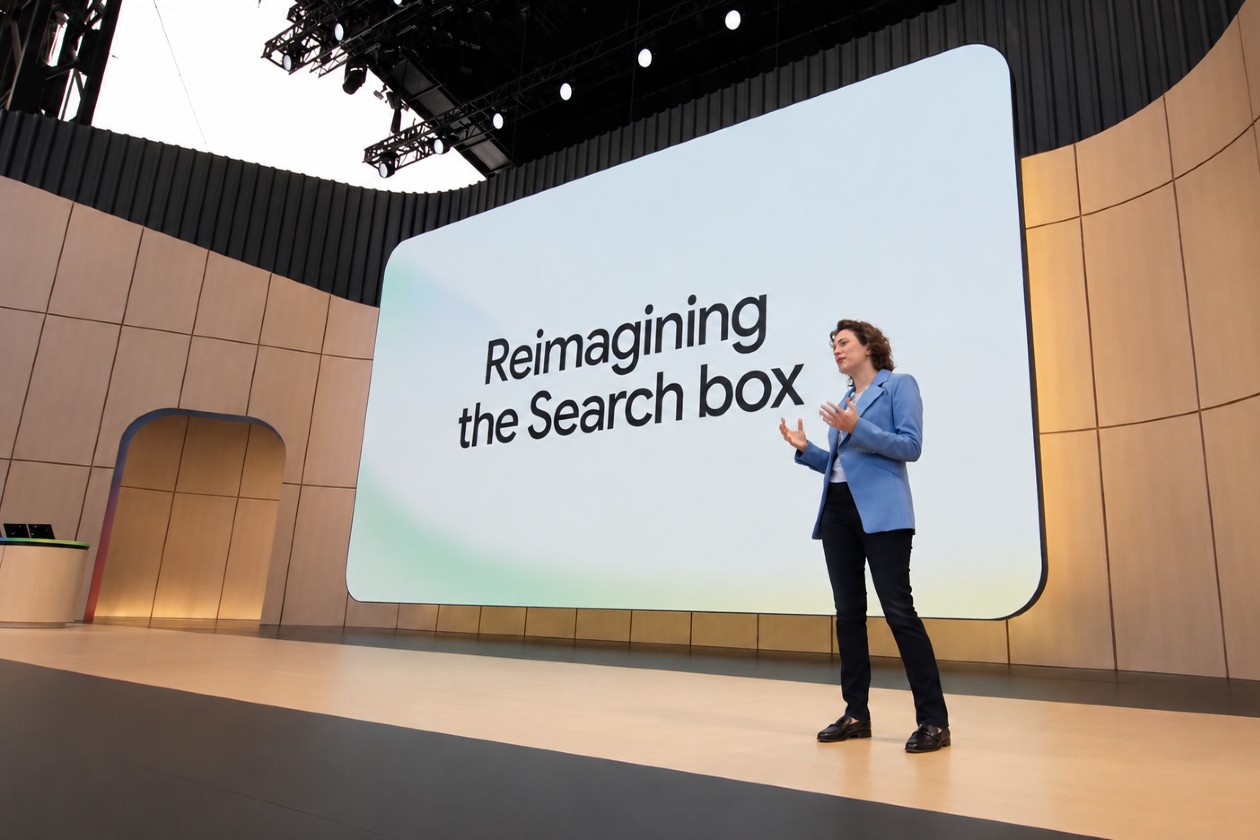
Google’s VP of Search, Elizabeth Reid, characterized the I/O 2026 announcements as “the next step in bringing together the best of a search engine with the best of AI.” This sentiment underscores the integration of AI not merely as a feature but as the core engine of search itself. The search box, a familiar interface for over two decades, has been radically re-engineered. It now dynamically expands to accommodate lengthier, more nuanced queries, accepts multimodal inputs including text, images, files, and video, and offers AI-powered suggestions that transcend simple autocompletion. This enhanced functionality promises to unlock unprecedented capabilities for users in researching solutions, identifying resources, and making informed decisions.
AI Mode: Dominance and Evolving User Behavior
The scale of AI Mode’s adoption is staggering. Merely one year after its initial rollout, it has surpassed one billion monthly users, with query volumes more than doubling each quarter. Furthermore, AI Overviews are now reaching an impressive 2.5 billion monthly users, indicating that the vast majority of Google searches are no longer confined to the traditional list of links. This paradigm shift necessitates a move away from the singular goal of ranking on the first page of Google towards a more sophisticated objective: securing prominent placement and citation within AI-generated answers. As Jon Miller, Co-Founder of Stealth AI Startup and Co-Founder of Marketo, aptly put it, “It’s not about showing up on the page one of Google. It’s about getting referenced inside of an AI answer… The playbooks that we used to use just don’t work anymore.” This heralds the era of “zero-click marketing,” a concept amplified by the recent publication of a book by Amanda Natividad and Rand Fishkin, highlighting the diminishing direct traffic from search results.
Google has also released crucial behavioral data, offering deep insights into how users are interacting with AI Mode in the U.S. This data, central to strategies like TopRank Marketing’s “Best Answer Marketing,” reveals a significant evolution in search query complexity and user engagement. The average AI Mode query is now triple the length of a traditional search query, indicating users are moving beyond simple keyword formulations to natural, conversational language. This is further evidenced by a 40% month-over-month increase in follow-up conversations, demonstrating that users are engaging in deeper exploration and iterative questioning. Crucially, one in six searches are already multimodal, with image input alone experiencing a more than 40% surge month-over-month.
Key Announcements from Google I/O 2026
Google I/O 2026 unveiled several transformative announcements concerning the future of search:
- Reimagined Search Interface: The search box has undergone its first significant overhaul in 25 years, designed for conversational and multimodal interactions.
- AI Mode at Scale: AI Mode has rapidly achieved a user base of over one billion monthly users, with queries doubling quarterly, and AI Overviews reaching 2.5 billion monthly users.
- Search Agents: Users can now create and manage AI agents that autonomously monitor topics, synthesize information, and deliver synthesized answers with recommended actions, effectively transforming agents into a secondary audience for content.
- Generative UI: The capability for users to create custom, on-the-fly interactive experiences, such as comparison tables or stateful mini-apps, directly within the search interface has been introduced.
The “query fan-out” capability, first showcased last year, where AI Mode concurrently executes multiple related searches, has evolved into a full agentic system. Google’s own AI optimization guide reinforces the continued importance of query fan-out and retrieval-augmented generation (RAG) in its core ranking systems, emphasizing that foundational content authority remains a critical factor in what AI cites. As Sarah Perez of TechCrunch observed, “searching the web” will increasingly be performed by AI agents, with humans focusing on acting upon the information provided. This shift has given rise to concepts like “agent-based marketing” (ABM) and “business-to-agent” (B2A) strategies.
Understanding User Behavior in AI Mode
The behavioral data from AI Mode offers a granular view of how users are engaging with this new search paradigm:
- Extended Queries: The average query length has tripled, signifying a move towards natural language and contextual questioning rather than keyword optimization. This suggests that content must be structured to directly address “What” and “How” questions, moving beyond mere keyword targeting.
- Follow-Up Conversations: A 40% month-over-month increase in follow-up queries indicates a user journey characterized by deeper exploration and sustained engagement. Brands that offer comprehensive topical coverage are better positioned to remain relevant throughout these extended interactions.
- Multimodal Search: Over one in six AI Mode searches are non-textual, with image input growing by 40% monthly. Image creation queries have tripled year-to-date, underscoring the critical need for visual and multimedia content in B2B strategies.
Google categorizes AI Mode usage into five distinct behavioral modes:
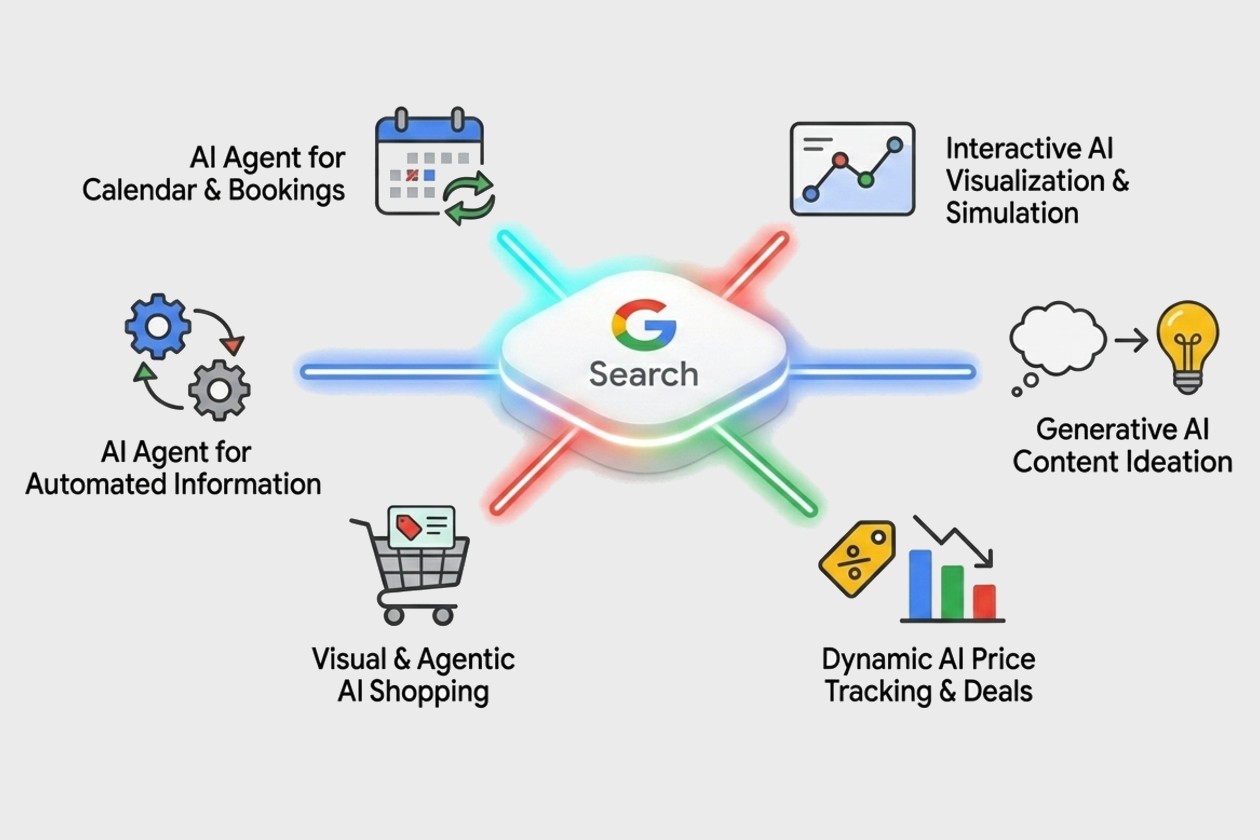
- Explore: Brainstorming-related queries are growing 30% faster than overall AI Mode queries, highlighting user engagement with open-ended discovery.
- Decide: Searches beginning with “which” have increased 40% faster, indicating the critical role of evaluative queries where trust signals and comparative content are paramount.
- Learn: Extensive use of AI Mode for professional development and deep-dive learning signifies the importance of educational content, including original research and expert-led explainers.
- Do: Planning-related queries have grown 80% faster, with Google’s Canvas tool facilitating complex, multi-step planning tasks. Actionable content like guides and templates is crucial here.
- Create: Image creation queries have more than tripled, positioning AI Mode as a productivity tool where modular and repurposable content can offer visibility opportunities.
The “Best Answer Marketing” Framework: Adapting to the AI Shift
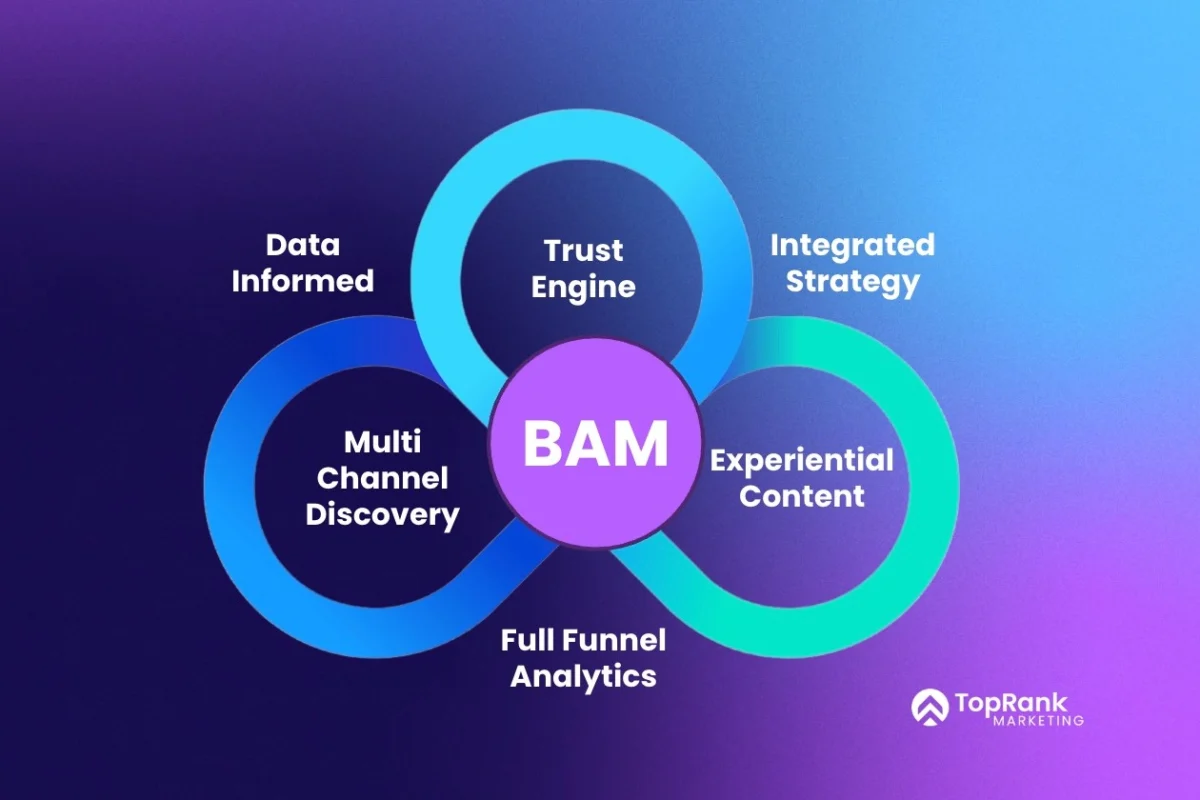
The “Best Answer Marketing” (BAM) framework, developed by TopRank Marketing, is strategically designed to address the evolving search landscape. Its core premise is that buyer behavior, and consequently the technology used to discover and interact with content, will continuously adapt, largely driven by AI. This aligns with findings from TopRank Marketing’s “Answer Engine: The State of B2B Thought Leadership in 2026” report, which revealed that 35% of marketing leaders believe AI and GenAI platforms are fundamentally changing content discovery, and 32% of B2B professionals now discover thought leadership through GenAI tools.
Google’s own AI search optimization guide, published in May 2026, corroborates this direction by explicitly outlining ineffective tactics such as creating LLMS.txt files, chunking content, rewriting copy for AI systems, seeking inauthentic mentions, and overemphasizing structured data. These methods are contrasted with what works: unique, non-commodity content backed by original research, genuine thought leadership, and credible signals recognized by AI. BAM eschews these superficial shortcuts in favor of a data-driven, integrated approach.
Pillars of Best Answer Marketing in the AI Era:
-
Data Informed: Answering Buyer Questions Directly: The shift to longer, more conversational queries means buyers are articulating their needs naturally. The top AI Mode query intents (What, How, Explain, Identify, Summarize) provide a clear roadmap for content briefs, moving beyond traditional keyword research. Brands that have invested in understanding genuine buyer questions possess a content architecture that AI Mode can effectively leverage. As David Rowlands, Head of Product at B2B Marketing & Propolis, stated, “The content that we find that’s really valuable is the content that’s based in proprietary data and actually has a really strong foundation for saying something different in the industry.”
-
Integrated Strategy: Depth and Coherence for Follow-Up Conversations: The surge in follow-up conversations underscores the importance of topic cluster depth and coherent narrative orchestration. Buyers engage in multi-stage research across various platforms, including LinkedIn, Reddit, TikTok, and GenAI tools. BAM’s Integrated Strategy pillar ensures brand, demand, and lead generation content goals are unified across formats and channels, creating a consistent narrative that remains relevant throughout the buyer’s journey.
-
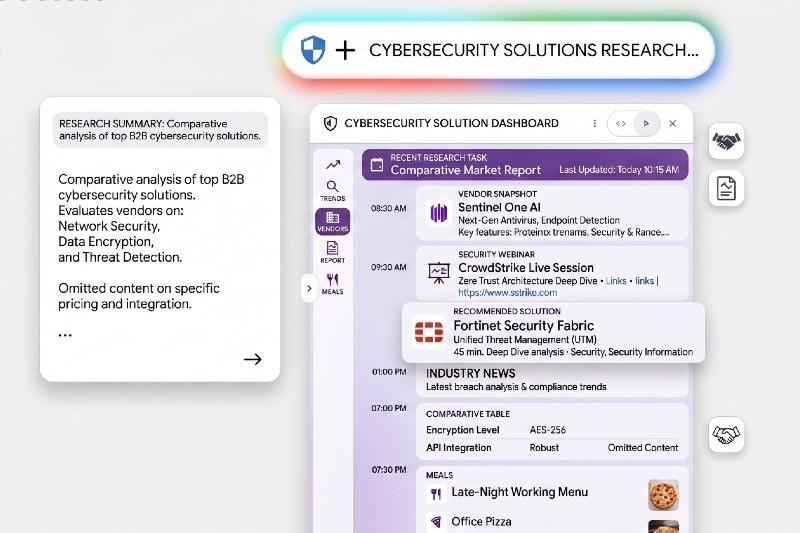
Trust System: Credibility as the Deciding Factor: With the 40% faster growth in “which” queries, the “Decide” mode is central to AI Mode strategy. When buyers ask AI Mode for recommendations, such as “which cybersecurity solution for fintech should I consider,” the brands that appear in AI-powered answers are those with the strongest credibility signals. Google’s guide distinguishes between “commodity content” and “non-commodity content,” emphasizing the value of unique, expert perspectives. Kelsey Voss, Principal Marketing Analyst at EMARKETER, noted, “GEO builds on great SEO tactics. It does not replace it. So, structure and clear answers and credible authorship make content easier for systems to extract data and information and reuse that.” BAM’s Trust System focuses on producing authentic, high-quality content through:
- Original Research: Providing unique data and insights.
- Thought Leadership: Showcasing expert perspectives and novel ideas.
- Credibility Signals: Leveraging E-E-A-T principles (Experience, Expertise, Authoritativeness, Trustworthiness) which Google has long championed.
- Third-Party Validation: Securing endorsements and mentions from reputable sources.
-
Experiential Content: Multi-Format, Structured for AI: The growing prevalence of multimodal search necessitates an investment in visual and multimedia content. With one in six queries being non-textual and image creation queries tripling, text-only content strategies put brands at a significant disadvantage. Furthermore, the rapid growth in planning queries highlights the demand for structured, actionable content. Google’s generative UI capabilities allow AI to create interactive experiences directly from web content, emphasizing the need for content that is not only rich in format but also structured for AI parsing and repurposing.
-
MultiChannel Visibility: Owning Discovery Across All Behavioral Modes: The five AI Mode behavioral modes (Explore, Decide, Learn, Do, Create) require a presence across diverse formats and channels. As TechCrunch reported, the shift in search behavior may significantly reduce Google referrals to publishers, exacerbating the impact of AI Overviews. Buyers now utilize an average of 10.2 channels during a purchase journey, according to McKinsey. BAM’s MultiChannel Visibility pillar is designed to ensure discovery across the full spectrum of formats and channels that align with each buyer mode.
-
Unified Analytics: Measuring What Matters in an Agent-Driven World: With the decline of direct clicks as a primary performance metric, the focus must shift to AI citation rates, brand mention share, topic authority, and pipeline influence. Tracking these metrics across disparate sources requires a sophisticated analytics infrastructure. BAM’s Unified Analytics pillar consolidates data from various sources into an AI-powered data warehouse, visualizing full-funnel outcomes from brand awareness to revenue. In an environment where AI agents conduct searches on behalf of buyers across distinct behavioral modes, unified measurement is essential for evaluating content program effectiveness.
The Narrowing Window for B2B Adaptation
Google’s confirmation that the new search interface is rolling out now, with Generative UI following this summer, underscores the urgency for B2B brands to adapt. The behavioral data shared by Google—triple-length queries, increasing follow-up conversations, and rapid multimodal growth—paints a clear picture of the current search landscape. Brands that align their content strategies with these evolving buyer behaviors are positioning themselves to build authority and preference with both AI systems and human decision-makers.
The message from Google I/O 2026 is unequivocal: the era of AI-driven search is not on the horizon; it is here. As TopRank Marketing articulated last year, embracing a “Best Answer Marketing” strategy moves B2B marketers beyond mere discoverability to becoming the indispensable resource customers seek. The data now unequivocally confirms this trajectory. Building brand credibility and consensus across channels through integrated content experiences is the pathway for B2B companies to transition from blending in to becoming “Best Answer Brands.” The time to act is now.