

In a rapidly evolving digital marketing landscape, an increasing number of businesses are re-evaluating their foundational email marketing infrastructure, leading to a notable trend of migration from established platforms like Mailchimp to alternatives such as Sinch Mailjet. This strategic shift is driven by a confluence of factors, including the imperative for enhanced scalability, more sophisticated collaboration tools, stringent compliance requirements, and superior performance metrics. As companies mature and their outreach strategies become more complex, the demands on their email service providers intensify, prompting a closer look at solutions that offer greater flexibility and specialized capabilities. This comprehensive guide outlines the critical steps and considerations involved in transitioning essential marketing assets – contacts, email templates, and historical data – from Mailchimp to Sinch Mailjet, providing a structured pathway for businesses undertaking this pivotal operational upgrade.

The Evolving Landscape of Email Marketing Platforms
The email marketing sector has undergone significant transformation over the past decade, evolving from simple newsletter tools to sophisticated automation engines and critical components of customer relationship management (CRM) strategies. Mailchimp, a pioneer in the space, has long served as a popular entry point for small businesses and startups due to its user-friendly interface and freemium model. Its widespread adoption has made it synonymous with accessible email marketing.
However, as businesses expand, their needs often transcend basic email campaigns. They begin to require platforms capable of handling high-volume transactional emails, advanced segmentation based on complex customer behaviors, robust multi-user access for larger teams, and enterprise-grade deliverability guarantees. The acquisition of Mailchimp by Intuit in 2021 marked a significant point, leading some users to reassess its long-term strategic fit, particularly concerning evolving pricing structures and its integration within a broader financial ecosystem. Concurrently, platforms like Sinch Mailjet have emerged, often positioning themselves as robust solutions for growing businesses and developers. These platforms typically emphasize API-first approaches, granular control over sending infrastructure, and competitive pricing models designed for high-volume users. This dynamic environment necessitates that businesses regularly audit their email platform’s capabilities against their strategic growth objectives and projected scaling needs.
Key Drivers for Platform Migration
The decision to migrate from one email platform to another is rarely taken lightly, often involving considerable planning and resource allocation. For many businesses, the primary impetus behind moving from Mailchimp to Sinch Mailjet stems from several key operational and strategic considerations that become increasingly critical as they scale.
- Scalability and Performance Requirements: As email volumes grow exponentially, businesses require platforms that can handle millions of sends without compromising deliverability rates or speed. Sinch Mailjet, often lauded for its robust infrastructure and API capabilities, is frequently chosen by organizations with high-volume sending requirements, offering reliable performance even under peak loads. Its architecture is designed to manage complex email flows, from marketing campaigns to critical transactional messages.
- Enhanced Collaboration Features for Growing Teams: For larger marketing teams, agencies managing multiple client accounts, or organizations with distributed marketing functions, Mailchimp’s collaboration features can sometimes feel restrictive. Mailjet typically provides more advanced multi-user management, granular role-based access controls, and comprehensive sub-account management. This fosters seamless teamwork, improves workflow efficiency across departments or client portfolios, and enhances security by ensuring users only access necessary functionalities.
- Compliance and Deliverability Expertise: Navigating the complex landscape of global email regulations, such as the General Data Protection Regulation (GDPR) in Europe and the California Consumer Privacy Act (CCPA) in the United States, and maintaining high deliverability rates is paramount for any business. Mailjet often emphasizes its adherence to these compliance frameworks and offers dedicated deliverability support and insights. This can be a decisive factor for businesses operating in regulated industries or those highly dependent on email for critical customer communications where inbox placement is non-negotiable.
- Cost Efficiency for Growing Volumes: While Mailchimp offers an attractive entry point with its freemium model, its pricing structure can become less competitive as contact lists and sending volumes increase substantially. Sinch Mailjet frequently presents a more cost-effective solution for businesses scaling their email operations, particularly those requiring flexible pricing tiers, volume-based discounts, or custom plans tailored for very high usage. This allows businesses to manage their marketing budgets more effectively as their outreach expands.
- Advanced Automation and API Integration Capabilities: Businesses seeking deeper integration with their existing CRM systems, e-commerce platforms, or custom-built applications often find Mailjet’s comprehensive API documentation and developer-friendly environment more accommodating. This facilitates the creation of sophisticated, automated workflows that go beyond standard drip campaigns, enabling highly personalized customer journeys and data-driven marketing strategies that are deeply embedded within their operational ecosystem.
“We’ve observed a consistent and growing demand from businesses that have reached a point where their initial email marketing solutions no longer fully support their strategic ambitions,” stated a spokesperson for Sinch Mailjet. “These organizations are actively seeking platforms that offer not just reliable email sending, but a complete communication infrastructure that can integrate deeply with their business logic, scale globally, and provide competitive pricing without compromising performance or compliance.” Industry analysts corroborate this trend, noting that “the email marketing platform market is increasingly segmenting, with different providers specializing to cater to specific business sizes and technical sophistication levels. The shift towards platforms offering greater API flexibility, enterprise-grade features, and robust deliverability tools is a natural and necessary progression for maturing businesses aiming for sustained growth.”
The Migration Process: A Detailed Operational Overview
Undertaking a migration of core digital marketing assets requires a methodical and carefully planned approach to ensure data integrity, maintain compliance, and minimize any disruption to ongoing communication efforts. The transition from Mailchimp to Sinch Mailjet, while requiring careful execution, is designed to be manageable, focusing on three primary categories of data: contacts, email templates, and historical reporting.
Step 1: Migrating Subscriber Data
The cornerstone of any email marketing operation is its contact list. The process of transferring subscriber data from Mailchimp to Sinch Mailjet is largely straightforward, leveraging standard CSV export and import functionalities.

-
Exporting Contacts from Mailchimp:
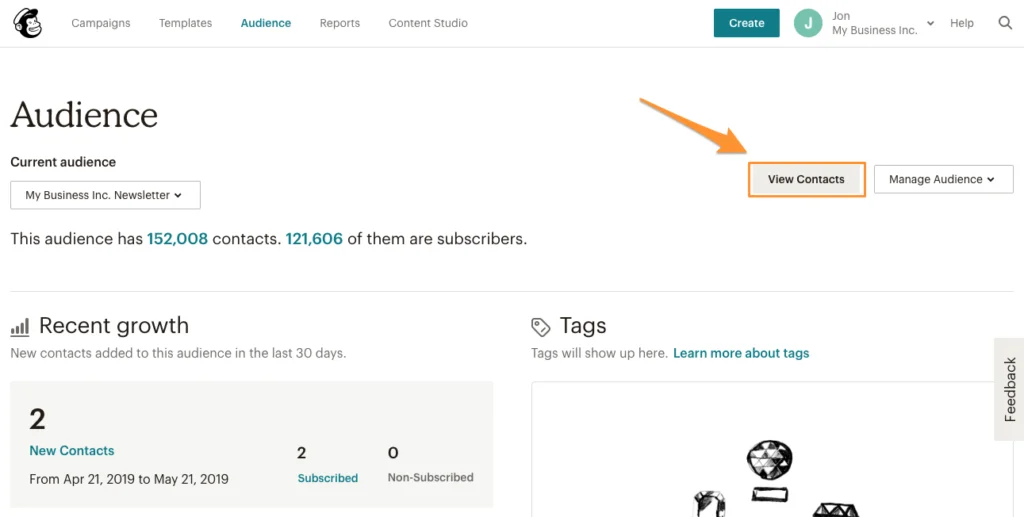
- Businesses must begin by logging into their Mailchimp account and navigating to the “Audience” section, then selecting “View Contacts.”
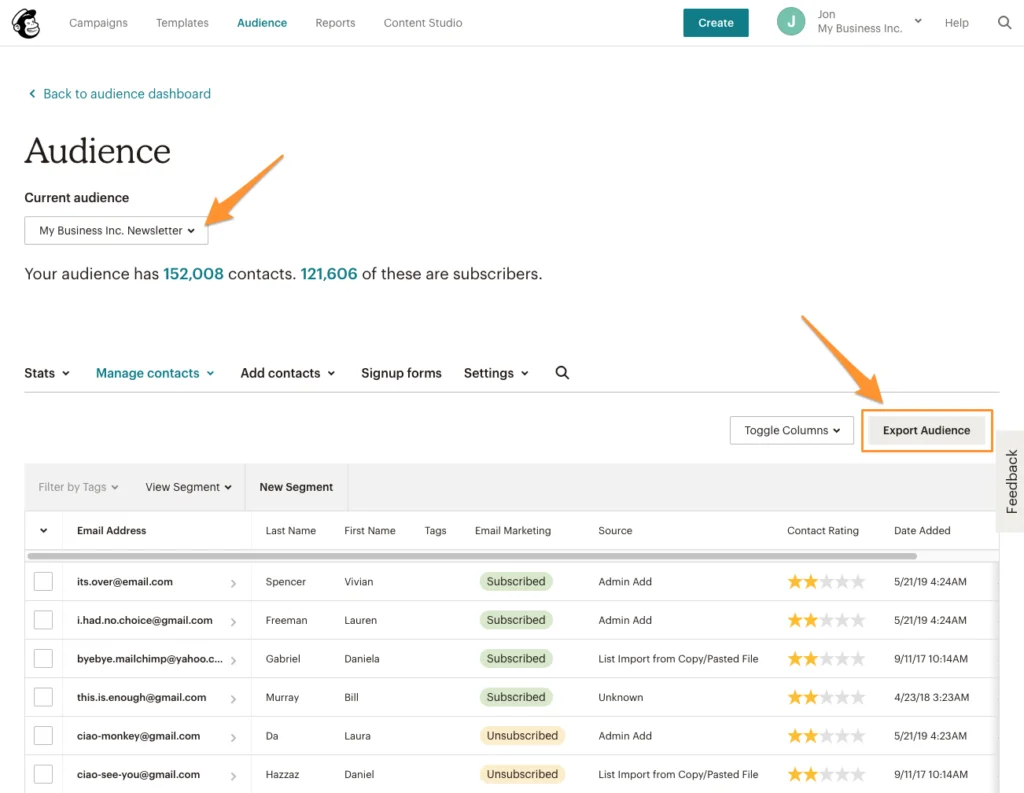
- For each distinct audience (or contact list) within Mailchimp, the “Export Audience” function must be utilized. This action initiates the generation of a downloadable CSV (Comma Separated Values) file containing all subscriber data associated with that specific audience. It is crucial to repeat this step for every separate audience to ensure that no valuable contact data is left behind.
- After downloading, the exported data typically arrives as a compressed ZIP file. This file needs to be unzipped to access the individual CSV file(s), making them ready for the subsequent import process.
-
Importing Contacts into Sinch Mailjet:
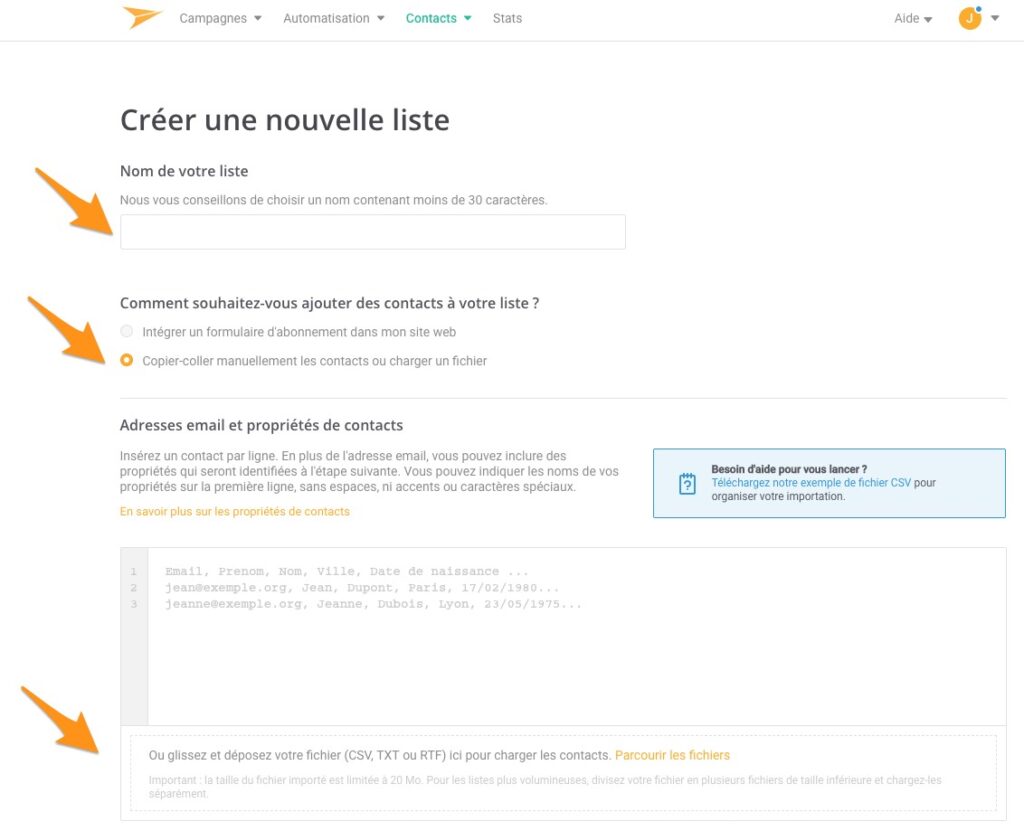
- Upon logging into their Sinch Mailjet account, users should navigate to the “Contacts” section and then select “Contact Lists.”
- The “Create a new list” option provides two methods: manual pasting of contacts or, more efficiently for bulk transfers, uploading the previously exported CSV file. A critical best practice at this stage is to maintain the organizational structure from Mailchimp; if Mailchimp had multiple distinct audiences, each should be imported into a corresponding, separate contact list within Mailjet. This preserves crucial segmentation and allows for targeted communication strategies.
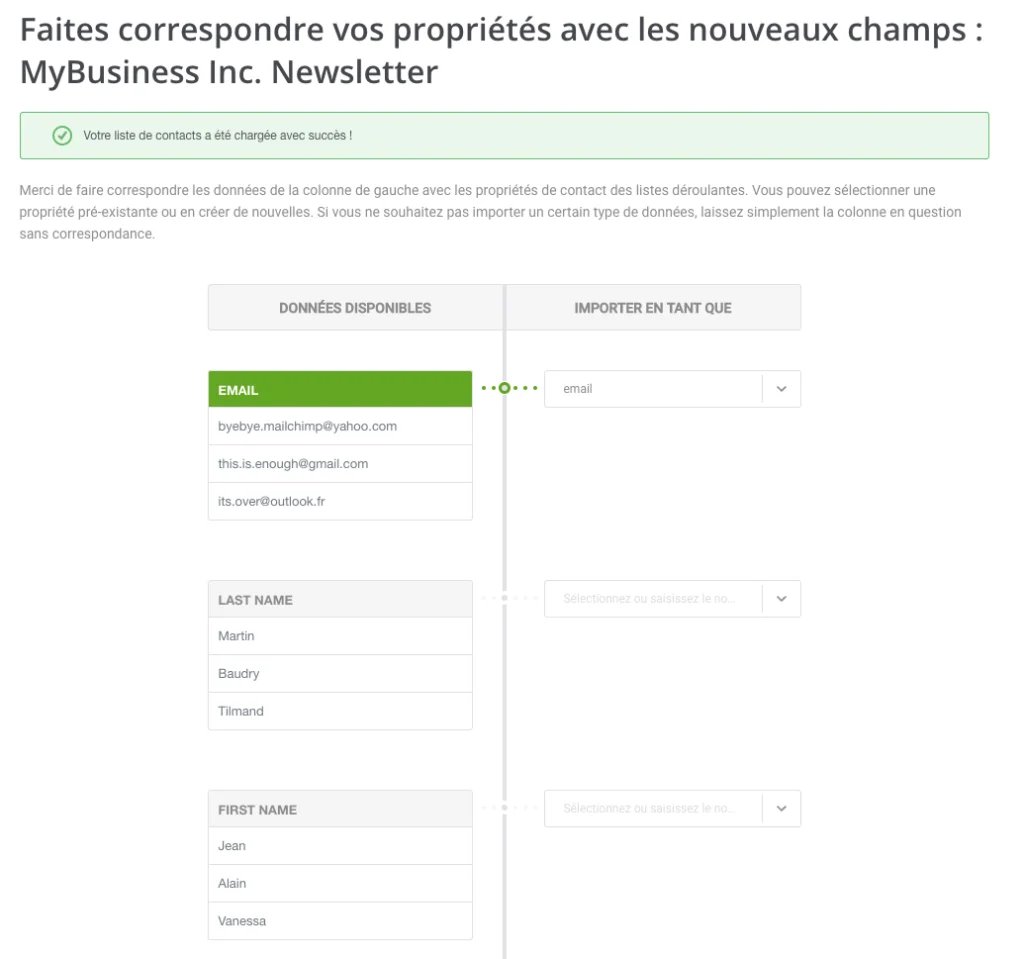
- During the import process, Mailjet facilitates “field mapping.” This step is vital for ensuring that all contact properties – such as names, company affiliations, birthdays, geographic locations, or any custom fields – are correctly aligned with Mailjet’s data schema. Proper mapping enables advanced segmentation and personalization capabilities within Mailjet, allowing for highly targeted and relevant campaigns. Once the fields are correctly mapped, users click “Save and continue.”
-
Handling Unsubscribed Contacts: A crucial, often overlooked, aspect of any email platform migration is the proper management of unsubscribed contacts. To maintain compliance with anti-spam regulations (like CAN-SPAM, GDPR) and respect user preferences, businesses must export their unsubscribed lists from Mailchimp separately.
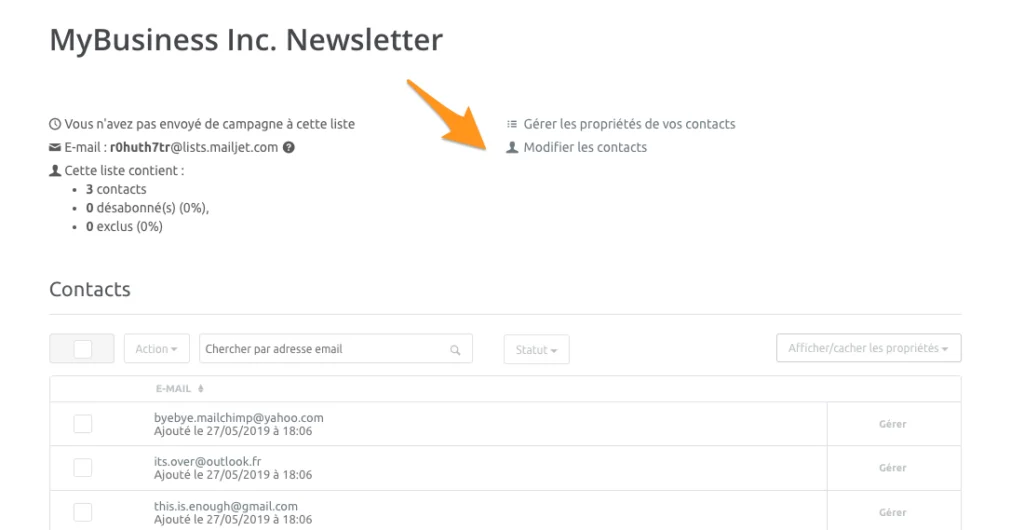
- After importing active contacts, users in Mailjet should navigate to “Manage contacts” for their newly created list.
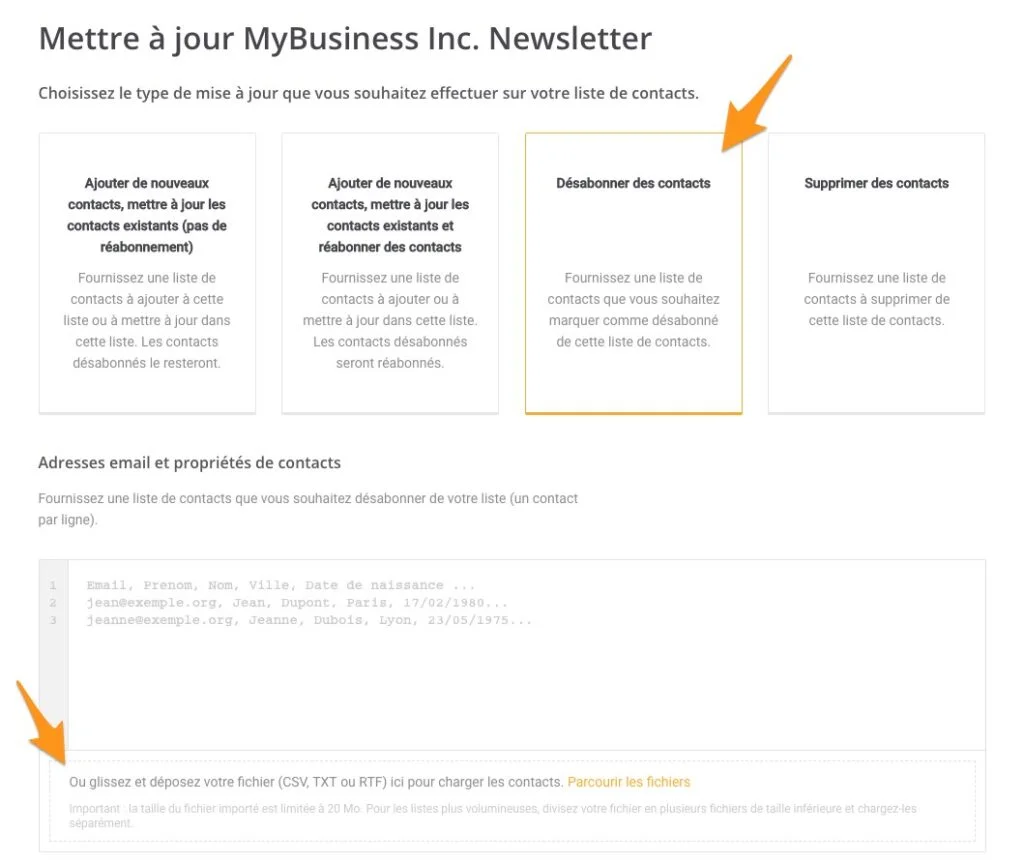
- From the available options, select “Unsubscribe contacts” as the update type. Then, upload the CSV file containing the previously unsubscribed email addresses from Mailchimp. This action ensures that these individuals are correctly marked as unsubscribed in the new platform, preventing inadvertent future mailings and safeguarding the sender’s reputation, which is paramount for long-term deliverability.
Step 2: Transitioning Email Templates
While direct, editable template transfer between different email platform editors is generally not possible due to proprietary coding structures and unique drag-and-drop builder components, businesses have practical options for moving their visual email designs. This step requires a decision based on the complexity of the templates and the desire for future editability.
- Recreating Templates Natively: The most robust option, and often recommended for leveraging Mailjet’s native editor features and ensuring optimal responsiveness across various email clients, is to recreate templates directly within Sinch Mailjet’s Email Editor. This allows for a fresh start, utilizing Mailjet’s design blocks, dynamic content capabilities, and ensuring full compatibility with its sending infrastructure. This approach also future-proofs the templates within the new platform’s ecosystem.
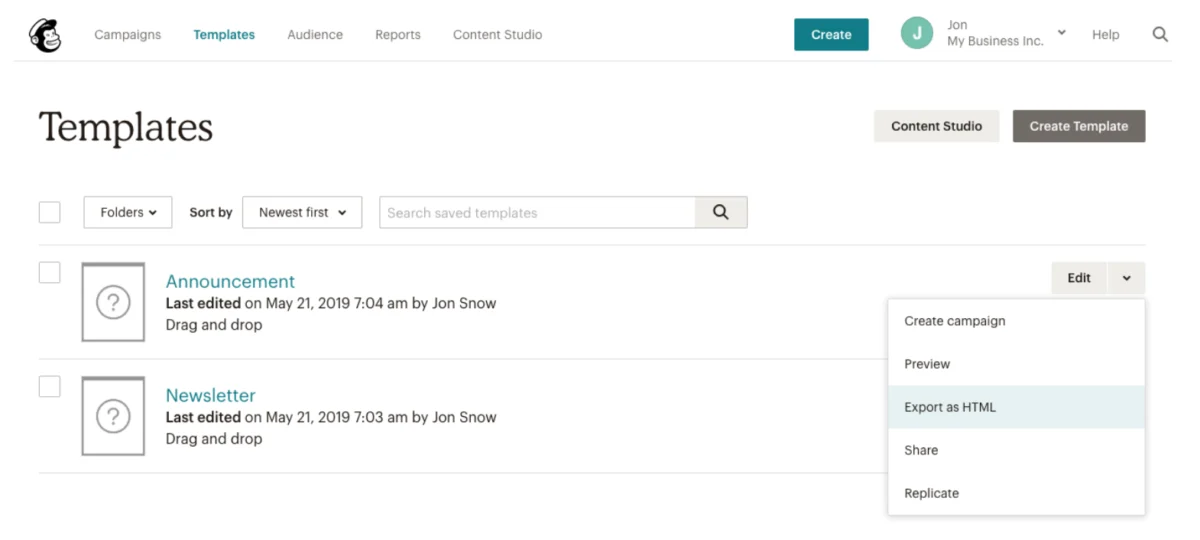
- Exporting and Importing as HTML: For those preferring to retain the exact visual layout of existing templates, particularly those with complex custom HTML or specific brand styling, Mailchimp allows templates to be “Exported as HTML.” Each desired template must be downloaded individually as an HTML file.
- In their Sinch Mailjet account, users can then navigate to “Campaigns” and select “Create a new template.” Choosing the “Code it in HTML” option enables the upload of the previously exported HTML files. While this method effectively preserves the visual design, it’s important to note that these templates might not be fully editable within Mailjet’s drag-and-drop editor. Future changes often require direct HTML manipulation. Businesses should also carefully review the imported HTML for any Mailchimp-specific code or image paths that might need adjustment for optimal rendering and functionality within the Mailjet environment.
Step 3: Preserving Historical Reporting Data
One inherent limitation in email platform migration is the direct transfer of historical reporting data. Performance metrics, such as open rates, click-through rates, bounce rates, and conversion data, are intrinsically linked to the specific platform where campaigns were executed and are not typically portable as actionable data into a new system.
- Exporting Reports from Mailchimp: Although these detailed metrics cannot be imported into Mailjet for live dashboard display, preserving historical context is vital for ongoing performance analysis and strategic decision-making. Mailchimp provides a “Download All Reports” function within its “Reports” section. Businesses are strongly advised to utilize this feature to export and archive all relevant campaign data in a static format (e.g., CSV or PDF). This ensures that a comprehensive historical record of past email performance is retained for benchmarking, trend analysis, and strategic planning, even as future campaigns are run from Sinch Mailjet. This archived data can be invaluable for understanding past audience engagement patterns, identifying successful content strategies, and informing future segmentation and personalization efforts.
Implications and Future Outlook
The successful migration from Mailchimp to Sinch Mailjet signifies more than just a change in service provider; it represents a strategic decision by businesses to align their email marketing capabilities with their growth trajectory, operational needs, and long-term digital communication strategy. The implications of such a move are multi-faceted, touching upon operational efficiency, marketing effectiveness, and overall strategic agility.
Post-migration, businesses often experience immediate benefits, including improved deliverability due to Mailjet’s focus on high-performance transactional and marketing email infrastructure, access to more granular analytics, and potentially reduced costs for high-volume senders. The enhanced collaboration features empower marketing teams to work more seamlessly, particularly in larger organizations or agencies with complex workflows. Furthermore, Mailjet’s robust API capabilities open doors for deeper integration with other business systems, enabling more sophisticated automation, highly personalized customer journeys, and the creation of bespoke communication solutions.
However, the migration is not merely about transferring data; it’s also about establishing a new, optimized foundation for future communications. Before initiating the first campaigns from Sinch Mailjet, critical technical configurations are imperative to ensure optimal performance and reputation:
- Domain Validation and Sender Addresses: Ensuring that all sending domains and associated email addresses are properly validated within Mailjet is fundamental for establishing sender identity and trust with internet service providers (ISPs) and recipients.
- SPF, DKIM, and DMARC Configuration: These email authentication protocols are crucial for verifying the legitimacy of outgoing emails. Correctly configuring these records with DNS providers significantly impacts deliverability by preventing email spoofing and phishing, thereby safeguarding sender reputation and ensuring emails reach the inbox.
The broader trend of businesses moving between email platforms underscores the dynamic nature of digital marketing and the evolving demands placed on technology providers. As technologies advance and business needs shift, the ability to adapt and adopt platforms that best serve current and future requirements becomes a key differentiator for competitive advantage. Sinch Mailjet, with its focus on scalability, robust APIs, and commitment to deliverability, positions itself as a strong contender for businesses seeking to elevate their email communication strategy. This comprehensive migration pathway provides a practical framework for organizations to make this transition smoothly, ensuring their email marketing remains a powerful and effective engine for growth and customer engagement in the years to come.








